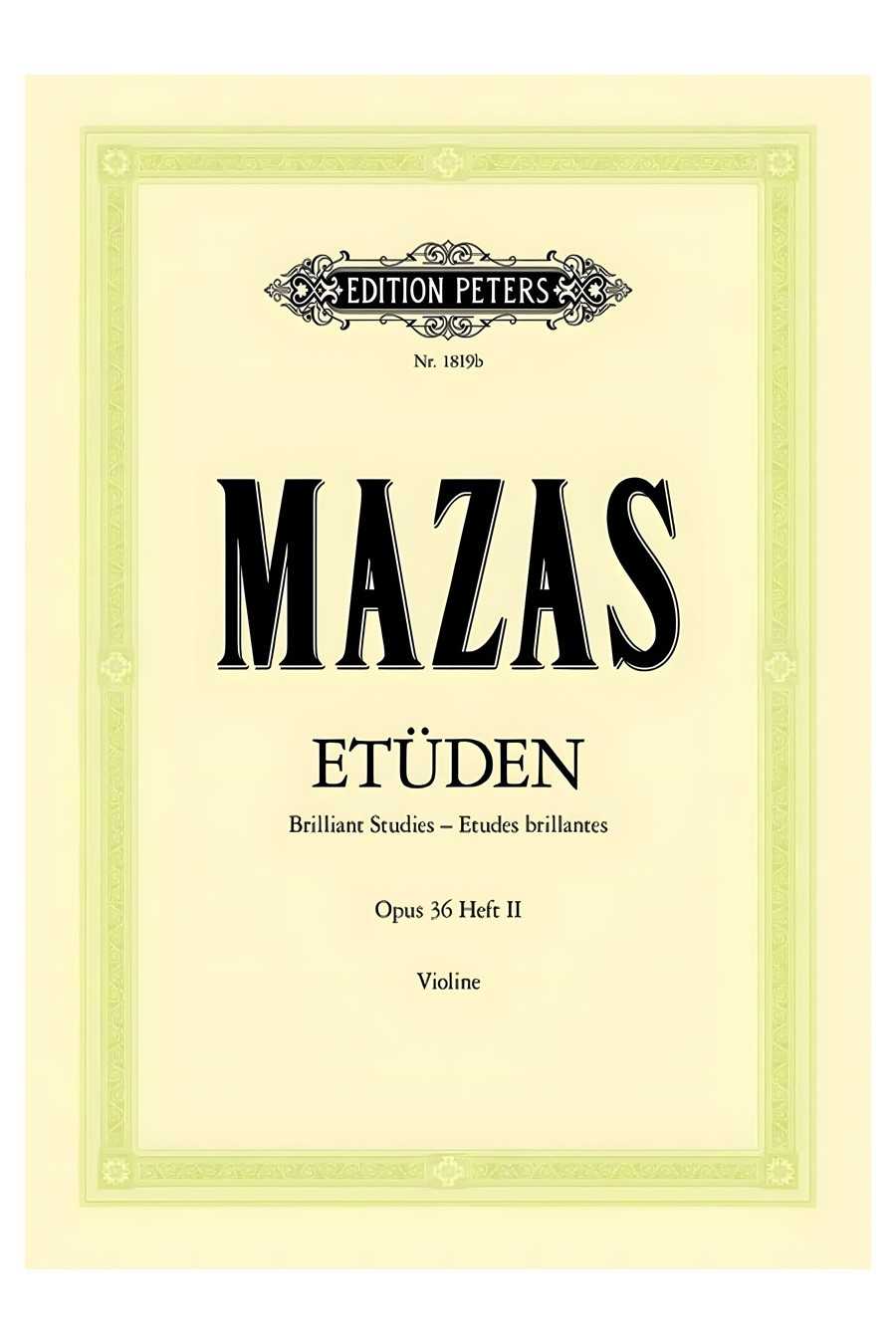
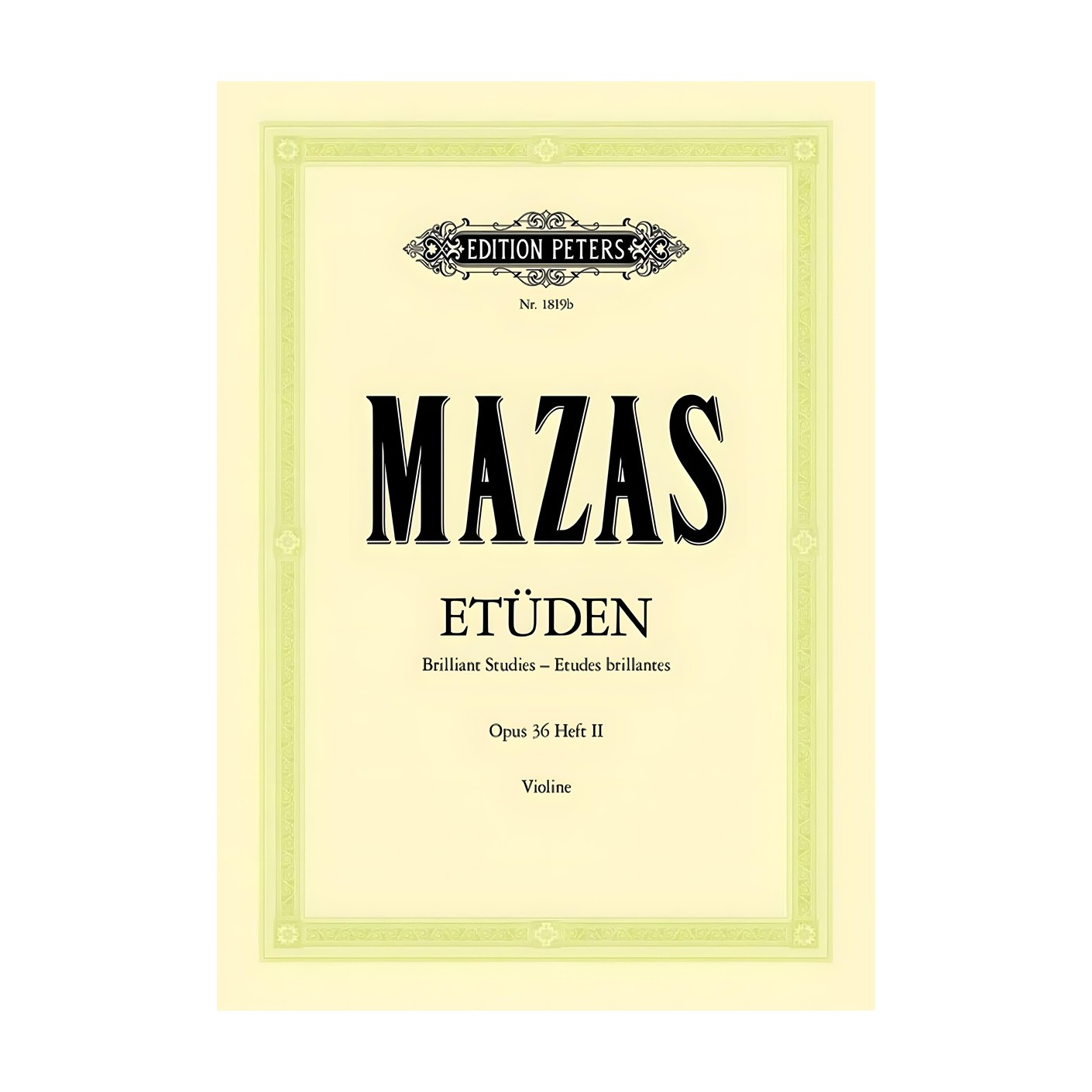
Mazas’ Studies Op. 36 Book 2 (Peters) delivers brilliant etudes for violin, developing advanced technique and musicality—an essential study resource for students.
Key Features:
• Études brillantes for advanced skills.
• Emphasis on technique and expression
• Widely used by teachers.
• Peters edition
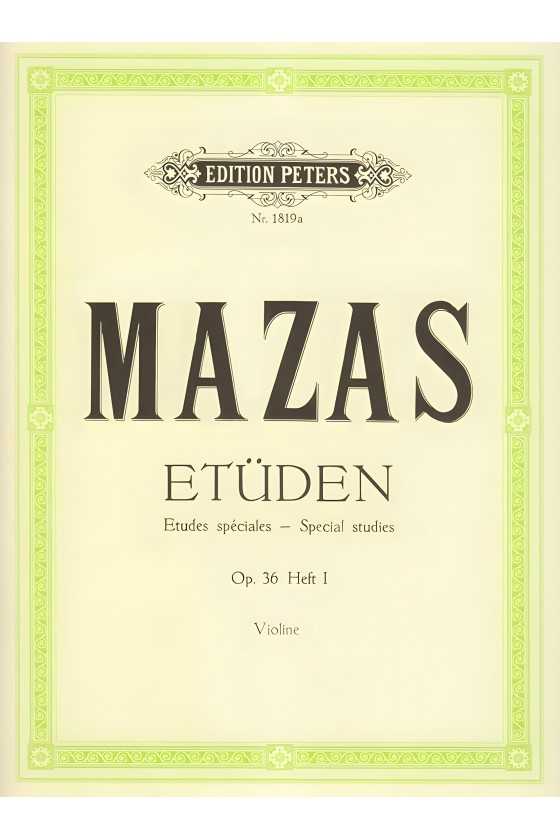
Jacques Féréol Mazas (1782-1849) was a French composer, conductor, and violinist renowned for his exceptional teaching skills. He composed the 75 Études mélodiques et progressives, Op. 36, which is considered essential pedagogical material for young violin students. The first 30 etudes, known as Études spéciales, teach crucial skills such as position changes, bowing, finger techniques, and ornaments while emphasizing musicality and expressive abilities.
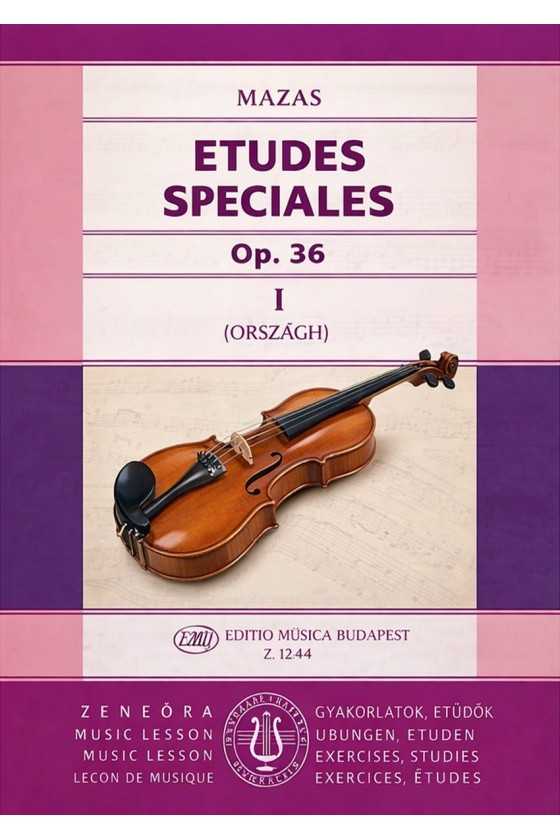
Mazas’ Etudes Spéciales Opus 36 Book 1 (EMB, ed. Orszagh Tivadar) features 30 melodious etudes for violin, essential for mastering technique and musical expression.
Key Features:
• 30 progressive etudes for violin
• Emphasis on technique and musicality
• Orszagh Tivadar edition
• EMB publication
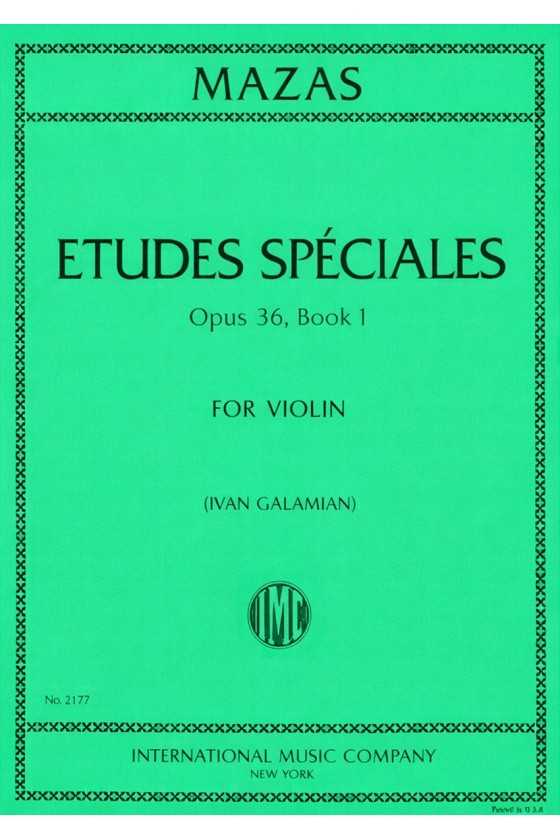
Mazas’ 30 Études Spéciales Op. 36 Vol. 1 (IMC, ed. Galamian) offers progressive etudes for mastering foundational violin technique and musical expression.
Key Features:
• 30 special etudes for violin
• Focus on technique and musicality.
• Galamian edition
• IMC publication