
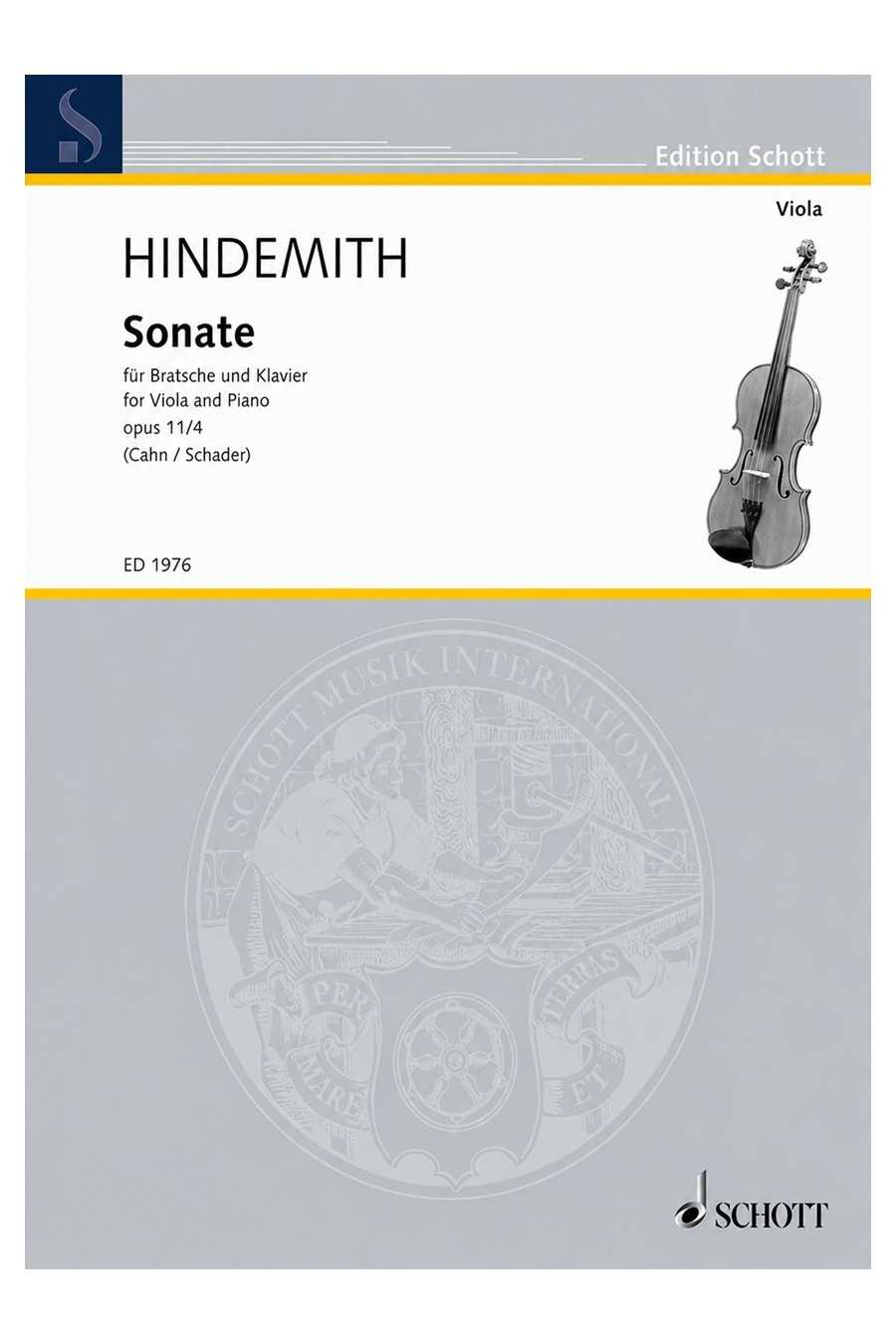
Sonata for Viola and Piano, Op. 11 No. 4 by Paul Hindemith, published by Schott Music, is an important early chamber work that bridges late Romantic expression with Hindemith's emerging modern style. Rich in musical dialogue and expressive depth, it is essential repertoire for advanced violists preparing for recitals, conservatory study, and professional performance.
Key Features:
• Music by Paul Hindemith
• Published by Schott Music
• Sonata for Viola and Piano, Op. 11 No. 4
• Early twentieth-century chamber music masterpiece
• Equal partnership between viola and piano
• Suitable for advanced students and professional violists
• Develops tone, phrasing, articulation, and ensemble musicianship
• Ideal for recitals, auditions, diploma examinations, and conservatory study
Experience the emergence of a distinctive musical voice with Sonata for Viola and Piano, Op. 11 No. 4 by Paul Hindemith, published by Schott Music. Composed in 1919, this remarkable sonata marks one of Hindemith's earliest major works for the viola and foreshadows the innovative style that would establish him as one of the twentieth century's most influential composers. Blending late Romantic warmth with bold harmonic language and energetic rhythmic ideas, the sonata explores the expressive range of the viola while maintaining a strong sense of formal balance. Throughout the work, the viola and piano engage as equal musical partners, creating a richly textured chamber dialogue filled with colour, contrast, and emotional depth.
A favourite among advanced violists, Op. 11 No. 4 offers an engaging combination of lyrical expression and technical sophistication. Its varied movements challenge performers to master expressive phrasing, rhythmic precision, tonal control, shifting, articulation, and ensemble sensitivity, while encouraging thoughtful interpretation of Hindemith's evolving compositional style. This Schott edition is an outstanding choice for conservatory study, recital programmes, diploma examinations, chamber music performance, auditions, and advanced repertoire development. As one of the composer's foundational viola sonatas, it remains an indispensable work for musicians seeking to explore the origins of modern viola literature.
Key Features:
Musical Benefits:
