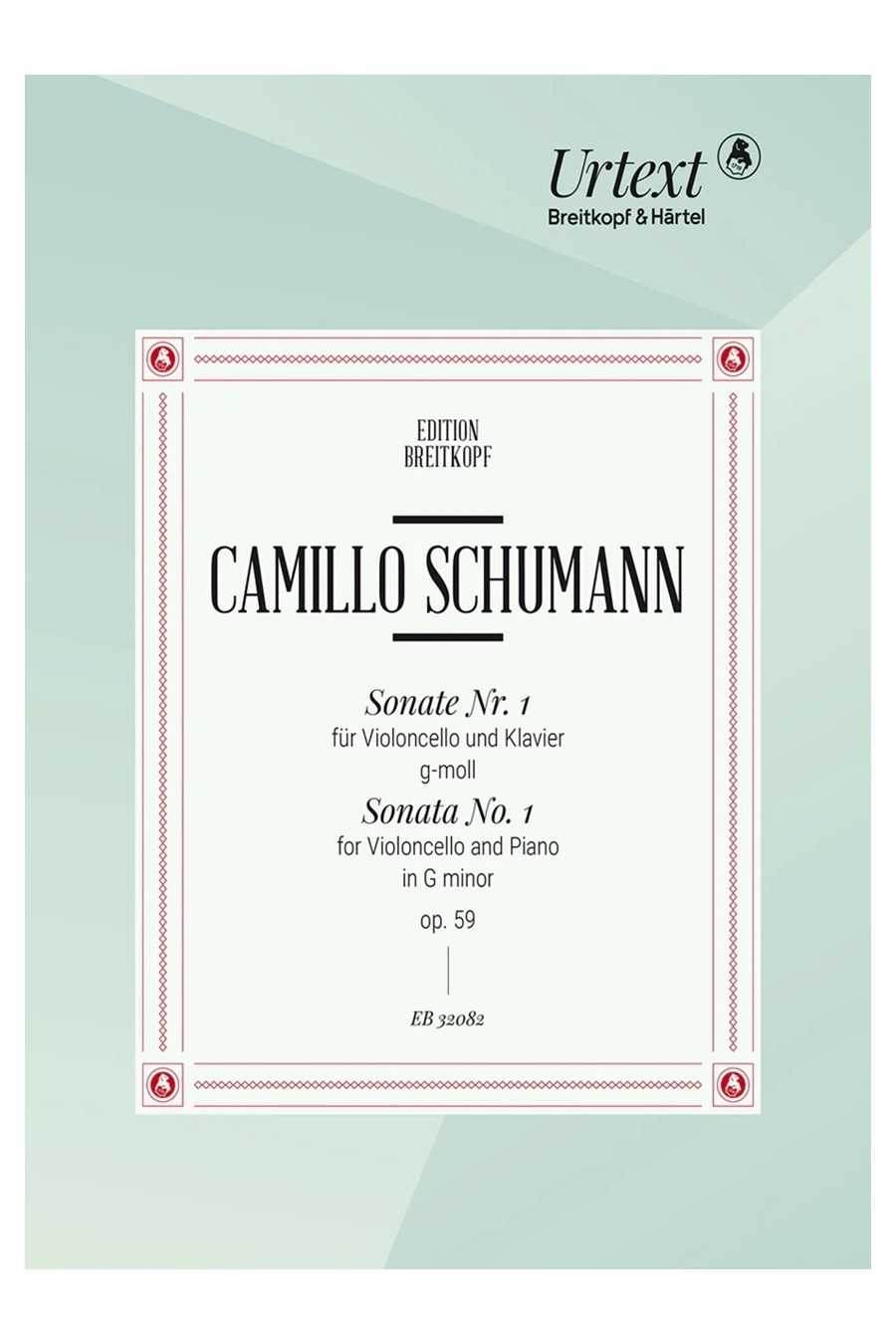
For cellists looking beyond the standard Romantic repertoire, Camillo Schumann’s Sonata No. 1, Op. 59 offers a substantial and rewarding discovery. Published by Breitkopf & Härtel for cello and piano, its lyrical writing, Romantic harmonic language, and substantial interplay between the instruments make it particularly appealing to advanced students and serious chamber musicians.
Key Features:
• Music by Camillo Schumann (1872–1946)
• For cello and piano
• Rich late-Romantic chamber repertoire
• Ideal for advanced study, recitals, and chamber music performance
Composed in 1851, Schumann’s Märchenbilder (Fairy-Tale Pictures), Op. 113 is a landmark work for viola and piano, replacing traditional sonata form with four vividly contrasting Romantic character pieces. Published by Breitkopf & Härtel, this approximately 16-minute cycle demands imagination, tonal variety, technical refinement, and mature chamber musicianship.
Key Features:
• Original work for viola and piano by Robert Schumann
• Four contrasting Romantic character pieces
• Composed in 1851 and dedicated to Wilhelm Joseph von Wasielewski
• Ideal for advanced study, recitals, auditions, and conservatory performance
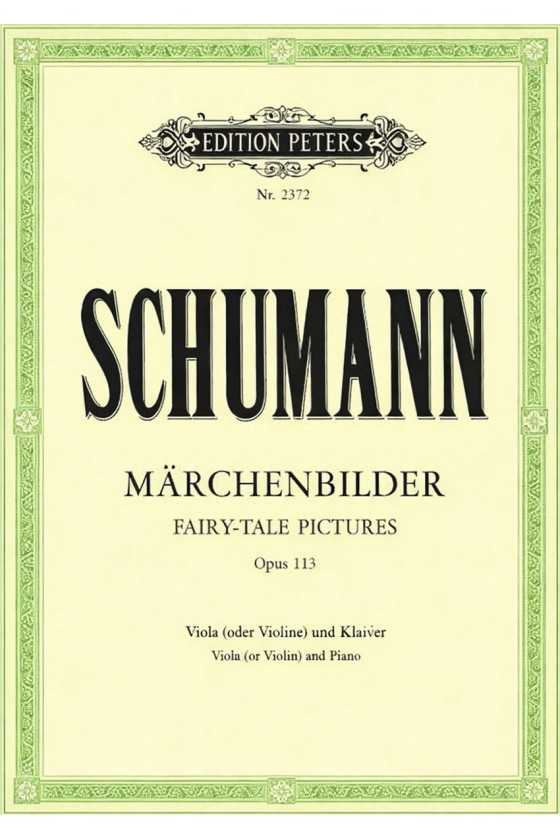
Four movements, four distinct characters, and one continuous imaginative journey define Schumann’s Märchenbilder, Op. 113. Published by Edition Peters for viola and piano, this landmark Romantic work challenges serious violists to combine technical refinement with tonal colour, expressive flexibility, and mature chamber musicianship.
Key Features:
• Original work for viola and piano by Robert Schumann
• Four contrasting Romantic character pieces
• Major nineteenth-century viola repertoire
• Ideal for advanced study, auditions, competitions, and recitals
Schumann’s Fairy-Tale Pictures (Märchenbilder), Op. 113 is one of the great original works for viola and piano of the Romantic era. Published in Henle Urtext, its four contrasting pieces move from lyrical introspection to energetic drama, demanding refined tone, technical control, and imaginative interpretation from the serious violist.
Key Features:
• Original Romantic work for viola and piano
• Four contrasting character pieces by Robert Schumann
• Authoritative Henle Urtext edition
• Ideal for advanced study, auditions, competitions, and recitals
Schumann’s Three Romances, published by Kalmus for viola and piano, reward performers who can communicate through tone, phrasing, and subtle changes of character. These three lyrical Romantic pieces provide excellent repertoire for developing expressive maturity, tonal colour, and a sensitive musical partnership with the piano.
Key Features:
• Three expressive Romantic pieces by Robert Schumann
• Arranged for viola and piano
• Develops tone, phrasing, and interpretative maturity
• Ideal for examinations, recitals, and conservatory study
Explore Schumann’s magical “Märchenbilder” for viola or violin and piano (Peters). These captivating pieces blend lyrical storytelling with Romantic expression and are a versatile choice for performers.
Key Features:
• Includes parts for viola or violin, and piano
• Published and edited by Peters
• Suitable for intermediate to advanced players
• Inspired by fairy tales and the Romantic style