
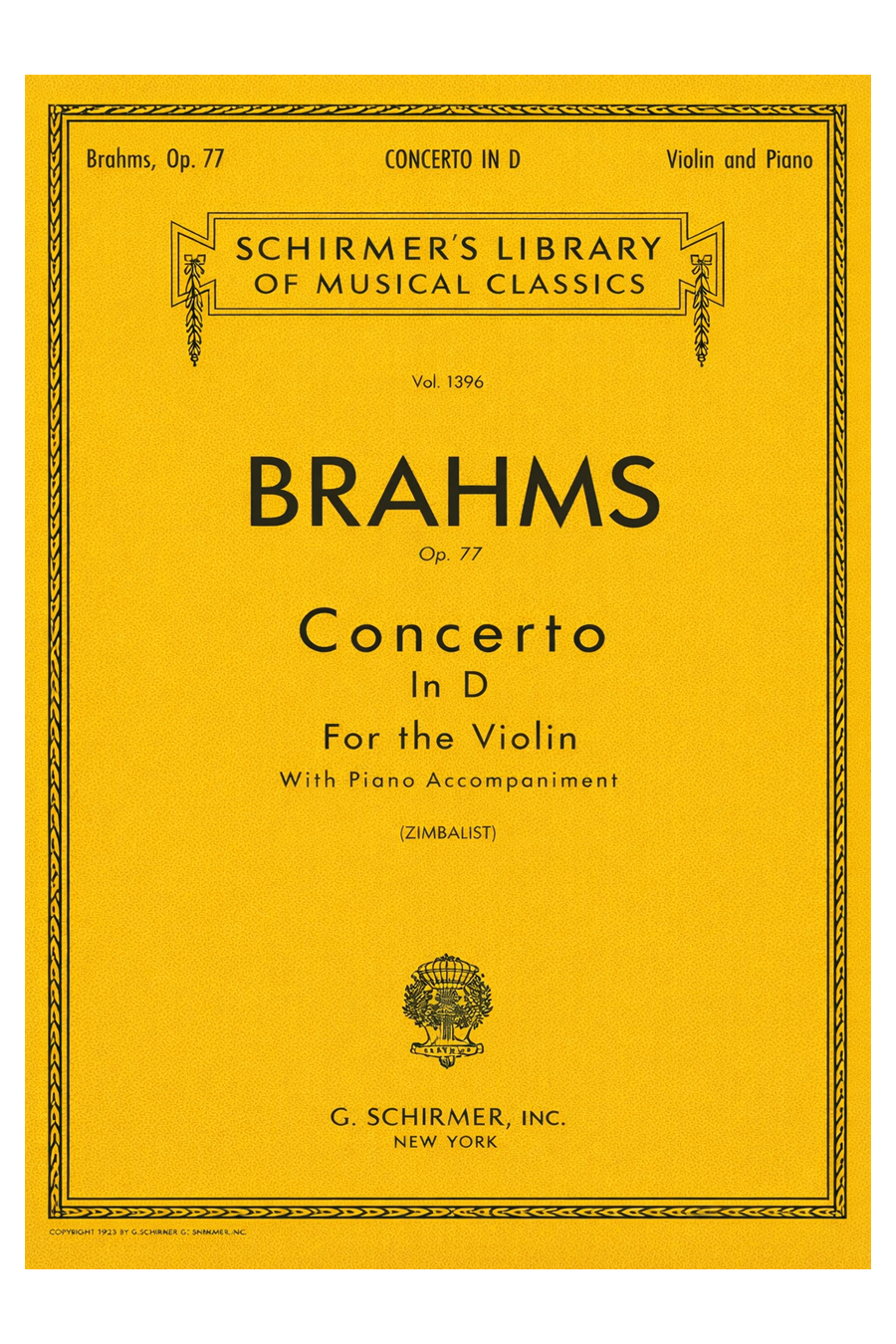
Brahms Violin Concerto in D major Op. 77 by Johannes Brahms, published by G. Schirmer, is a symphonic masterpiece that challenges the violinist to combine technical command with deep musical insight and structural mastery.
Key features
•A true symphonic concerto, not a virtuoso showpiece
•Tests musical maturity, stamina, and architectural thinking
•Noble, expansive, and emotionally profound
•A defining milestone in a serious violinist’s repertoire
Brahms Violin Concerto in D major Op. 77 by Johannes Brahms, published by G. Schirmer, stands as one of the most monumental achievements in the violin repertoire; conceived on a symphonic scale, this concerto treats the violin not as a mere virtuoso soloist but as an equal voice within a vast orchestral argument, demanding intellectual depth, architectural thinking, and profound musical maturity from the performer, and rewarding those qualities with music of exceptional nobility, power, and emotional breadth.
Key features:

A symphonic concerto where musical intelligence and structure matter more than surface virtuosity
Demands endurance, control, and long-line phrasing, making it a true test of artistic maturity
Blends heroic strength with deep lyricism, especially in the expansive first movement
The famous slow movement offers intimate, almost chamber-like dialogue between soloist and orchestra
Finale driven by earthy rhythm and rustic energy, rooted in folk character rather than brilliance alone
A work that reveals more with every return, often described as a lifetime concerto
Brahms Hungarian Dances Nos. 1–5 for Violin and Piano by Johannes Brahms, published by Carl Fischer, offers five irresistible dance miniatures full of rhythm, color, and Romantic flair.
Key features
•Lively, folk-inspired character pieces
•Rich in rhythmic snap and expressive contrast
•Highly engaging for performers and audiences
•Essential Romantic repertoire with immediate appeal
Brahms Violin Concerto in D major Op. 77 by Johannes Brahms, published by G. Henle Verlag, is a definitive Urtext edition of one of the greatest violin concertos ever written, enriched by Joseph Joachim’s cadenzas.
Key features
•A cornerstone of Romantic violin literature
•Includes two authentic Joachim cadenzas
•Symphonic, noble, and deeply expressive
•Essential repertoire for advanced and professional violinists
Brahms Hungarian Dances for Violin and Piano by Johannes Brahms, published by Edition Peters, captures Brahms at his most vibrant, blending folk spirit with refined Romantic craftsmanship.
Key features
•Lively, dance-driven character pieces
•Rich in contrast, rhythm, and expressive color
•Highly engaging for performers and audiences
•Essential Romantic repertoire with immediate appeal
Brahms: Sonata for Violin and Piano in A major Op. 100 by Johannes Brahms, published by Bärenreiter, is a luminous and tender sonata that showcases Brahms’s gift for songful melody and chamber-music intimacy.
Key features
•Warm, song-like Romantic lyricism
•Emphasis on balance and ensemble breathing
•Expressive depth through restraint and nuance
•Essential repertoire for mature chamber musicians
Brahms Hungarian Dances Nos. 1–5 for Violin and Piano by Johannes Brahms, published by Editio Musica Budapest, presents the first five Hungarian Dances in a vivid violin-and-piano arrangement that emphasizes rhythmic fire, expressive freedom, and folk-inspired brilliance.
Key features
•Brimming with Hungarian fire, rhythmic snap, and dramatic flair
•Perfect for short concert slots and encores
•Encourages expressive freedom and stylistic personality
•Musically exciting without excessive technical overload
Brahms-Joachim Hungarian Folk Dances 1-5 for Violin (Butorac)
Brahms–Joachim Hungarian Folk Dances Nos. 1–5 for Violin by Johannes Brahms, arranged by Joseph Joachim and revised by Tomislav Butorac, presents five irresistible dance pieces bursting with rhythm, color, and folk spirit.
Brahms: Sonatensatz (Scherzo) for Violin and Piano by Johannes Brahms, published by International Music Company, is a powerful early work born from friendship, collaboration, and Romantic fire.
Key features
•A fiery Scherzo by the 20-year-old Brahms
•Part of the historic F. A. E. Sonata for Joseph Joachim
•Dark, energetic, and emotionally charged
•A compelling blend of youthful brilliance and Romantic depth
Brahms Lullaby for Violin and Piano by Johannes Brahms is a timeless miniature that highlights the violin’s singing voice and Brahms’s unmatched lyrical warmth.
Key features
•Gentle, song-like lyricism
•Focus on tone, warmth, and expressive simplicity
•Universally recognizable and emotionally resonant