
Open 6 Days: Tuesdays-Saturdays 9-4, Sun 10-2, Mondays closed.

Bruni, Antonio Bartolomeo

Bruni, Antonio Bartolomeo

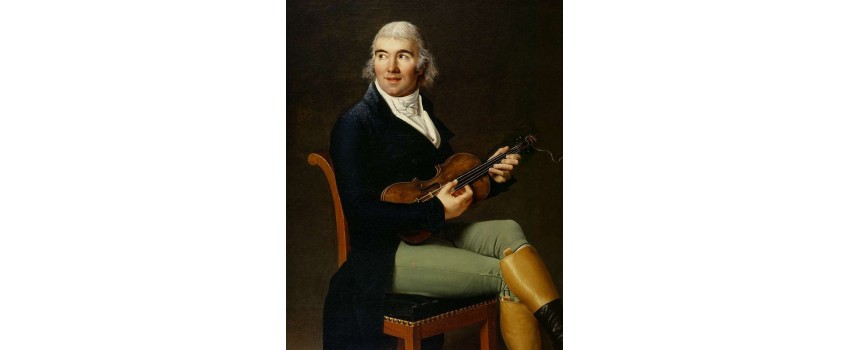
Antonio Bartolomeo Bruni, born on 28 January 1757, was an Italian violinist, composer, conductor, and music theorist of the Classical period. Born in Cuneo, Piedmont, Bruni developed a career that eventually took him to Paris, where he became active as both a performer and composer. His extensive output includes operas and vocal music, but string players especially remember him for his music for violin and viola, including duets, sonatas, concertante works, études, and instructional compositions.
Early Life and Musical Education
Bruni was born in Cuneo, Italy, and demonstrated considerable musical ability from an early age. He studied violin and composition and eventually travelled to Paris, one of Europe's most important musical centres. By the late eighteenth century, he had established himself there as a skilled violinist and composer and became closely involved in Parisian musical life.
Career in Paris
Bruni spent much of his professional career in Paris, where he worked as a violinist, conductor, and composer. He was associated with prominent Parisian theatres and participated in France's rapidly changing musical culture around the French Revolution. Alongside his theatrical activities, he continued to compose instrumental music intended for both professional musicians and students.
Violin Music
The violin occupies an important place in Bruni's music. As an accomplished violinist, he understood the instrument's technical and expressive qualities and wrote music that combines Classical elegance with practical string technique. His violin repertoire includes works for two violins, violin and viola, and various chamber ensembles.
Among his works are the Six Duets, Op. 34 for Two Violins, which demonstrate his interest in balanced ensemble writing. Rather than treating one violin simply as an accompaniment, Bruni frequently gives both performers meaningful melodic material, making his duets useful for developing ensemble playing, intonation, articulation, and musical communication.
Violin and Viola Duets
Bruni is particularly associated with music for violin and viola. His concertante duets allow the two instruments to interact as equal musical partners, alternating melodic passages and supporting material while exploring the contrasting colours of the violin and viola.
His Six Duets for Violin and Viola, Op. 25, are among his better-known chamber compositions. Selections from these works have appeared in modern editions from publishers including International Music Company (IMC) and Amadeus Verlag, helping preserve Bruni's music in the modern string repertoire.
Viola Music and Studies
Bruni also contributed significantly to the viola repertoire. At a time when relatively little instructional literature was written specifically for viola, he produced works designed to develop both technical ability and musicianship. His Méthode pour l'alto, associated with his collection of 25 Études for Viola, became an important early contribution to viola pedagogy.
The studies address essential aspects of string playing while remaining musical rather than functioning solely as mechanical exercises. Modern editions of Bruni's studies continue to make this repertoire accessible to viola students and teachers.
Musical Style
Bruni's instrumental writing reflects the clarity and balance characteristic of the Classical period. His works generally feature graceful melodies, clearly structured phrases, conversational exchanges between instruments, and writing that uses string technique effectively without unnecessarily overwhelming the performer.
This combination makes many of his violin and viola compositions particularly suitable for students, teachers, chamber musicians, and advancing players. His duets can serve as both teaching repertoire and enjoyable performance pieces.
Published Editions
Bruni's string compositions have continued to circulate through modern sheet-music editions. International Music Company (IMC) has published works including his violin duets and viola studies. At the same time, publishers such as Amadeus Verlag have issued editions of his concertante music for violin and viola. These publications have helped keep his works available to contemporary string players.
Legacy
Antonio Bartolomeo Bruni died in Cuneo on 6 August 1821. Although he is less widely known today than composers such as Mozart, Haydn, or Beethoven, his music remains a valuable part of the historical violin and viola repertoire. His experience as a professional string player is evident throughout his compositions, particularly in his duets, studies, and chamber works.
Conclusion
Antonio Bartolomeo Bruni was an accomplished Italian violinist-composer whose works provide an important link between Classical-period performance, chamber music, and string pedagogy. His violin and viola sheet music—including duets, concertante works, sonatas, and studies—continues to offer players attractive melodic writing alongside useful technical and ensemble challenges. For violinists and violists exploring lesser-known Classical repertoire, Bruni's music provides a particularly rich collection of works for study and performance.
Antonio Bartolomeo Bruni
  • Home
  • Perform
  • Violin Sheet Music
  • Composers Violin A-C
  • Bruni, Antonio Bartolomeo


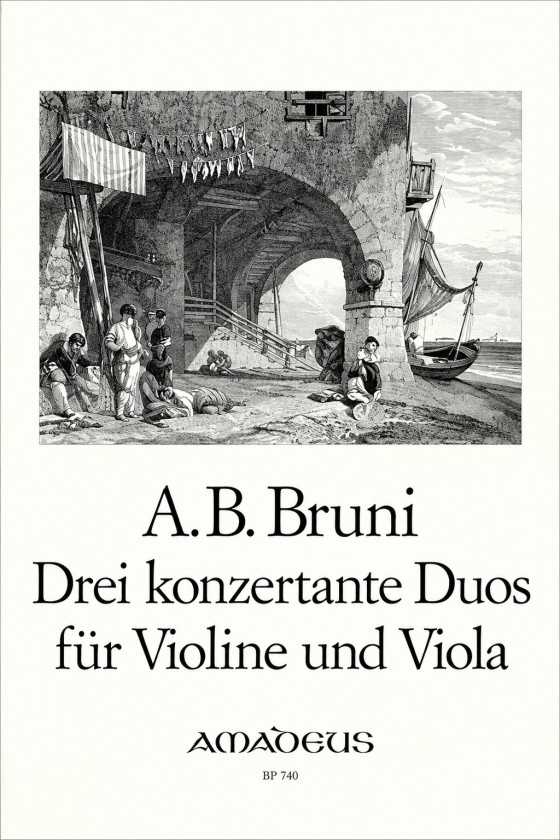
  • Bruni, Three Concert Duos For Violin And Viola

    Antonio Bartolomeo Bruni's Three Concert Duos for Violin and Viola offer elegant Classical repertoire with engaging interplay between the two instruments. The three duos develop intonation, phrasing, articulation, coordination, and ensemble playing.

    Key Features:

    • Composer: Antonio Bartolomeo Bruni

    • For: Violin and Viola

    • Period: Classical

    • Three concert duos

    • Chamber repertoire

    • Develops ensemble skills

    • For study and recital

    $43.95 Price

    Boxed:

    Sticky Add To Cart

    Font: