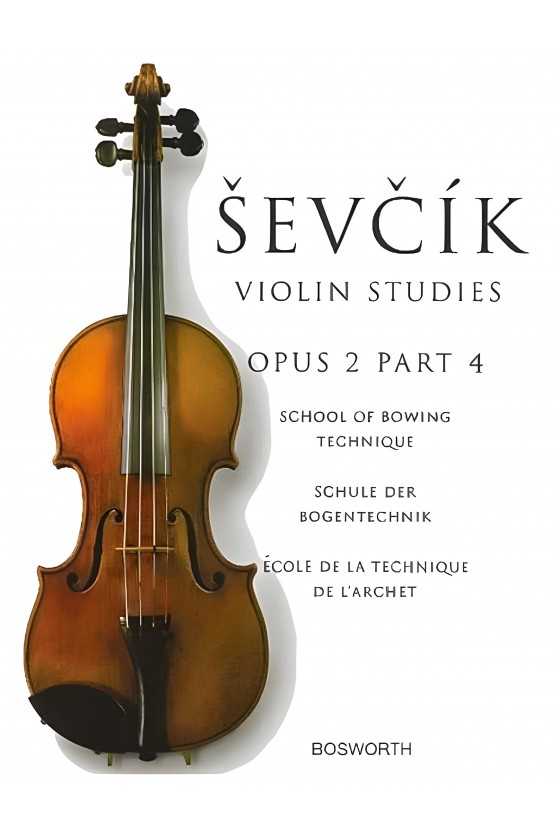
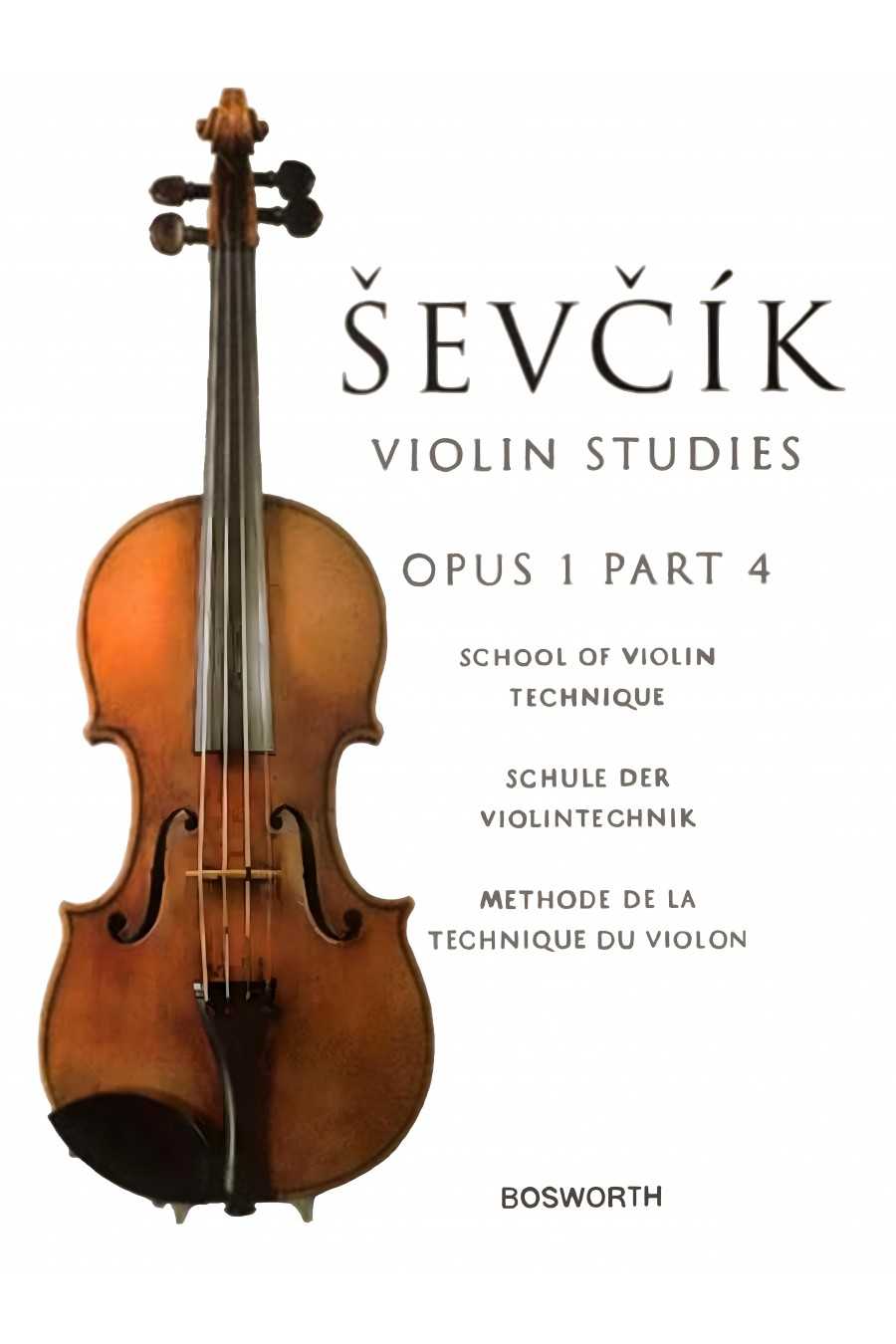
Otakar Sevcik was a renowned violin teacher who developed effective and rigorous technical exercises for violin players of all skill levels - from beginners to the most advanced. His book "School of Violin Technique" covers every aspect of violin technique, including special exercises for individual technical problems and analytical studies of popular concertos. The fourth book in the series focuses on double stops and harmonics, and this Bosworth Edition includes helpful commentary on the exercises.
Otakar Sevcik was an acclaimed and influential violin pedagogue whose technical studies are considered indispensable for virtuosos and beginners alike. His book "School of Violin Technique" is a comprehensive guide that covers every aspect of violin technique, from the simplest exercises for beginners to the most complex techniques required for advanced players. The book is divided into four volumes, with the fourth volume containing methods and exercises for mastering double stops and harmonics - two advanced techniques essential for any serious violinist.
This Bosworth Edition of the book includes helpful commentary on the exercises, providing students with additional insight and guidance on how to perfect their technique. Sevcik's exercises are designed to be rigorous and effective, helping players to develop their skills and overcome technical challenges. Whether you're a beginner or an advanced player, "School of Violin Technique" is an essential resource for anyone looking to master the art of the violin.
Otakar Sevcik was a famous violin teacher who developed effective technical exercises for players at all levels. His "School of Bowing Technique" focuses on right-hand precision, rhythmic accuracy, wrist speed, and strength. Book 4 covers arpeggios on two strings, and this Bosworth Edition has helpful commentary.
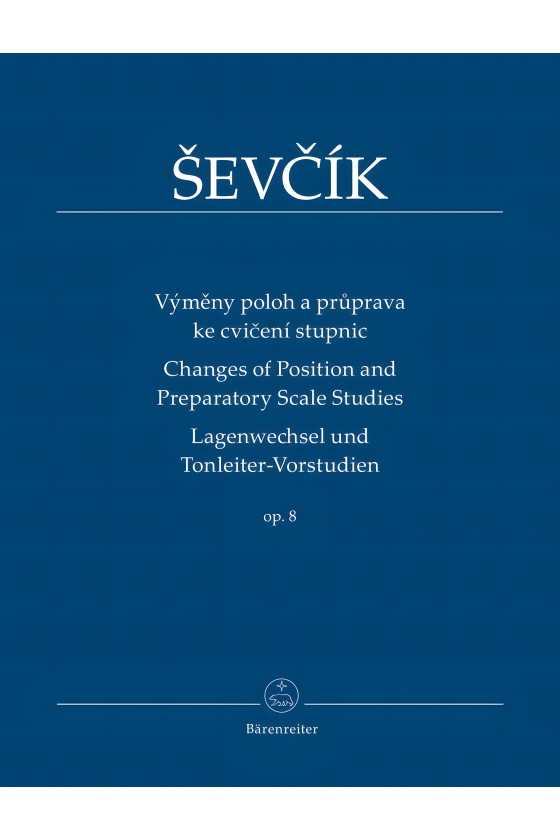
Otakar Sevcik was a renowned violin instructor who developed technical exercises for violinists. This volume focuses on changing positions and preparatory studies for three-octave scales. The exercises provide a musical framework for each shift, making them more effective. This Bosworth Edition includes helpful commentary.
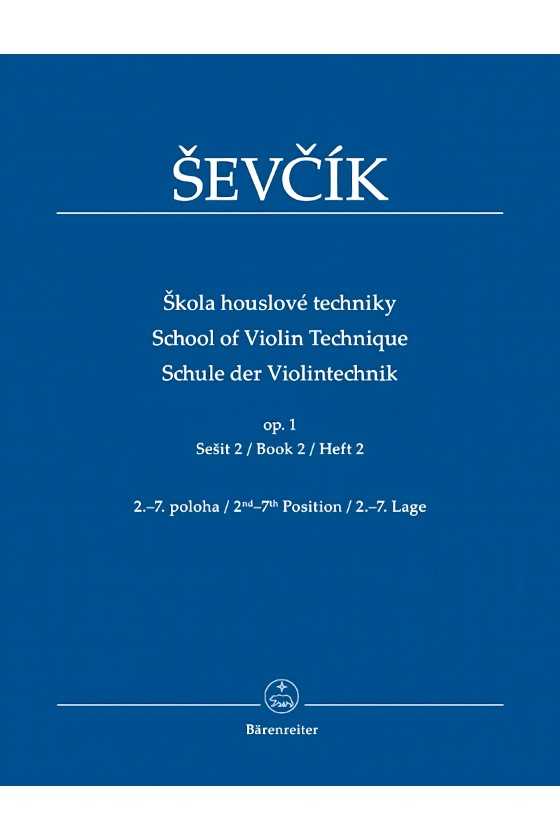
Ševcík’s “School of Violin Technique” is a comprehensive guide covering every aspect of violin technique. It’s been one of violinists’ most important teaching methods for over 130 years. The latest version includes four books derived from the first edition and some unpublished works of Ševcík. Jaroslav Foltýn, a violin professor, has contributed to this latest version for an accurate methodological commentary.
• This is a brief about a new edition of a violin method that generations of violinists have used.
• It is a seminal work by a leading violin educator.
• Each book contains a methodological commentary by the editor in Czech, English, and German.
• This edition begins a series of new Bärenreiter publications of Ševcík’s principal works.
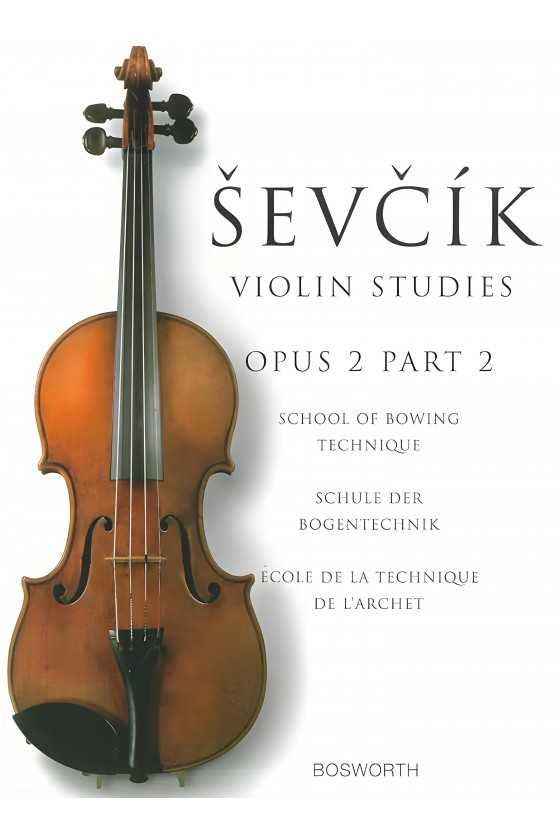
Otakar Sevcik is a renowned violin teacher known for his effective technical exercises catering to beginner and advanced violinists. His book, "School of Bowing Technique," focuses on developing the right-hand technique, including bowing style, accuracy, rhythms, and wrist speed/strength. Book 2 covers rhythmic exercises, different bowing styles, and sustained tones. This Bosworth Edition also includes helpful commentary on the exercises.
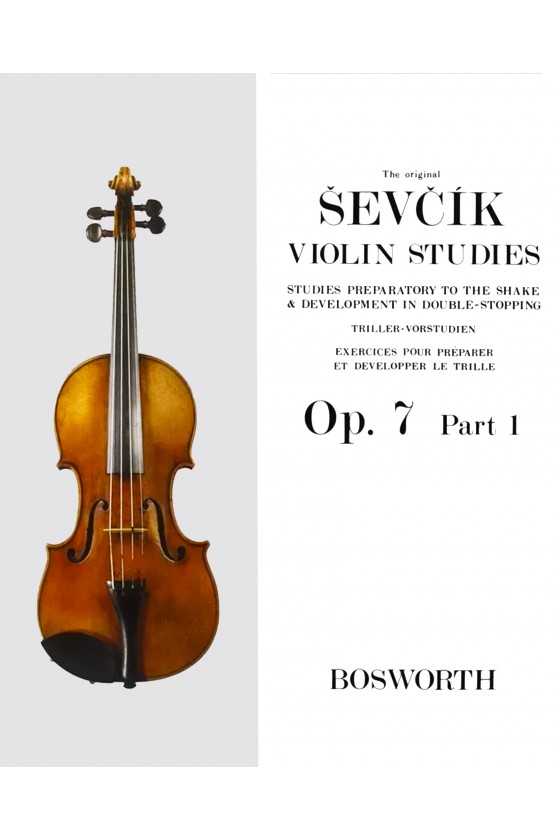
This is the first part of a collection of violin studies composed and compiled by Otakar Sevcik. It includes a comprehensive set of exercises in the first position, which are great for preparing to develop double-stopping skills. These exercises are an excellent way to practice and improve your playing.
Ševcík wrote extensively on violin technique, covering all levels of playing. His opus 8 is one of his most important works, focusing on position changes and scales over three octaves. Our new edition is based on the original print and Ševcík's posthumous papers, edited by Jaroslav Foltýn, a professor at Prague Conservatory.
• A fundamental pedagogical work from a superb violin teacher
• With methodological notes by the editor (Cz/Eng/Ger)
• Moderate level of difficulty
Sevcik's Violin Studies is a century-old renowned method for improving violin technique. The Third part of Opus 1 reinforces strength, dexterity, accuracy, and position change exercises. It also includes scales and arpeggios spanning three octaves.
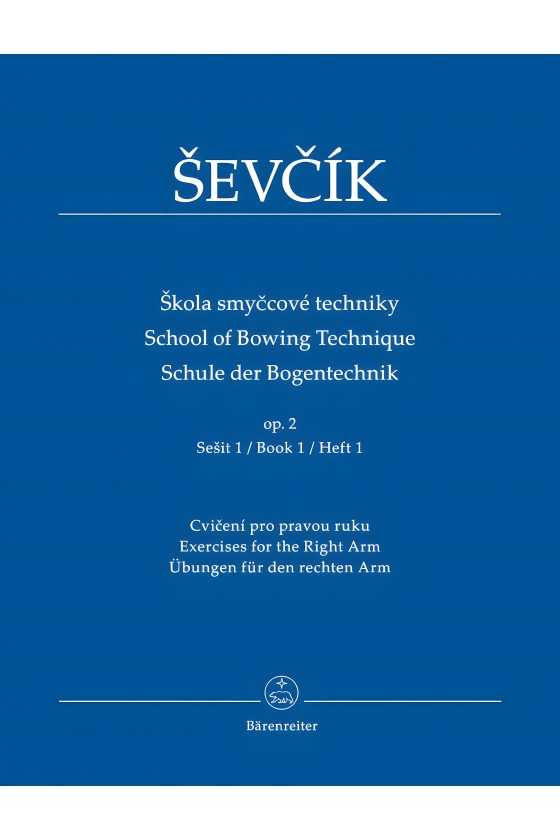
"School of Bowing Technique" op. 2 by Otakar Ševčík is a significant violin tutor with over 4,000 bowing exercises arranged by difficulty. The latest version combines the original six volumes into two and is primarily based on the first edition. The editor is Jaroslav Foltýn, a professor of violin at the Prague Conservatory.
• New edition of a tutor that generations of violinists have grown up with
• Fundamental work by a leading violin educator
• Three volumes in increasing order of difficulty: easy-moderate–difficult
• Methodological notes by the editor (Cz/Eng/Ger)
Exercises for the Right Arm