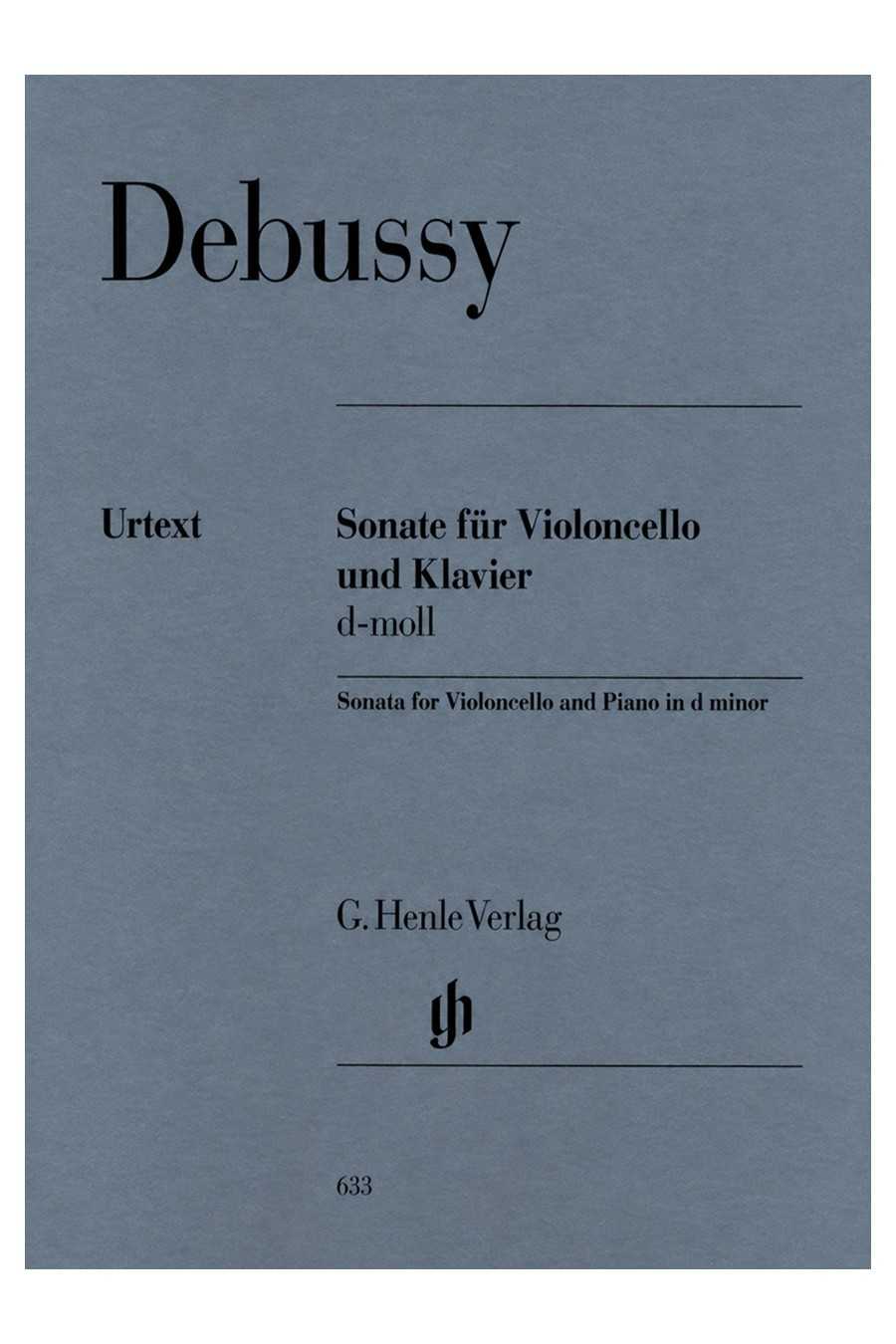
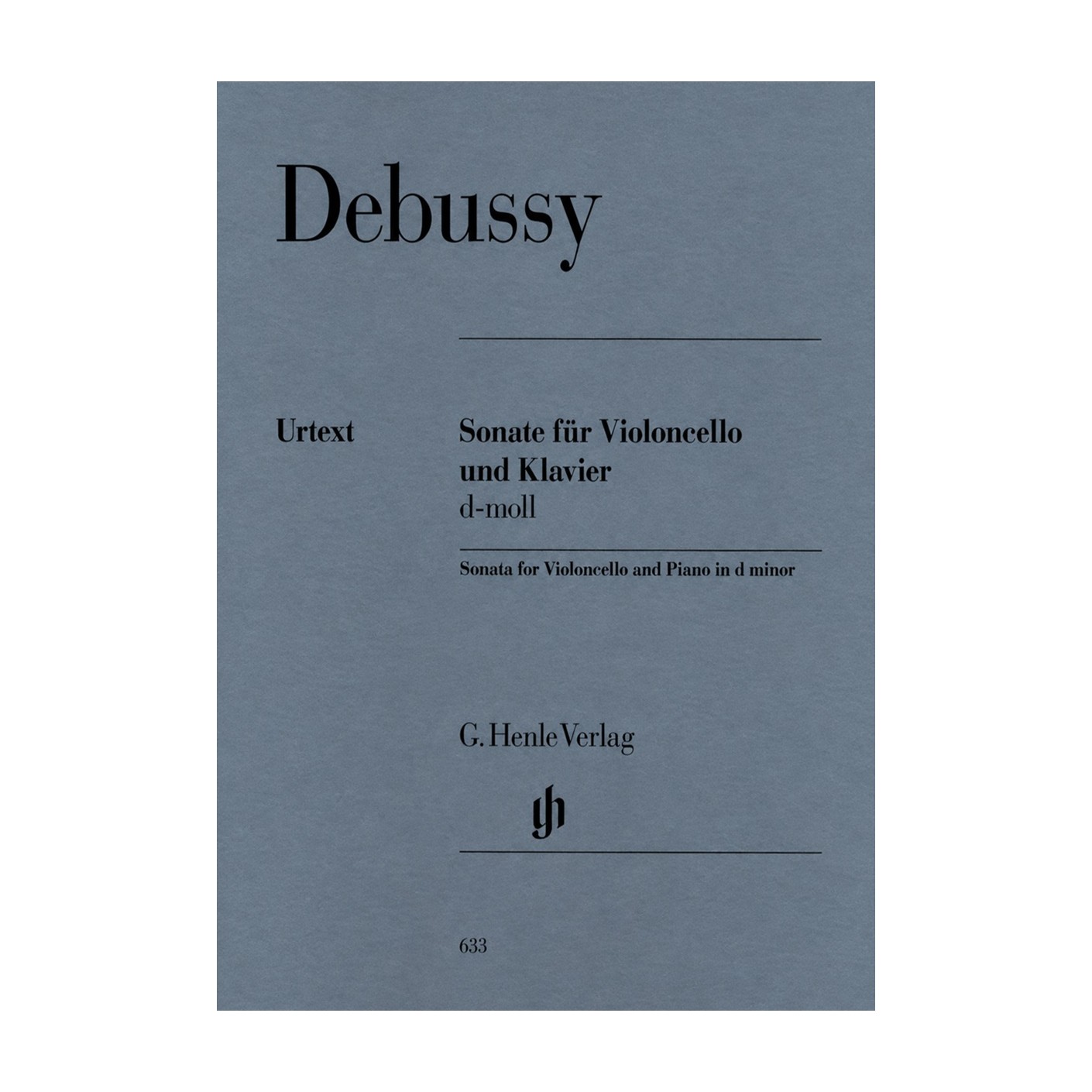
Debussy’s Cello Sonata in D Minor is a landmark 20th-century work combining atmospheric lyricism, rhythmic vitality and imaginative cello writing. This Henle Urtext edition is edited by Ernst-Günter Heinemann, with cello fingering and bowing by Reiner Ginzel, and uniquely provides both marked and unmarked cello parts, allowing performers to work either with practical performance guidance or directly from the Urtext.
Key Features:
• For cello and piano
• Composed by Claude Debussy
• Composed in 1915
• Henle Urtext Edition
• Edited by Ernst-Günter Heinemann
• Cello fingering and bowing by Reiner Ginzel.
• Includes marked and unmarked cello parts
• Catalogue No. HN 633
• ISMN 979-0-2018-0633-4
• Henle difficulty: Level 9 – Difficult
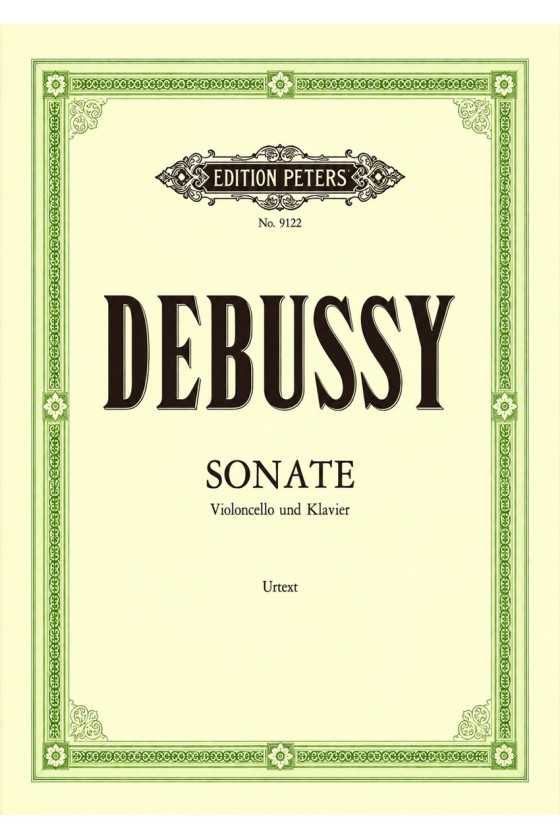
Debussy’s Sonata in D Minor for Cello and Piano is a compact yet richly expressive masterpiece of 20th-century chamber music. This Edition Peters Urtext, edited by Josef Schwab, presents Debussy’s three contrasting movements—Prologue, Sérénade and Finale—in a carefully prepared edition ideal for advanced study, recital and professional performance.
Key Features:
• For cello and piano
• Composed by Claude Debussy
• Composed in 1915
• Urtext edition
• Edited by Josef Schwab
• Three connected movements
• Published by Edition Peters
• Catalogue No. EP 9122
• Peters edition dating from 1969
• Advanced-level repertoire
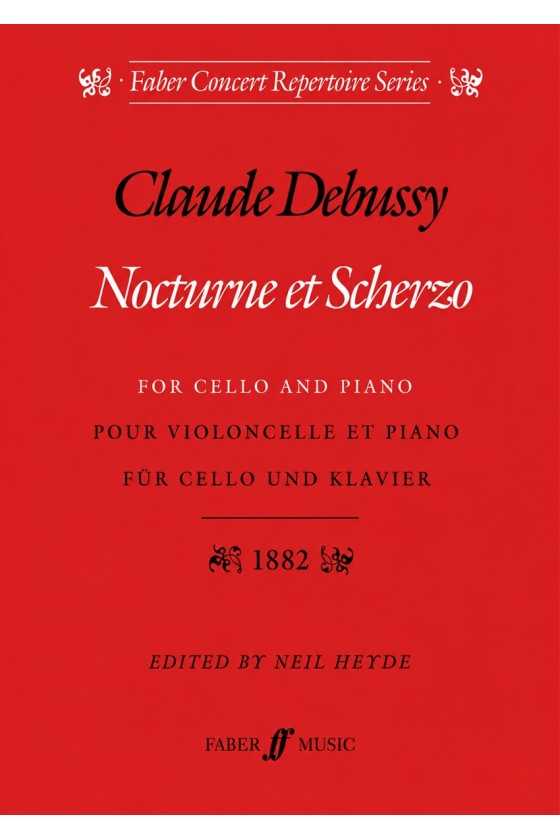
Debussy’s Nocturne et Scherzo is a fascinating early work for cello and piano, composed in 1882 when Debussy was nineteen. Contrasting animated Scherzo writing with a lyrical, nocturne-like central character, the piece already hints at the composer’s sensitivity to colour and atmosphere. This Faber Music edition was prepared from the surviving manuscript by Neil Heyde and first published in 1995.
Key Features:
• For cello and piano
• Composed by Claude Debussy
• Written in 1882
• Edited by Neil Heyde
• Published by Faber Music
• Catalogue No. 0571515118
• ISBN 978-0-571-51511-0
• 16 pages
• Contrasts lively Scherzo writing with lyrical, cantabile expression
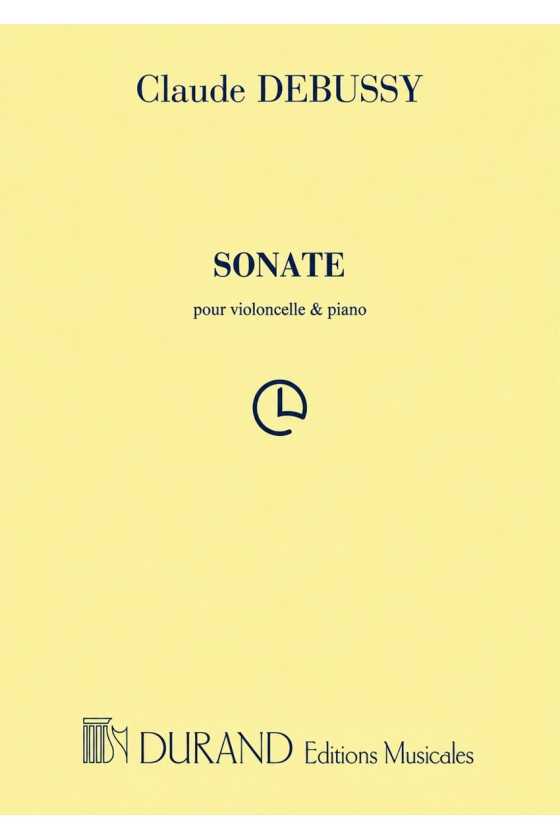
Debussy’s Sonata in D Minor for Cello and Piano is a landmark of early 20th-century chamber music, composed in 1915 and published by Durand. Across its three connected movements—Prologue, Sérénade and Final—Debussy explores an exceptional range of cello colours, articulations and expressive effects, creating challenging and rewarding repertoire for advanced performers.
Key Features:
• For cello and piano
• Composed by Claude Debussy
• L. 135 / CD 144
• Composed in 1915
• Three contrasting movements
• Published by Durand
• Catalogue No. DD00939000
• ISMN 979-0-044-01362-3
• Major 20th-century cello repertoire