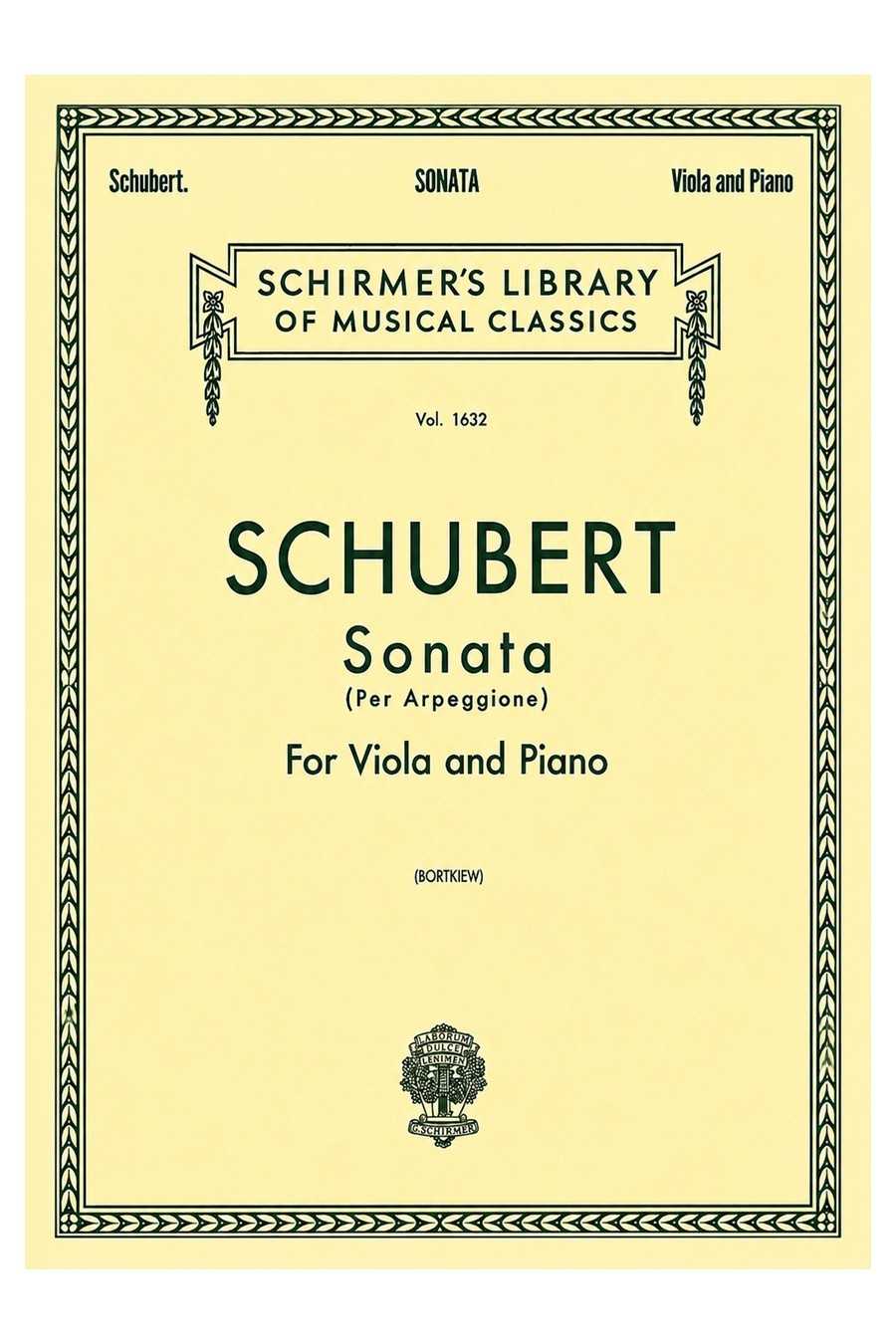
Schubert, Arpeggione Sonata For Viola And Piano (Schirmer)
Few transcriptions have become as completely at home on the viola as Franz Schubert’s Arpeggione Sonata in A Minor, D. 821. Published by G. Schirmer for viola and piano, this celebrated work was originally composed in 1824 for the arpeggione, a short-lived six-stringed bowed instrument. Although the instrument itself largely disappeared, Schubert’s sonata endured, finding a natural home in the viola repertoire where its expansive melodies, warm register, and intimate musical character can be realised with exceptional depth.
Across its three movements, the sonata demands far more than technical fluency. The violist must sustain long melodic lines, negotiate wide registers and flowing passagework, and maintain an expressive partnership with the piano throughout. Control of shifting, intonation, bow distribution, vibrato, tonal colour, and phrase architecture are all essential, particularly in passages where apparent simplicity leaves every musical decision exposed. For advanced students and accomplished performers, the Arpeggione Sonata is an important recital work and a profound study in Schubertian expression, making this Schirmer edition a valuable addition to any serious viola library.
Movements:
I. Allegro moderato
II. Adagio
III. Allegretto
Key Features:
- Music by Franz Schubert
- Published by G. Schirmer
- Arpeggione Sonata in A Minor, D. 821
- For viola and piano
- Originally composed in 1824 for arpeggione and piano
- Three substantial and contrasting movements
- Major Romantic chamber and recital repertoire
- Suitable for advanced violists
- Ideal for recitals, auditions, competitions, and conservatory study
Musical Benefits:
- Develops sustained lyrical phrasing and sophisticated tonal control
- Refines shifting, intonation, vibrato, and bow distribution
- Strengthens musical dialogue and balance with the pianist
- Encourages mature interpretation, phrase architecture, and expressive freedom