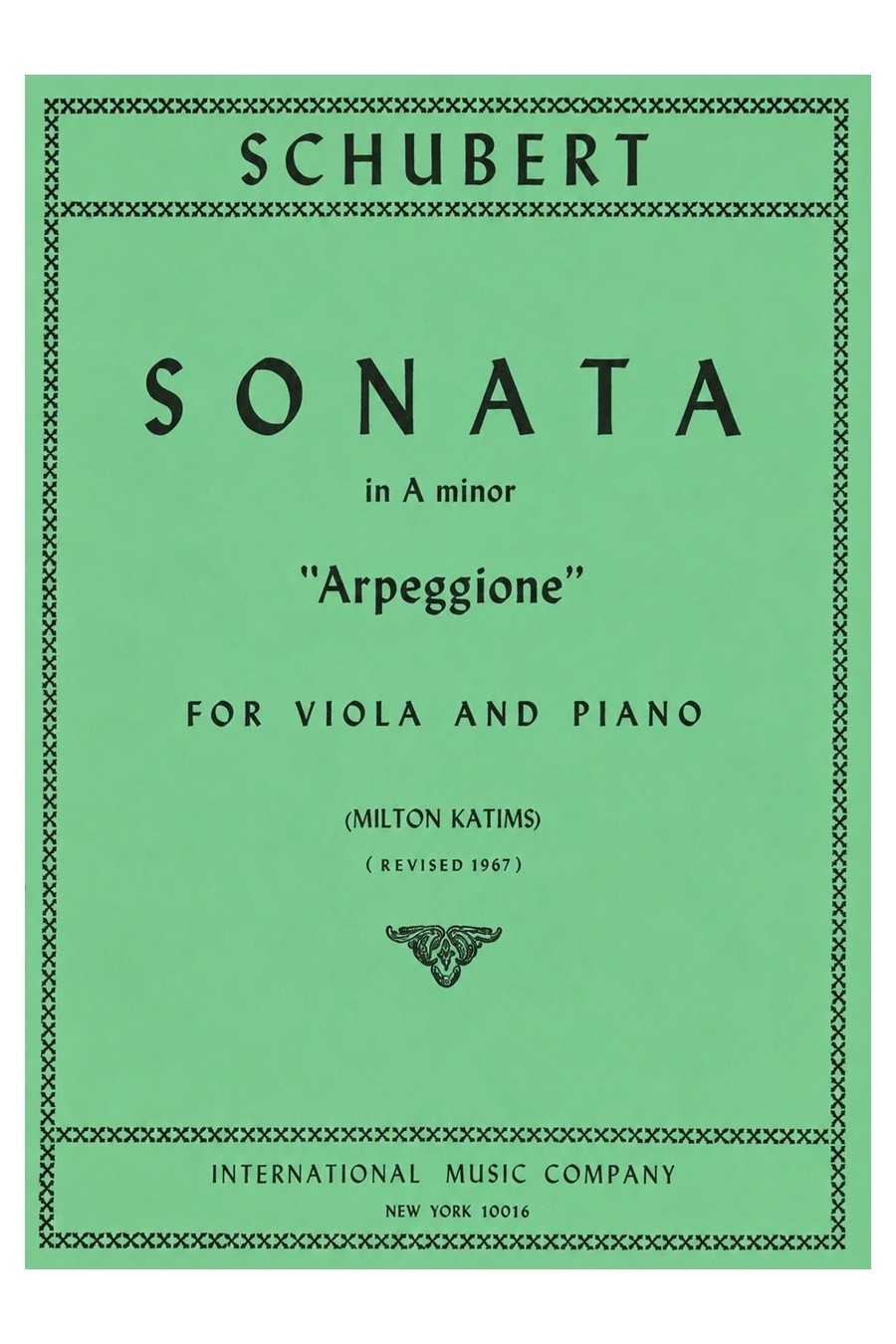
Schubert, Arpeggione Sonata in A Minor D821 arranged for Viola and Piano (IMC)
Some works become so closely associated with a new instrument that they seem almost written for it. Franz Schubert’s Arpeggione Sonata in A Minor, D. 821, arranged for viola and piano and published by International Music Company (IMC), has earned precisely that place in the modern viola repertoire. Schubert composed the sonata in 1824 for the arpeggione, a short-lived six-stringed bowed instrument, but the work’s extraordinary melodic richness ensured its survival long after the original instrument disappeared from regular use. On the viola, its lyrical writing takes on a particularly warm and intimate character.
Across three substantial movements, the performer encounters everything from expansive melodic lines to fluid passagework and moments of remarkable delicacy. The technical demands—shifting across a wide register, secure intonation, controlled bow distribution, tonal consistency, and agility—must remain completely integrated with Schubert’s long musical phrases. Equally important is the relationship with the piano, whose part forms an essential element of the musical conversation rather than simply accompanying the soloist. This IMC edition is an important choice for advanced violists preparing for conservatory study, auditions, competitions, examinations, and serious recital performance.
Movements:
I. Allegro moderato
II. Adagio
III. Allegretto
Key Features:
- Music by Franz Schubert
- Published by International Music Company (IMC)
- Arpeggione Sonata in A Minor, D. 821
- Arranged for viola and piano
- Originally composed in 1824 for arpeggione and piano
- Three contrasting and substantial movements
- A cornerstone of advanced viola chamber repertoire
- Suitable for advanced students and accomplished performers
- Ideal for conservatory study, auditions, competitions, examinations, and recitals
Musical Benefits:
- Develops secure shifting and intonation across an extended range
- Refines sustained tone, bow distribution, and dynamic control
- Encourages sophisticated phrasing and expressive interpretation
- Strengthens the musical partnership and balance between viola and piano