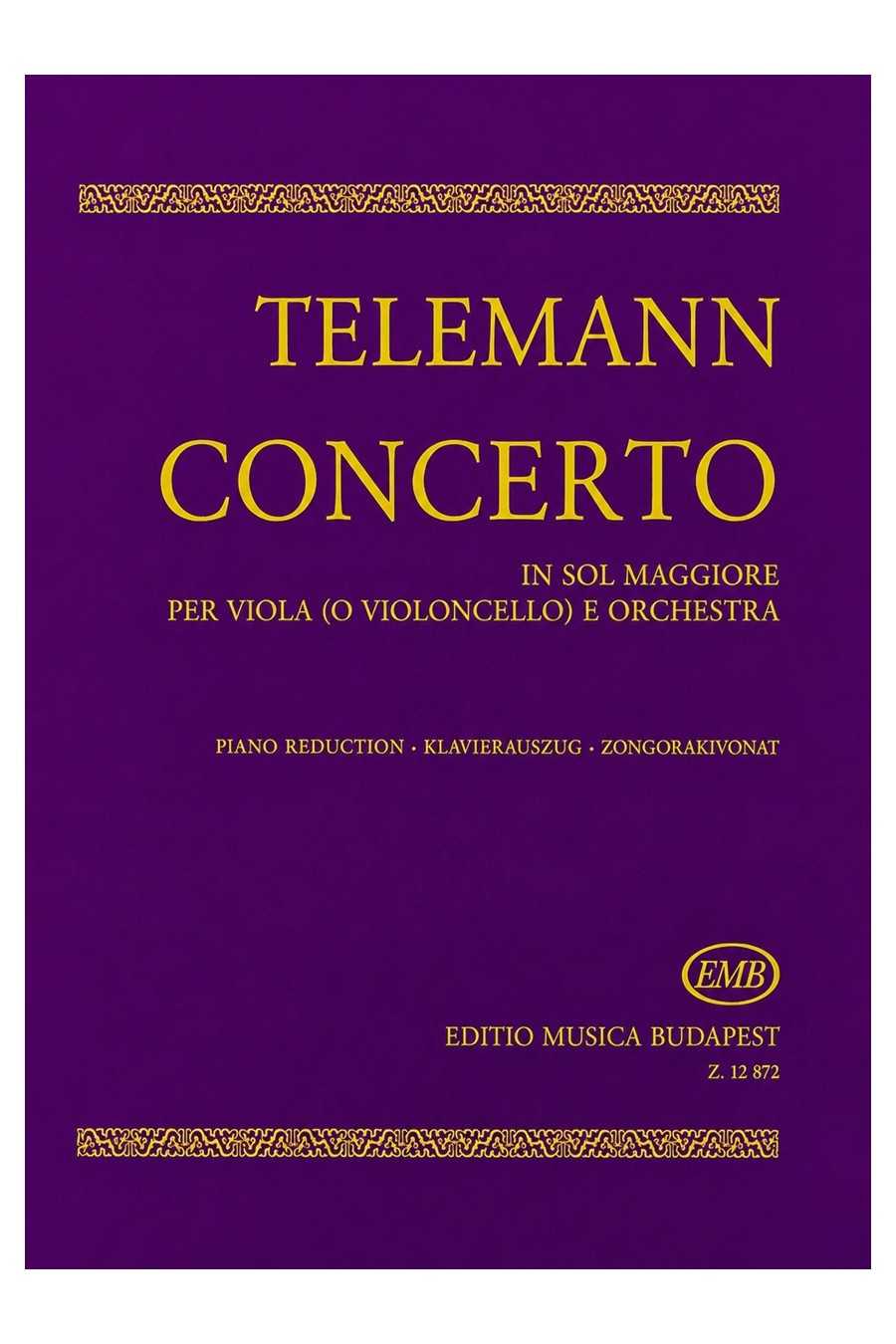
Telemann, Concerto In G Major For Viola And Orchestra. Edition For Viola Or Cello, With Piano Accompaniment. EMB.
One of Telemann’s most enduring concertos takes on added versatility in this Editio Musica Budapest edition of the Concerto in G Major. Originally written for viola and orchestra, this publication presents the work for viola or cello with piano accompaniment, opening this important Baroque concerto to performers of either instrument. The cello transcription by Árpád Pejtsik carefully transfers the solo writing to the cello, while the piano reduction by Olivér Nagy provides a practical alternative to the original orchestral accompaniment for lessons, rehearsals, and performance.
The concerto’s four-movement slow–fast–slow–fast structure provides a compact but substantial study in Baroque musicianship. The lyrical outer character of the slower movements contrasts with the rhythmic energy and articulation required in the Allegro and Presto, demanding stylistic awareness rather than virtuosity for its own sake. For both violists and cellists, the work develops bow clarity, intonation, ornamentation, rhythmic discipline, phrase direction, and ensemble communication. This versatile EMB edition is particularly valuable for students, teachers, and performers seeking a respected Baroque concerto suitable for examinations, recitals, conservatory study, and concerto preparation.
Edition Details:
- Composer: Georg Philipp Telemann
- Published by Editio Musica Budapest
- Catalogue No. Z. 12 827
- Originally for viola and orchestra
- Edition for viola or cello with piano accompaniment
- Cello transcription by Árpád Pejtsik
- Piano reduction by Olivér Nagy
Key Features:
- Important Baroque concerto repertoire
- Can be performed by either viola or cello
- Includes practical piano accompaniment
- Four contrasting movements
- Excellent for lessons, examinations, recitals, and conservatory study
- Useful for both performance and concerto preparation
Musical Benefits:
- Develops stylistically informed Baroque playing
- Refines articulation, bow control, and expressive phrasing
- Strengthens rhythmic precision, intonation, and ornamentation
- Builds ensemble awareness and confidence in concerto performance