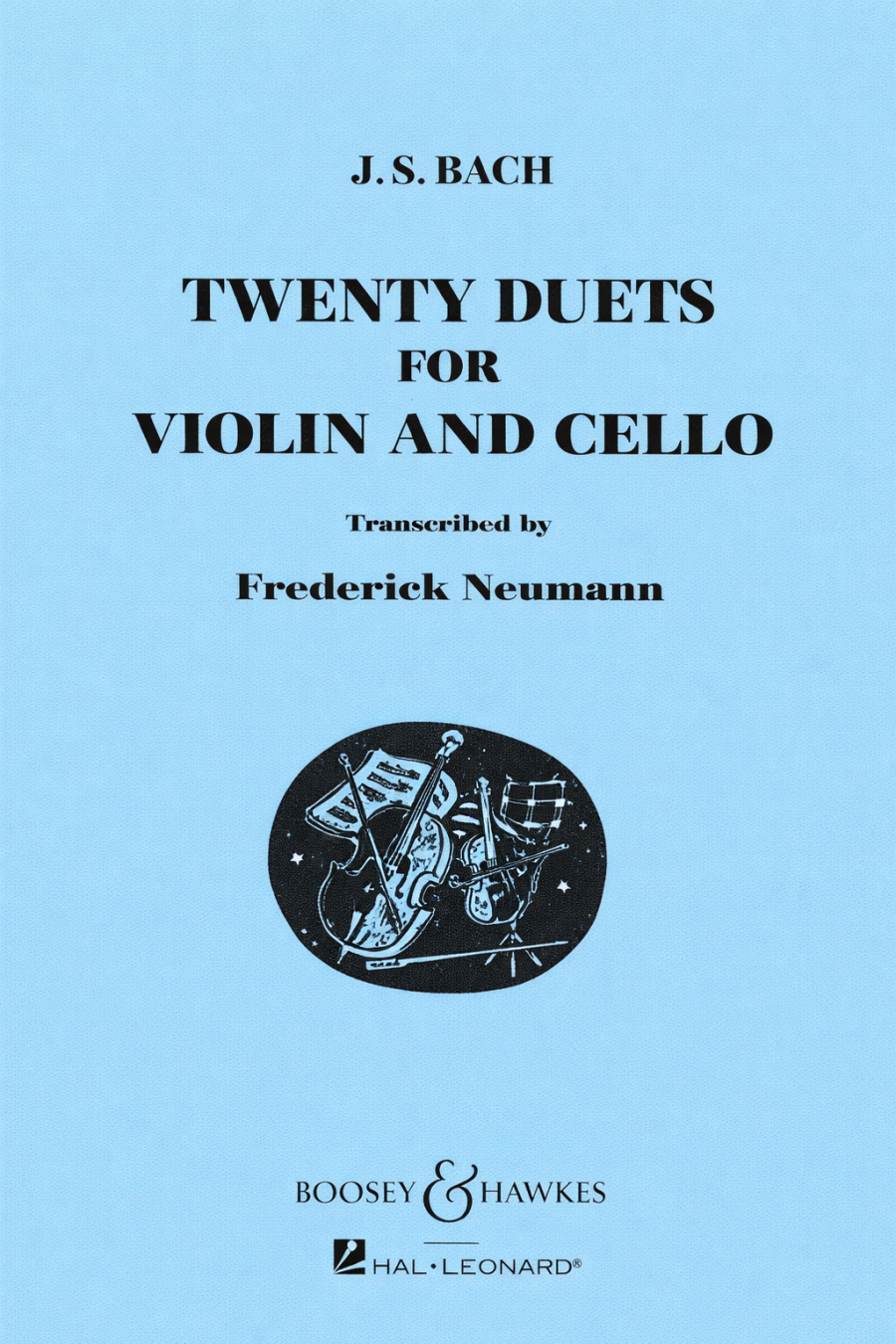
Bach Twenty Duets for Violin and Cello by Johann Sebastian Bach, published by Boosey & Hawkes, is a charming and instructive collection that develops ensemble skills through elegant musical conversation.
Key features
• A true chamber-music dialogue for violin and cello
• Builds listening skills and stylistic clarity
• Accessible yet musically rich Bach repertoire
• Ideal for study, teaching, and performance
Bach Twenty Duets for Violin and Cello by Johann Sebastian Bach, published by Boosey & Hawkes, offers a delightful and instructive exploration of Bach’s contrapuntal thinking through intimate duo writing; distilled from Bach’s keyboard and chamber works, these duets transform violin and cello into equal conversational partners, encouraging rhythmic independence, balance, and stylistic clarity while presenting Bach’s musical language in a form that is immediately playable, engaging, and deeply musical.
Key features:
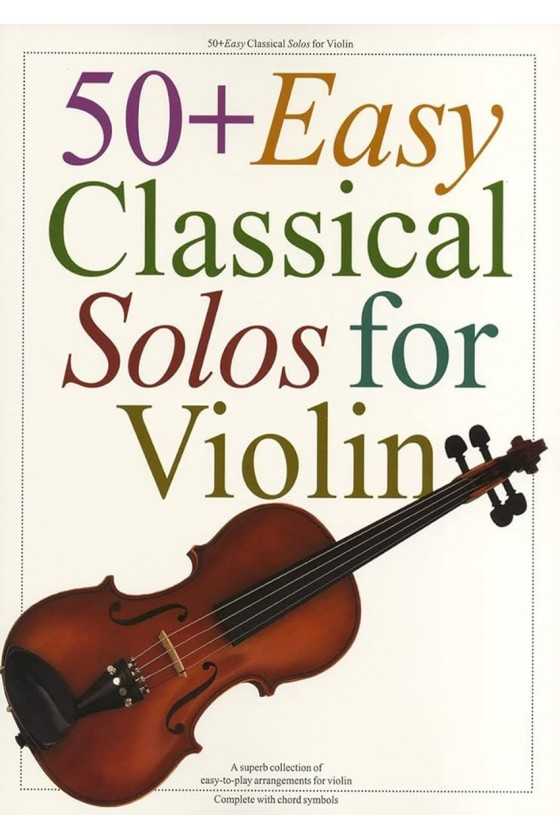
50+ Easy Classical Solos for Violin is an inviting introduction to classical violin repertoire, offering expressive and accessible solos that help developing players perform with confidence and enjoyment.
Key features
• Easy, musically rewarding classical solos
• Builds confidence and expressive playing
• Ideal for students and early performers
• Encouraging, varied, and performance-ready
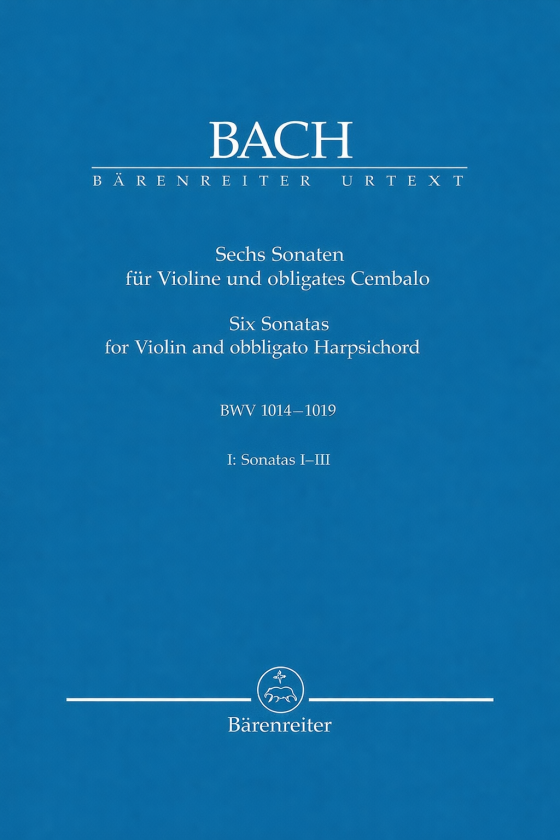
Bach Six Sonatas for Violin and Obbligato Harpsichord – Sonatas Nos. 1–3 by Johann Sebastian Bach, published by Bärenreiter, offers a profound chamber music experience built on equality, dialogue, and contrapuntal mastery.
Key features
• A true chamber partnership, not solo with accompaniment
• Rich contrapuntal texture and shared musical responsibility
• Develops ensemble listening and stylistic refinement
• Essential Bach repertoire for violin and keyboard players
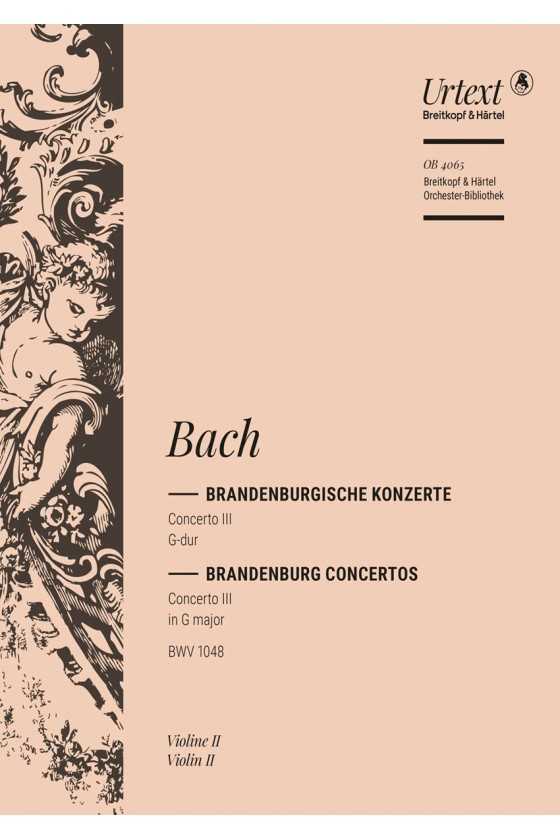
Bach: Brandenburg Concerto No. 3 in G major BWV 1048 – Violin II Part by Johann Sebastian Bach, published by Breitkopf & Härtel, offers an engaging and demanding inner-voice role within one of Bach’s most energetic and innovative concertos.
Key features
• A fully engaged inner voice, not secondary accompaniment
• Central to rhythmic drive and contrapuntal texture
• Builds ensemble precision and listening skills
• Essential experience in Bach’s most forward-thinking orchestral writing
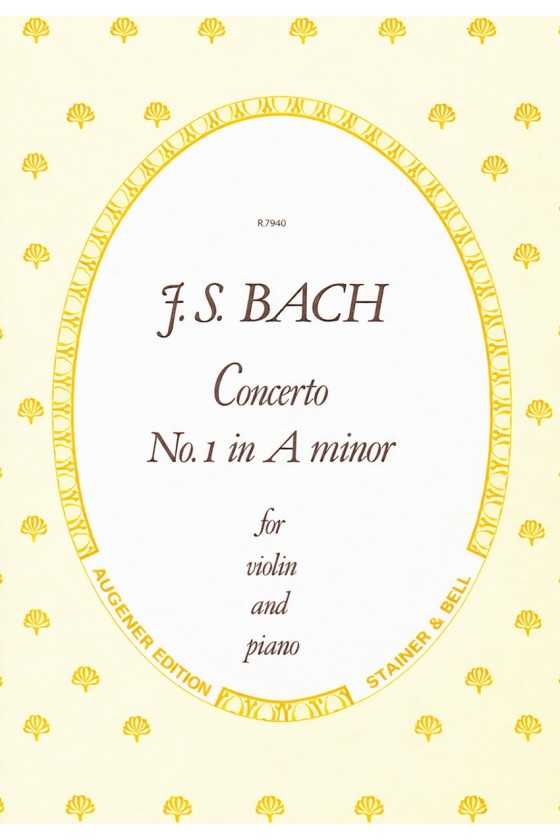
Bach Concerto No. 1 in A minor BWV 1041 for Violin and Piano by Johann Sebastian Bach is a powerful and inward Baroque concerto that rewards clarity, balance, and expressive depth.
Key features
• Dramatically concentrated and expressive
• Develops Baroque articulation and rhythmic precision
• Combines lyrical depth with energetic finale writing
• Essential repertoire for serious violinists
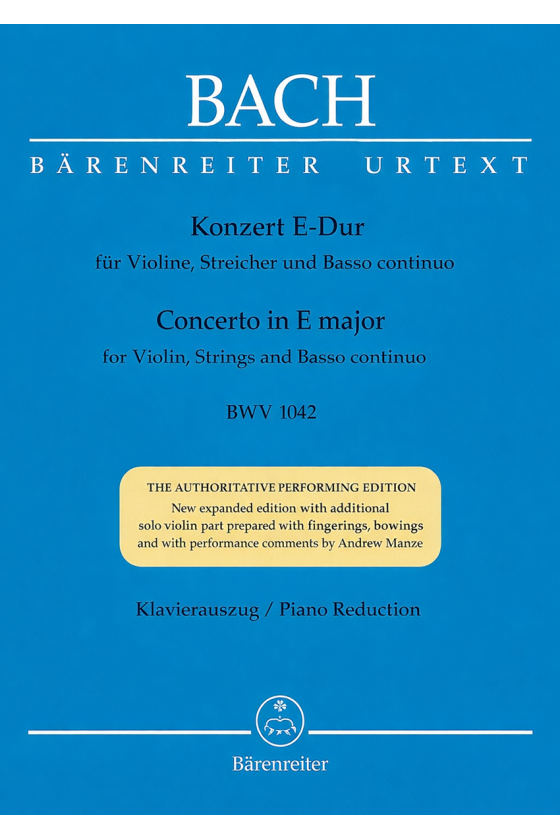
Bach Violin Concerto in E major BWV 1042 by Johann Sebastian Bach, edited by Andrew Manze and published by Bärenreiter, is a vibrant and elegant Baroque concerto that combines brilliance, rhythmic energy, and refined lyricism.
Key features
• Radiant, joy-filled concerto with strong rhythmic drive
• Encourages stylistic clarity and dance-like articulation
• Balances brilliance with elegance and poise
• A cornerstone of expressive Bach concerto repertoire
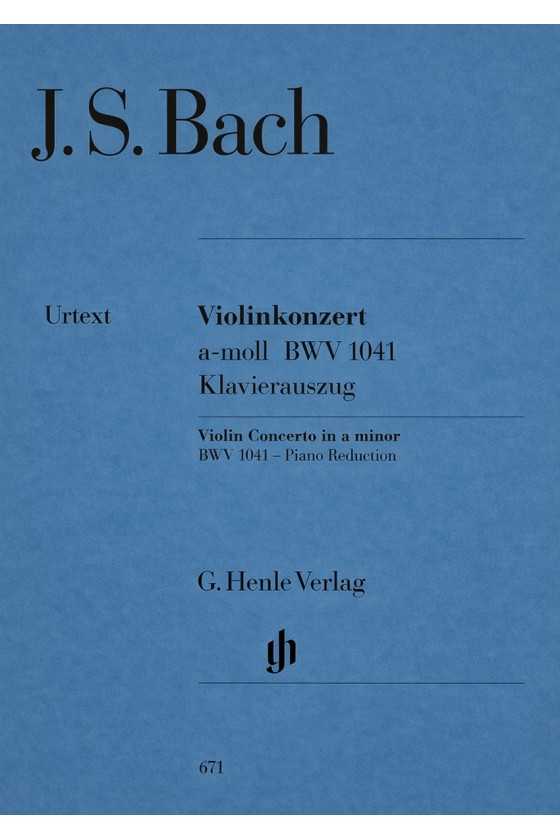
Bach Violin Concerto in A minor BWV 1041 by Johann Sebastian Bach, published by G. Henle Verlag, is a refined and expressive Baroque concerto that rewards clarity, balance, and musical depth.
Key features
• Inward, dramatically concentrated concerto
• Urtext clarity supporting personal interpretation
• Develops Baroque articulation and rhythmic precision
• A cornerstone of serious Bach concerto repertoire
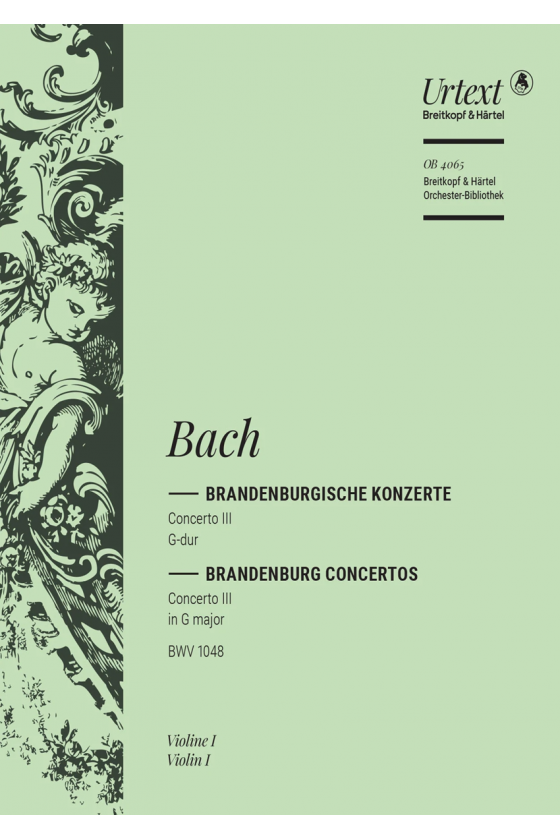
Bach: Brandenburg Concerto No. 3 in G major BWV 1048 – Violin I Part by Johann Sebastian Bach, published by Breitkopf & Härtel, offers a demanding and exhilarating leadership role within one of Bach’s most energetic and groundbreaking orchestral works.
Key features
• A lead violin role within a fully democratic string texture
• Central to rhythmic drive and ensemble cohesion
• Requires clarity, stamina, and stylistic authority
• Essential repertoire for advanced Baroque orchestral playing