

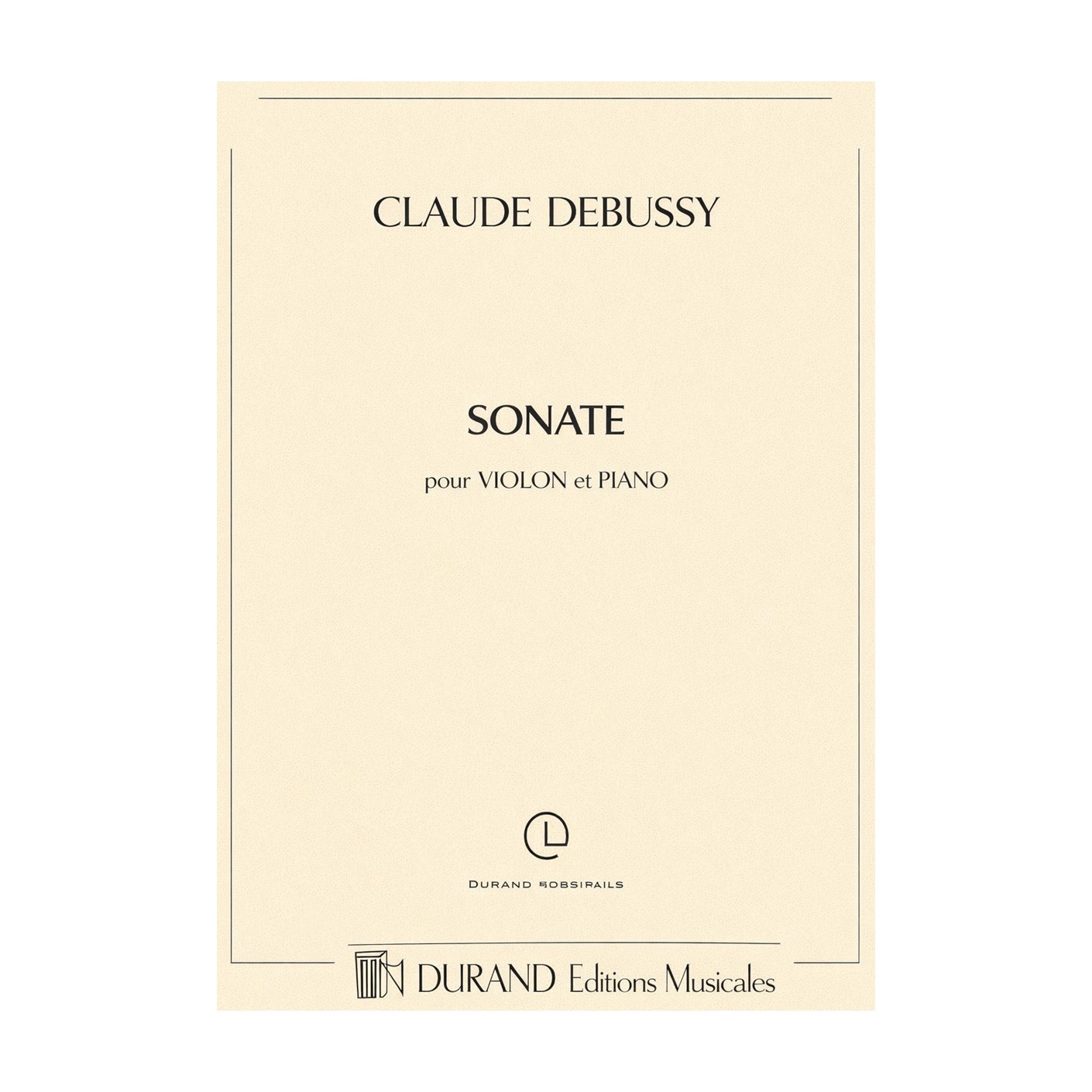

Debussy: Sonata for Violin in G minor by Claude Debussy, published by Durand Éditions Musicales, is a pivotal 20th-century sonata blending Impressionist color with poetic expression.
Key features
• Atmospheric, color-rich modern sonata
• Equal, expressive dialogue between violin and piano
• Emphasis on tone, phrasing, and interpretative depth
• Essential repertoire for thoughtful performers
As one of the most significant chamber works of the early 20th century, Debussy: Sonata for Violin in G minor by Claude Debussy, published by Durand Éditions Musicales, stands at the crossroads of tradition and innovation. Composed in 1917, this sonata exemplifies Debussy’s mature voice: modal color, rhythmic subtlety, and an evocative harmonic language that imagines the violin and piano as equal partners in a poetic, Impressionist conversation.
Written in the shadow of World War I and dedicated to French composer Paul Dukas, the work departs from Romantic virtuosity in favor of atmospheric nuance, timbral color, and free-flowing expression. Across its four movements — from the misty Prologue and the gently swaying Sérénade interrompue, through the angular Final — the sonata rewards performers with opportunities for rich tonal shading and interpretative depth, challenging them to bring out the work’s invisible contours and emotional subtleties.
Key features
