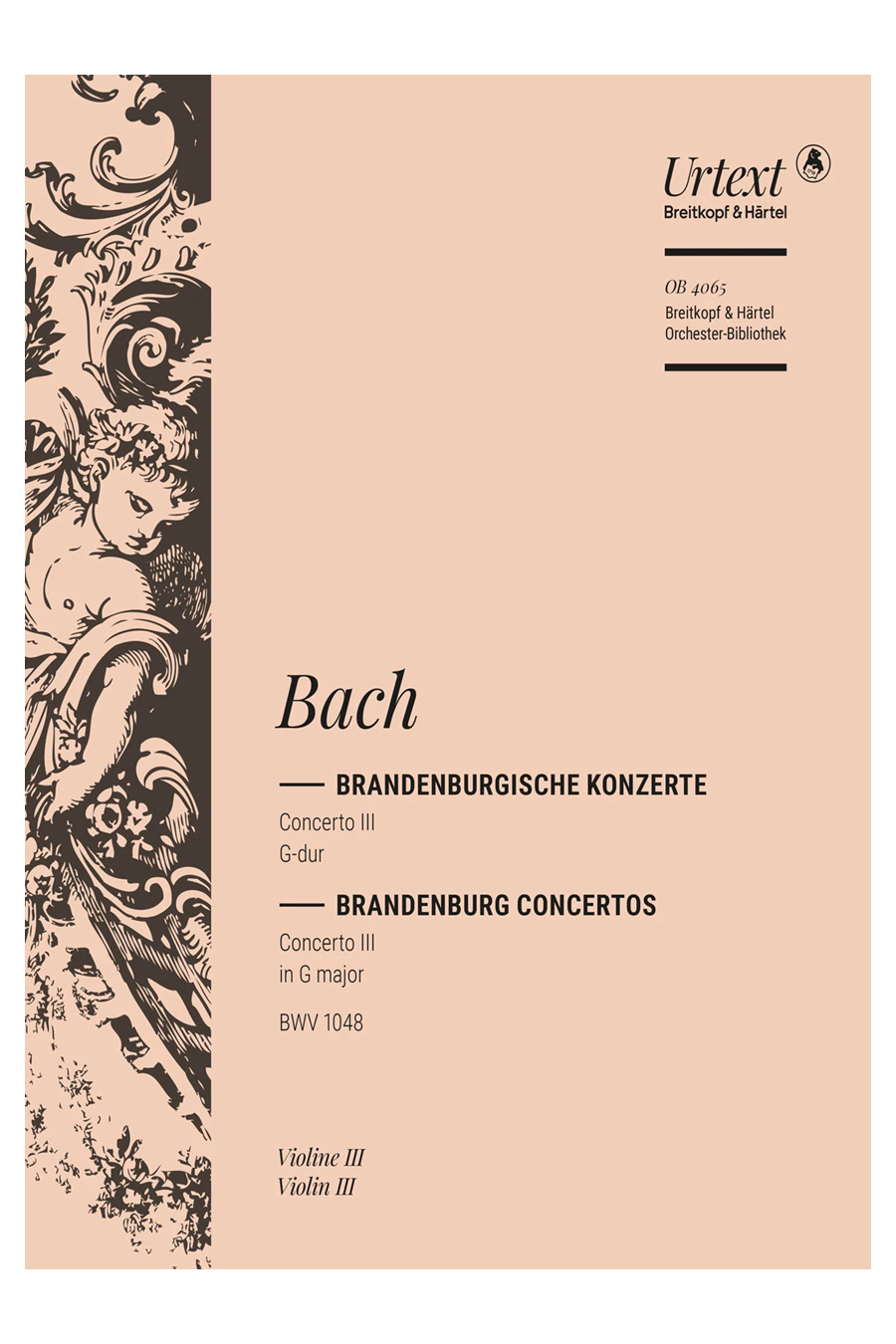
Bach: Brandenburg Concerto No. 3 in G major BWV 1048 – Violin III Part by Johann Sebastian Bach, published by Breitkopf & Härtel, offers an engaging orchestral role within one of Bach’s most innovative and energetic concertos.
Key features
• A fully engaged orchestral voice, not a secondary part
• Central to the concerto’s rhythmic drive and texture
• Develops ensemble precision and contrapuntal awareness
• Essential experience in Bach’s most democratic orchestral writing
Bach: Brandenburg Concerto No. 3 in G major BWV 1048 – Violin III Part by Johann Sebastian Bach, published by Breitkopf & Härtel, places the Violin III player at the heart of one of Bach’s most revolutionary orchestral conceptions; unlike traditional concerto writing, this work treats all nine string parts as equal voices in a dense contrapuntal fabric, making the Violin III line an essential contributor to rhythmic propulsion, harmonic tension, and collective brilliance rather than a secondary supporting role.
Key features:
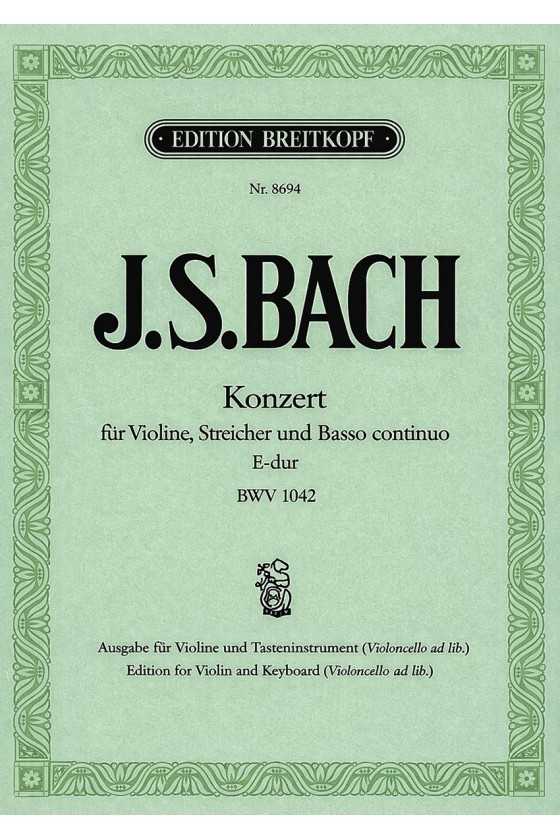
Bach Violin Concerto in E major BWV 1042 by Johann Sebastian Bach, published by G. Henle Verlag, is a radiant Baroque concerto that combines brilliance, rhythmic vitality, and refined lyricism in a pristine Urtext edition.
Key features
• Bright, joy-filled concerto with strong rhythmic drive
• Urtext clarity allowing personal interpretative freedom
• Balances brilliance with elegance and poise
• A cornerstone of the Bach violin concerto repertoire
Bach Violin Concerto in A minor BWV 1041 by Johann Sebastian Bach, published by G. Henle Verlag, is a refined and expressive Baroque concerto that rewards clarity, balance, and musical depth.
Key features
• Inward, dramatically concentrated concerto
• Urtext clarity supporting personal interpretation
• Develops Baroque articulation and rhythmic precision
• A cornerstone of serious Bach concerto repertoire
Bach: Air and Dances by Johann Sebastian Bach, arranged by Urbainczyk, is a charming selection of Bach’s lyrical and dance movements presented in a clear, expressive arrangement.
Key features
• Elegant dance rhythms and lyrical airs
• Encourages stylistic clarity and expressive phrasing
• Ideal for recitals and teaching repertoire
• A joyful introduction to Bach’s Baroque character
Bach Sonata No. 2 in A minor for Solo Violin BWV 1003 by Johann Sebastian Bach is one of the most profound and demanding works in the solo violin repertoire, revered for its emotional depth and monumental fugue.
Key features
• Home to one of the greatest fugues for solo violin
• Dark, introspective, and architecturally powerful
• Demands musical maturity and technical control
• A cornerstone of serious solo violin study
Bach Violin Concerto in E major BWV 1042 by Johann Sebastian Bach is a radiant Baroque concerto that combines brilliance, rhythmic vitality, and refined ensemble dialogue.
Key features
• Bright, joy-filled concerto with strong rhythmic energy
• Highlights elegant interaction between soloist and strings
• Balances brilliance with poise and stylistic clarity
• Essential repertoire for Baroque ensemble performance
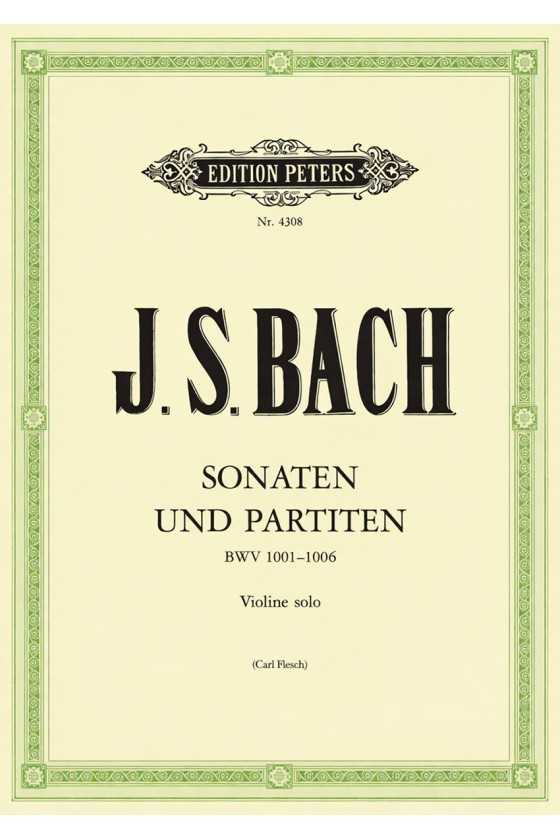
Bach Sonatas and Partitas for Solo Violin BWV 1001–1006 by Johann Sebastian Bach, edited by Carl Flesch and published by Edition Peters, is a landmark edition of Bach’s solo violin masterpieces shaped by one of the great analytical minds in violin history.
Key features
• The cornerstone of solo violin literature
• Guided by Carl Flesch’s authoritative, structure-driven insight
• Emphasizes clarity, balance, and polyphonic control
• Essential for serious, long-term artistic study
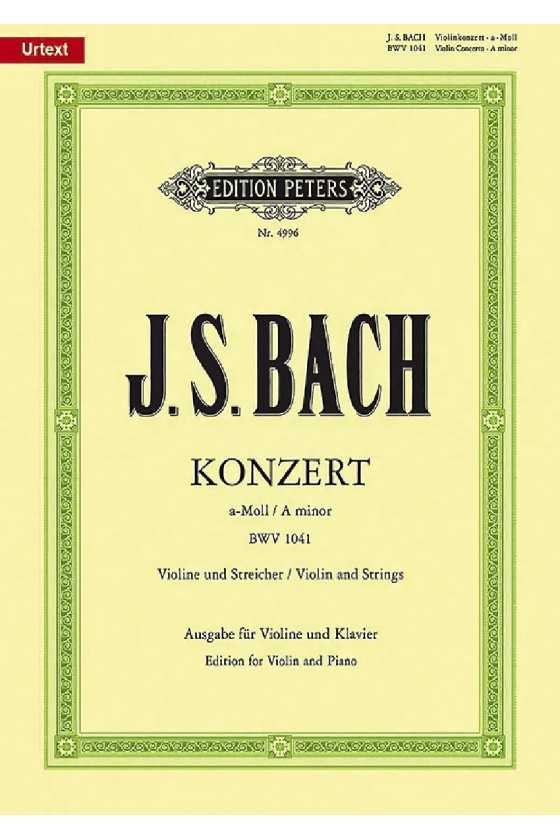
Bach Violin Concerto in A minor BWV 1041 for Violin and Piano by Johann Sebastian Bach, published by Edition Peters, is a concentrated and expressive Baroque concerto that rewards clarity, balance, and interpretative maturity.
Key features
• Dramatically focused and inward concerto
• Develops Baroque articulation and rhythmic precision
• Balances lyrical depth with energetic finale writing
• Essential repertoire for serious Bach interpretation
A collection of 10 pieces, ranging between Bach, Barber, Beethoven, Dvorak, Franck, Mozart, Previn, Tchaikovsky and John Williams.