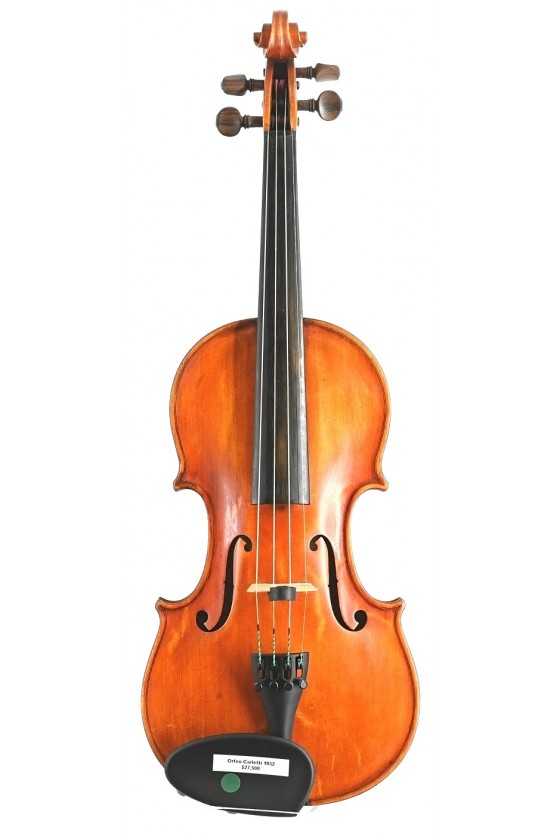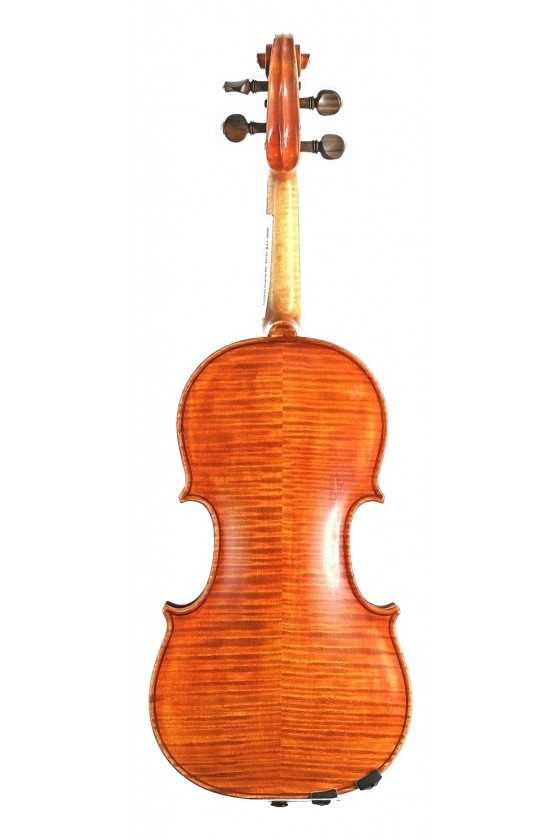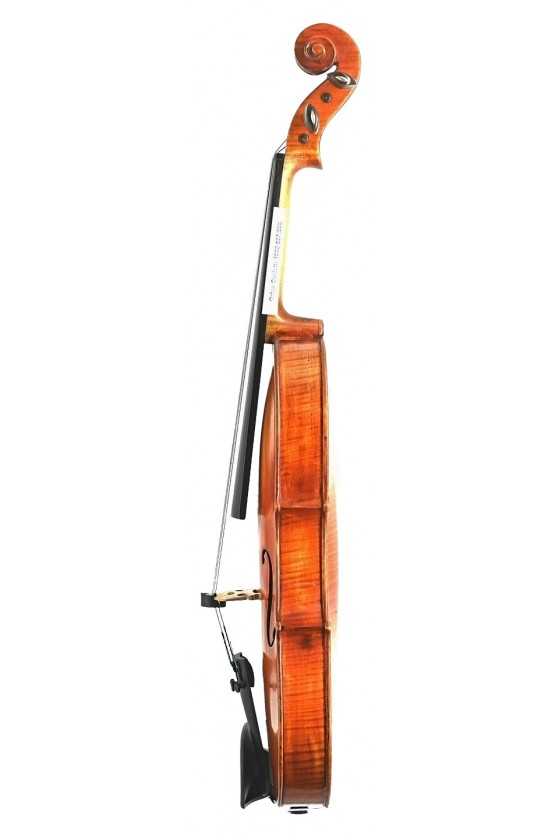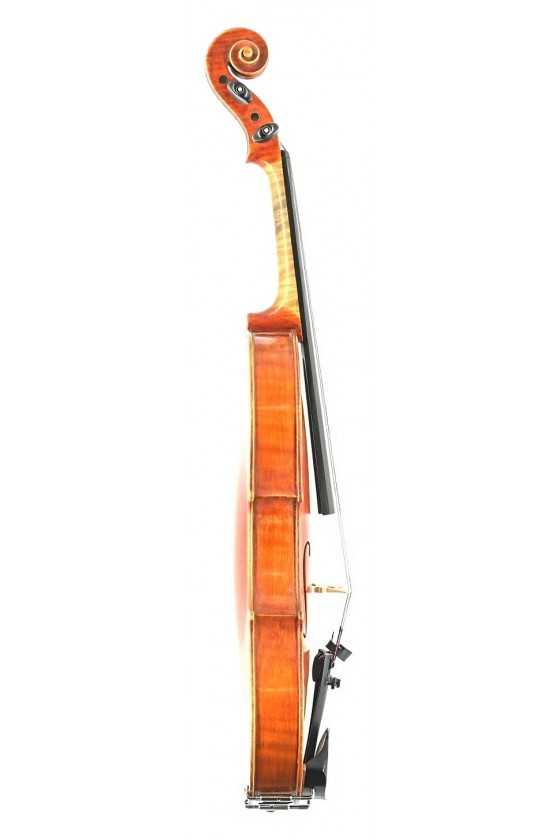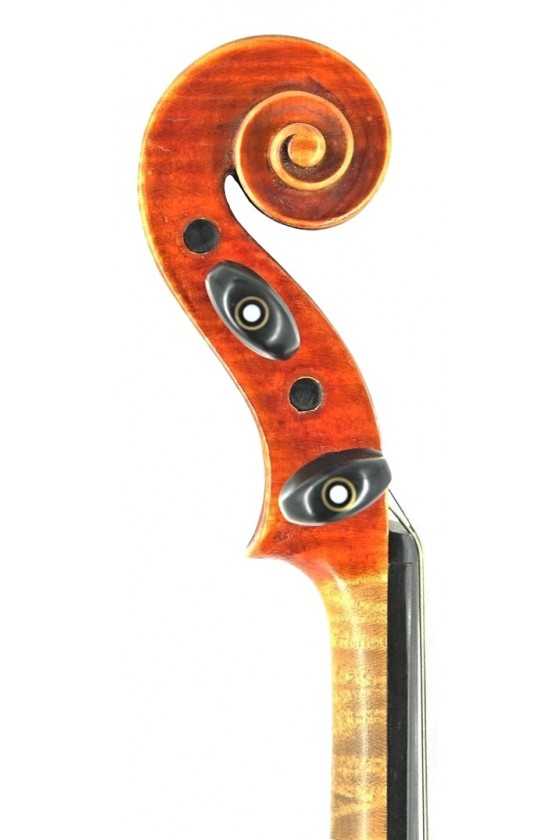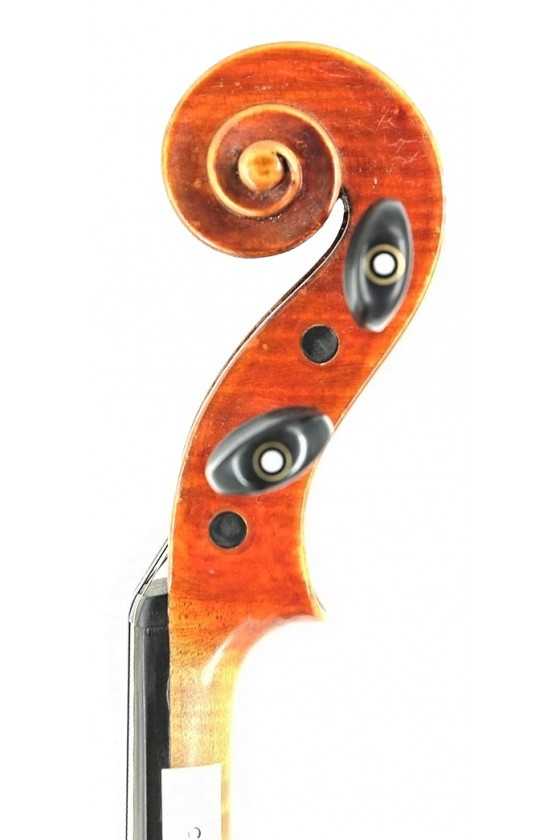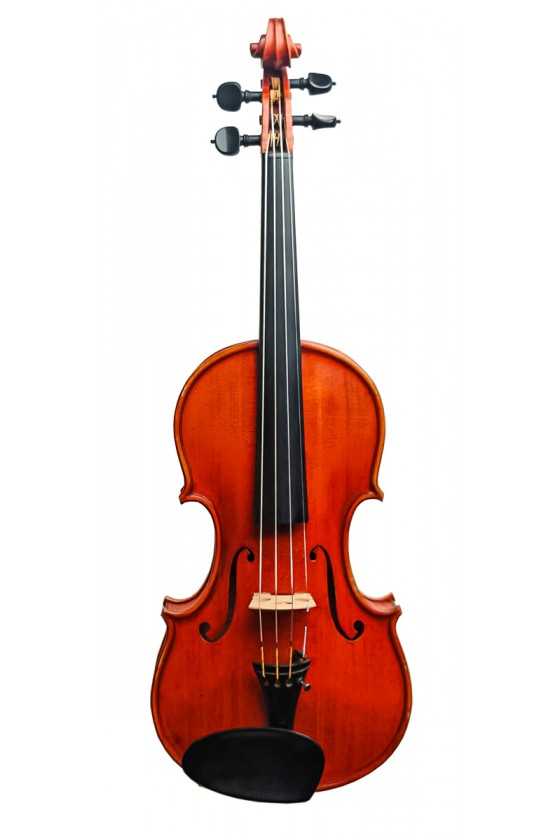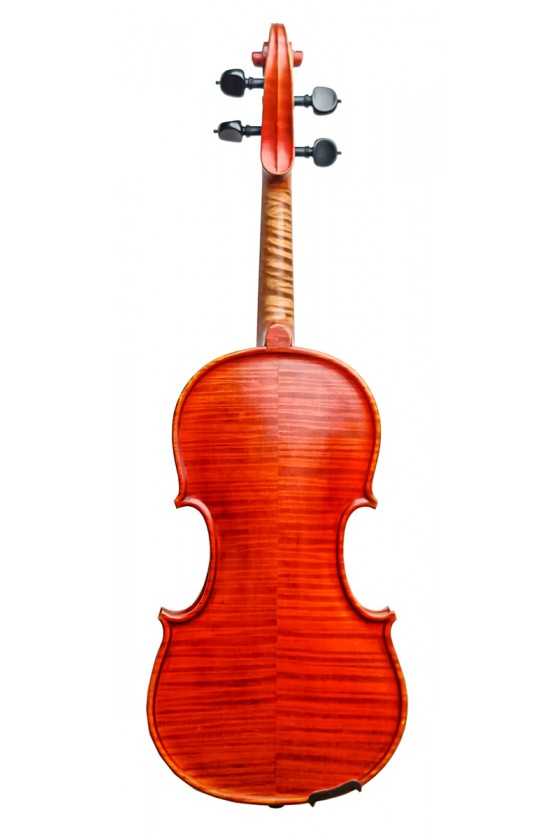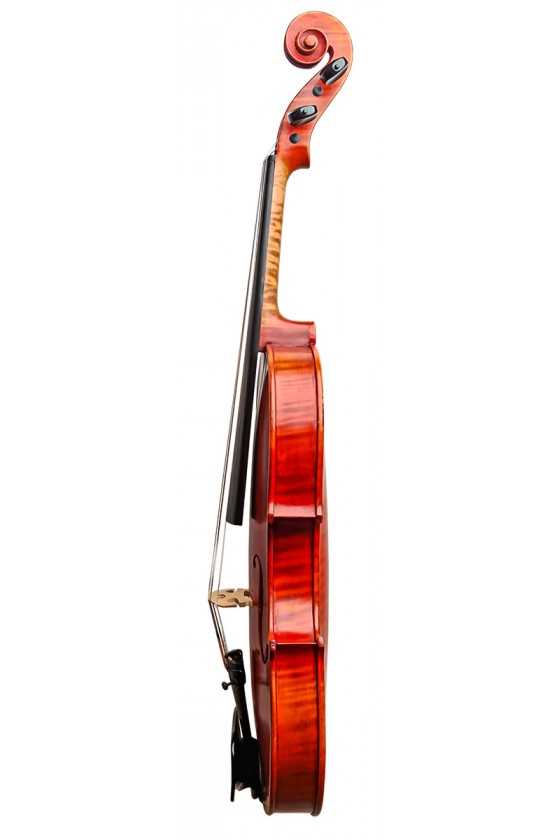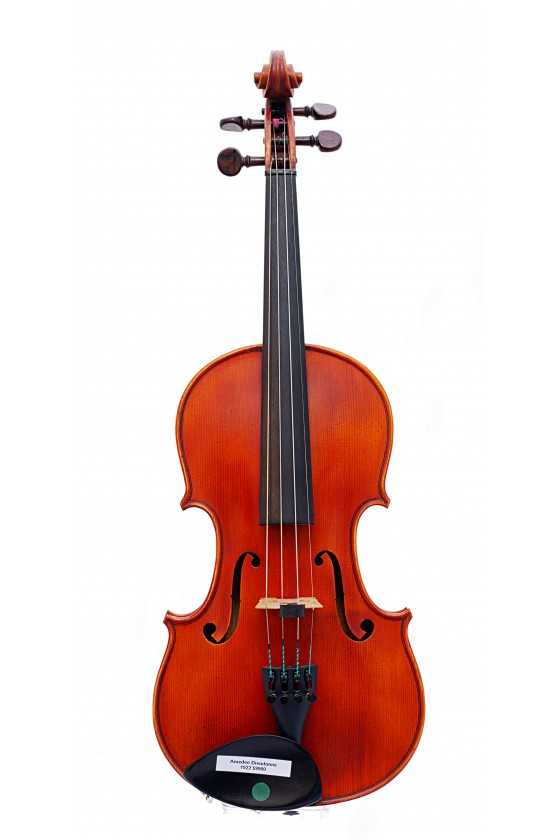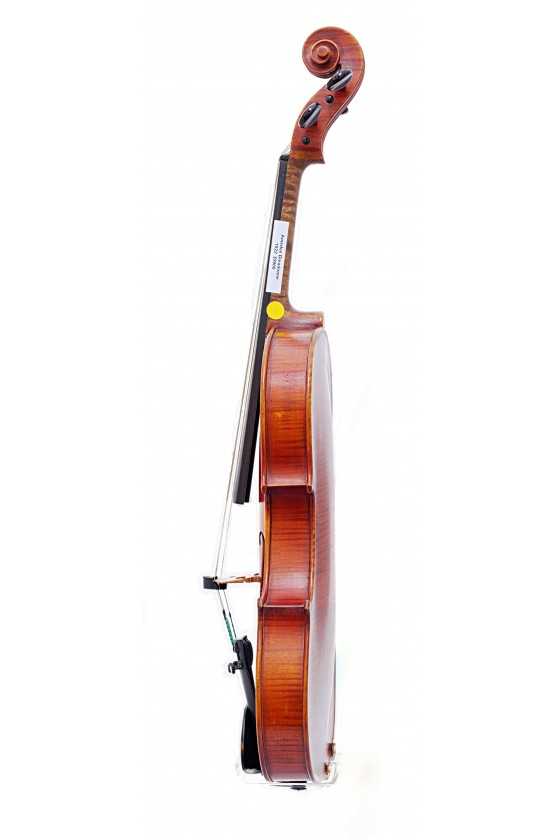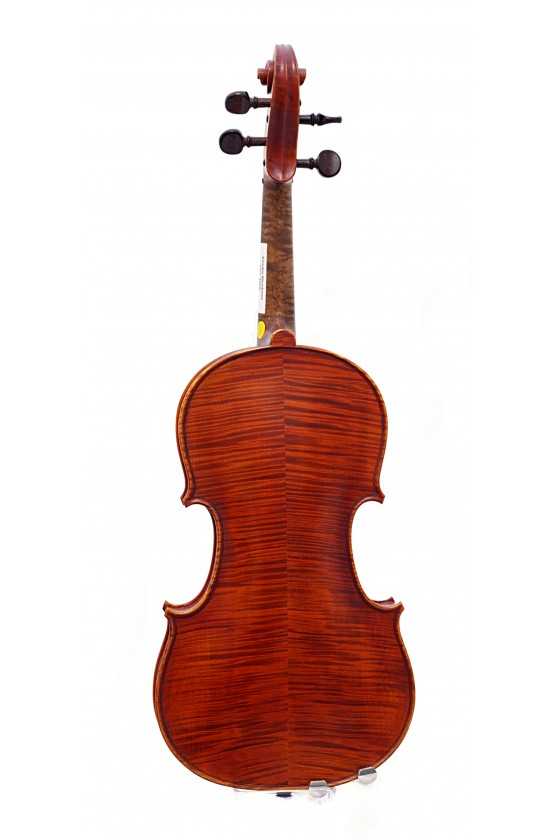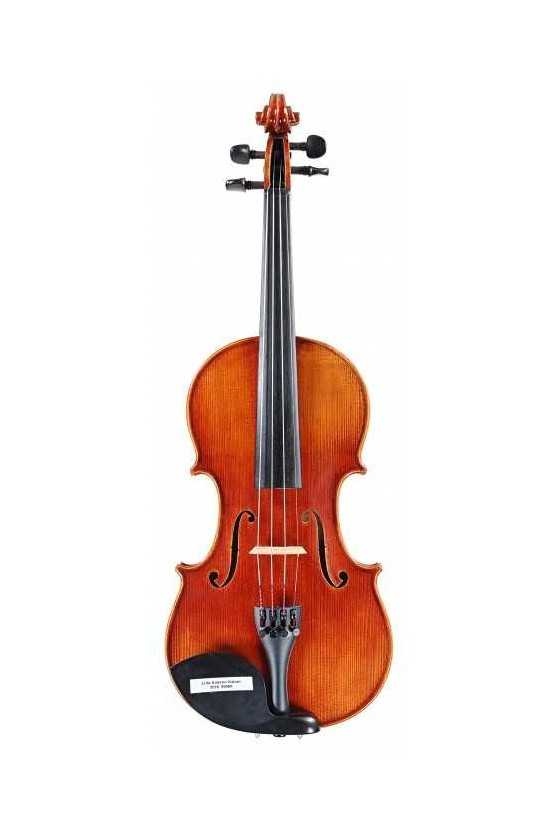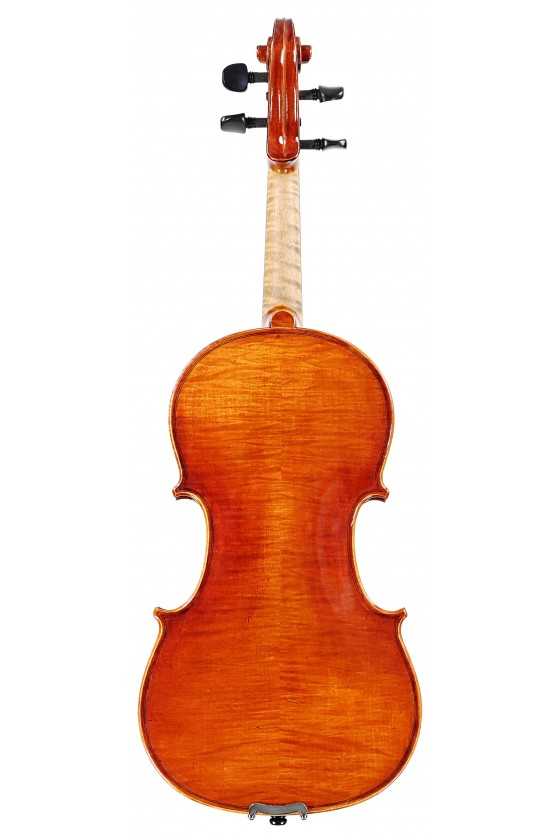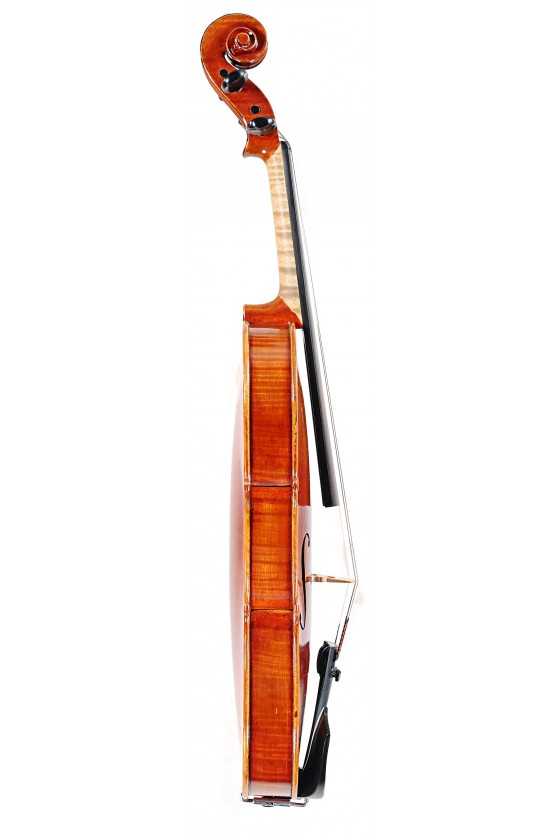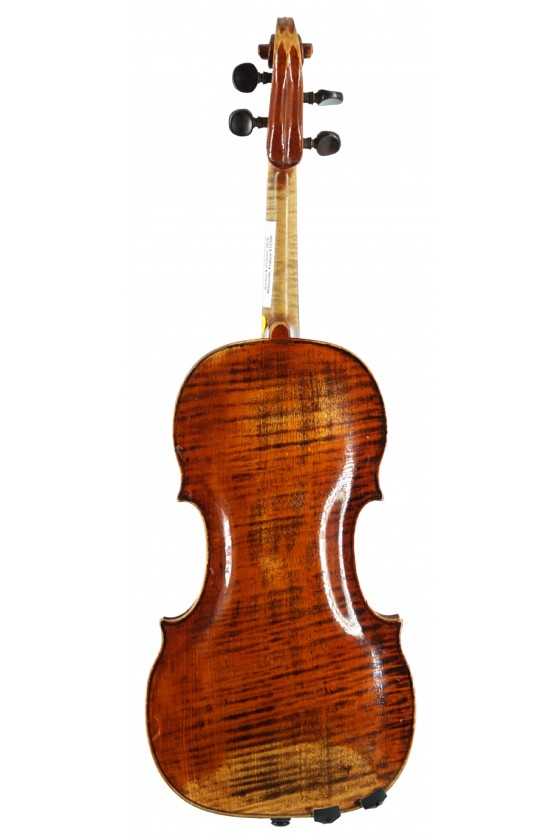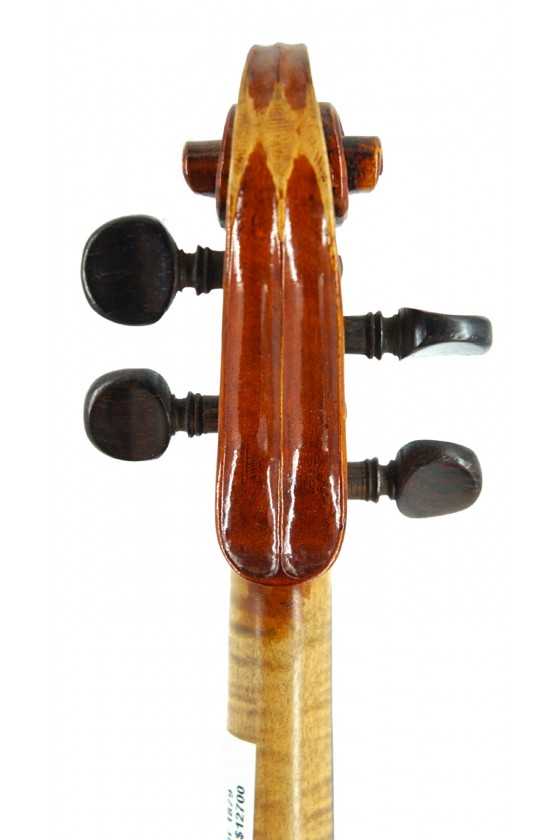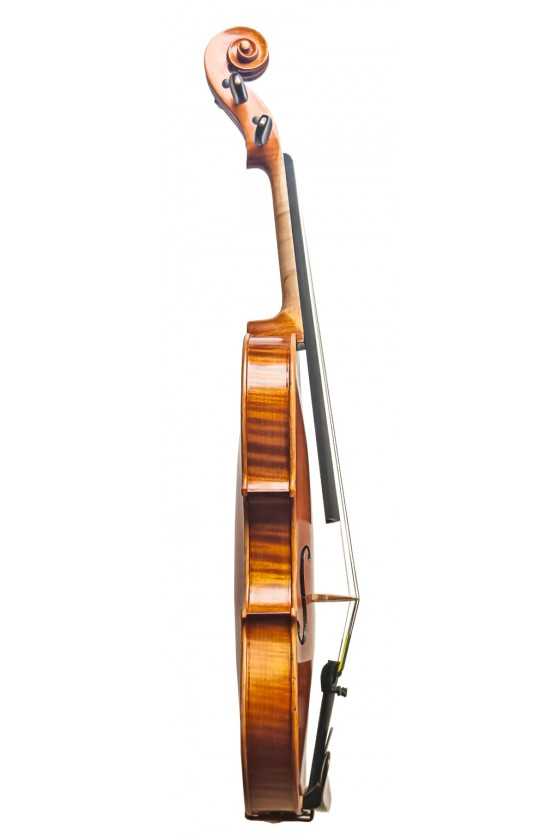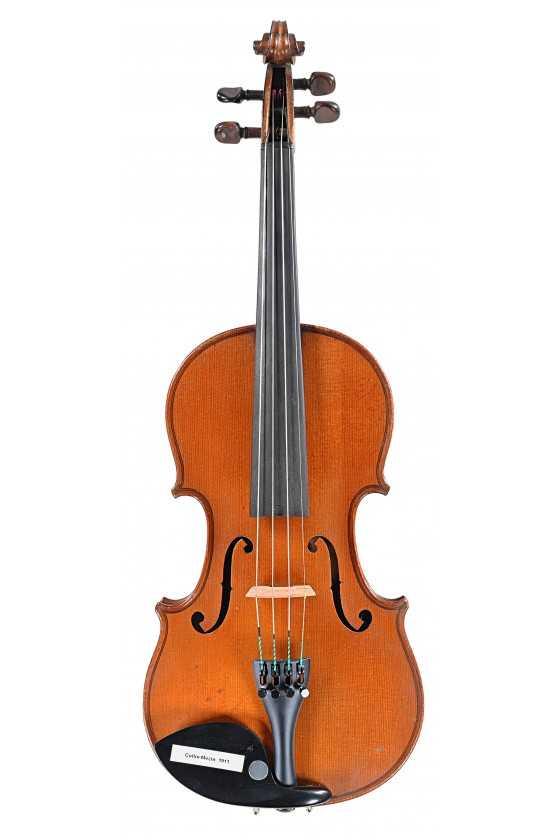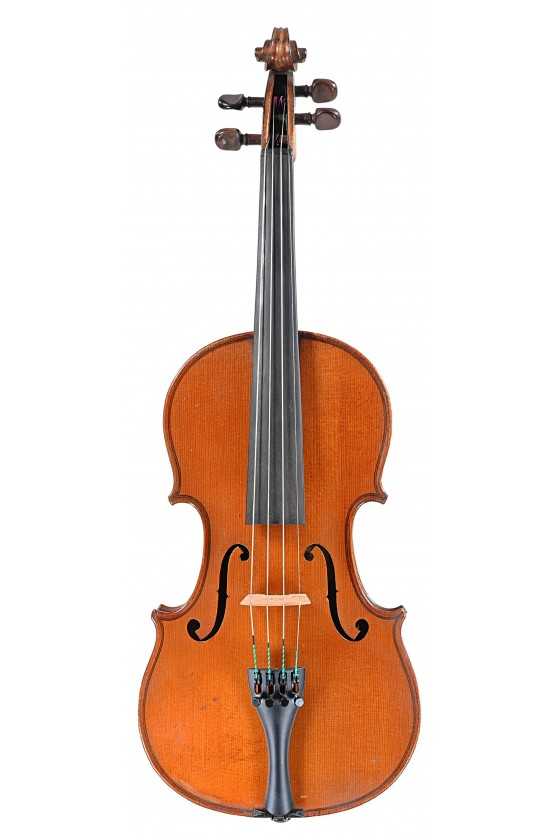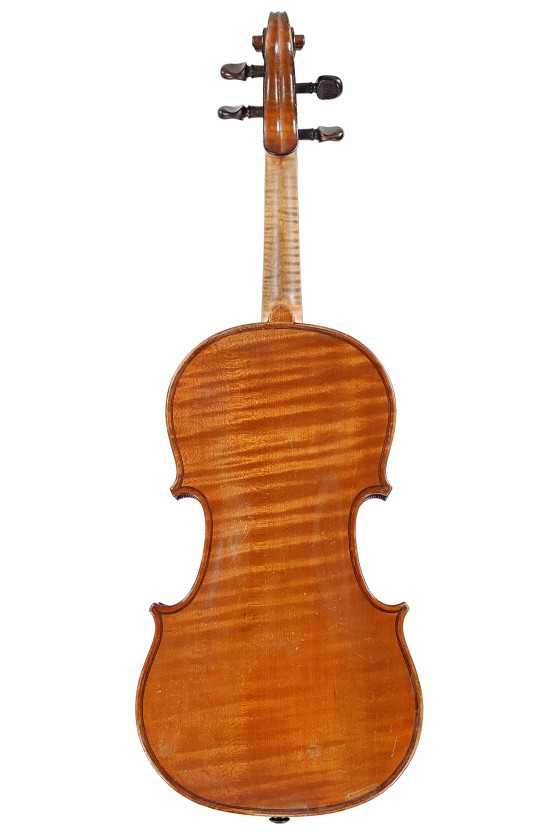
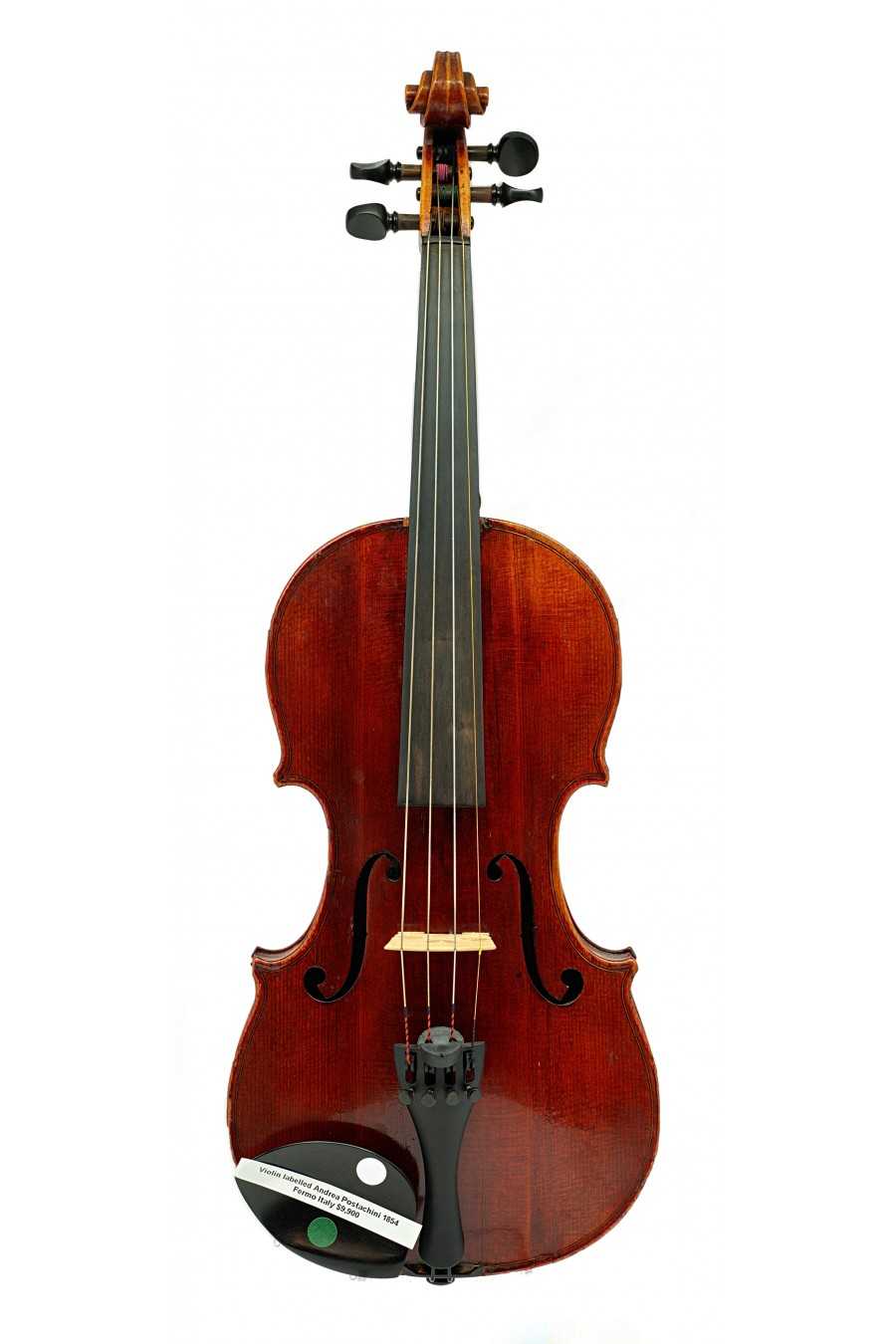
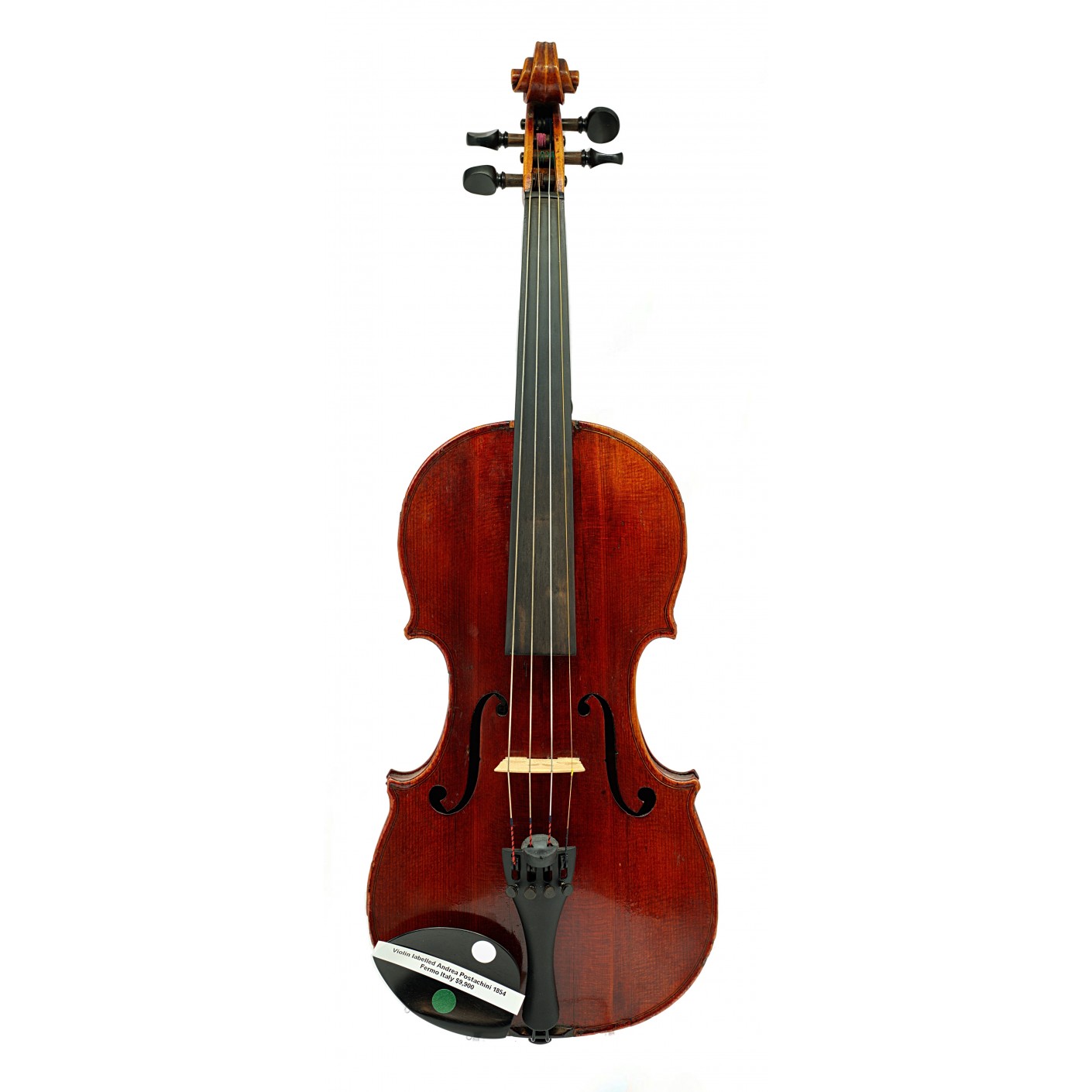
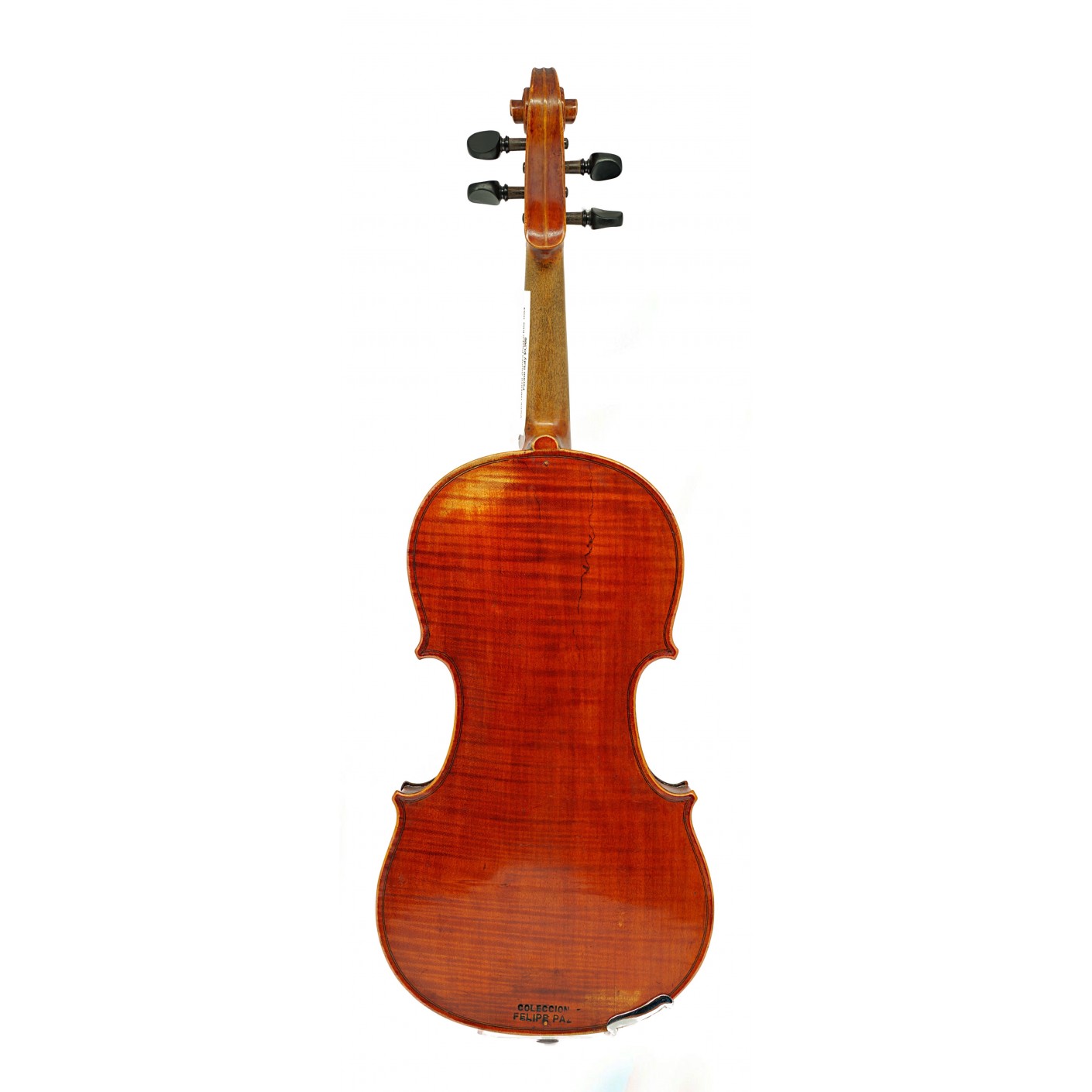
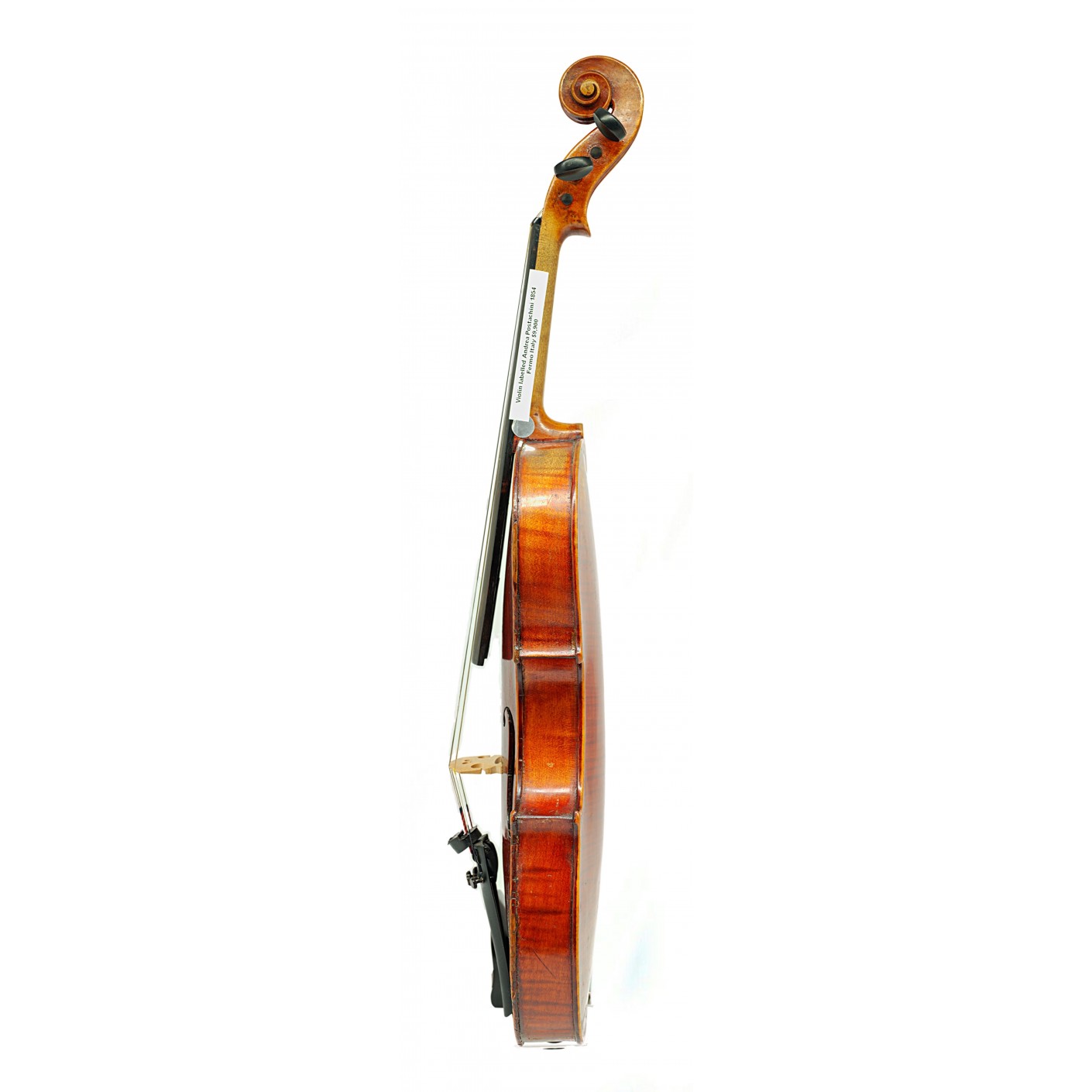
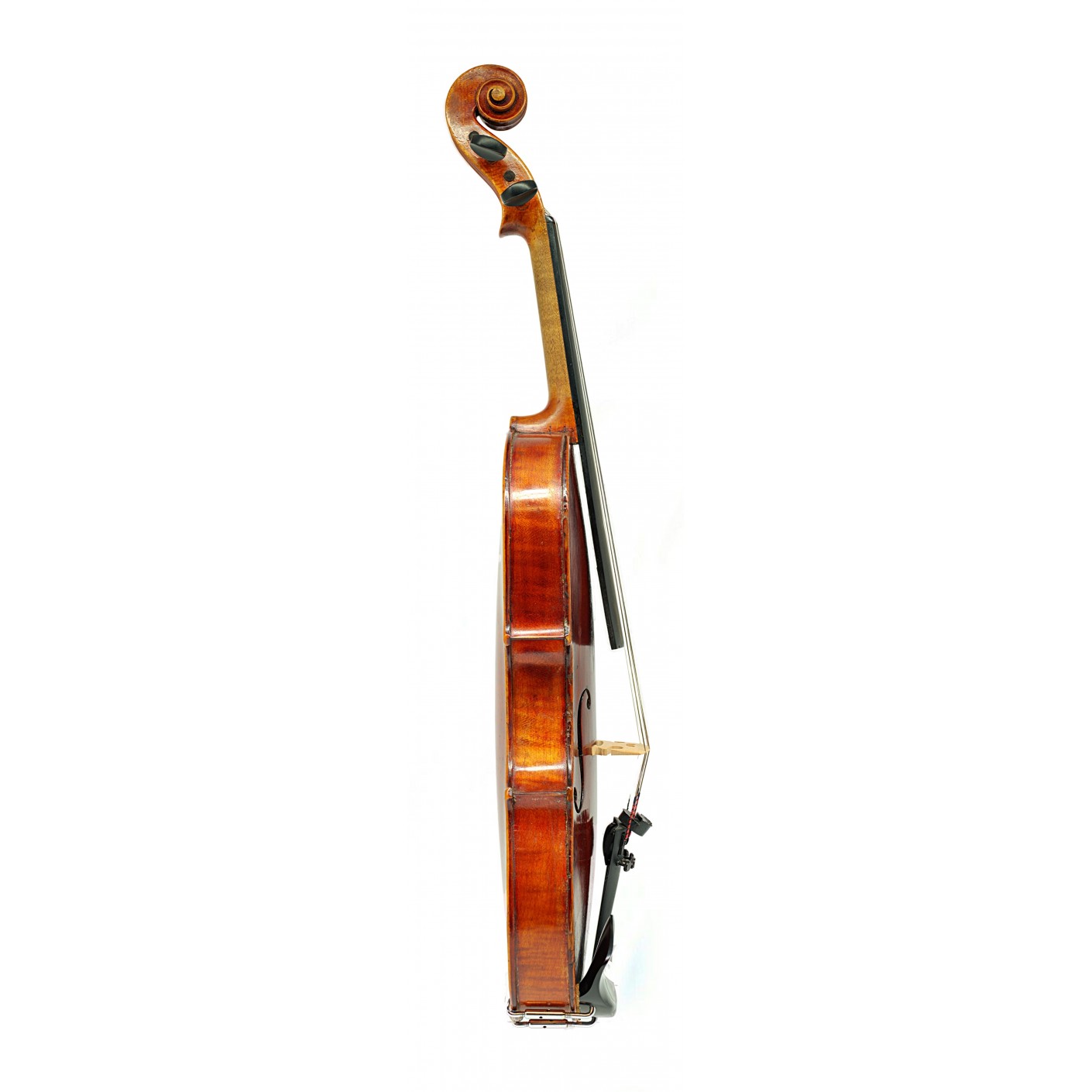
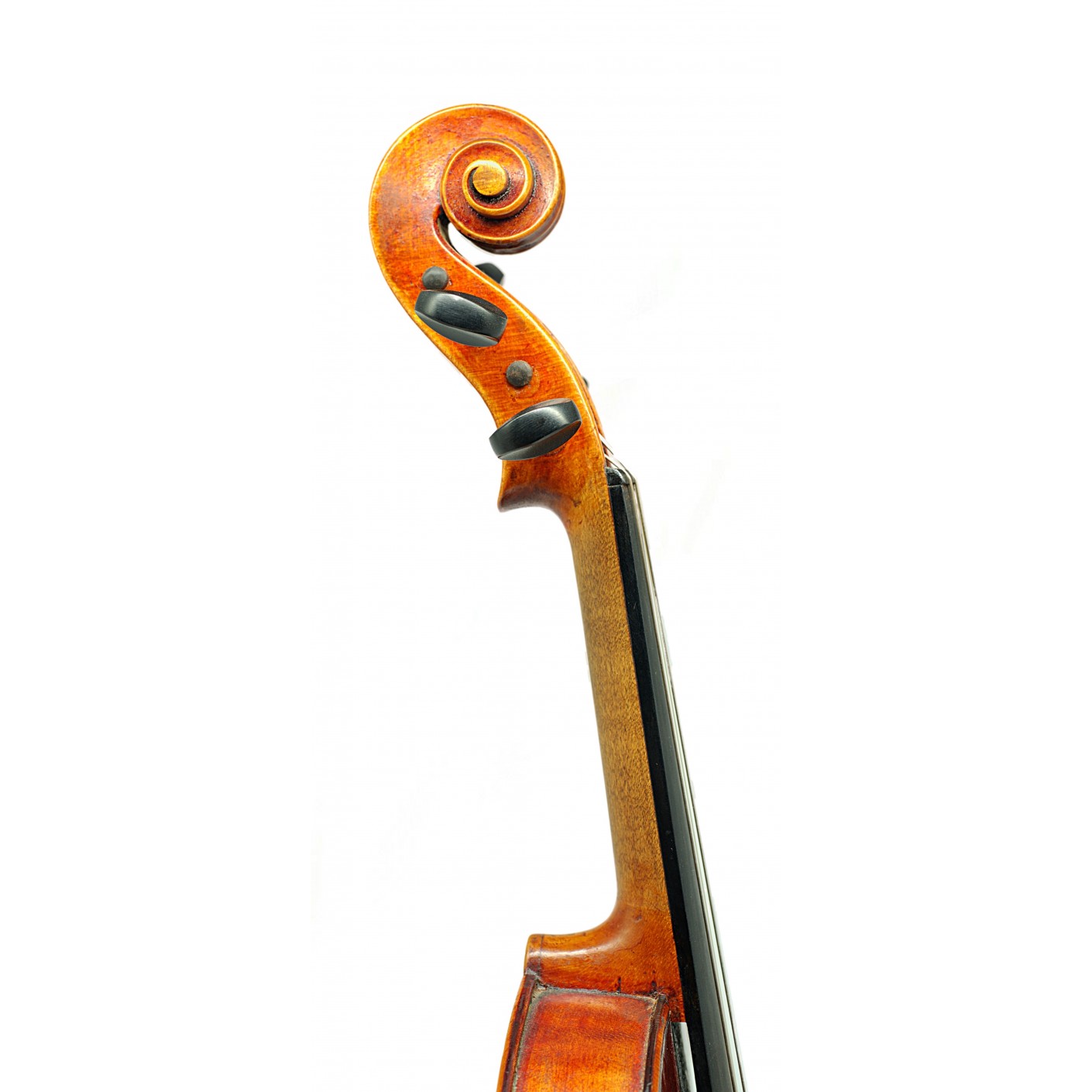
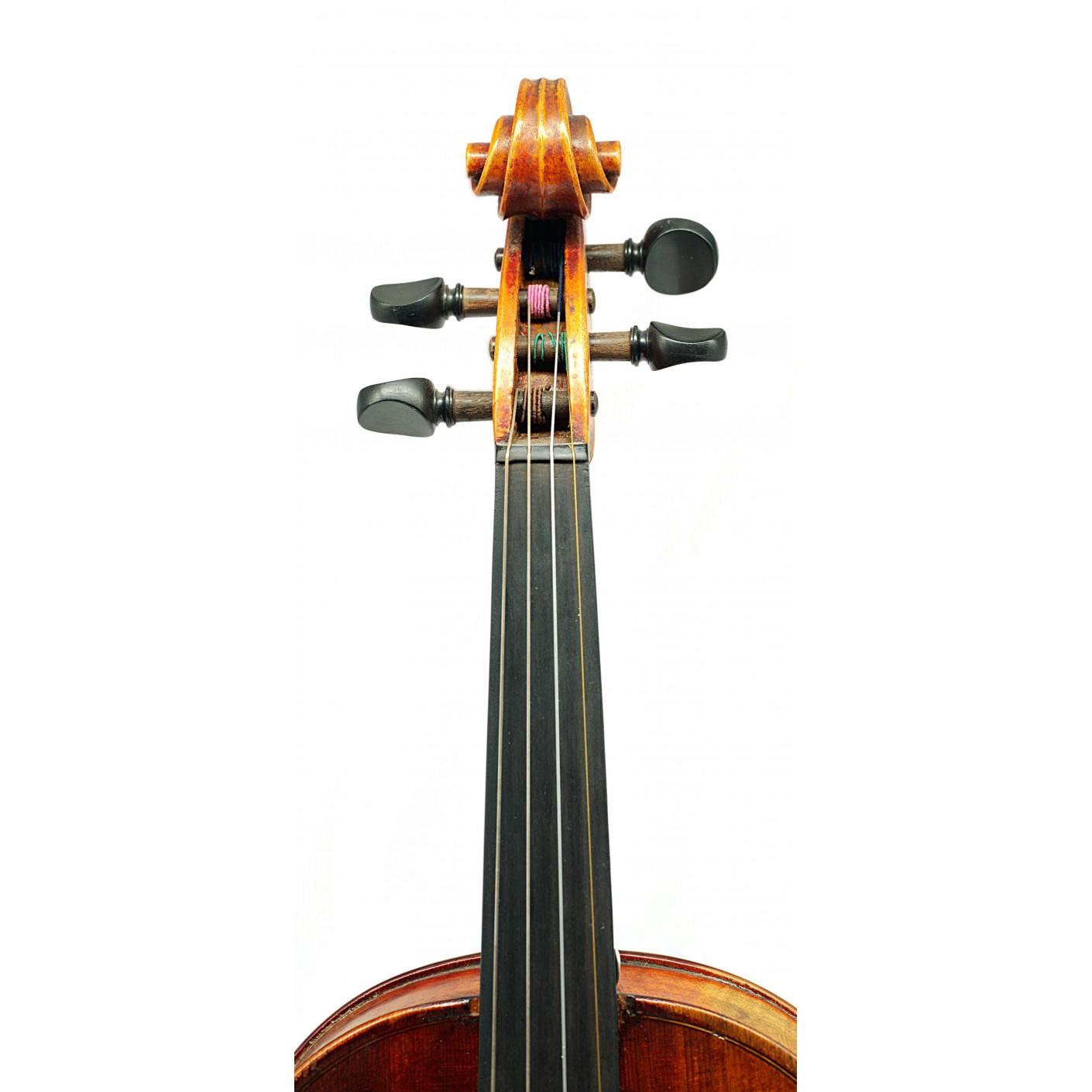
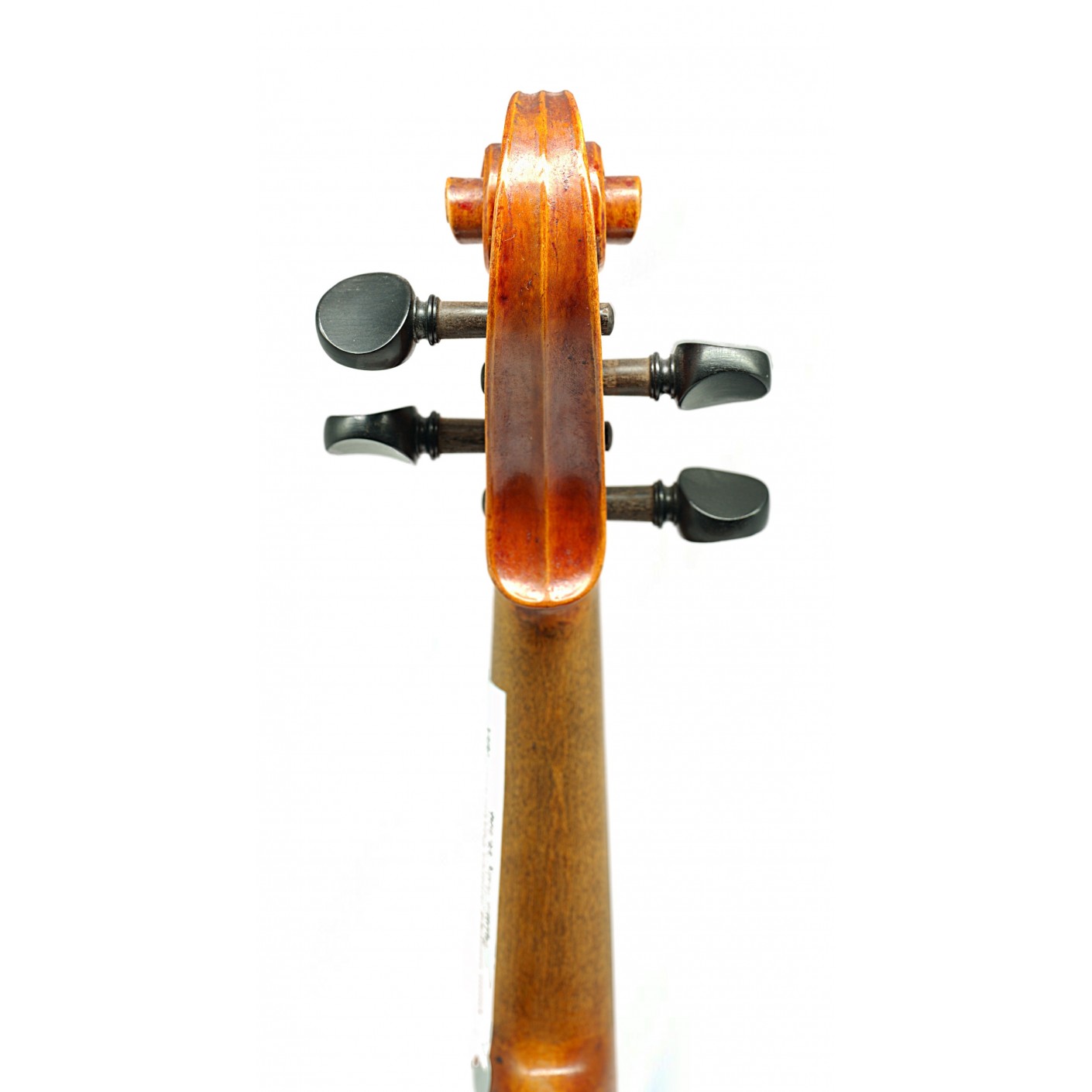
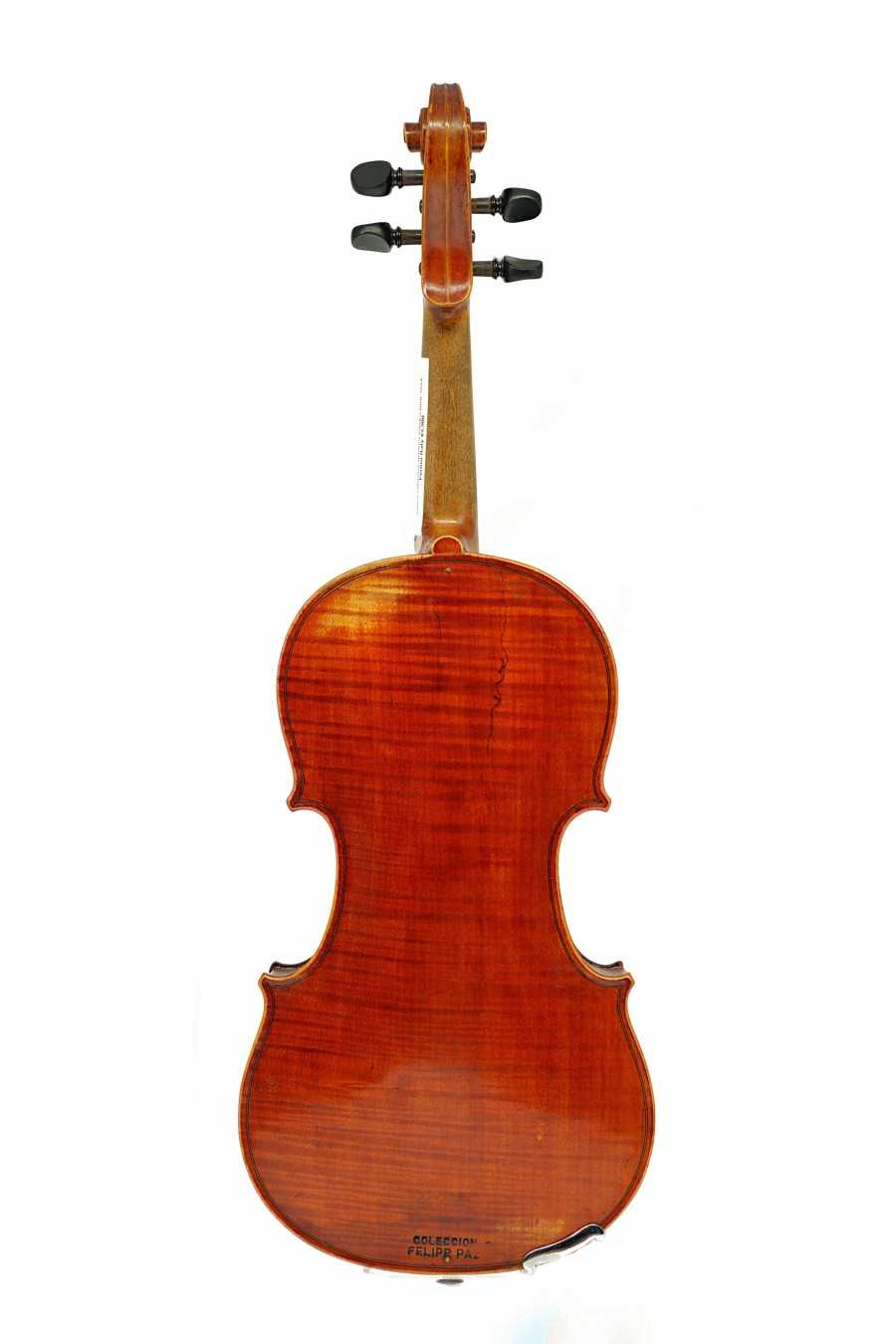
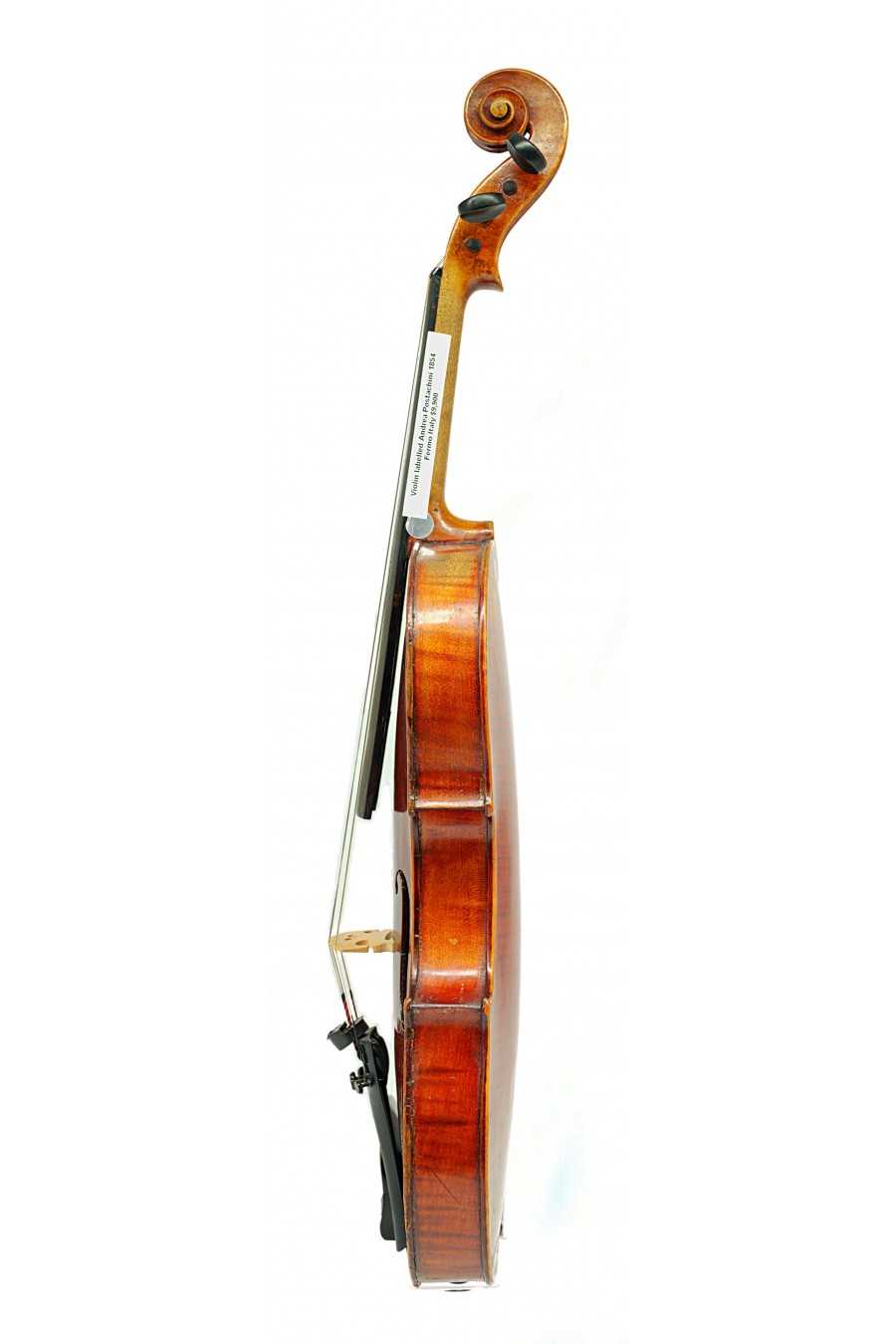
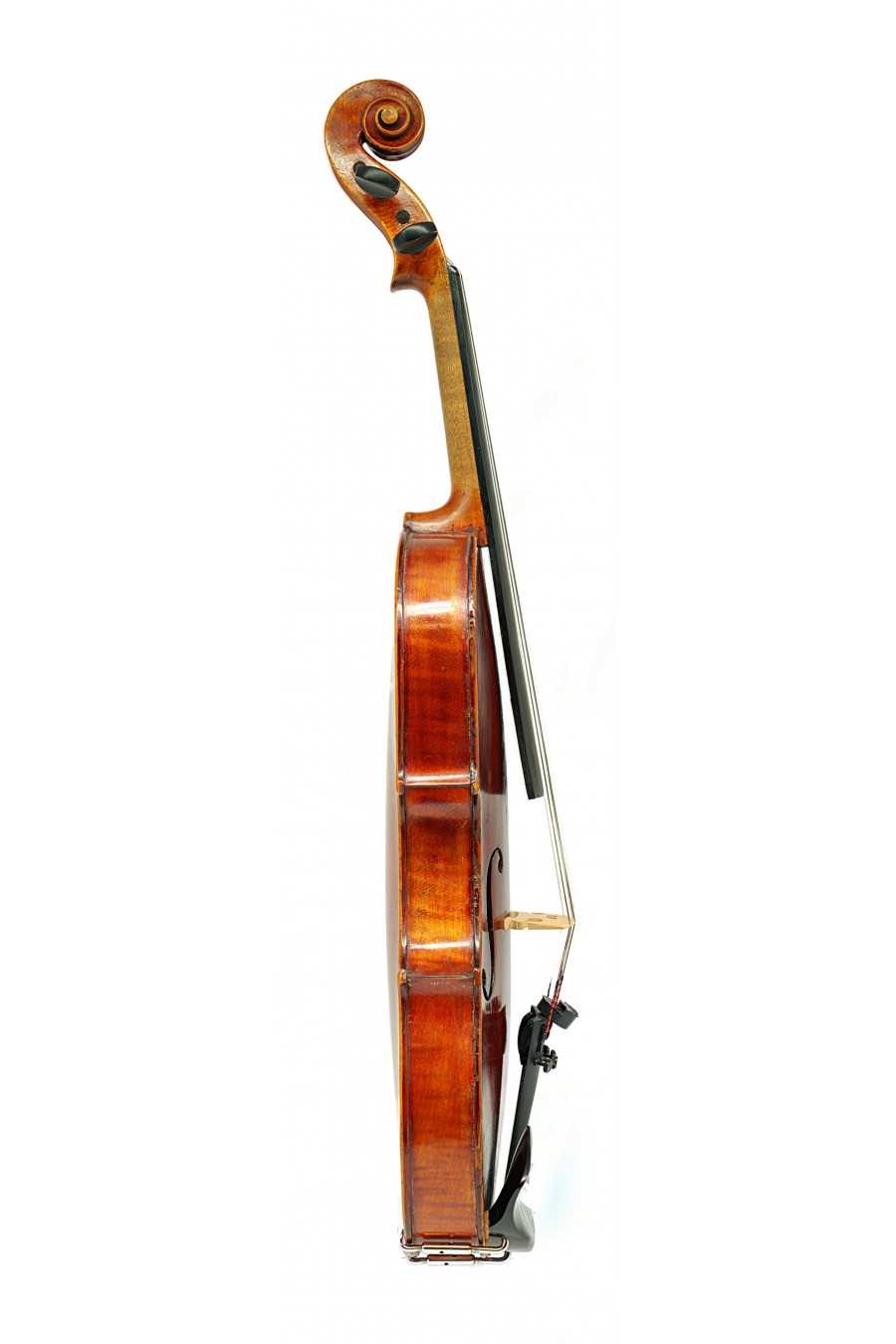
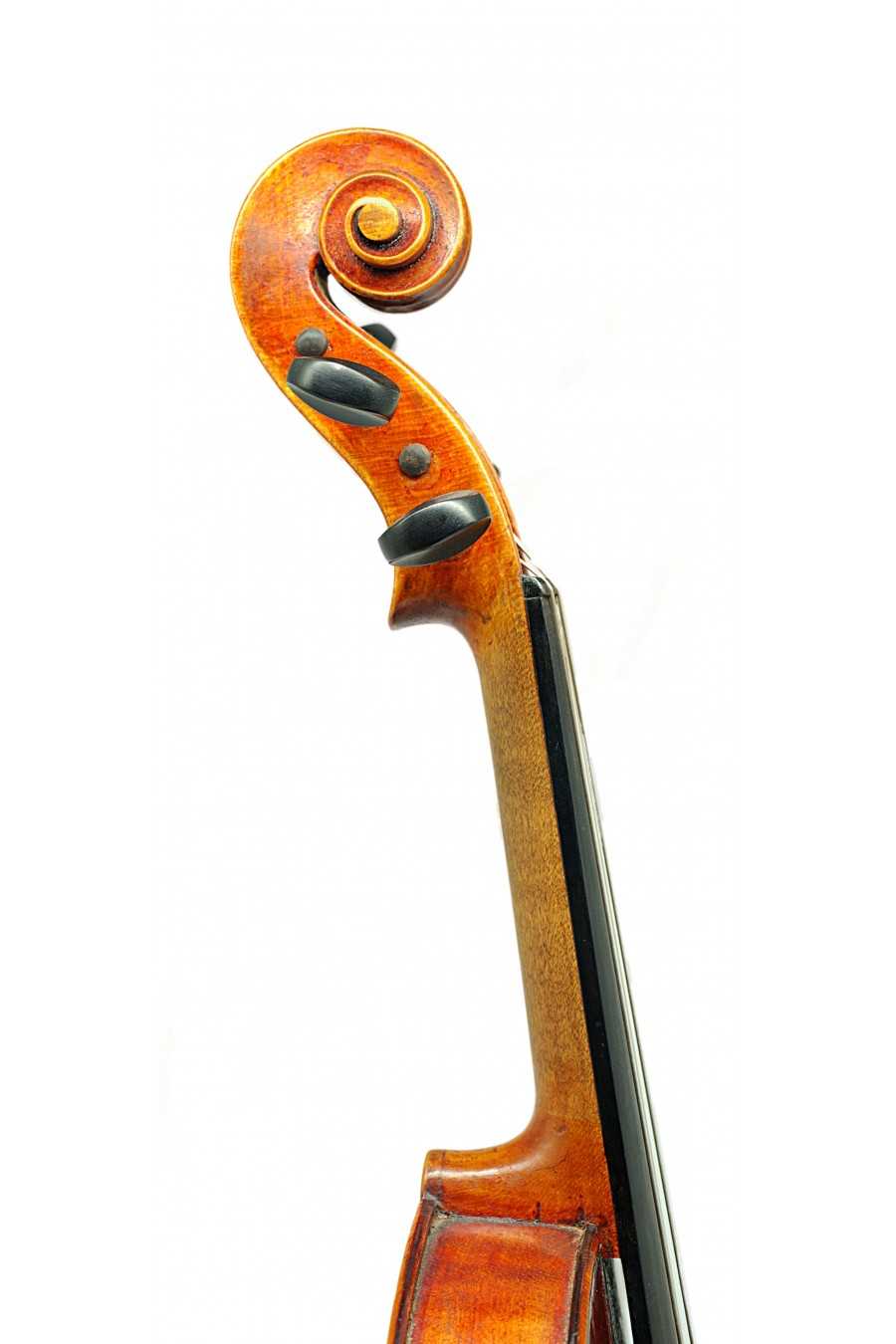
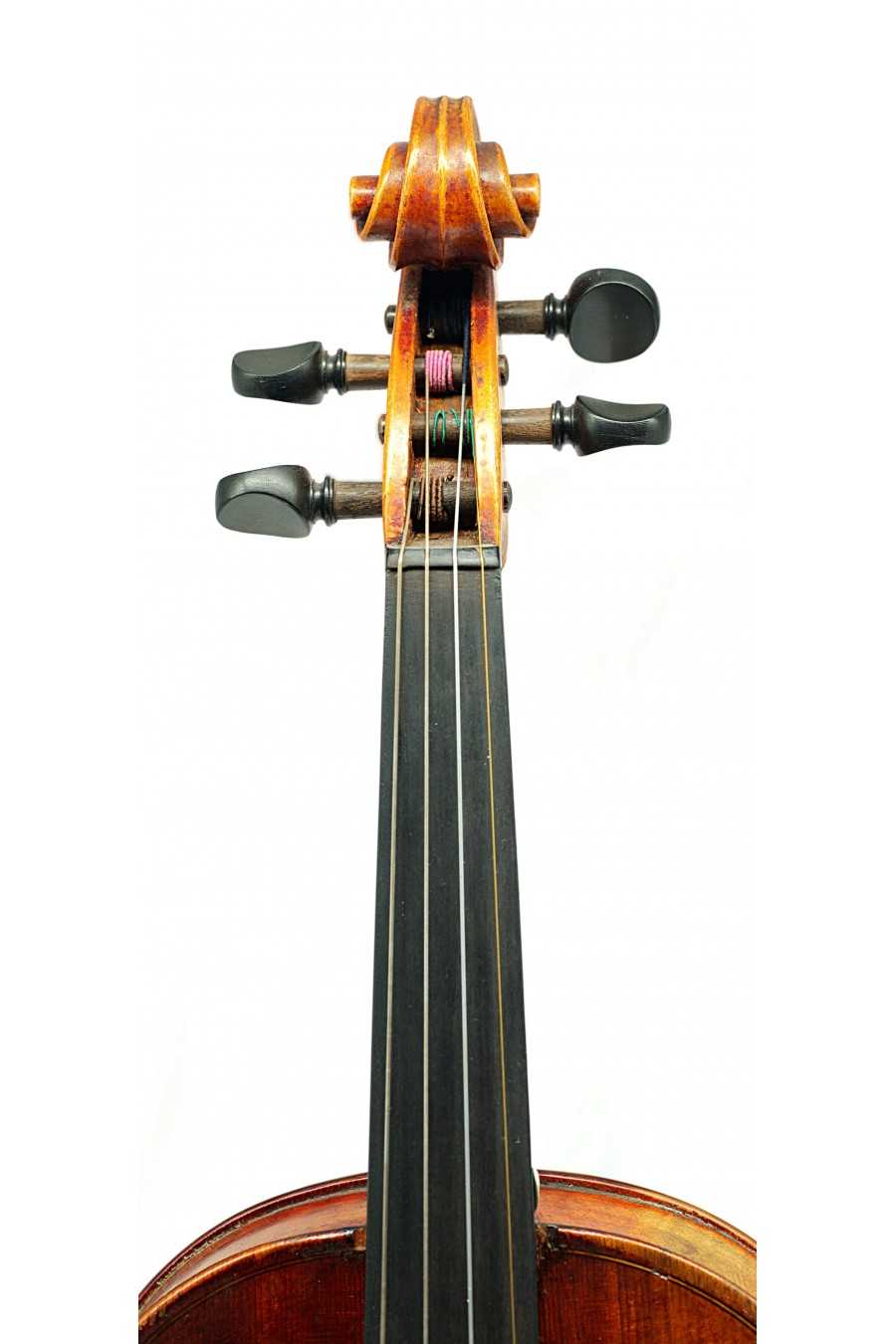
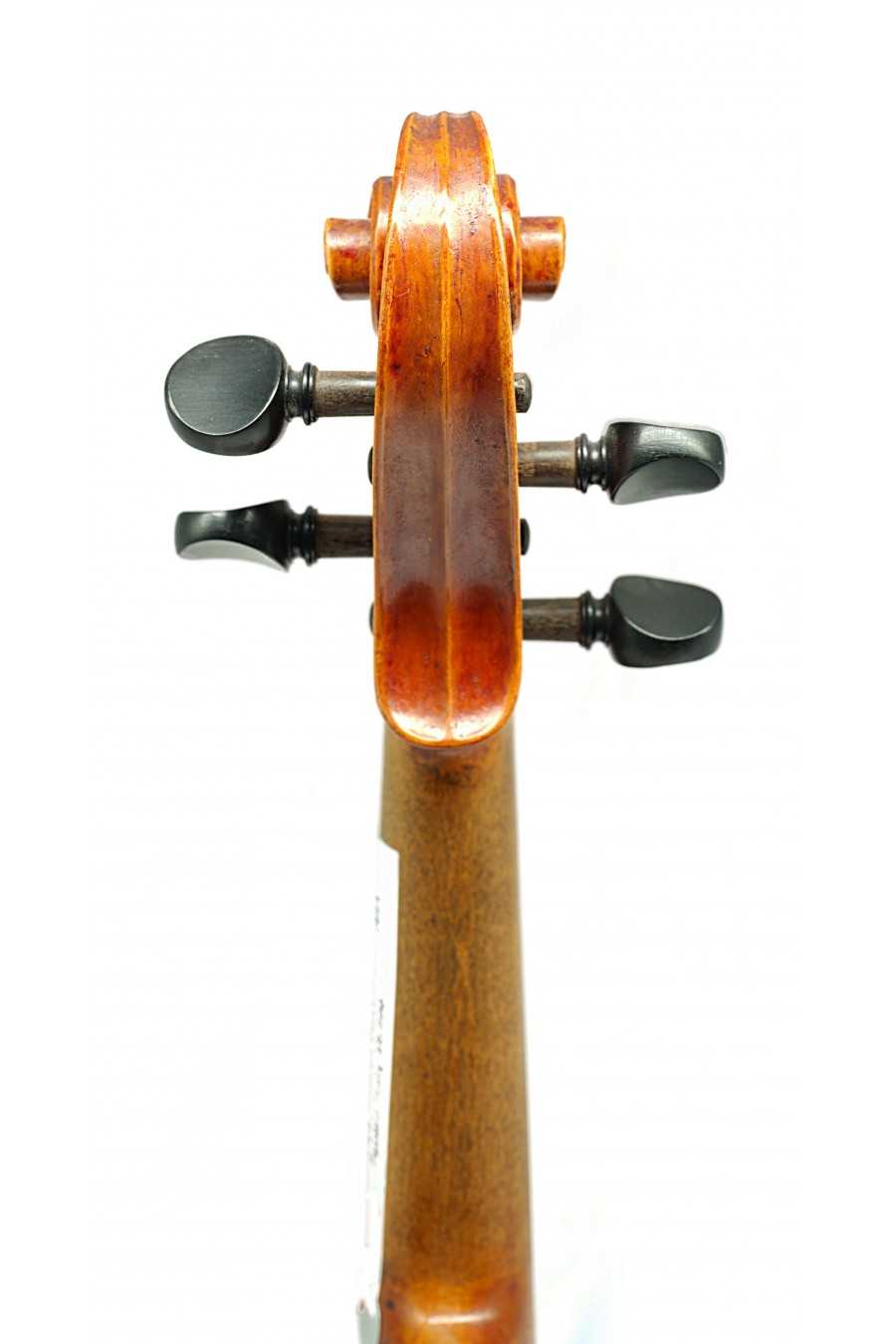
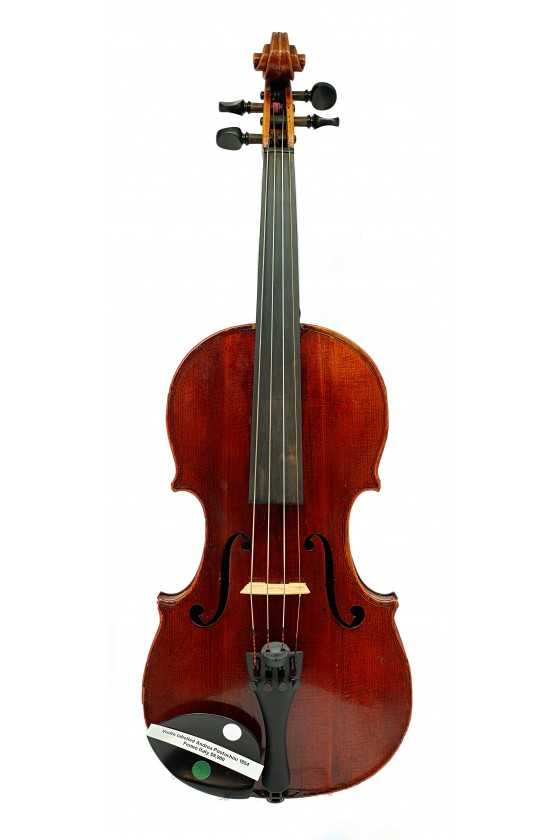
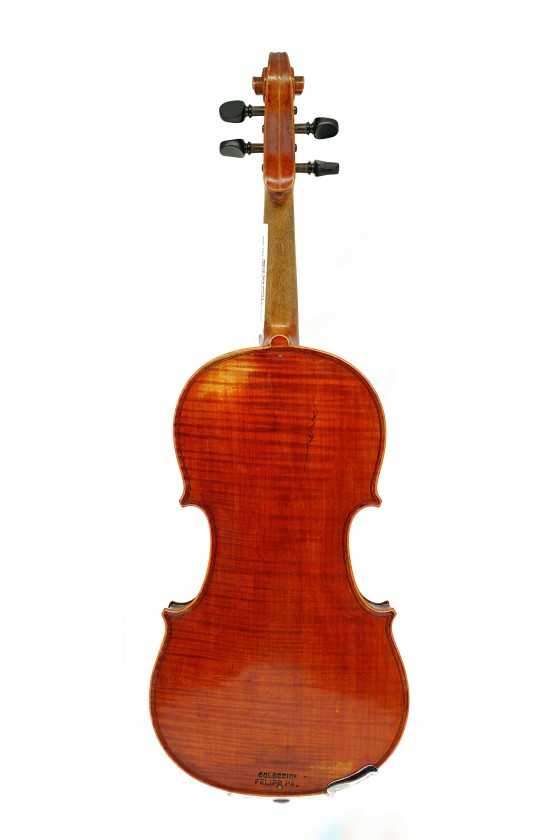

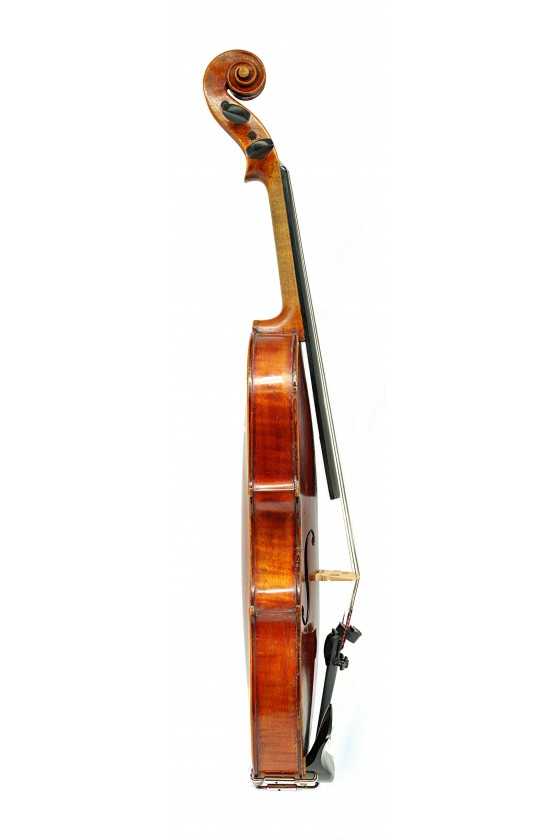
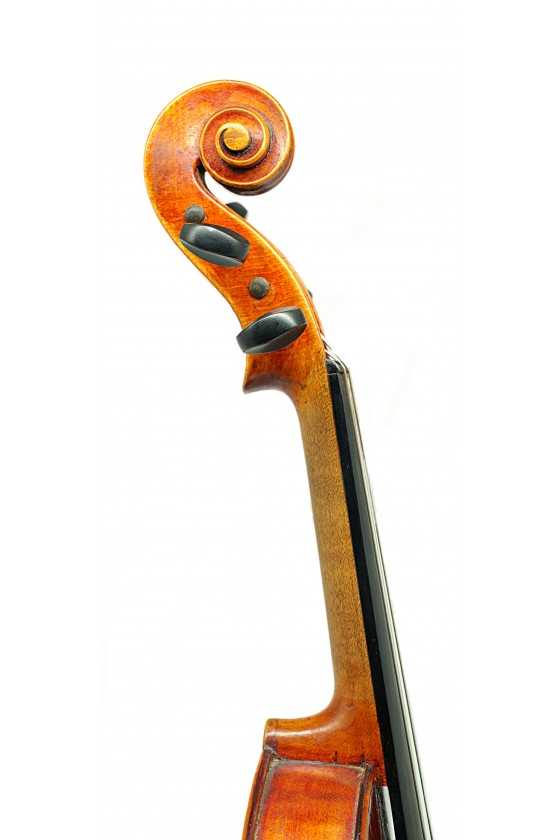
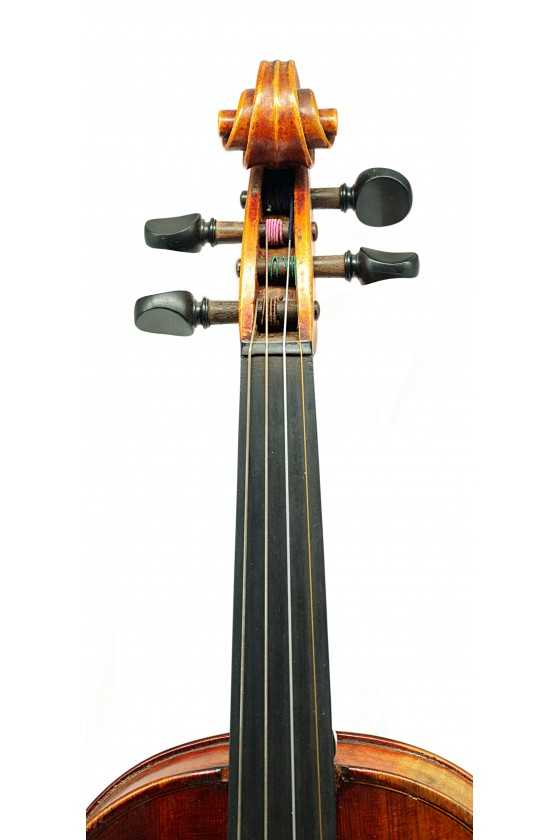
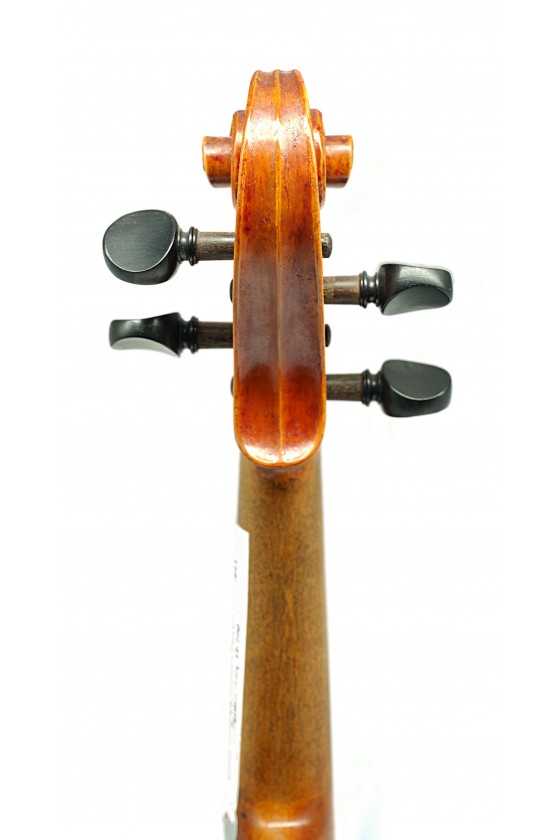
This violin (copy) bears the label 'Andrea Postacchini,' a skilled Italian luthier renowned for crafting high-quality instruments with exceptional tonal quality.
This violin is an old copy, labelled Andrea Postacchini, an Italian luthier born on November 30, 1781, in Fermo, Italy. It was a town on the hilltop near the Marches region of Italy where he was later known as “The Stradivari of Marches.” Postacchini started his fascination with the craft of violin making when he met a priest who used primitive tools in his violin making.
Postacchini began making violins at the age of 28. His knowledge and skill were self-taught, yet he produced excellent-quality instruments with fascinating tonal qualities. He produced a diverse range of stringed instruments and accessories, including bows and guitars. He was one of the most acclaimed violin makers in exhibitions and fairs during his lifetime. He spent the rest of his life in Fermo and died at the age of 76 on February 3, 1862.
We have here the Orfeo Carletti Violin made in 1932. Orfeo Carletti is an Italian violin maker who opened a workshop together with his father and brother in Bologna.
Check out this Copy of Giuseppe Fiorini violin 1926. Giuseppe Fiorini an Italian luthier, the son and student of Raffaele Fiorini who established the "Rieger and Fiorini" violin-making firm in Munich. A passionate teacher, donating materials and relics to the Municipality of Cremona in order to establish a violin-making school there.
Bearing the label "Laurentius Bellafontana fecit Genuae Anno Domini 1943," this violin is the work of Lorenzo (Laurentius) Bellafontana (1906–1979), a distinguished member of the Genoese school and a pupil of Oreste Candi. The Latin label translates to "Laurentius Bellafontana made [this] in Genoa in the year of Our Lord 1943" and includes his characteristic LBG monogram and handwritten signature. Bellafontana's violins are admired for their refined craftsmanship, warm Italian tone, elegant design, responsive playability, and rich orange-red varnish, making them highly regarded examples of 20th-century Italian violin making.
This French violin was made in 1922 by Amédée Dominique Dieudonné, who specialized in copying Cremona Masters and achieved a superior varnishing technique. He started his own workshop in Mirecourt after the First World War in the 1920s.
We have here a Lillo Salerno Italian violin made in 2019. Lillo Salerno is an Italian luthier born in Sicily, Italy. He went to Cremona Violin Making School then finished his studies in Mittenwald School of Violin Making in Germany in 2005.
Instrument - Violin
Model- Personalized Stradivari
Top - Italian spruce in two pieces
Back - Balkan maple in two pieces
Scroll - From the same wood as the back
Varnish - Oil and amber with a yellow background, red-brown violin.
Notes - The instrument was made with an antique and shows a black bevel on the scroll and points of the bouts.
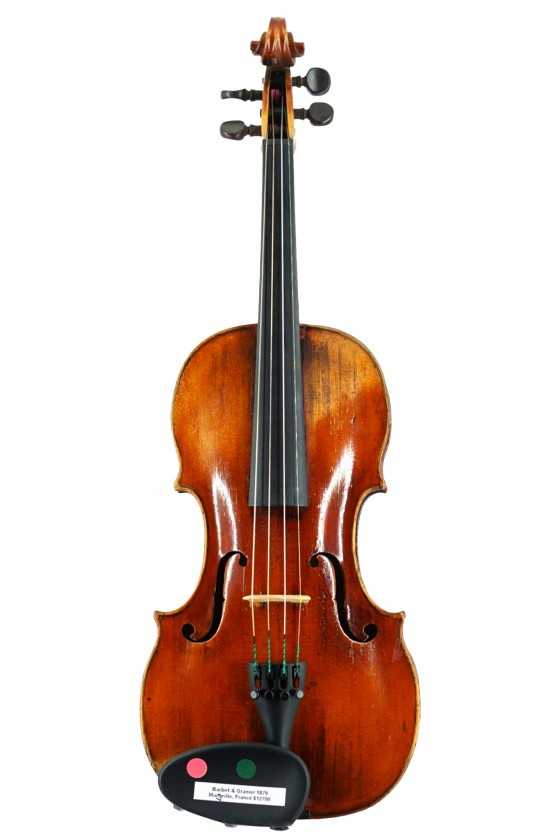
This is the Barbet & Granier dated 1879 Violin from Marseille France. Charles Barbet and Edmund Granier of Marseille were at the forefront of outstanding makers at the turn of the 19th century.
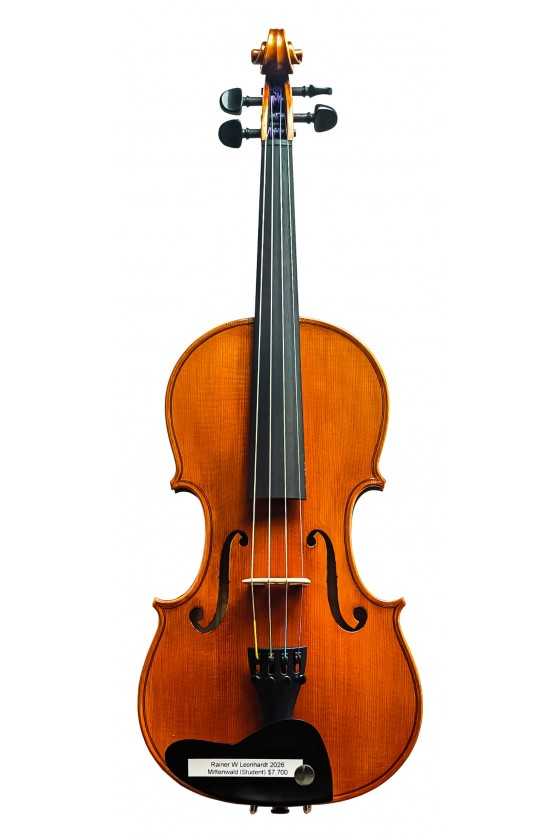
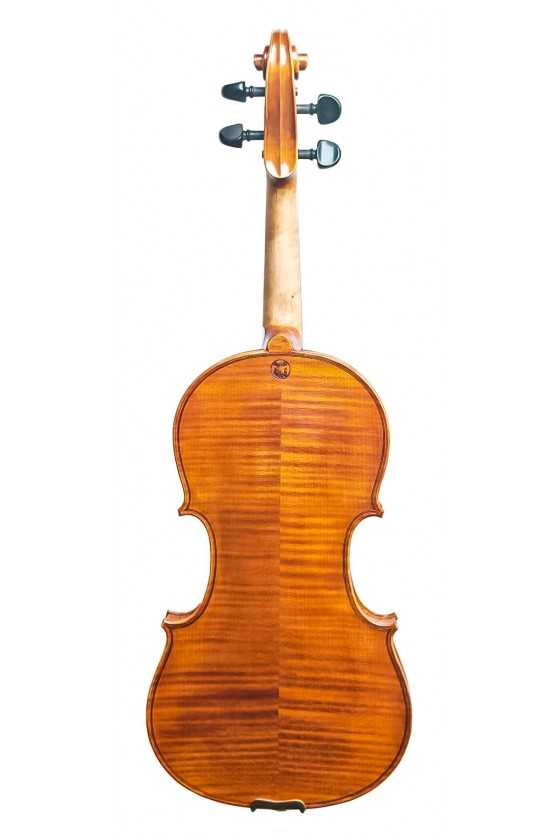
The Rainer W. Leonhardt Mittenwald Student Violin 2026 is a handcrafted German violin made in Mittenwald using carefully selected European spruce and maple. Offering a warm, balanced tone, excellent playability, and dependable craftsmanship, it is an ideal instrument for advancing students seeking an authentic European-made violin with outstanding value and musical performance.
Rainer W. Leonhardt is a fourth-generation Master Violin Maker whose family workshop has handcrafted fine string instruments since 1926. Based in Mittenwald, Germany, he continues more than 350 years of local violin-making tradition, producing instruments renowned for their exceptional craftsmanship, beautiful tone, and lasting quality.
We have here a Collin - Mezin Violin made in Paris in 1911. Charles Jean Baptiste Collin-Mezin is a French violin maker who started at a young age under the tutelage of his father, Claud-Nicolas Collin. His own workshop started in 1867 at the 14 and 18 rue du Faubourg Poissonnièr in France.