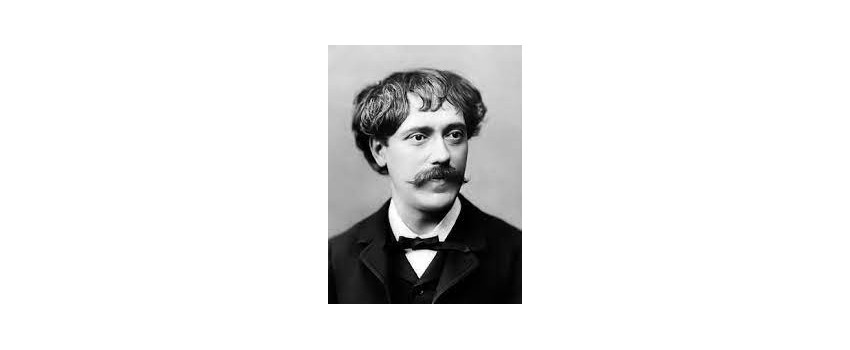
Pablo de Sarasate, born on March 10, 1844, in Pamplona, Navarre, was a renowned Spanish violin player, composer, and conductor. His remarkable talent and virtuosity on the violin made him one of the most celebrated musicians of the Romantic era. Sarasate's compositions, such as the Zigeunerweisen (Gypsy Airs), Spanish Dances, and Carmen Fantasy, continue to captivate audiences around the world.
Early Life and Musical Prodigy
Sarasate was born into a musical family. His father, Don Miguel Sarasate, was a local artillery bandmaster in Pamplona. At a young age, Sarasate showed a natural affinity for the violin. One day, after watching his father struggle with a particular section, he picked up the instrument and played it flawlessly. Recognizing his son's extraordinary talent, Don Miguel Sarasate began teaching him the violin at the age of five.
By the age of eight, Sarasate had his first public performance in A Corua, which received widespread acclaim. His exceptional musical abilities caught the attention of a wealthy patron who funded his studies in Madrid under the tutelage of Manuel Rodrguez Saez. This support also earned him the favor of Queen Isabella II.
Musical Education and Parisian Success
As Sarasate's skills continued to develop, his parents made the decision to send him to the prestigious Paris Conservatoire at the age of twelve. However, tragedy struck on their journey to Paris when Sarasate's mother passed away suddenly from a heart attack. Furthermore, he was diagnosed with cholera while crossing the Spanish-French border. The Spanish consul in Bayonne, who came to his aid, nursed him back to health and arranged for his passage to Paris.
In Paris, Sarasate successfully auditioned for the acclaimed violinist and teacher Jean-Delphin Alard. He moved in with Théodore de Lassabathie, the administrator of the Conservatoire, and began his studies. Sarasate's dedication and talent earned him the Premier Prix, the highest honor at the Conservatoire, at the young age of seventeen.
Rising Star on the International Stage
Following his success at the Conservatoire, Sarasate made his debut as a concert violinist in Paris in 1860. His performance was met with great acclaim, establishing him as a rising star in the music world. In the following year, he performed in London, further solidifying his reputation as a virtuoso violinist.
Throughout his career, Sarasate embarked on numerous international tours, captivating audiences in Europe, North America, and South America with his exceptional technique and pure tone. His virtuosity was characterized by a lack of sentimental or rhapsodic tendencies, focusing instead on the technical mastery of his instrument.
Compositions and Influences
While Sarasate was renowned for his skill as a violinist, he was also a prolific composer. His compositions were often characterized by a distinct Spanish flavor, reflecting his heritage and cultural influences. Sarasate's works inspired his contemporaries, and his impact can be heard in compositions such as Édouard Lalo's Symphonie Espagnole, Georges Bizet's Carmen, and Camille Saint-Saens' Introduction and Rondo Capriccioso.
Among Sarasate's most famous compositions is the Zigeunerweisen (Gypsy Airs), a captivating piece for violin and orchestra. Another notable work is the Carmen Fantasy, which incorporates themes from Bizet's opera Carmen. Sarasate also composed four books of Spanish Dances, which became popular encores and showcased his technical prowess.
Collaborations and Legacy
Sarasate collaborated with the pianist Berthe Marx, who accompanied him on tours across Europe, Mexico, and the United States. Marx also arranged his Spanish Dances for the piano. Additionally, Sarasate recorded a small number of recordings in 1904, which serve as a testament to his extraordinary talent.
Despite his international success, Sarasate maintained a strong connection to his hometown of Pamplona. He visited annually for the San Fermin festival, immersing himself in the local culture and traditions. Tragically, Sarasate's life was cut short by severe bronchitis, and he passed away on September 20, 1908, in Biarritz, France.
Sarasate's legacy lives on through his contributions to the world of violin music. His prized violin, crafted by Antonio Stradivari in 1724, was bequeathed to the Musée de la Musique and is now known as the Sarasate Stradivarius. The Real Conservatorio Superior de Msica in Madrid also possesses his second Stradivari violin, the Boissier of 1713.
In honor of his musical achievements, Pamplona hosts the Pablo Sarasate International Violin Competition. Many composers dedicated works to Sarasate, including Henryk Wieniawski, Édouard Lalo, Camille Saint-Saens, Max Bruch, and Alexander Mackenzie.
In conclusion, Pablo de Sarasate's life and music are a testament to his extraordinary talent and virtuosity on the violin. With his compositions and performances, he continues to inspire musicians and captivate audiences worldwide.
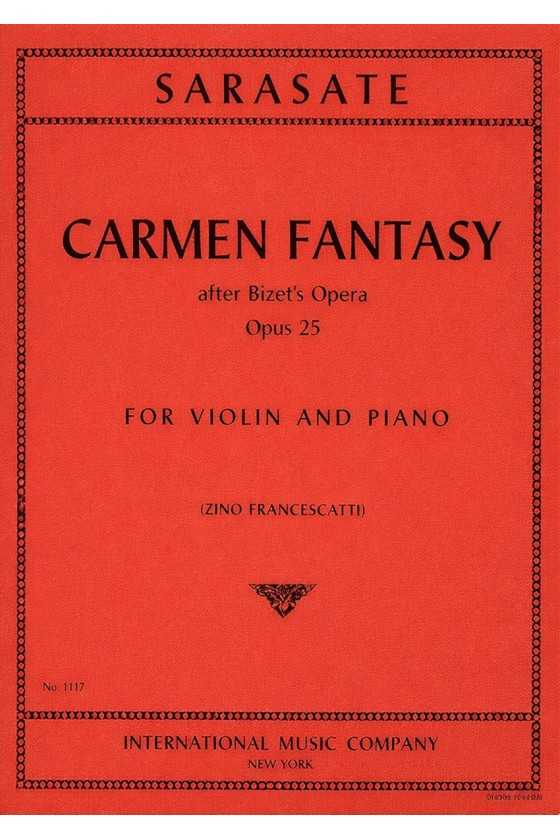
Impress your audience with Sarasate’s Carmen Fantasy for violin and piano from IMC. Full of Spanish color and technical brilliance, this arrangement is perfect for advanced violinists ready for a dramatic and dazzling showpiece.
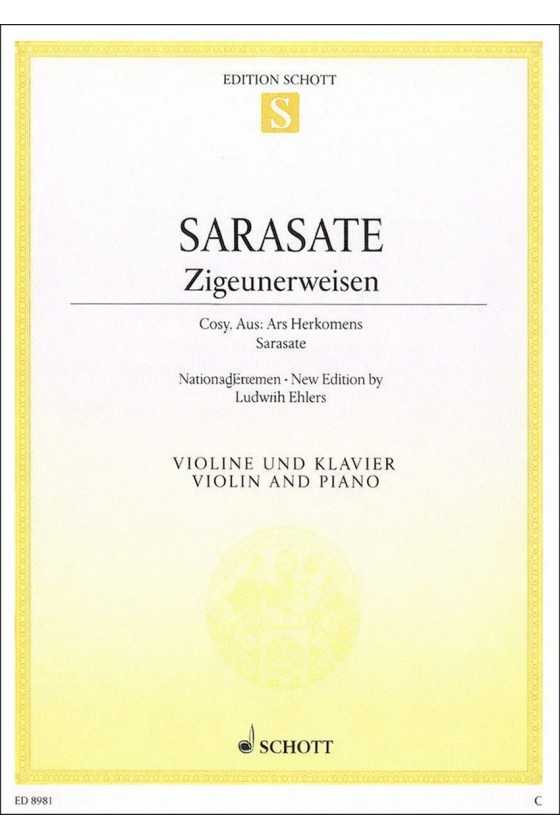
Add a touch of dazzling virtuosity to your program with Sarasate’s Gipsy Airs (Zigeunerweisen) for violin and piano in this Schott edition. Brimming with energy and expressive melodies, it’s a favourite for advanced violinists in recitals or as a show-stopping encore.
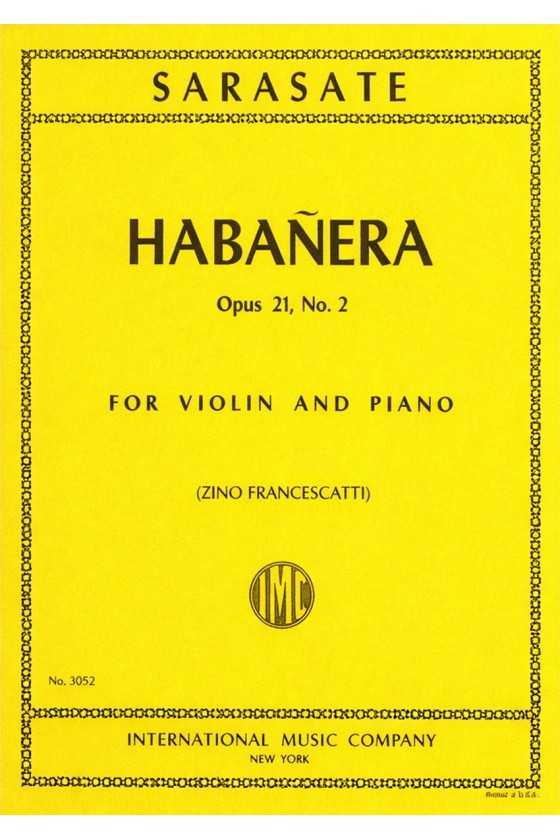
Spice up your repertoire with Sarasate’s Habanera Op. 21 No. 2 for violin and piano in this IMC edition. With its passionate rhythms and lyrical Spanish melodies, it’s a superb choice for advanced violinists in recitals or as a captivating encore.
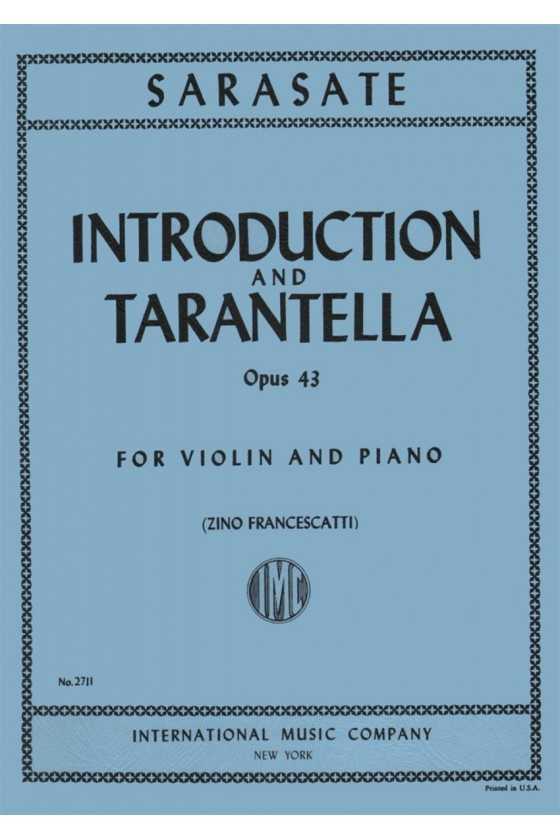
Surprise your audience with a burst of Italian flair using Sarasate’s Introduction and Tarantella Op. 43 for violin and piano, edited by Zino Francescatti in this IMC edition. With its dramatic opening and fiery tarantella, it’s a perfect choice for advanced violinists seeking a show-stopping recital piece.
Key Features:
•IMC edition, edited by Zino Francescatti
•Dramatic introduction paired with a vibrant tarantella
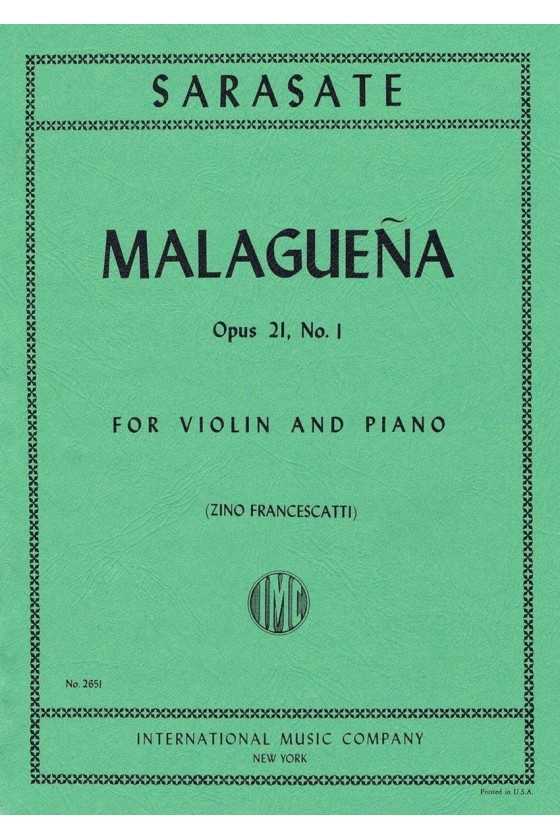
Set the stage aglow with the Spanish allure of Sarasate’s Malagueña for violin and piano, edited by Zino Francescatti in this IMC edition. With its rhythmic flair and expressive melodies, it’s a winning choice for advanced violinists in recitals or as an encore.
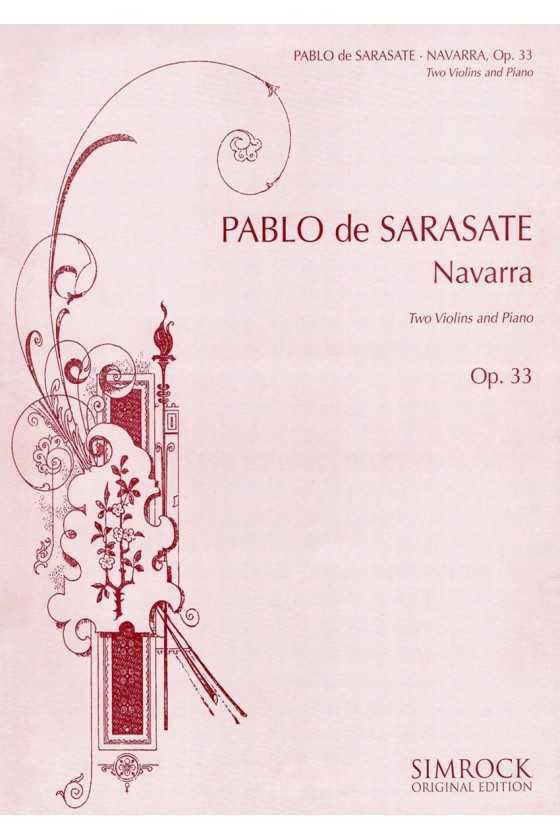
Bring the house down with Sarasate’s Navarra Op. 33 for two violins and piano, available in the Simrock edition. Packed with Spanish rhythms and dazzling virtuosity, it’s a show-stopping favourite for advanced duos at recitals or as a grand encore.
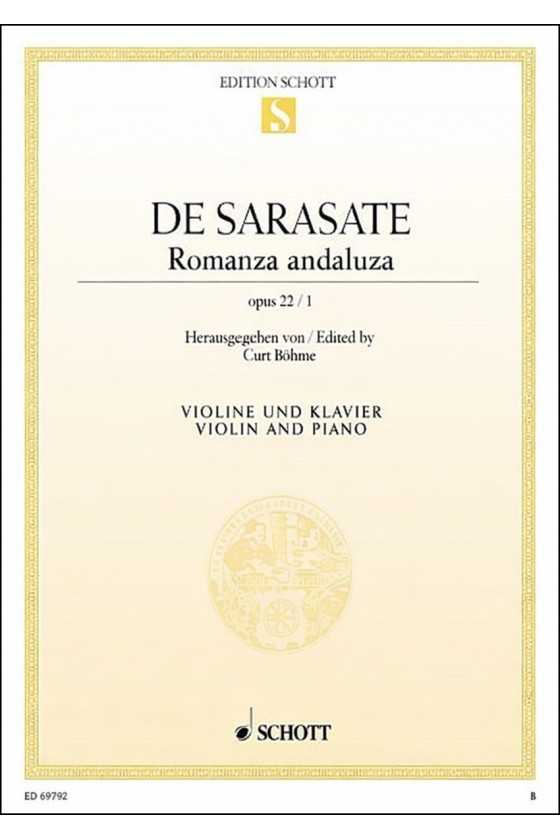
Invite evocative Spanish charm into your program with Sarasate’s Romanza Andaluza for violin and piano from Schott. This lyrical, sunlit piece is ideal for advanced violinists looking to create a warm, expressive moment in recitals or as an encore.
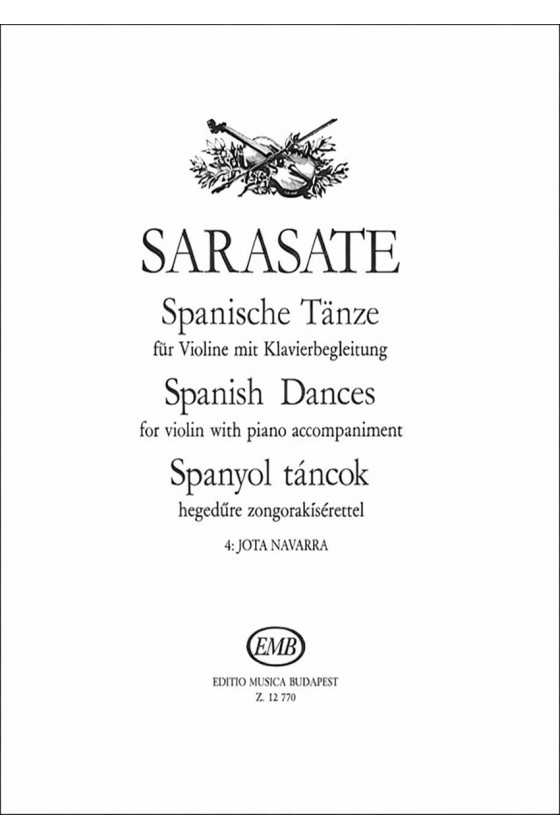
Give your recital a burst of Spanish vibrancy with Sarasate’s Spanish Dances No. 4 ‘Jota Navarra’ for violin and piano from EMB. Fast-paced and full of dance energy, this piece is a thrilling choice for advanced violinists.
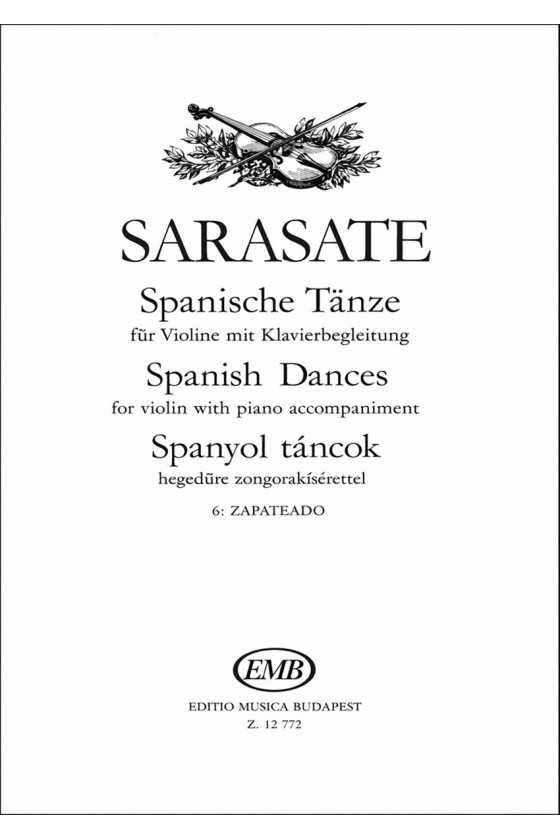
Add a spark of Spanish fire to your program with Sarasate’s Zapateado Op. 23 No. 2 for violin and piano from EMB, edited by Szenthelyi Miklós. Packed with dazzling runs and dance-like drive, this piece is a favourite for advanced violinists who want to wow on stage.
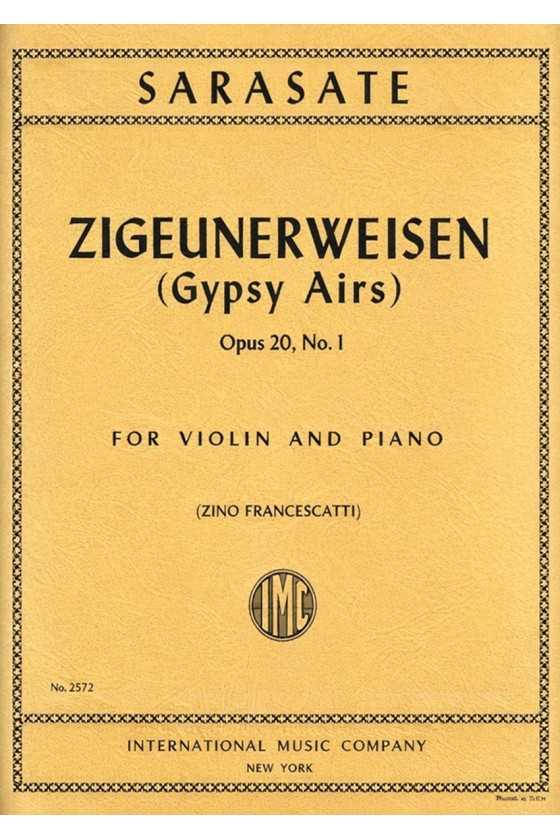
Captivate your audience with the dramatic flair of Sarasate’s Zigeunerweisen (Gypsy Airs), Op. 20 No. 1 for violin and piano in the IMC edition. Packed with passion and virtuosity, this classic is perfect for advanced violinists in recitals or as a thrilling encore.
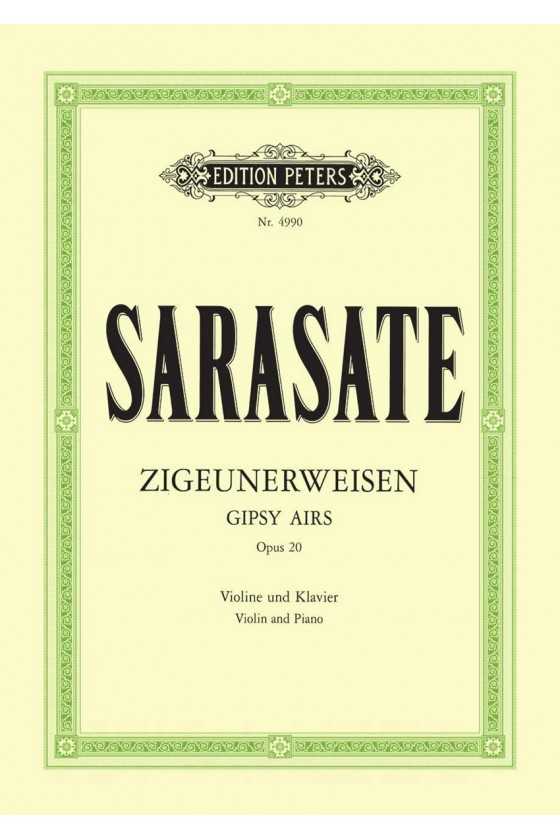
Dazzle listeners with Sarasate’s Zigeunerweisen (Gypsy Airs), Op. 20 No. 1 for violin and piano in this Peters edition. Lyrical, fiery, and packed with violinistic brilliance, it’s a top choice for advanced recitals or show-stopping encores.