Open 6 Days: Tuesdays-Saturdays 9-4, Sun 10-2, Mondays closed.

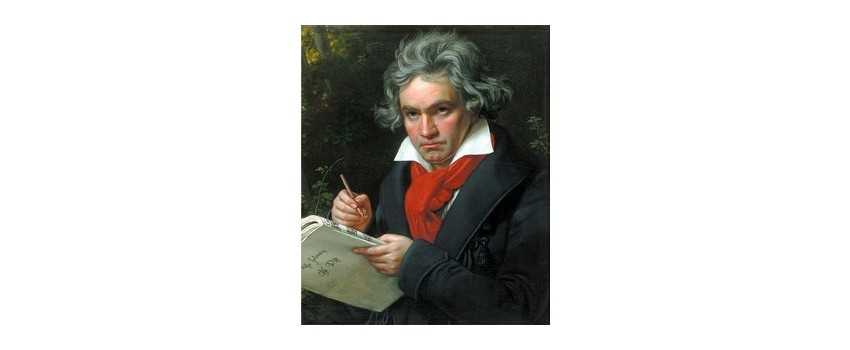
Beethoven, Ludwig van

Ludwig van Beethoven is one of the most celebrated composers of all time. His music has captivated audiences for over two centuries, and his influence can still be felt in contemporary classical and popular music. But who was the man behind the music? What inspired him to create such timeless masterpieces?

Beethoven’s Early Life and Musical Education

Ludwig van Beethoven was born in Bonn, Germany, in 1770. He was the second of seven children born to Johann van Beethoven, a court musician, and Maria Magdalena Keverich. Beethoven's father recognized his son's musical talent at an early age and began teaching him the piano and violin. Unfortunately, Beethoven's father was also an alcoholic and often abusive toward his son, making Beethoven's childhood tumultuous. Despite his challenges at home, Beethoven's talent continued to grow. He studied with several renowned musicians, including Christian Gottlob Neefe, who became his mentor. Neefe recognized Beethoven's exceptional ability and allowed him to play with the Bonn court orchestra. This was a crucial turning point in Beethoven's life, allowing him to showcase his talent and gain recognition as a musician. Beethoven's early works, such as his piano sonatas and early chamber music, were heavily influenced by the classical music of Mozart and Haydn, who were also popular during this period.

Beethoven’s Musical Works and Genres

Beethoven's music spans various genres, from solo piano to large-scale symphonies. He was a prolific composer with over 700 works, including nine symphonies, five piano concertos, one violin concerto, and various chamber music, choral music, and operas. Beethoven's music is characterized by its emotional intensity, innovative harmonic language, and use of motivic development. Beethoven's early works, such as his Op. 1 piano trios and Op. 18 string quartets, were heavily influenced by the classical style of Mozart and Haydn. However, as Beethoven matured as a composer, his music became more personal and introspective. His middle-period works, such as the "Eroica" Symphony and the "Appassionata" Piano Sonata, were notable for their increased emotional intensity and use of unconventional forms. Beethoven's later works, such as the Ninth Symphony and the "Late Quartets," were characterized by their experimental harmonies and complex polyphony.

Beethoven and the Development of the Symphony

Beethoven's influence on the development of the symphony cannot be overstated. He expanded the traditional symphonic form, adding new emotional depth and complexity dimensions. Beethoven's Ninth Symphony, in particular, was groundbreaking in its use of voices in the final movement, which was the first time a choral finale was used in a symphony. Beethoven's symphonies were also notable for their innovative use of motivic development, allowing him to create cohesive works that were structurally sound and emotionally powerful. Beethoven's influence on the symphony can still be felt in contemporary classical music. Many composers have been inspired by his use of harmony, form, and motivic development and have incorporated these elements into their works.

Beethoven’s Deafness and Its Impact on His Music

Beethoven's hearing loss is one of the most well-known aspects of his life. He began to experience hearing problems in his late twenties, and by age 44, he was completely deaf. This was a devastating blow for Beethoven, who relied heavily on his hearing to compose and perform his music. Despite his deafness, Beethoven continued to compose some of his most iconic works, including his Ninth Symphony and the "Late Quartets." He used various techniques to overcome his hearing loss, such as placing a rod between his teeth and touching it to his piano to feel the vibrations of the notes. Nevertheless, Beethoven's deafness profoundly influenced his music, forcing him to rely on his inner ear and imagination to create his works. This led to some of his most innovative and introspective music, which continues to inspire and captivate audiences today. 

Beethoven’s Influence on Classical and Romantic Music

Beethoven's impact on classical and romantic music cannot be overstated. He was a pivotal figure in the transition from the classical to the romantic era, and his music paved the way for future composers. Beethoven's use of harmony, form, and motivic development was groundbreaking, and his emotional intensity and introspection set the stage for the Romantic period. Many composers have been influenced by Beethoven's music, including Brahms, Mahler, and Wagner. Beethoven's Ninth Symphony, in particular, has inspired countless composers, and its choral finale has become one of the most iconic moments in classical music.

Beethoven’s Legacy and Enduring Popularity

Beethoven's legacy continues today, more than two centuries after his death. His music has been performed and recorded countless times, and his influence can be heard in a wide range of genres, from classical to pop. Beethoven's music has also been used in films, television shows, and commercials, further cementing his place in popular culture. Beethoven's enduring popularity can be attributed to his ability to capture the human experience in his music. His works are deeply emotional and introspective, speaking to universal themes such as love, loss, and triumph. As a result, Beethoven's music has the power to move and inspire audiences, and it continues to be an important part of our cultural heritage.

Conclusion

Ludwig van Beethoven was a musical genius whose legacy continues to inspire and captivate audiences today. His music is characterized by its emotional intensity, innovative harmonies, and use of motivic development. Beethoven's impact on the symphony and classical and romantic music cannot be overstated, and his enduring popularity is a testament to the power and beauty of his music. We may never fully understand the man behind the legend, but through his music, we can glimpse his soul and the timeless legacy he left behind.  

Cello Compositions of Ludwig van Beethoven | Animato Strings
  • Home
  • Perform
  • Cello Sheet Music
  • Composers Cello A-C
  • Beethoven, Ludwig van


  • 17 products.

    Showing 1-12 of 17 item(s)

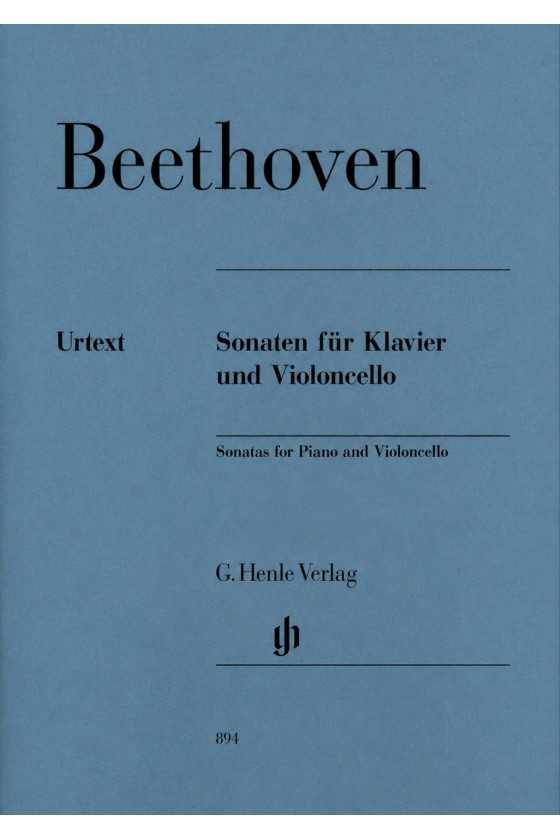
    Beethoven, Cello Sonatas (Henle)

    Beethoven’s five Cello Sonatas are among the cornerstones of the cello and piano repertoire, spanning important stages of his compositional development. This revised G. Henle Urtext Edition features new fingerings and bowings by David Geringas and includes an additional unmarked cello part for individual interpretation.

    Key Features:

    All five Beethoven Cello Sonatas

    For cello and piano

    G. Henle Urtext Edition

    Fingerings and bowings by David Geringas

    Additional unmarked Urtext cello part

    Ideal for advanced study and performance

    $98.95 Price
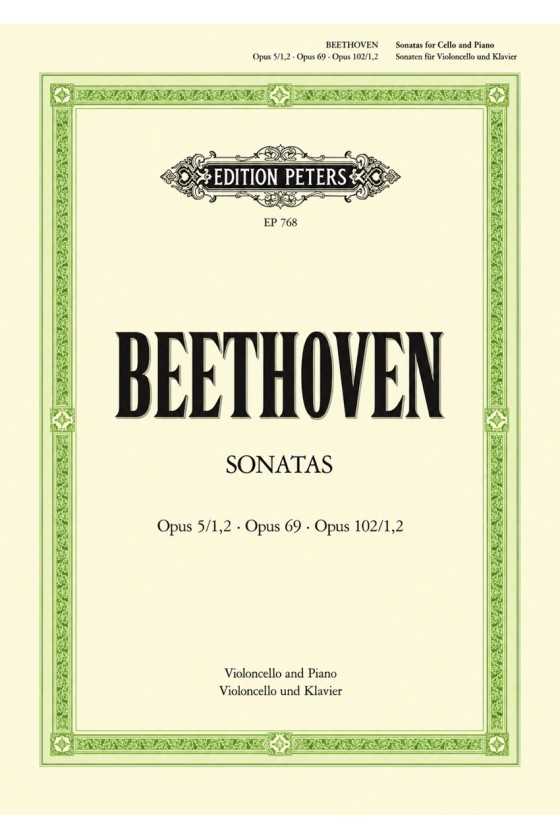
    Beethoven, Cello Sonatas Op. 5 Op. 69 Op. 102 (Peters)

    Beethoven’s Cello Sonatas, Op. 5, Op. 69 and Op. 102 are cornerstone works for cello and piano, spanning the composer’s early through late periods. This Edition Peters collection is especially useful for advanced players, with selected movements appearing in the AMEB Associate, Certificate of Performance, and Licentiate syllabuses.

    Key Features:

    Beethoven Cello Sonatas for cello and piano

    Includes Op. 5, Op. 69 & Op. 102

    Published by Edition Peters

    AMEB syllabus repertoire

    Suitable for advanced-level cellists

    Ideal for examinations, study, and recitals

    $79.95 Price

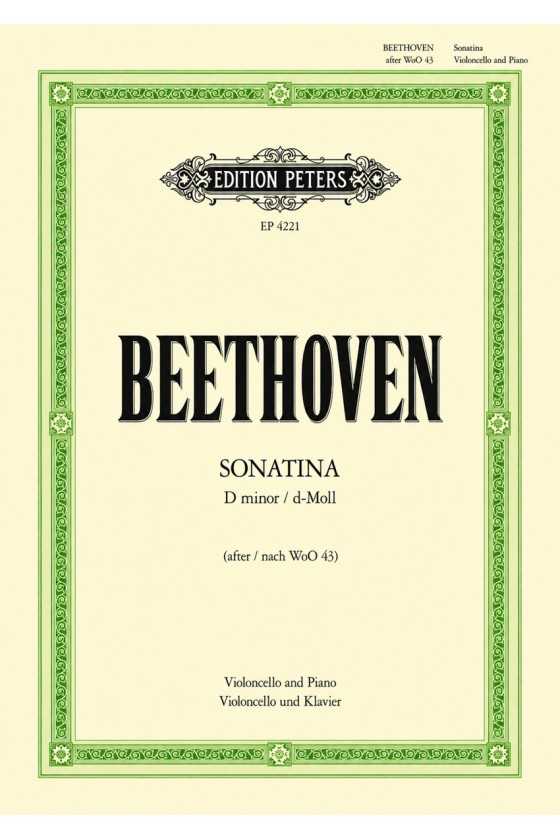
    Beethoven, Cello Sonatina In D Min (Peters)

    Sonatina in D Minor is a compact work for cello and piano, published by Edition Peters and attributed to Beethoven. Its approachable Classical character provides developing cellists with useful repertoire for improving technique, phrasing, and ensemble playing.

    Key Features:

    For cello and piano

    In D minor

    Published by Edition Peters

    Accessible Classical-style repertoire

    Develops phrasing and technique

    Ideal for lessons and performance

    $11.95 Price

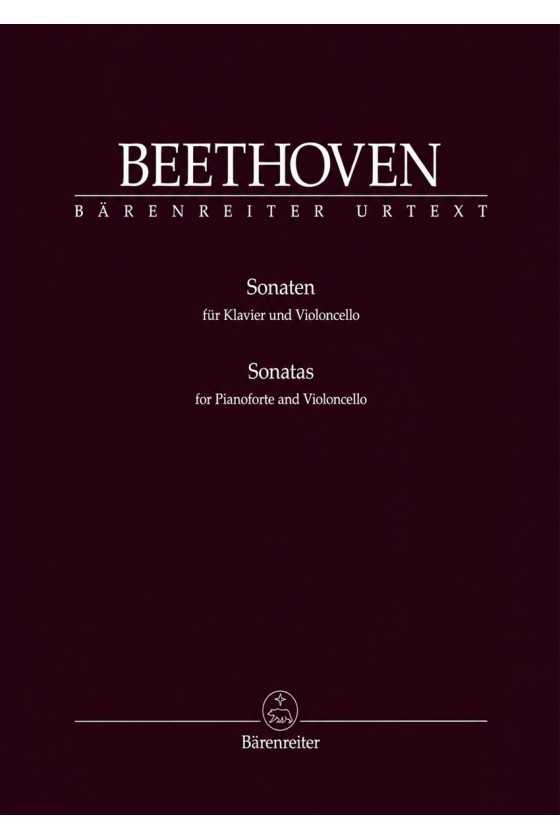
    Beethoven, Sonatas For Cello And Piano Complete (Barenreiter)

    Beethoven’s Complete Sonatas for Cello and Piano brings together all five landmark sonatas in Bärenreiter’s scholarly Urtext Edition, edited by Beethoven specialist Jonathan Del Mar. Based on extensive source research and accompanied by critical commentary, it is an authoritative choice for serious study and performance.

    Key Features:

    All five Beethoven Cello Sonatas

    For cello and piano

    Bärenreiter Urtext Edition

    Edited by Jonathan Del Mar

    Includes critical commentary

    Based on extensive source research

    Ideal for advanced and professional players

    $103.00 Price

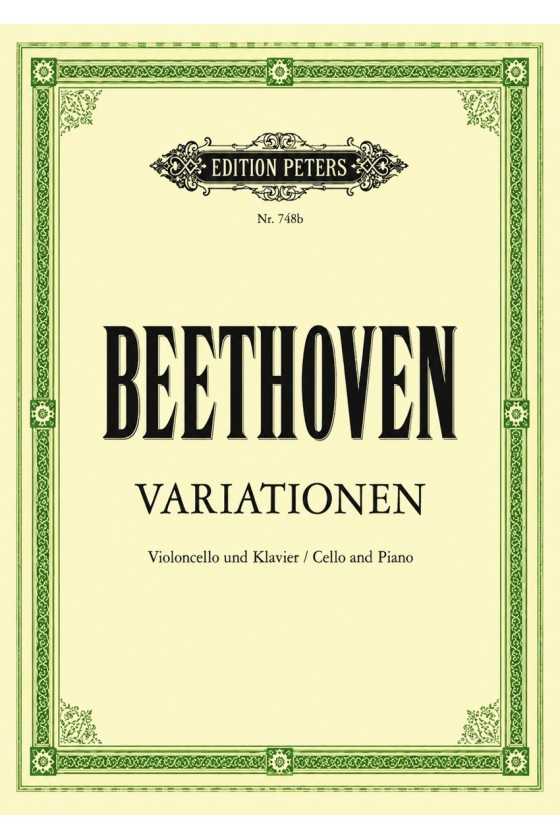
    Beethoven, Variations For Cello (Peters)

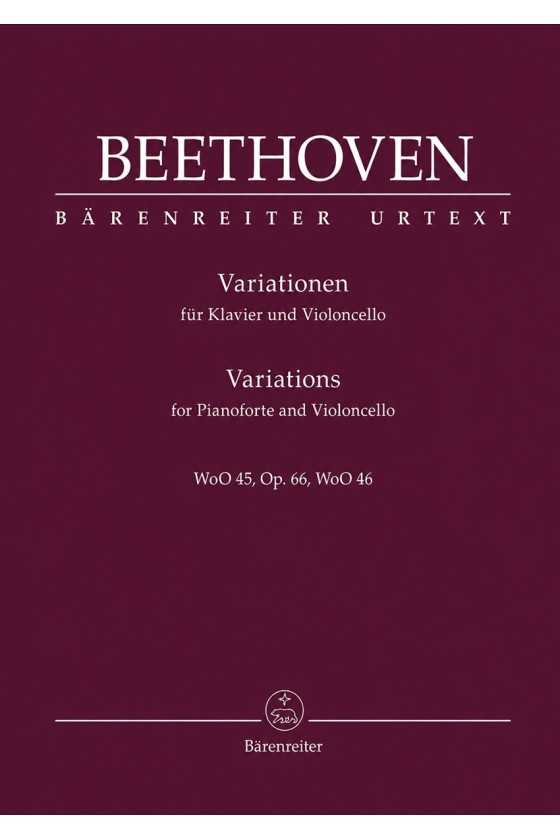
    Beethoven’s Variations for Cello and Piano features three celebrated variation sets based on themes by Handel and Mozart. Published by Edition Peters, the collection combines lyrical writing, technical variety, and sophisticated interplay between cello and piano, with selections included in the AMEB syllabus.

    Key Features:

    Three variation sets for cello and piano

    Themes by Handel and Mozart

    Includes WoO 45, Op. 66 & WoO 46

    Published by Edition Peters

    Includes AMEB syllabus repertoire

    Ideal for advanced study and performance

    $36.95 Price

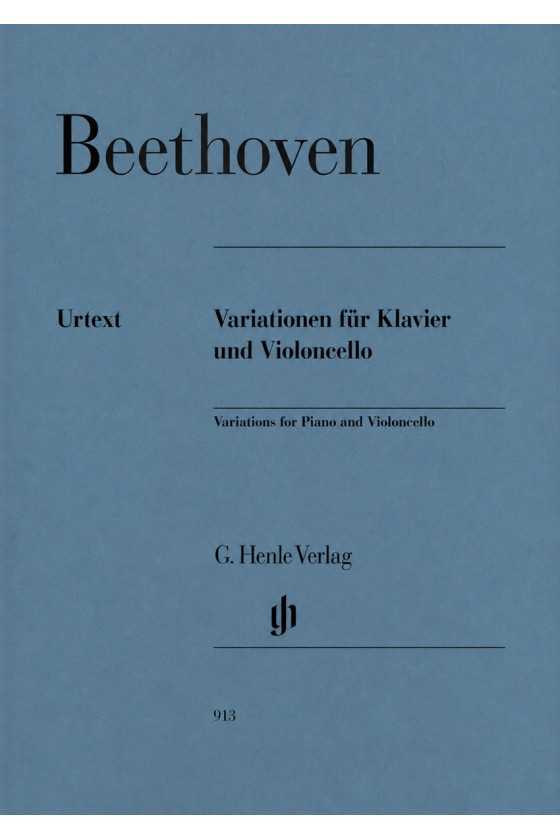
    Beethoven, Variations For Cello And Piano (Henle)

    Beethoven’s Variations for Cello and Piano brings together three popular variation sets based on themes by Handel and Mozart. This G. Henle Urtext Edition, edited by Jens Dufner, features cello fingerings and bowings by David Geringas and includes works listed in the AMEB Cello syllabus.

    Key Features:

    Three variation sets for cello and piano

    WoO 45, Op. 66 & WoO 46

    G. Henle Urtext Edition

    Edited by Jens Dufner

    Fingering and bowing by David Geringas

    Includes AMEB syllabus repertoire

    Ideal for advanced study and performance

    $68.95 Price

    Bach, Complete Variations For Cello/Piano (Barenreiter)

    Beethoven’s Complete Variations for Cello and Piano collects all three variation cycles based on themes by Handel and Mozart. This scholarly Bärenreiter Urtext Edition features numerous corrections to the cello part and includes a critical commentary with a complete facsimile of the surviving first-edition cello part of Op. 66.

    Key Features:

    All three Beethoven cello variation sets

    For cello and piano

    Bärenreiter Urtext Edition

    Includes WoO 45, Op. 66 & WoO 46

    Corrected cello text

    English critical commentary

    Facsimile of the first-edition Op. 66 cello part

    $68.95 Price

    Beethoven, Sonatas For Cello and Piano Beethoven (Schott/Universal)

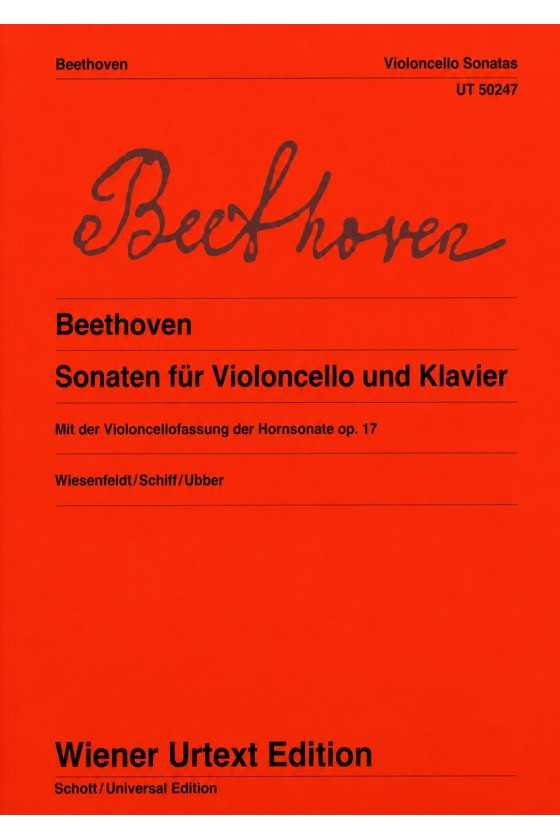
    Beethoven’s Sonatas for Cello and Piano in the Wiener Urtext Edition combines his five essential cello sonatas with the authentic cello version of the Horn Sonata, Op. 17. Featuring a critically prepared musical text, performance guidance by Heinrich Schiff, historical comments by Carl Czerny, and practical fold-out pages, this is an outstanding edition for advanced study and performance.

    Key Features:

    Five complete Beethoven cello sonatas

    Includes Horn Sonata, Op. 17 in its cello version

    Wiener Urtext Edition

    Cello part prepared by Heinrich Schiff

    Historical interpretation notes by Carl Czerny

    Separate cello part with alternative readings

    Fold-out pages and optimised page turns

    $79.95 Price

    Beethoven 3 Duets For Violin & Cello (Breitkopf & Härtel)

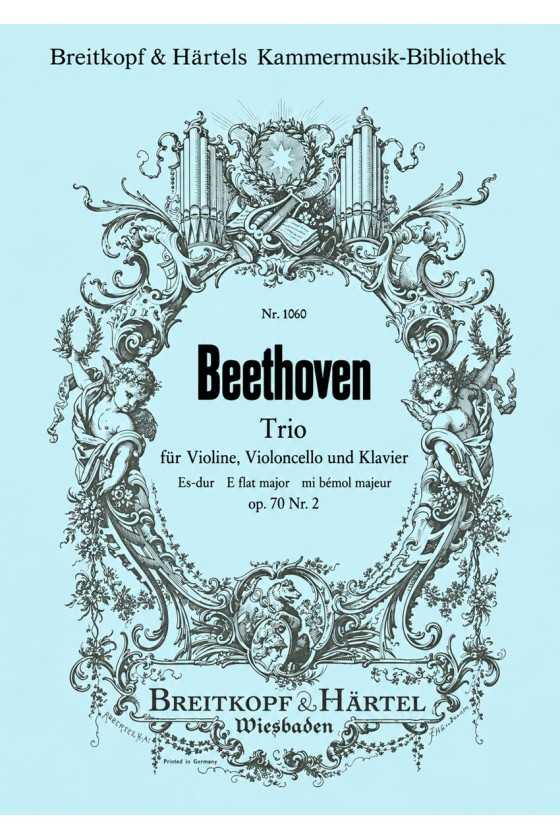
    Beethoven’s Piano Trio in E-flat Major, Op. 70 No. 2 is a sophisticated chamber work for violin, cello, and piano, published by Breitkopf & Härtel. With expressive melodies, intricate instrumental dialogue, and balanced writing across the ensemble, it is excellent repertoire for advanced chamber musicians.

    Key Features:

    For violin, cello, and piano

    E-flat Major, Op. 70 No. 2

    Published by Breitkopf & Härtel

    Set of parts

    Catalogue No. KM 1060

    Advanced Classical chamber repertoire

    Ideal for study and performance

    $54.95 Price

    Beethoven 3 Duets For Violin & Cello (Kalmus)

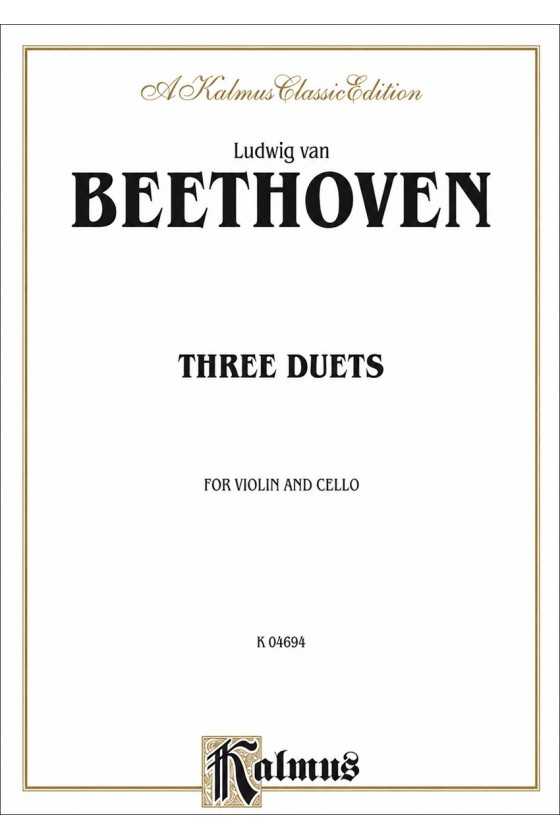
    Beethoven’s Three Duets, WoO 27 presents three engaging works in C major, F major, and B-flat major for violin and cello. Published in the Kalmus Edition, this 32-page collection includes separate parts for both instruments and offers excellent Classical repertoire for developing ensemble skills, phrasing, and musical communication.

    Key Features:

    Three duets for violin and cello

    WoO 27 Nos. 1–3

    Keys of C, F and B-flat major

    Separate violin and cello parts

    Kalmus Edition

    32 pages

    Catalogue No. K04694

    $36.25 Price

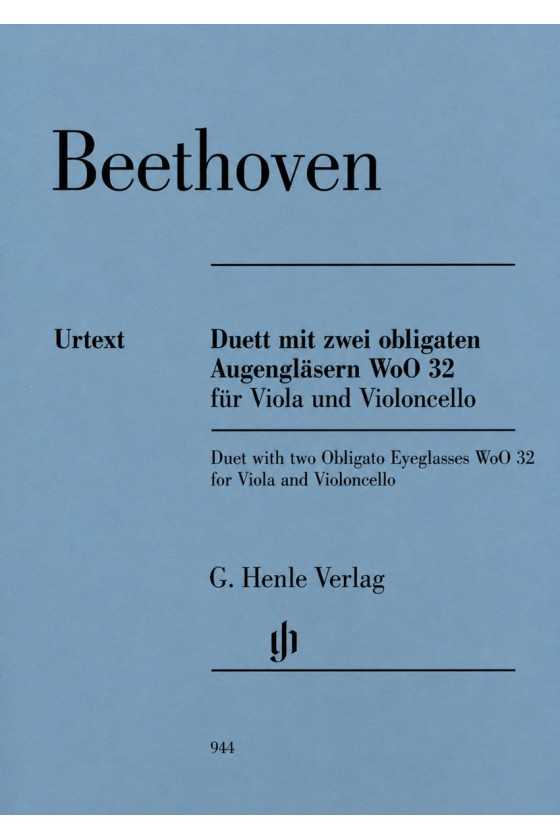
    Beethoven Duet 'With 2 Obligato Eyeglasses' For Viola & Cello

    Duet "With Two Obligato Eyeglasses" by Ludwig van Beethoven is a charming Classical duet for viola and cello that highlights the lyrical qualities and expressive dialogue between both instruments. A favourite among chamber musicians, this engaging work offers rewarding repertoire for study and performance.

    Key Features:

    Music by Ludwig van Beethoven

    Duet in E-flat Major, WoO 32

    For viola and cello

    Classic Classical chamber repertoire

    Suitable for intermediate and advanced players

    Develops ensemble playing, phrasing, and intonation

    Ideal for lessons, examinations, recitals, and chamber music

    Equal musical roles for both instruments

    Timeless educational and performance repertoire

    Valuable addition to every chamber music library

    $89.95 Price

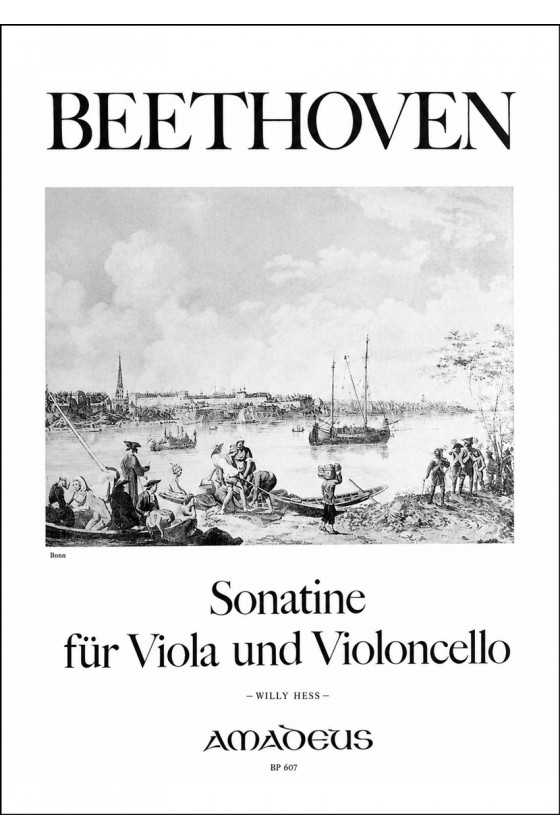
    Beethoven Sonatine For Viola And Cello (Amadeus)

    Sonatine for Viola and Cello by Ludwig van Beethoven, published by Amadeus Verlag, is a charming Classical chamber work that highlights the rich musical partnership between viola and cello. Combining lyrical melodies with engaging ensemble writing, it is an excellent choice for developing chamber musicians.

    Key Features:

    Music by Ludwig van Beethoven

    Published by Amadeus Verlag

    For viola and cello

    Classical chamber music repertoire

    Suitable for intermediate and advancing players

    Develops ensemble playing, tone, phrasing, and intonation

    Ideal for lessons, examinations, recitals, and chamber music

    Equal musical roles for both instruments

    Encourages expressive Classical interpretation

    Valuable addition to every chamber music library

    $29.95 Price

    Boxed:

    Sticky Add To Cart

    Font: