
Open 6 Days: Tuesdays-Saturdays 9-4, Sun 10-2, Mondays closed.

Jacob, Gordon

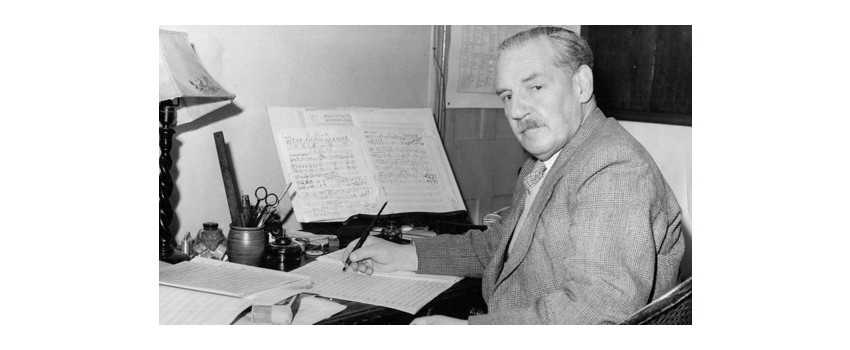
Septimus Gordon Percival Jacob (5 July 1895 – 8 June 1984) was a composer and teacher from England. From 1924 to 1966, he was a professor at the Royal College of Music in London, where he authored four books and numerous essays on music. He was a prolific composer, with over 700 works to his credit, most of which are his compositions, but a sizable minority are orchestrations and arrangements of other composers' works. William Byrd, Edward Elgar, and Noel Coward are among the composers whose work he orchestrated. Jacob wrote a lot of music. According to Grove, he composed 16 concertos for solo instruments, including trombone and timpani. In addition, more than 700 unique compositions or interpretations of existing music are listed on a website dedicated to Jacob. As a composer, Jacob was influenced more by early 20th-century French and Russian models than by German tradition, according to his biographer (and former pupil) Eric Wetherell. "Clarity of structure and instrumental writing that displays a great grasp of the possibilities and limitations of every instrument," comments Wetherell of Jacob. "As a general description, 'Good, but a little dry' might be justly applied to Jacob's work," The New York Times wrote in a review of a concert of his music conducted in 1939.

Between more ambitious compositions, Jacob created music for choral groups and school choirs in the 1920s and 1930s, which gave a consistent income. Wetherell's works from the 1920s include a viola concerto (1926), a piano concerto (1927), and the First Symphony (1929), which is dedicated to Jacob's favorite brother, who died in the First World War. Variations on an Original Theme (1935) and an oboe concerto for Léon Goossens (1935) are two large-scale works from the 1930s (1937)

Jacob, along with several other young composers, composed for the Sadler's Wells Ballet Company in the 1930s (now The Royal Ballet). Uncle Remus (1934), created for them, was his only original ballet (apart from student work, The Jew in the Bush (1928)). In addition, Jacob composed music for various propaganda films during WWII, and after the war, he composed the score for the feature film Esther Waters (1948). The austere Symphony for Strings (1943), written for the Boyd Neel Orchestra, reflects a more intimate perspective on the conflict.

One reviewer called Jacob's Second Symphony, which premiered on 1 May 1946 at a BBC studio recording, "probably the fascinating composition that has yet come from this composer." The work's depth of feeling, according to the reviewer, ranges from romantic thrill in the first movement to poignancy and rage in the two middle parts to an attitude of heroism in the final passacaglia. Music for a Festival (for brass and military bands), concertos for flute and horn, and the cantata A Goodly Heritage were all premiered in 1951, the year of the Festival of Britain.

Incidental music to a dramatized interpretation of the biblical Book of Job, originally presented at the Festival of the Arts, Saffron Walden, and afterward televised by the BBC, was among Jacob's later original compositions. The majority of Jacob's ballet scores were adaptations of older works, such as Les Sylphides (1932, with Chopin's music), Carnival (1932, with Schumann's music), Apparitions (1936, with Liszt's music), and Mam'zelle Angot (1936, with Liszt's music) (1947, Lecocq). Jacob arranged Nol Coward's one-act ballet London Morning for the London Festival Ballet in 1958. Jacob re-orchestrated the score of Frederick Ashton's ballet Marguerite and Armand in 1968, replacing Humphrey Searle's arrangement of Liszt's music.

Viola Compositions of Gordon Jacob | Animato Strings
  • Home
  • Perform
  • Viola Sheet Music
  • Composers Viola H-K
  • Jacob, Gordon


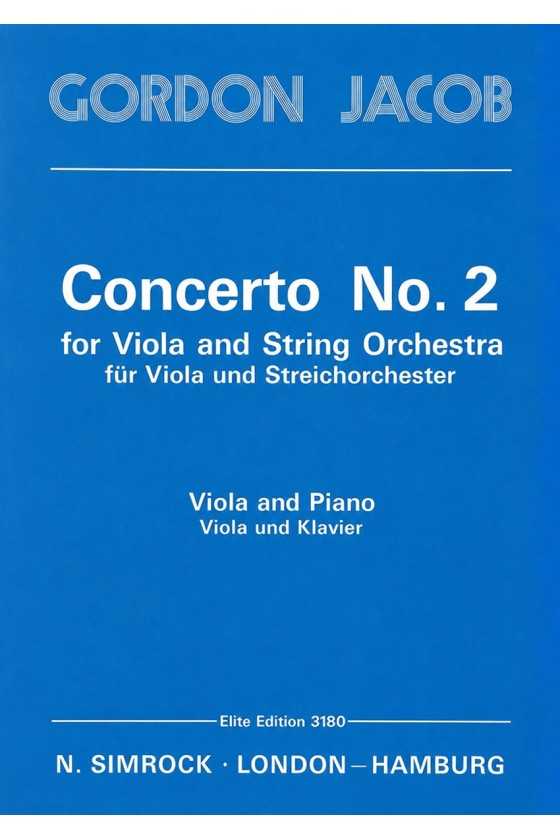
  • Jacob Concerto No.2 For Viola And Orchestra (Viola/Piano Reduction)

    Concerto No. 2 by Gordon Jacob is a compelling twentieth-century concerto for viola and orchestra, presented in a practical viola and piano reduction. Blending lyrical expression with refined British craftsmanship, this four-movement work is an excellent choice for advanced violists preparing for recitals, concerto performances, competitions, auditions, and conservatory study.

    Key Features:

    Music by Gordon Jacob

    Concerto No. 2 for viola and orchestra

    Viola and piano reduction

    Four-movement twentieth-century concerto

    Composed in 1979

    Suitable for advanced students and professional violists

    Develops tone, phrasing, articulation, and concerto technique

    Ideal for recitals, auditions, competitions, and conservatory study

    $41.95 Price
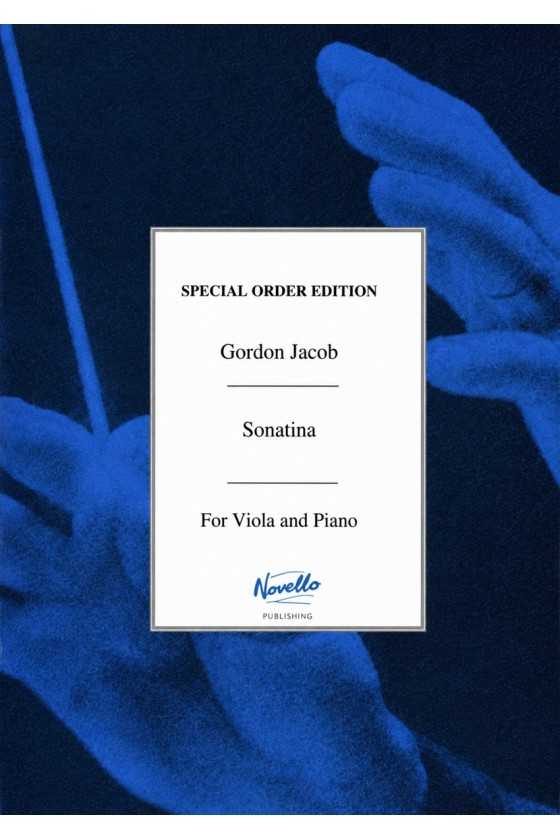
    Jacob Sonatina For Viola (Special Order Edition)

    Sonatina by Gordon Jacob is a beautifully crafted work for viola and piano that combines Classical elegance with the fresh harmonic language of twentieth-century British music. Available as a Special Order Edition, it is an excellent choice for intermediate and advanced violists seeking expressive and rewarding repertoire for recitals, conservatory study, examinations, and chamber music performance.

    Key Features:

    Music by Gordon Jacob

    Sonatina for viola and piano

    Available as a Special Order Edition

    Composed in 1946

    Elegant twentieth-century British chamber repertoire

    Suitable for intermediate and advanced violists

    Develops tone, phrasing, articulation, and ensemble musicianship

    Highlights Gordon Jacob's lyrical and accessible compositional style

    $36.95 Price

    Boxed:

    Sticky Add To Cart

    Font: