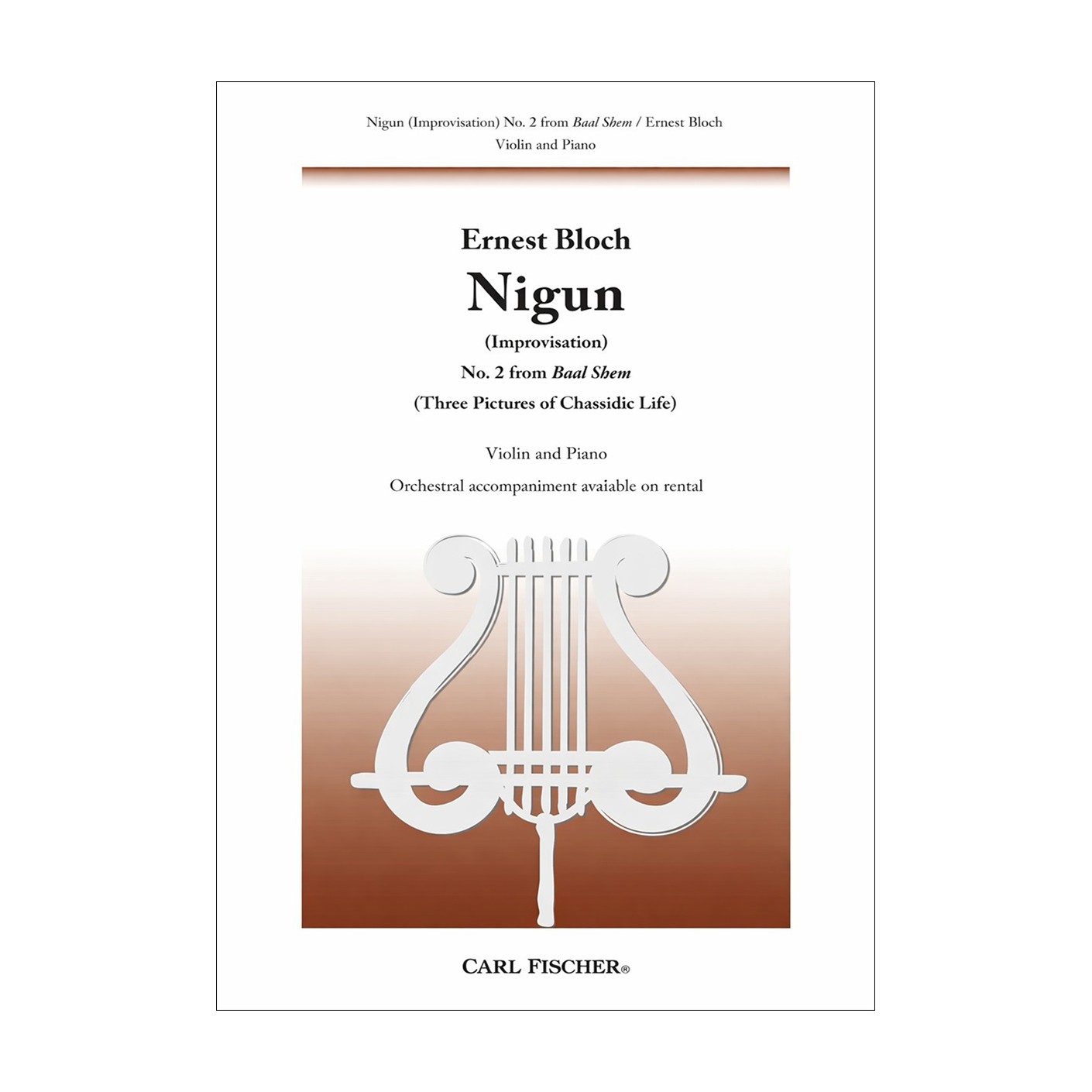
Nigun (Improvisation) from Baal Shem for Violin by Ernest Bloch, published by Carl Fischer, is a profoundly expressive solo that transforms the violin into a voice of prayer and longing.
Key features
• Deeply emotional and spiritual
• Vocal, improvisatory violin writing
• Demands expressive intensity and sincerity
• A landmark work of 20th-century violin repertoire
Nigun (Improvisation) from Baal Shem for Violin by Ernest Bloch, published by Carl Fischer, is one of the most emotionally charged and immediately recognizable works in the modern violin repertoire; drawn from Bloch’s Baal Shem (Three Pictures of Chassidic Life), Nigun unfolds as an intense, improvisatory outpouring in which the violin sings, cries, and prays, channeling deep spiritual longing through raw melodic line, flexible rhythm, and a uniquely Jewish musical voice that transcends cultural boundaries.
Key features:
Suite No. 1 for Solo Violin by Ernest Bloch is a gripping solo work that combines modern expression with deep spiritual and emotional resonance.
Key features
• Intense, expressive solo violin writing
• Rich in character, color, and personal voice
• Demands interpretative depth and commitment
• Essential 20th-century solo violin repertoire
Bloch: Sonata for Violin and Piano by Ernest Bloch, published by Masters Music, is a powerful modern masterpiece that challenges performers with its emotional intensity and uncompromising expressive depth.
Key features
• Intense, psychologically charged chamber music
• Equal partnership between violin and piano
• Demands expressive courage and stamina
• Essential major work of the modern violin repertoire
Simchas Torah (Rejoicing) No. 3 from Baal Shem for Violin by Ernest Bloch is a thrilling, dance-driven work that captures spiritual joy through raw energy and rhythmic brilliance.
Key features
• Explosive, celebratory character
• Rhythmic vitality and folk-inspired drive
• Bold, extroverted violin writing
• A dynamic recital showpiece