
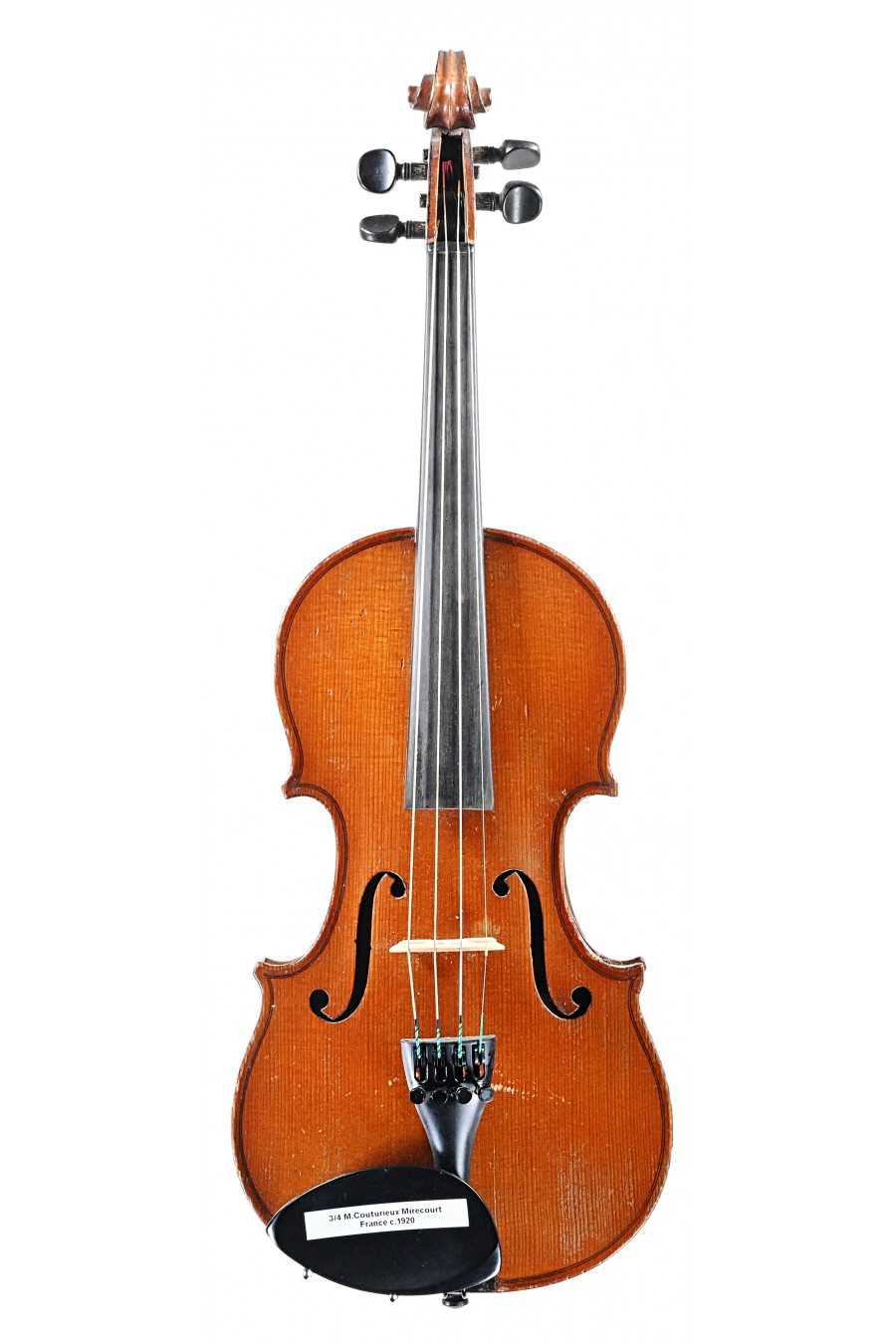
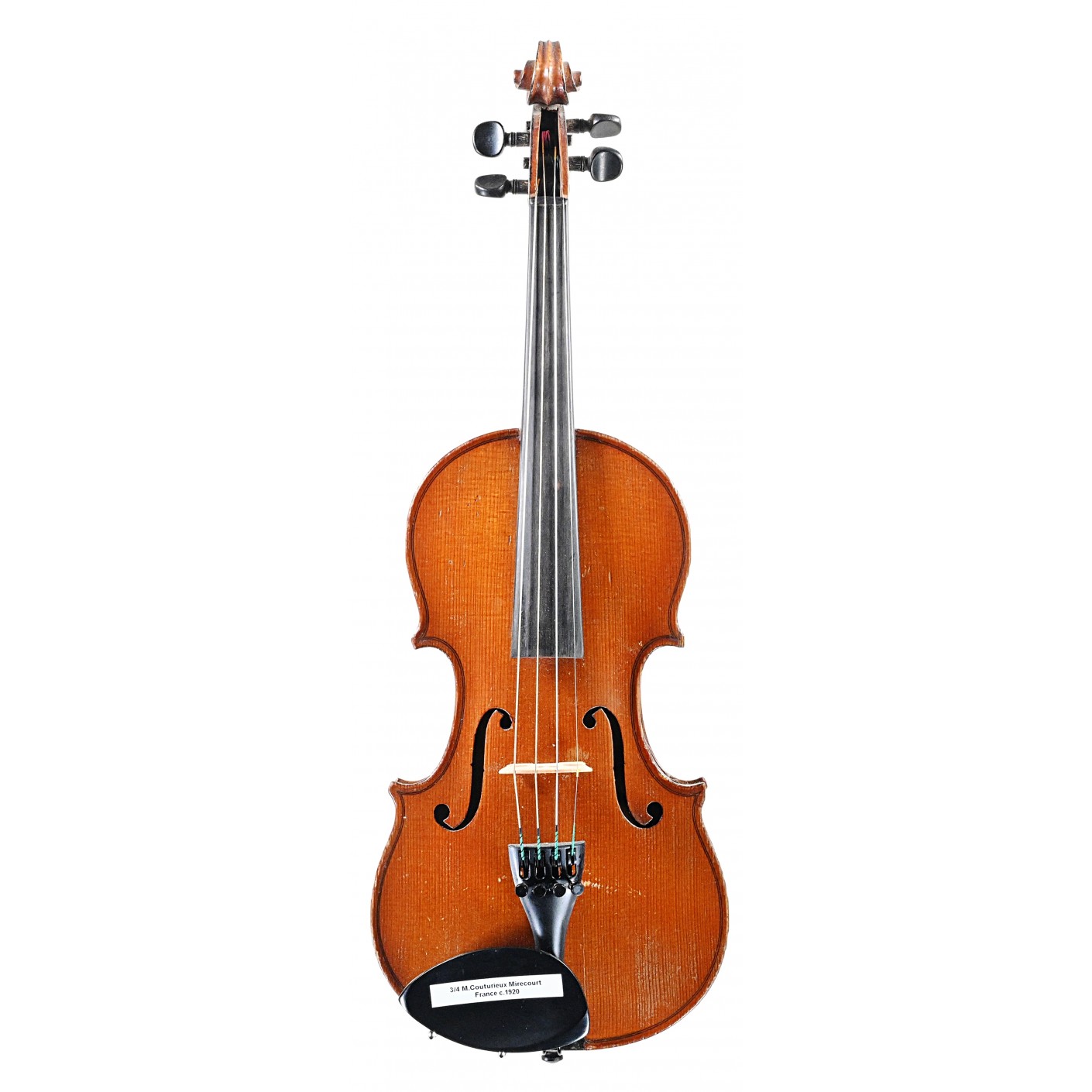
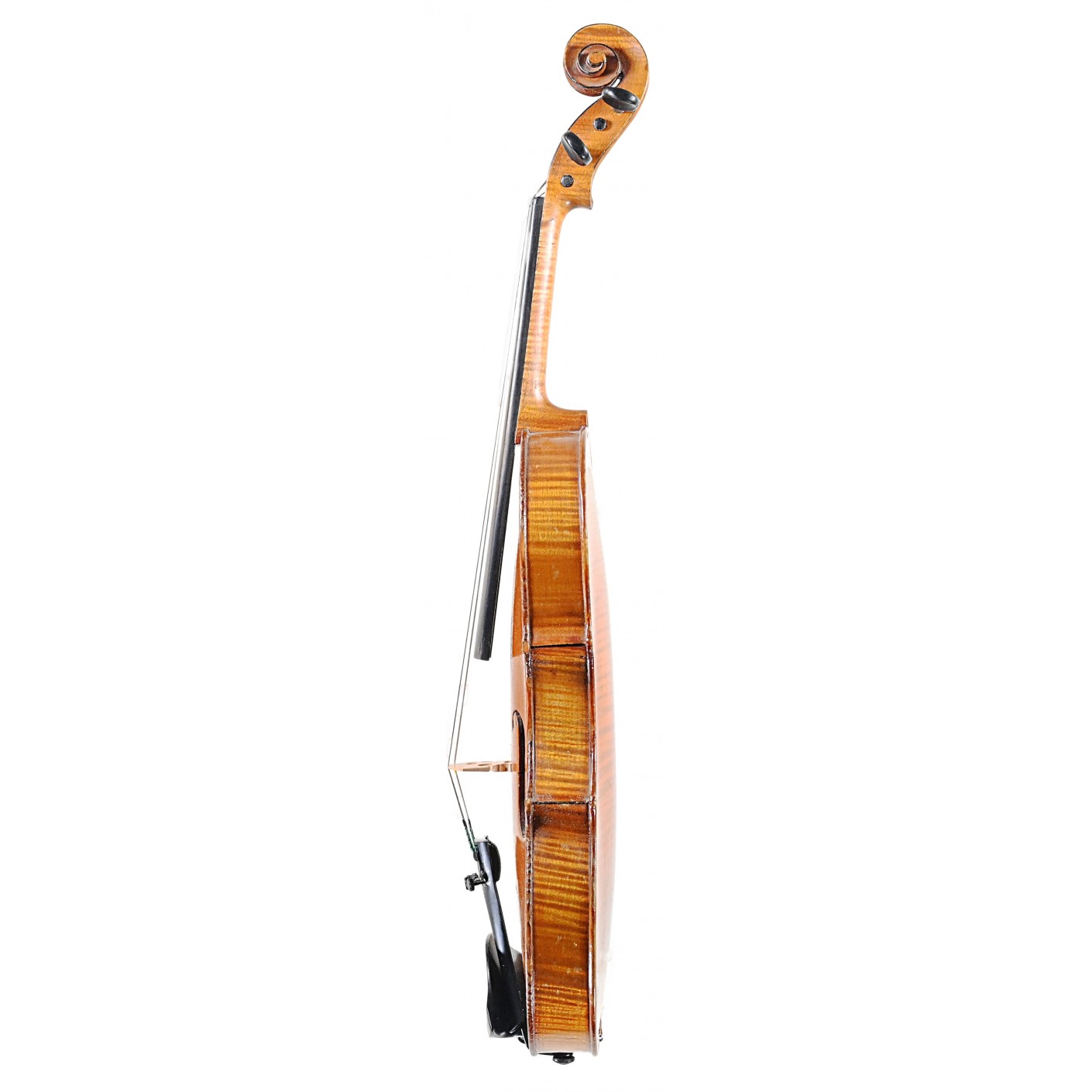
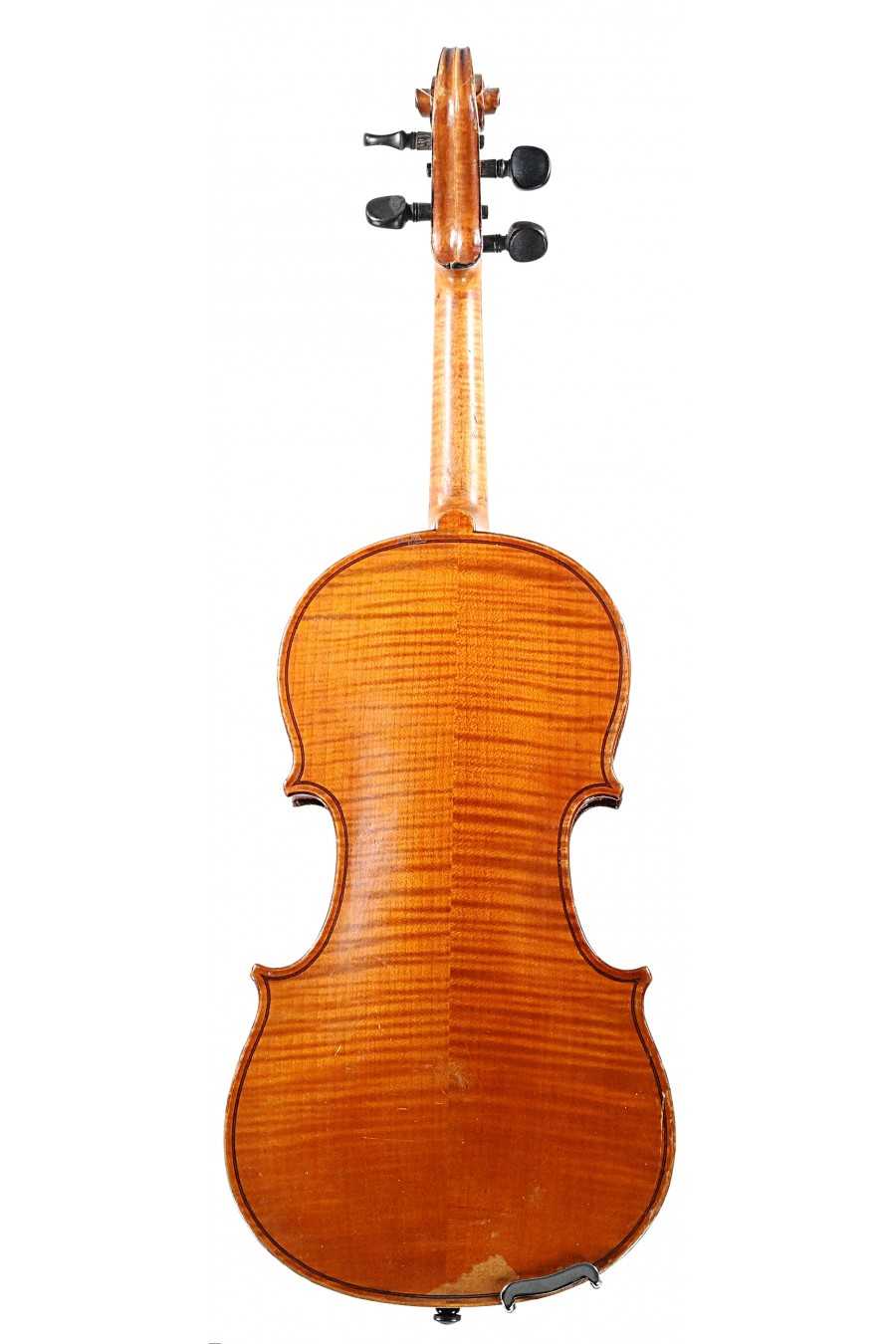
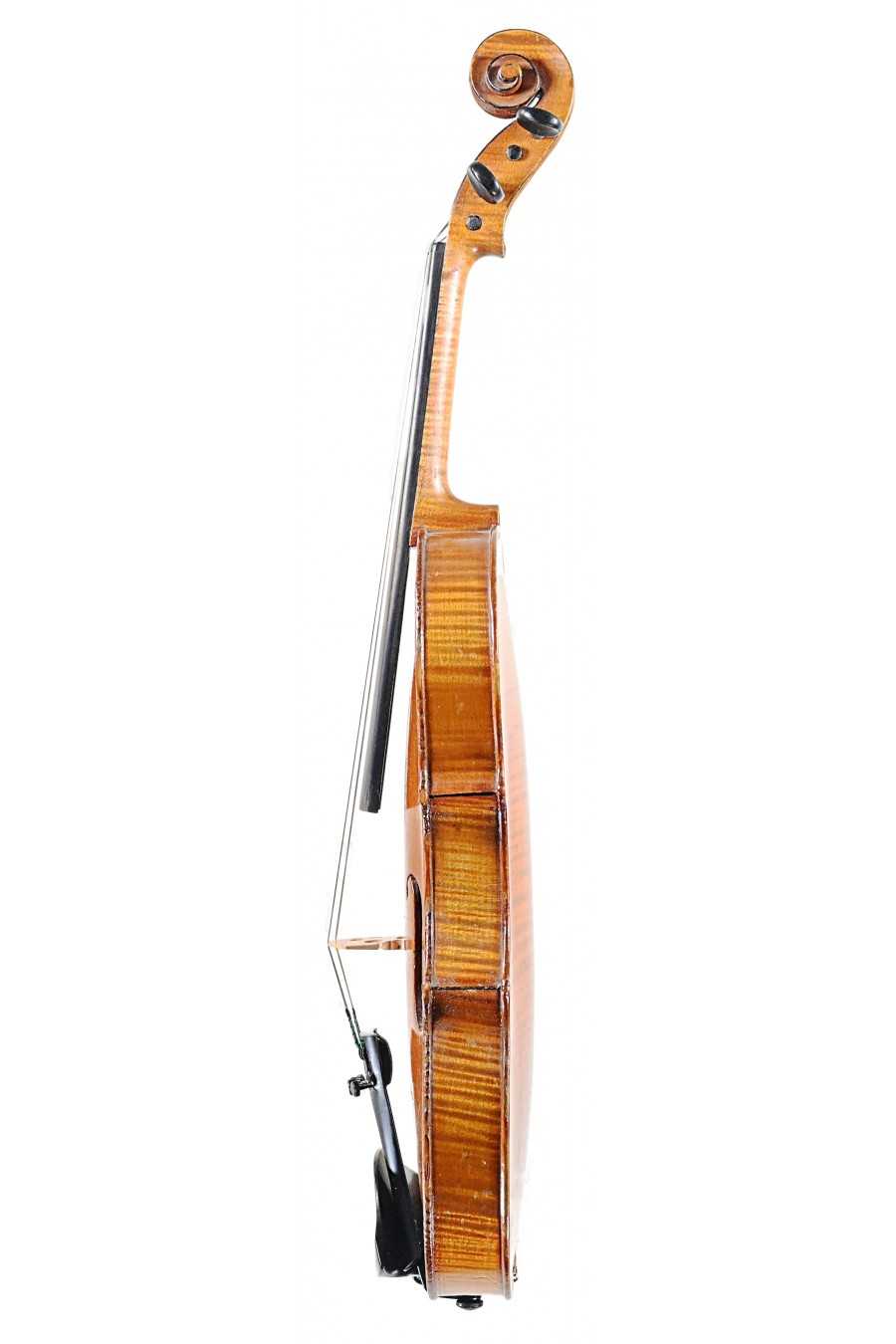
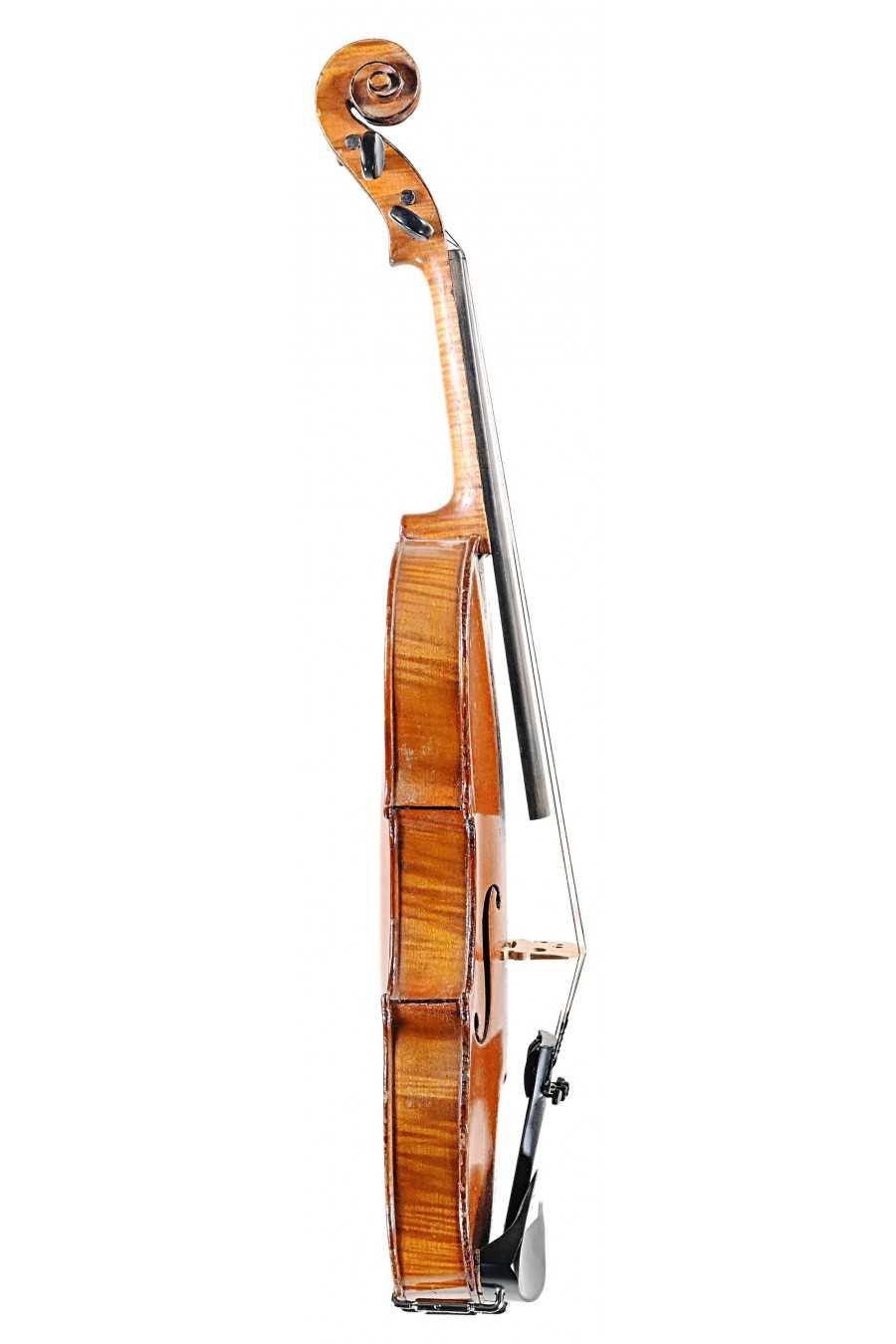
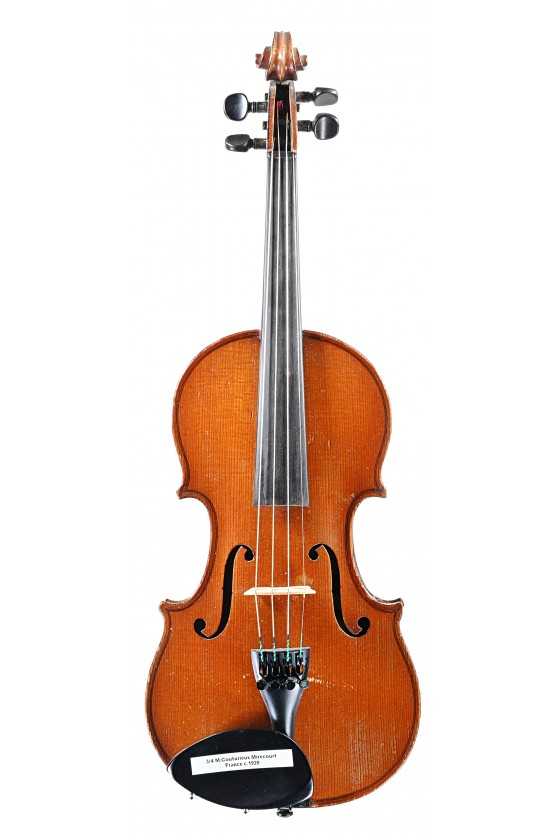
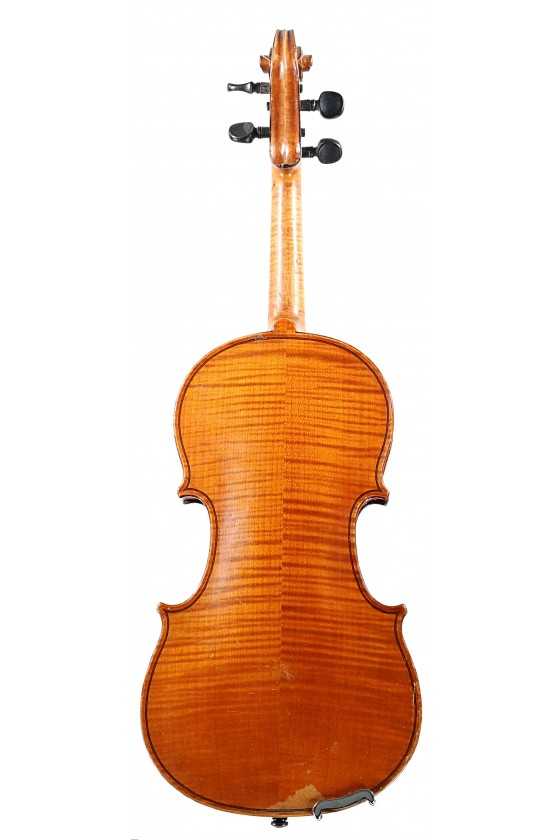
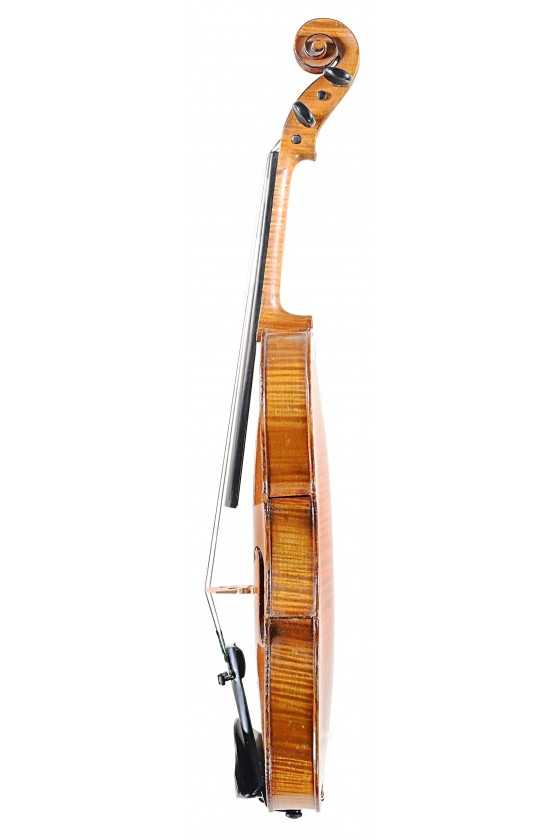
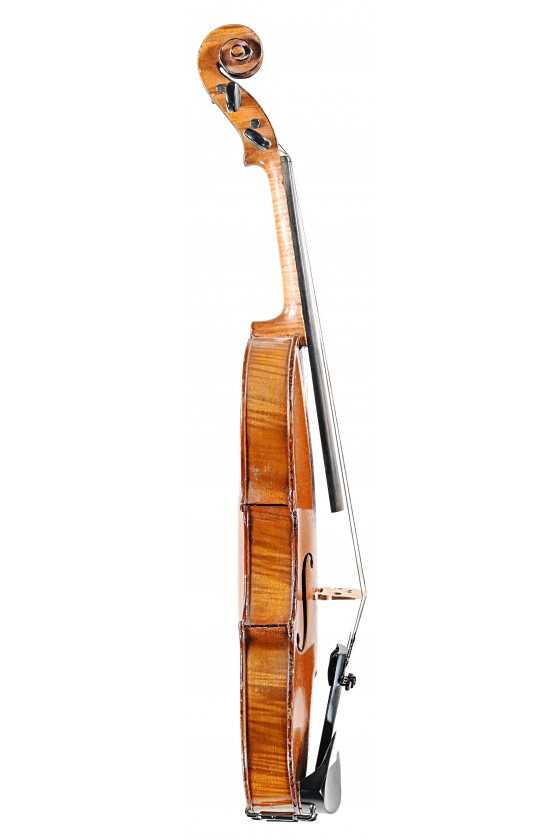
3/4 M. Couturieux Violin Mirecourt, France c. 1920
Michel Couturieux (1860 – 1895) is a French violin maker in Mirecourt in the mid – 19th century. Michel Courturieux’s violin is characterized by its attractive appearance, magnificent, clear, and yet sweet and bright sound.
This violin is Labelled Collin-Mezin and was made in Paris dated 1911. Charles Jean Baptiste Collin-Mezin came from a line of luthiers where he created various instruments considered superior to other new instruments. This violin is most likely an early copy.
This is the Paul Kaul violin made in France dated 1918. Paul Kaul is a French violin maker who joined several workshops such as Thibouville Lamy, Silvestre and Maucotel, Vuillemin-Didion. He started several workshops on rue Racine, Nantes in 1907, rue du Pont Communeau in 1908, and at 130 Boulevard Brune in 1926.
This is a Henri Farny violin made around 1910 and imported from Mirecourt, France to the USA with a label. Henri Farni’s works were mostly imported by Rembert Wurlitzer from Mirecourt, France to Cincinnati and New York USA.
Amati Mangenot made this violin, but he "Italianised" his name and city, resulting in Mageno and Bordo.
Amati Mangenot (1901 – 1966), a French luthier, crafted this violin. He collaborated with the Laurent brothers and later took over Emile Laurent's workshop in Bordeaux.
This French violin (copy) has a powerful sound and was made after Roger & Max Millant in Paris. It has a subtle and radiant voice. This violin is in excellent condition, making it suitable for professional musicians.
This is a Collin - Mezin violin made in Paris in 1902. Charles Jean Baptiste Collin-Mezin (1841–1923) was a Parisian luthier an Officier de l'Académie des Beaux-Arts and won gold and silver medals in 1878, 1889, and 1900 at the Paris Exhibitions.
Lambert-Humbert Frères was a well-known violin manufacturer in Mirecourt from 1876 to 1969. They produced various instruments from reputable makers like Joseph Aubry and Georges Apparut. The company changed to L.F.M. in 1919 and obtained the prestigious brand “A La Ville de Cremone” in 1927. Unfortunately, the industry declined in the mid-20th century, leading to the closure of all major firms by the 1960s, including Laberte.
