
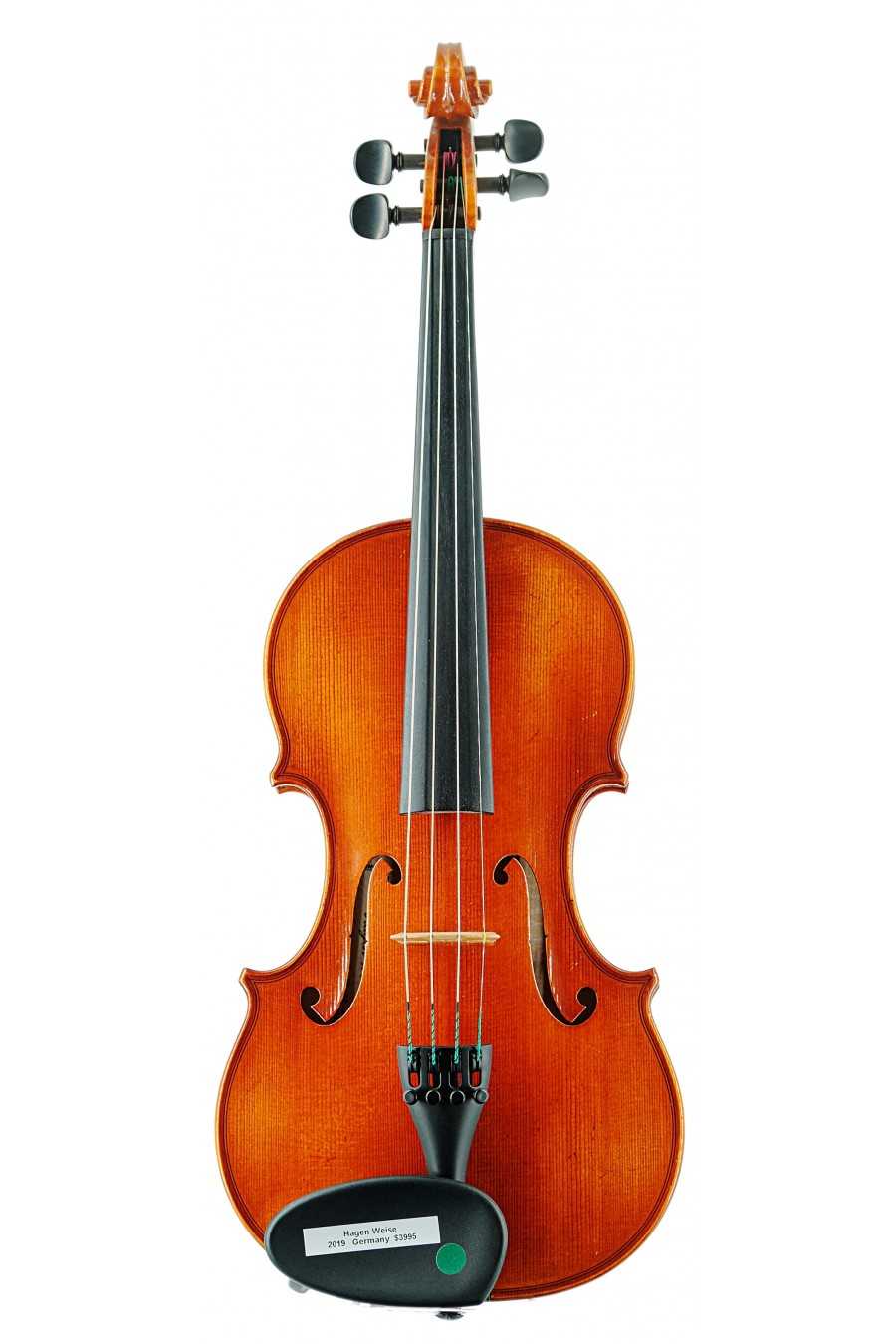
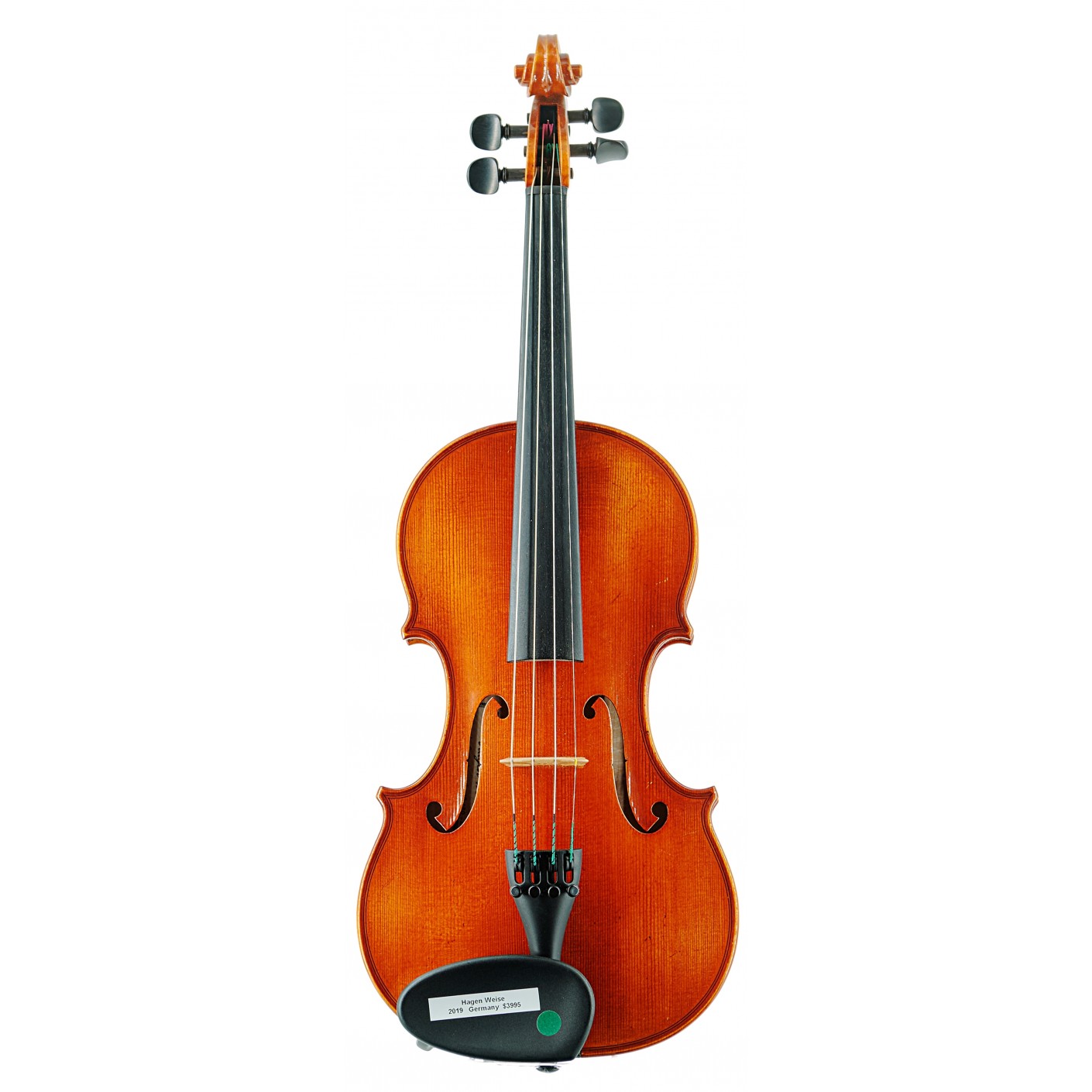
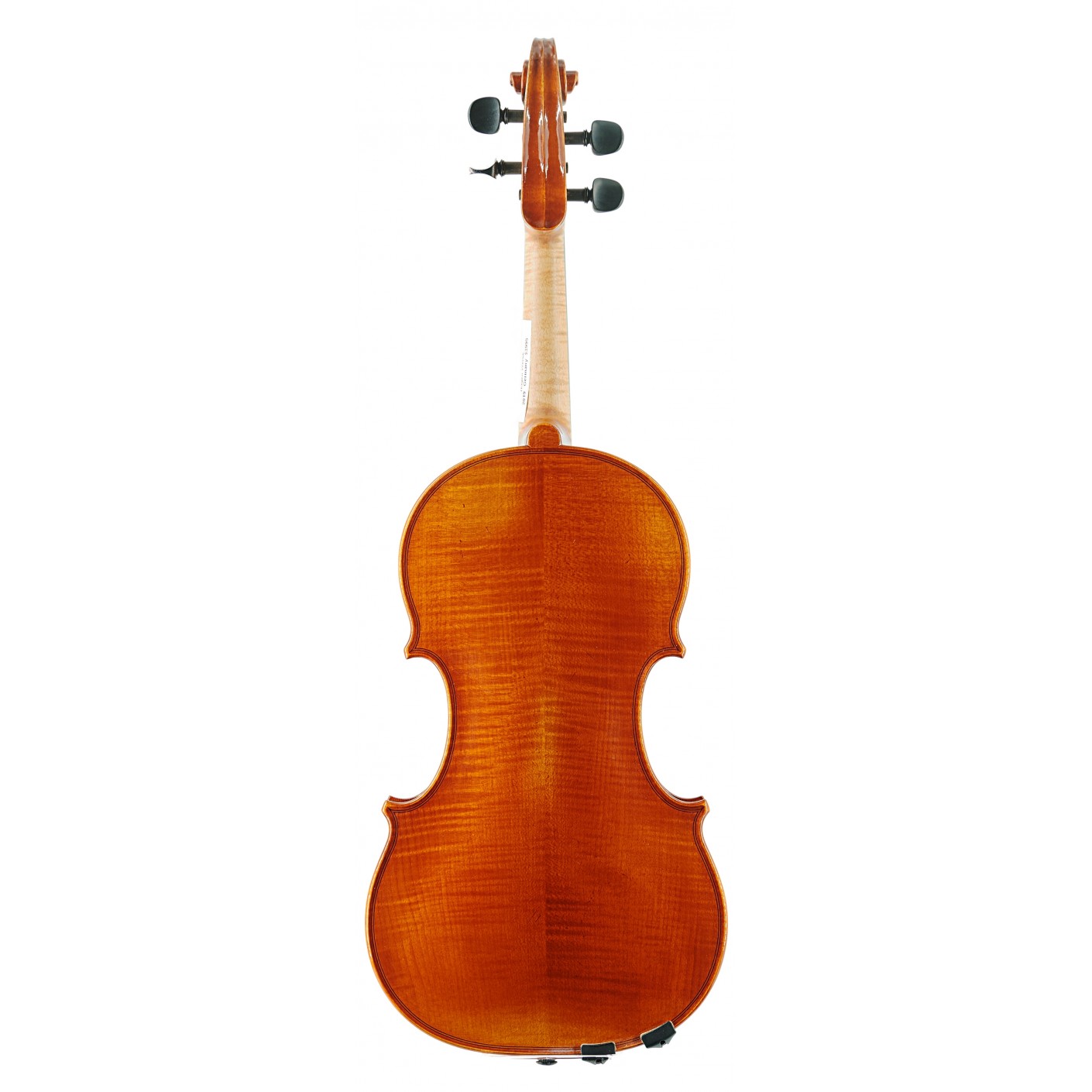
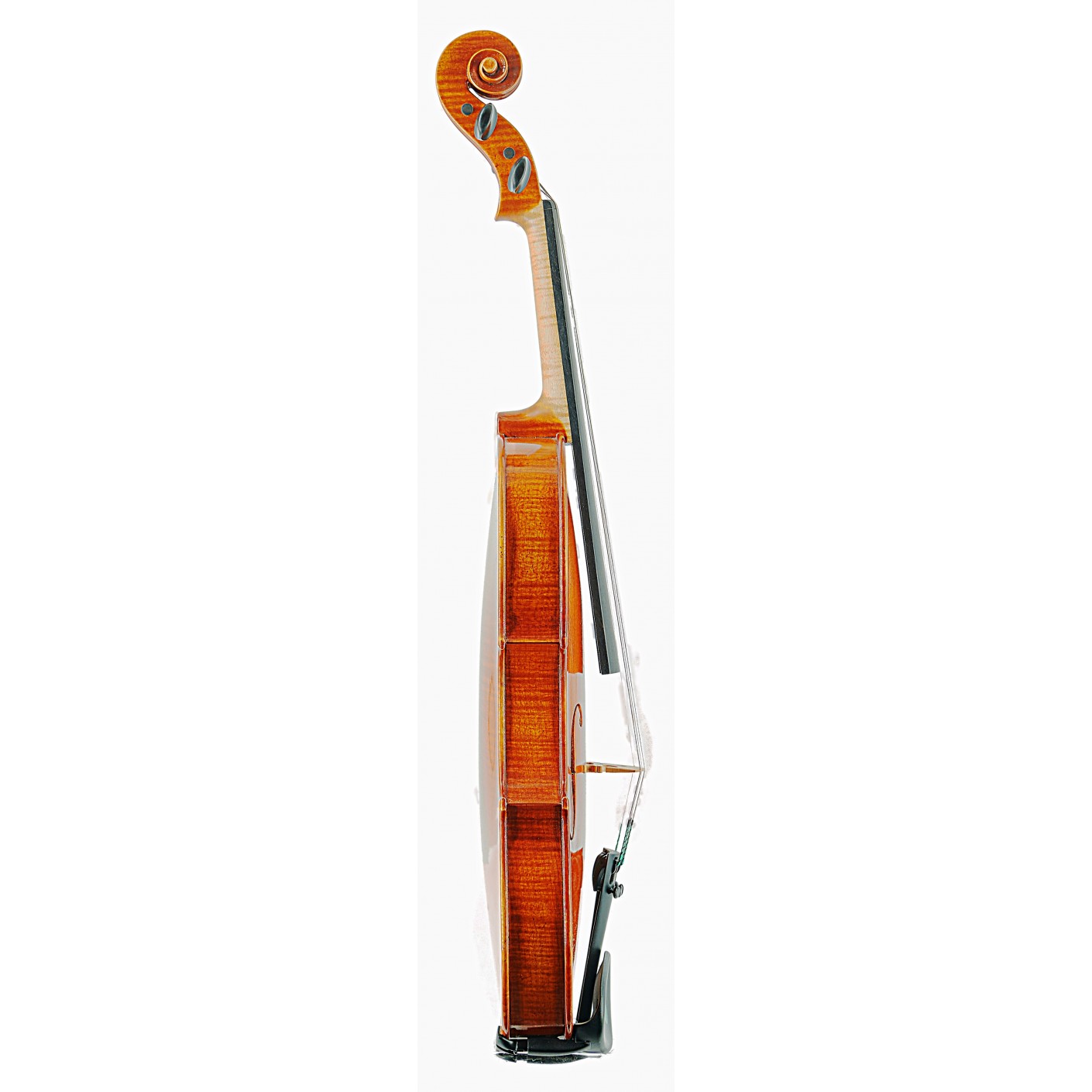
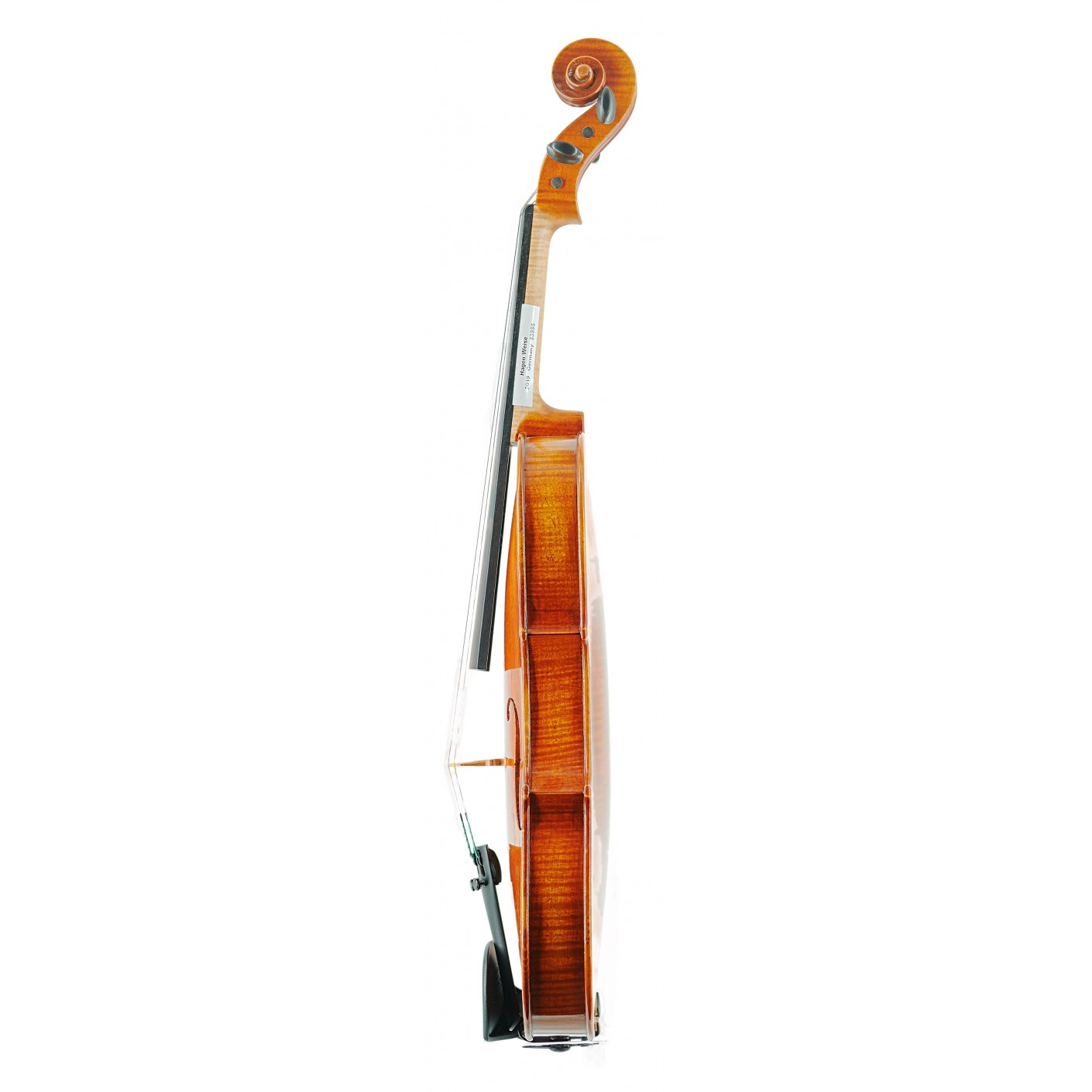
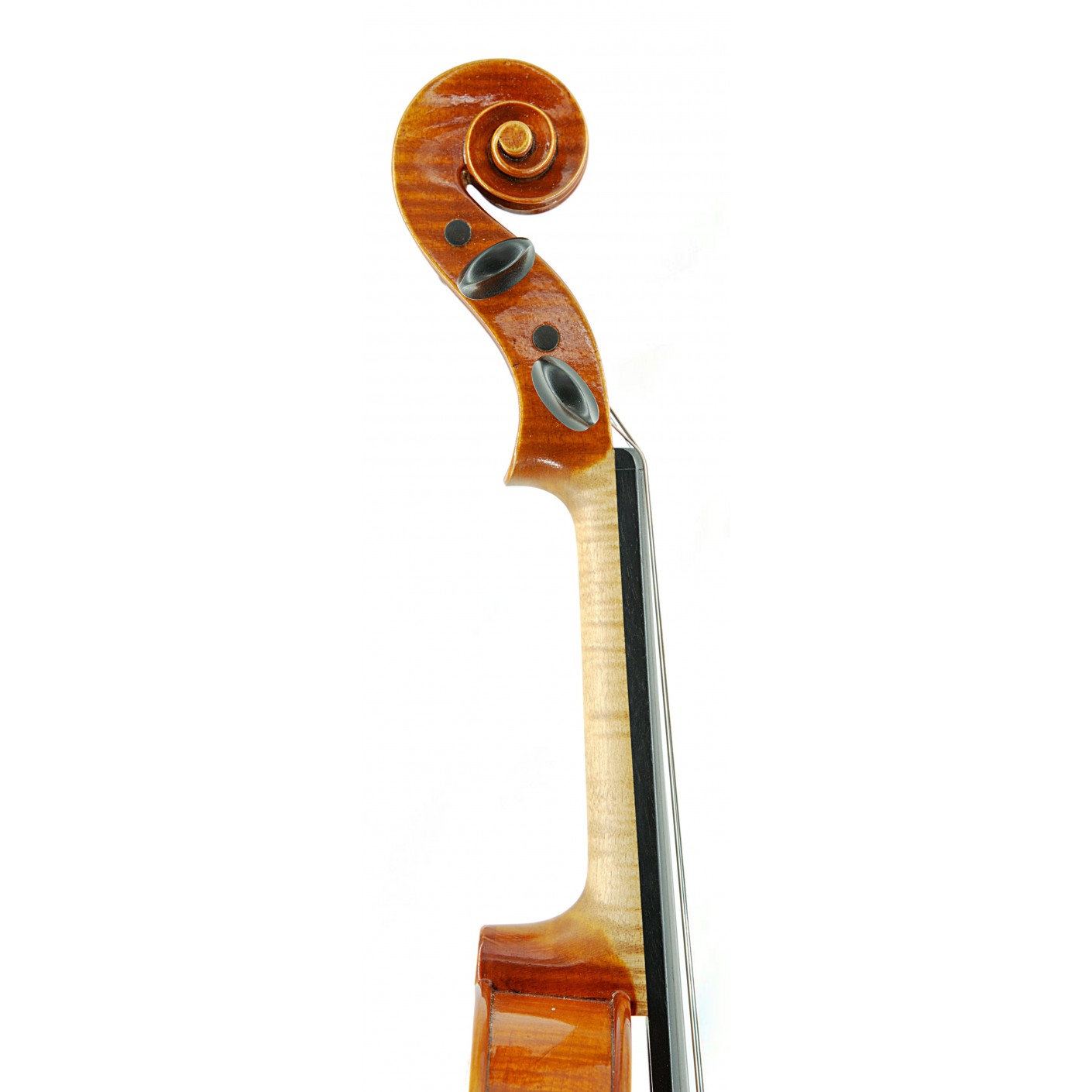
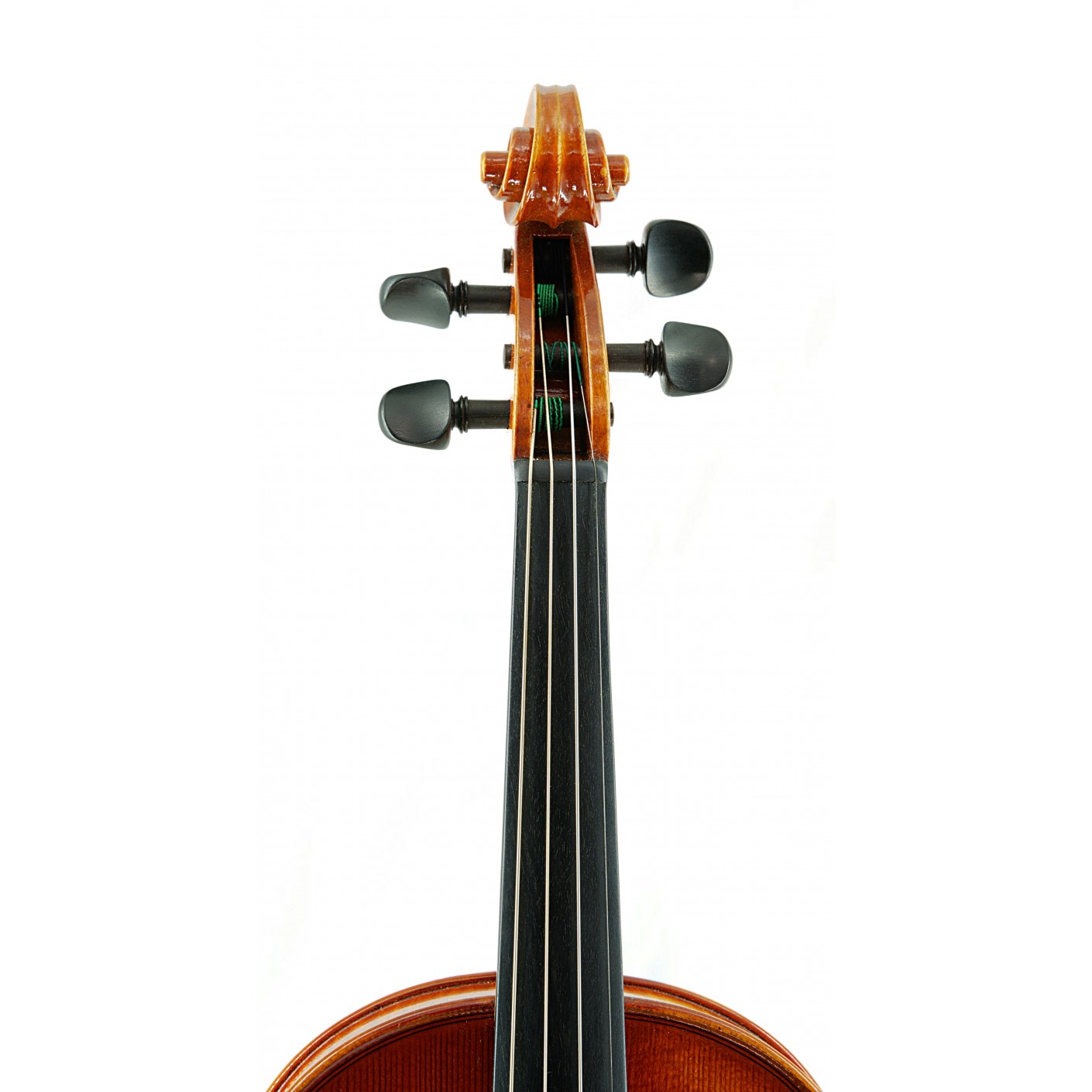
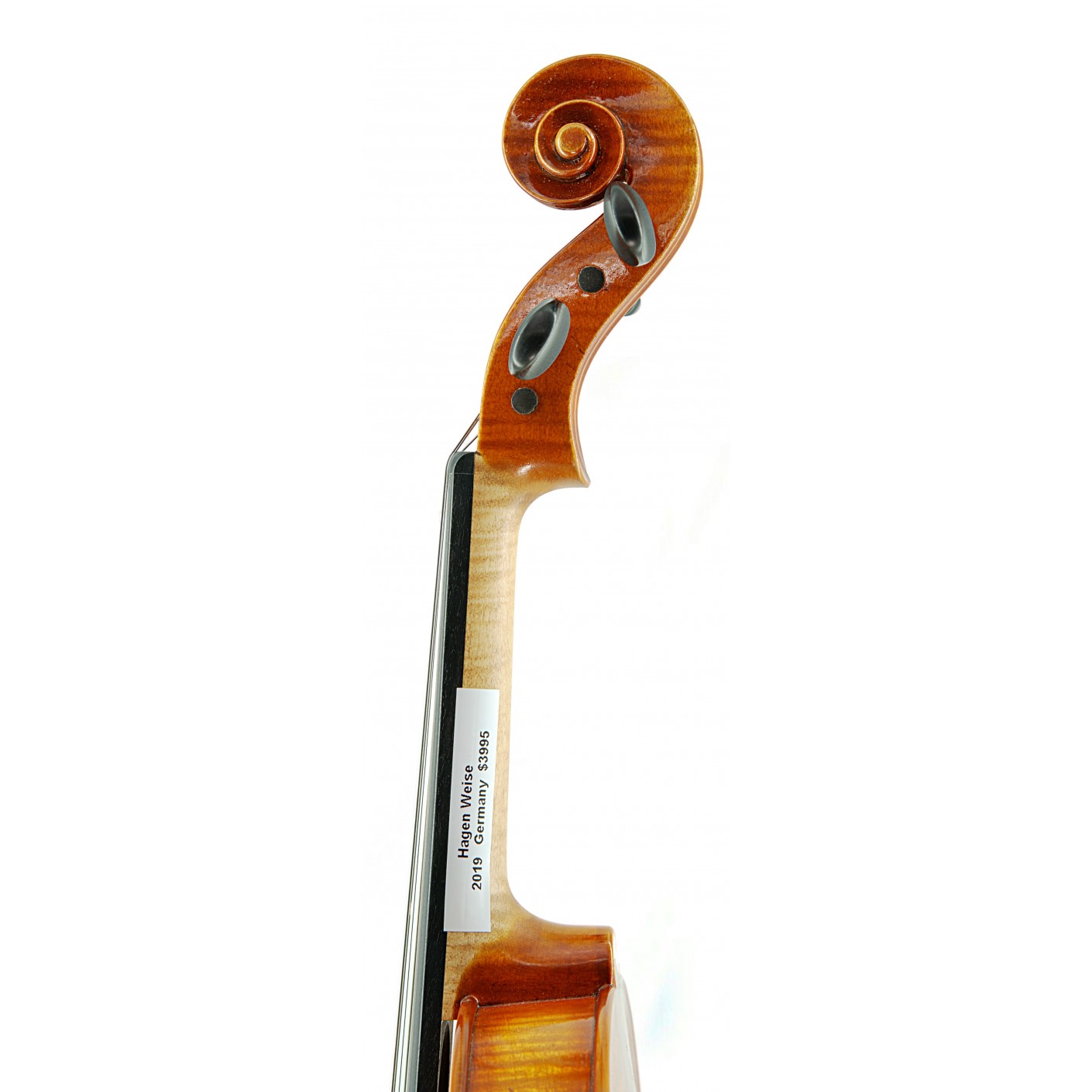
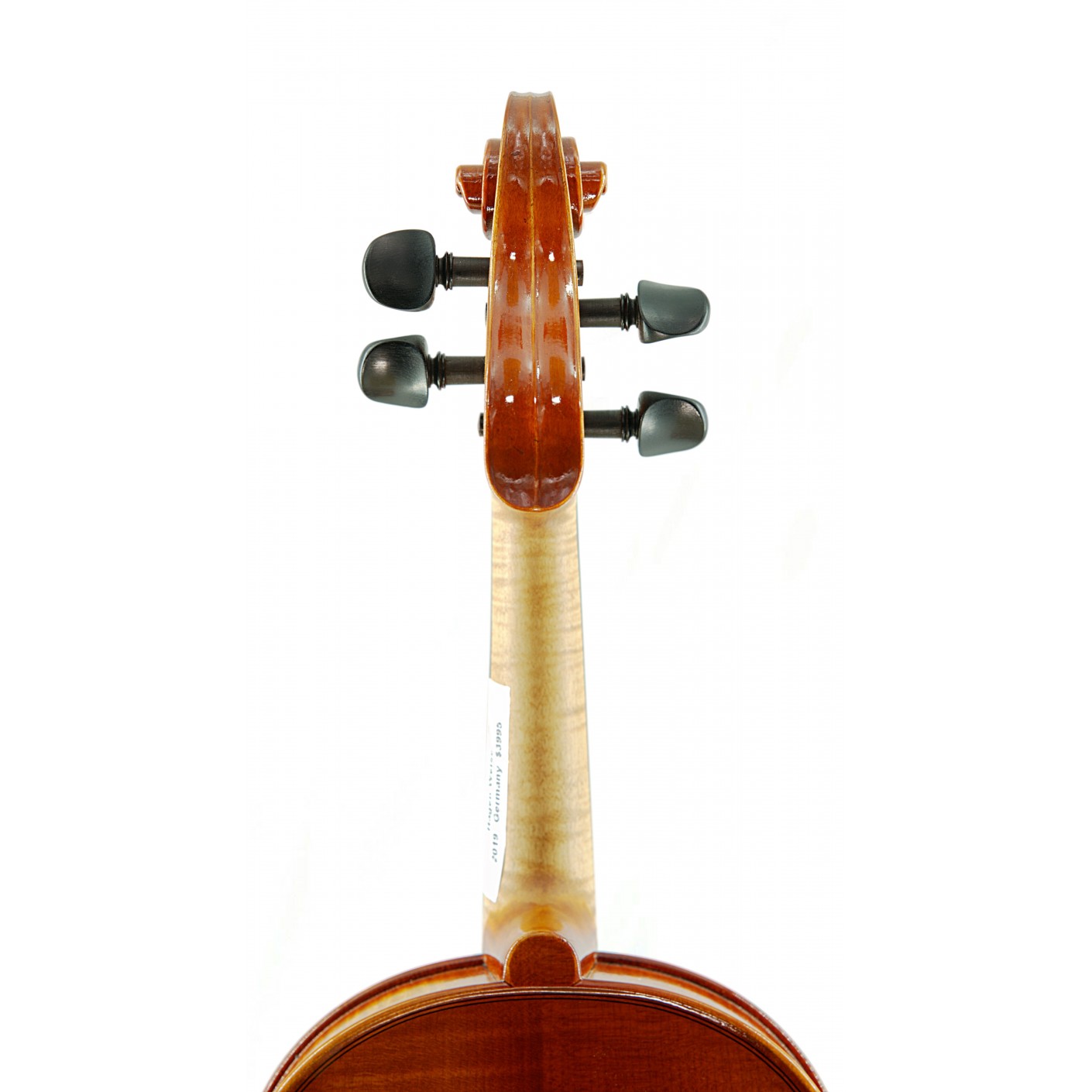
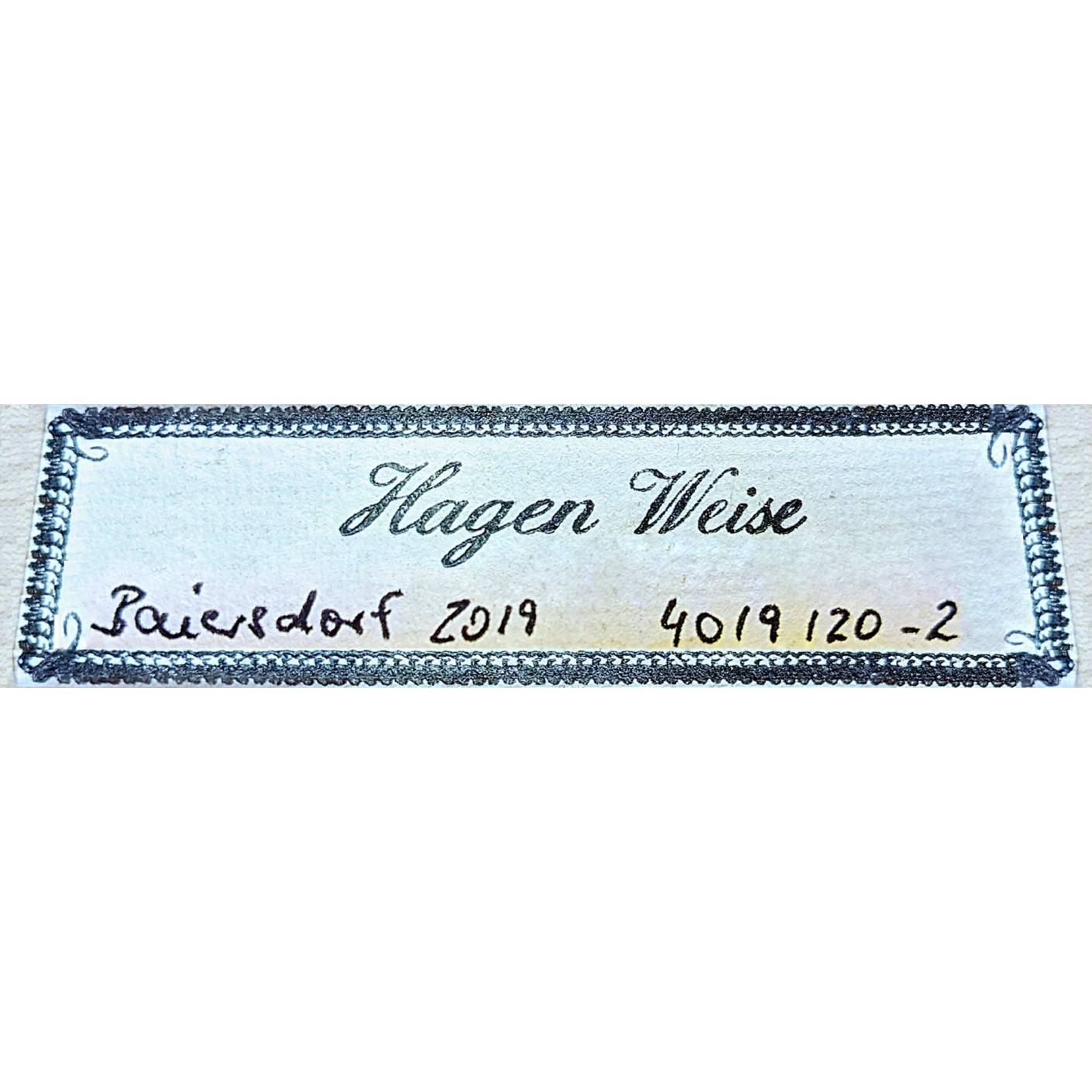
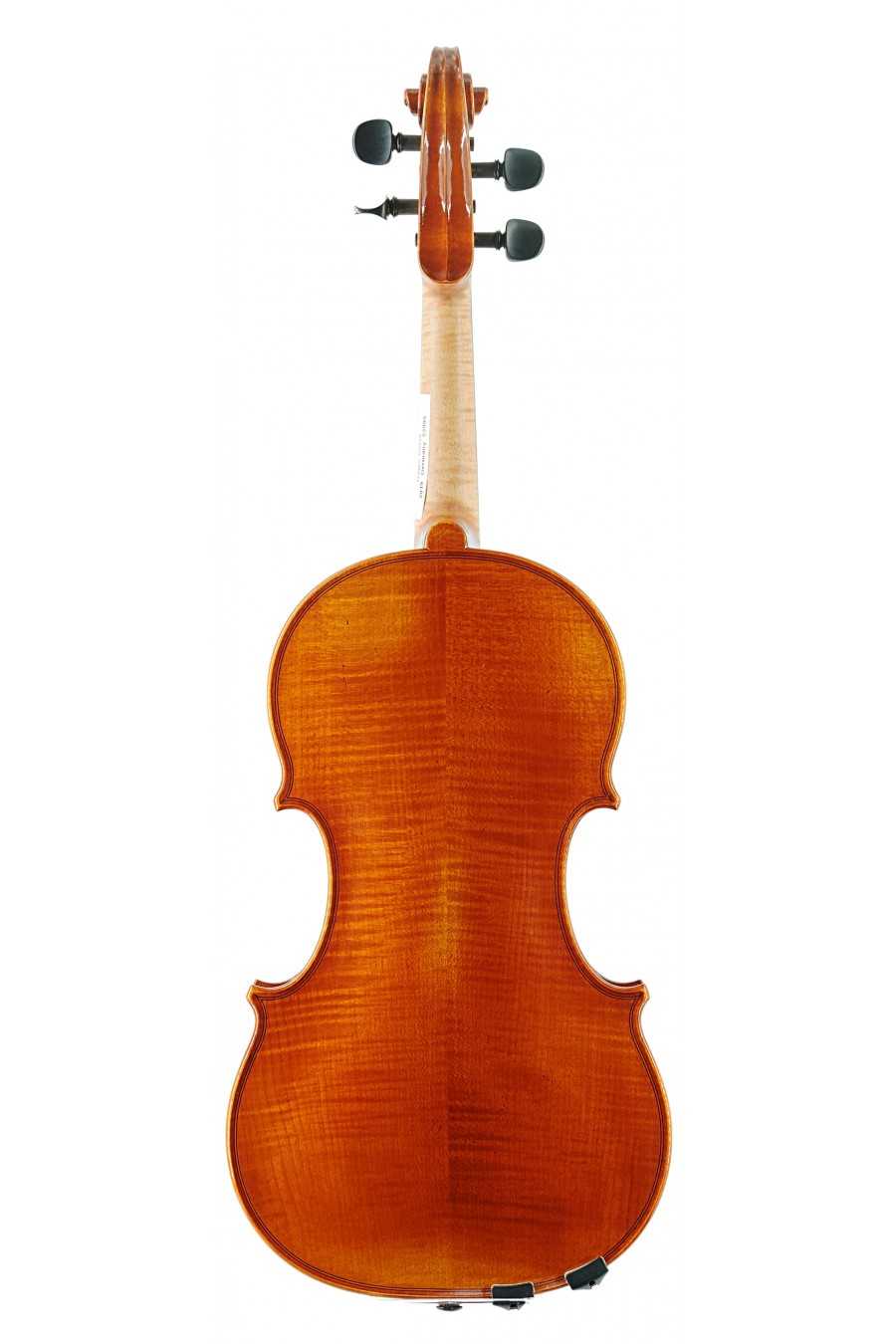
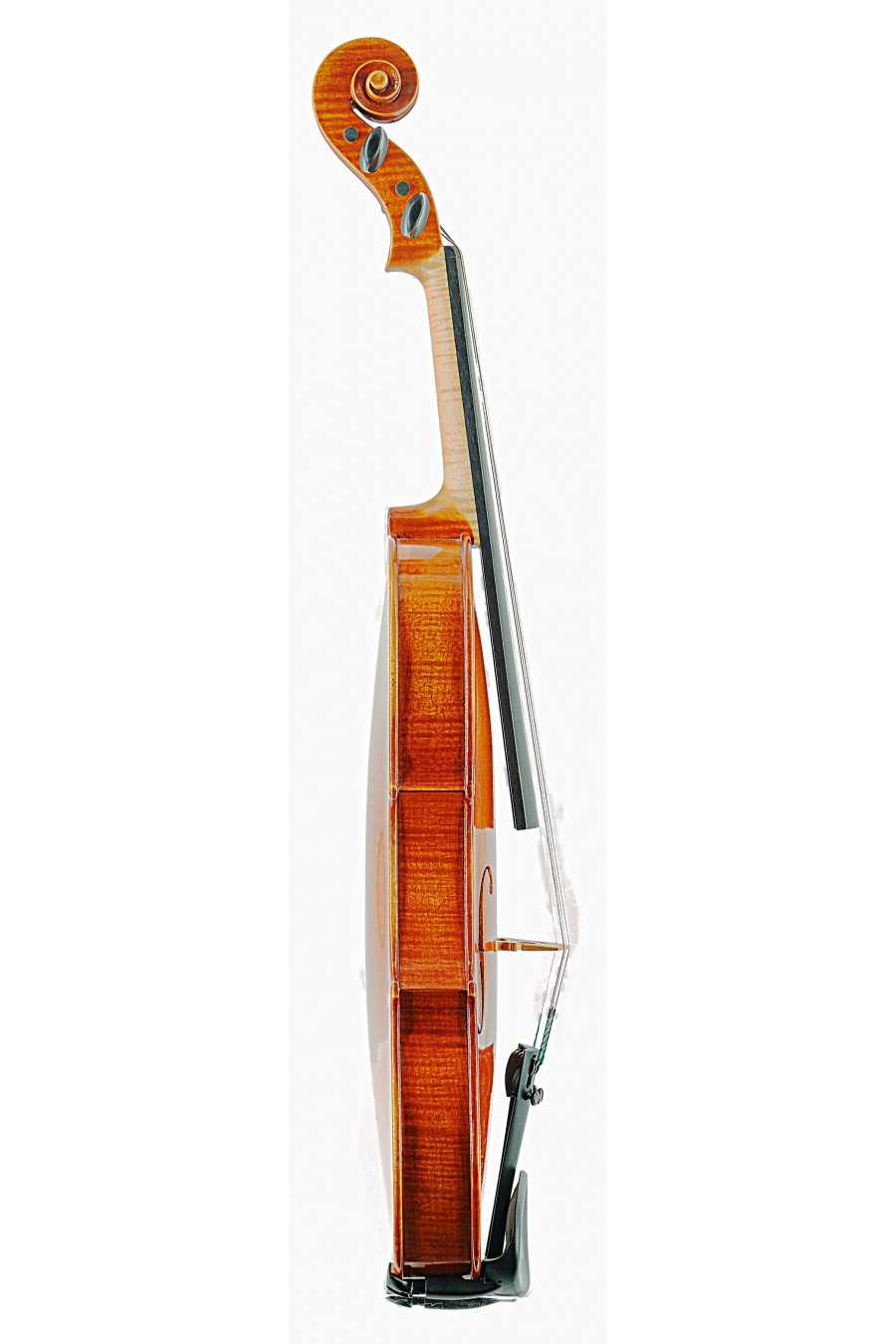
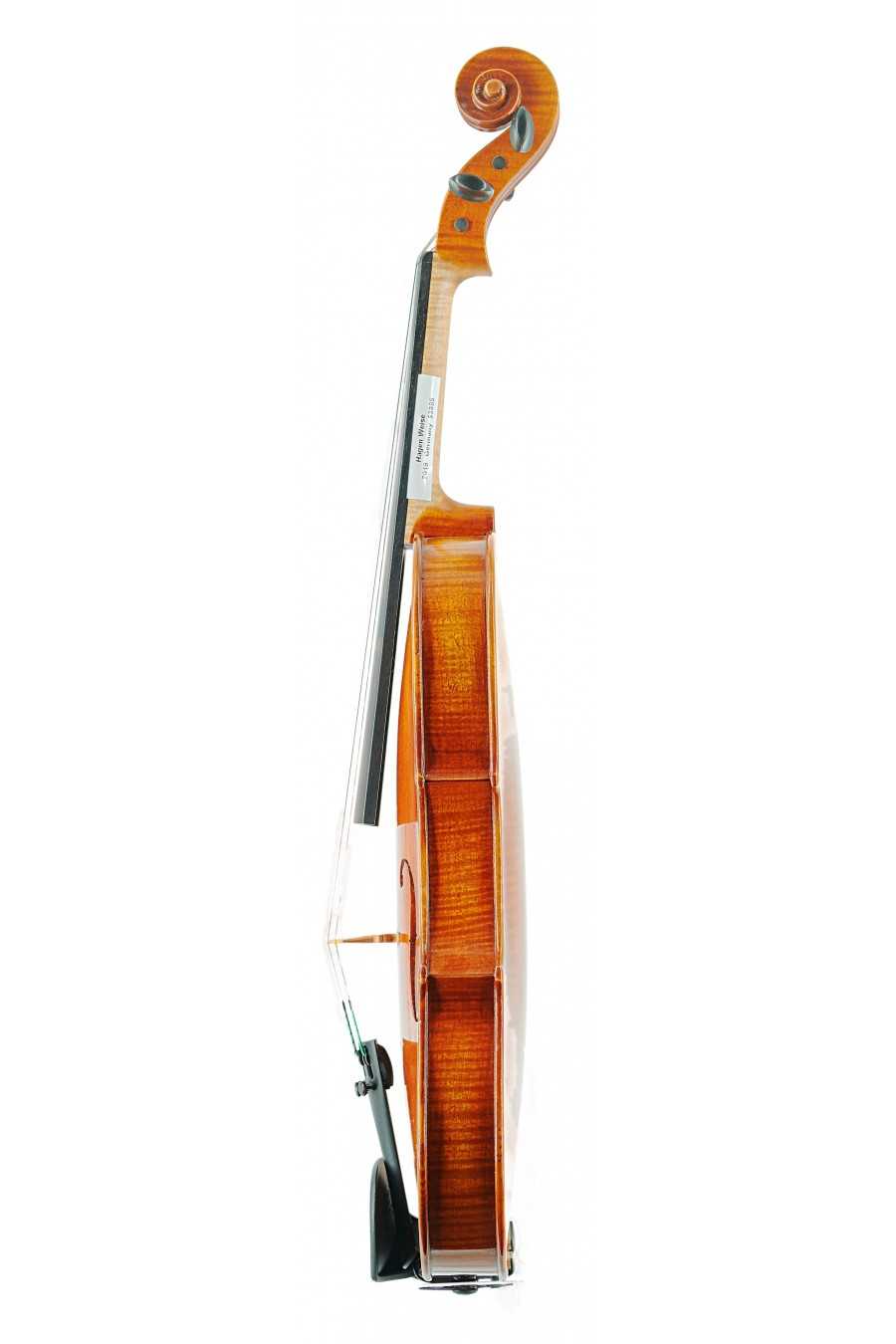
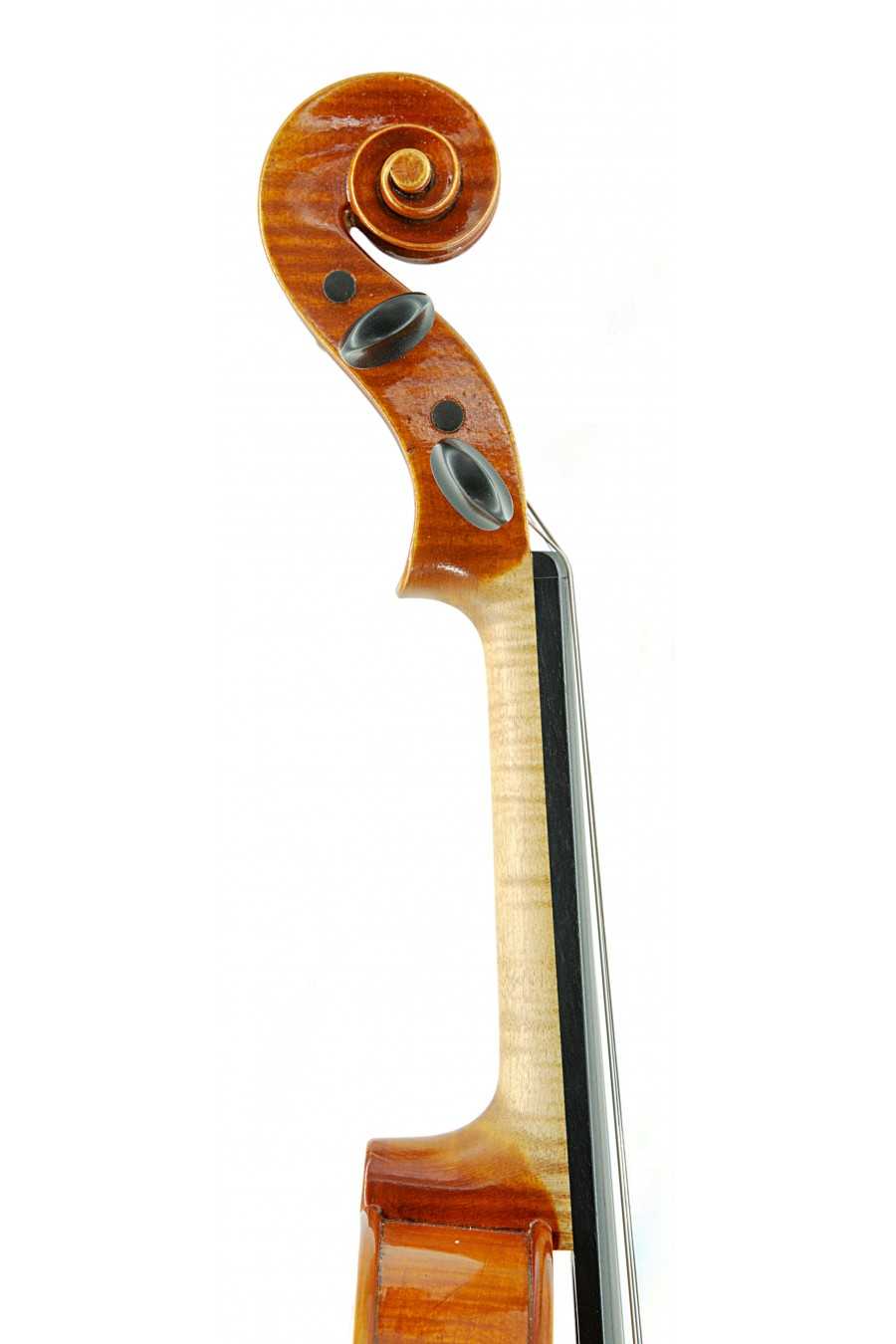
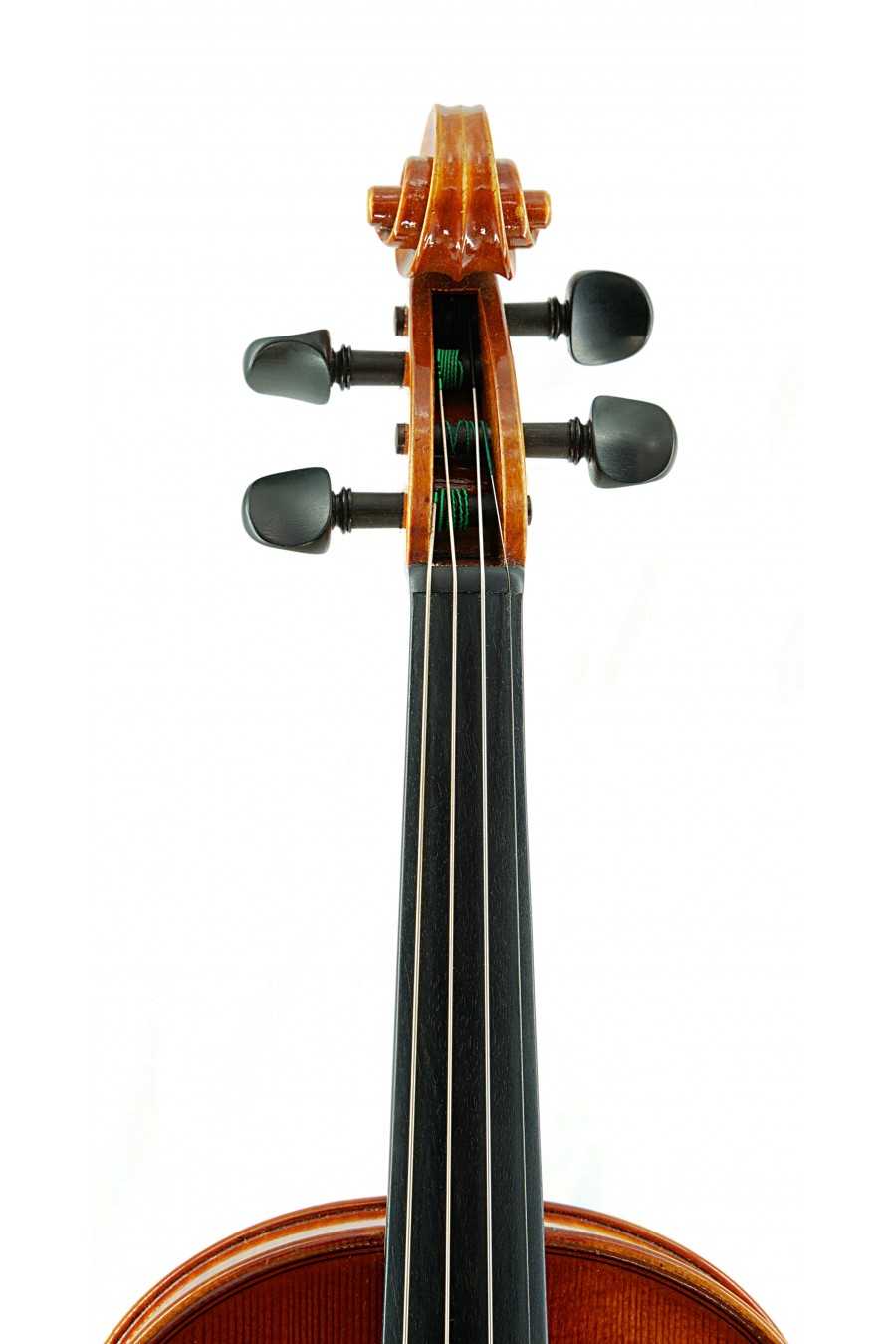
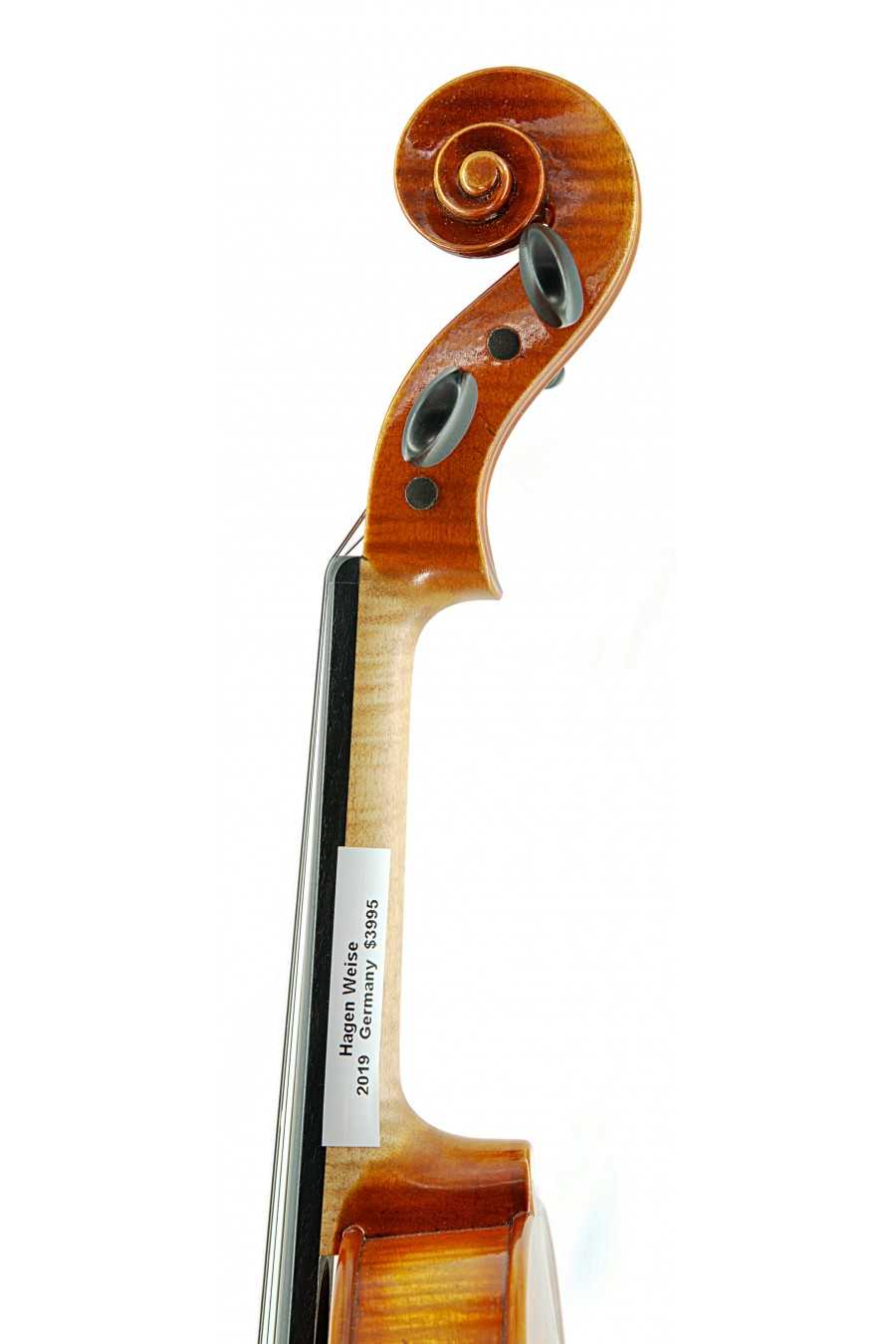
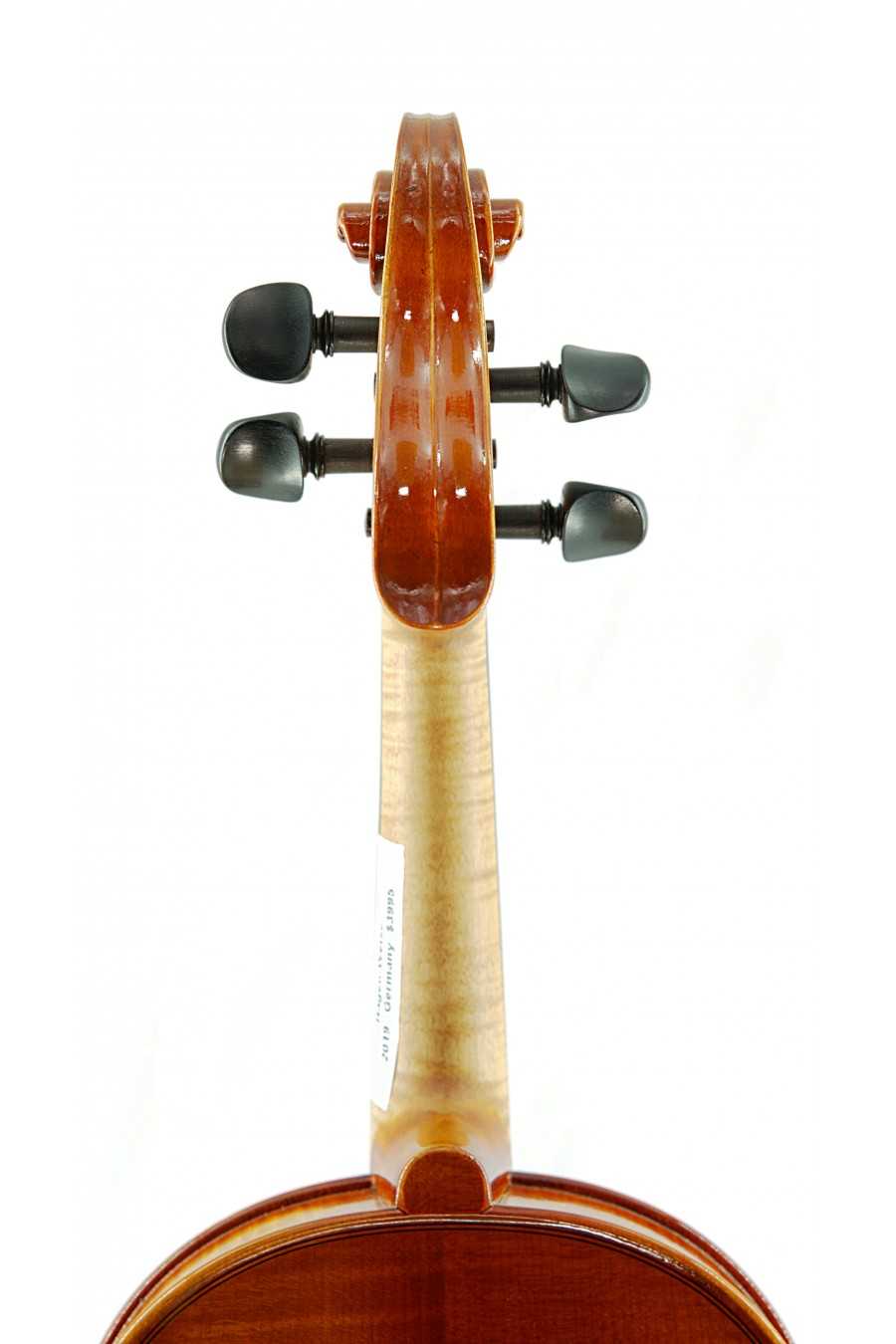
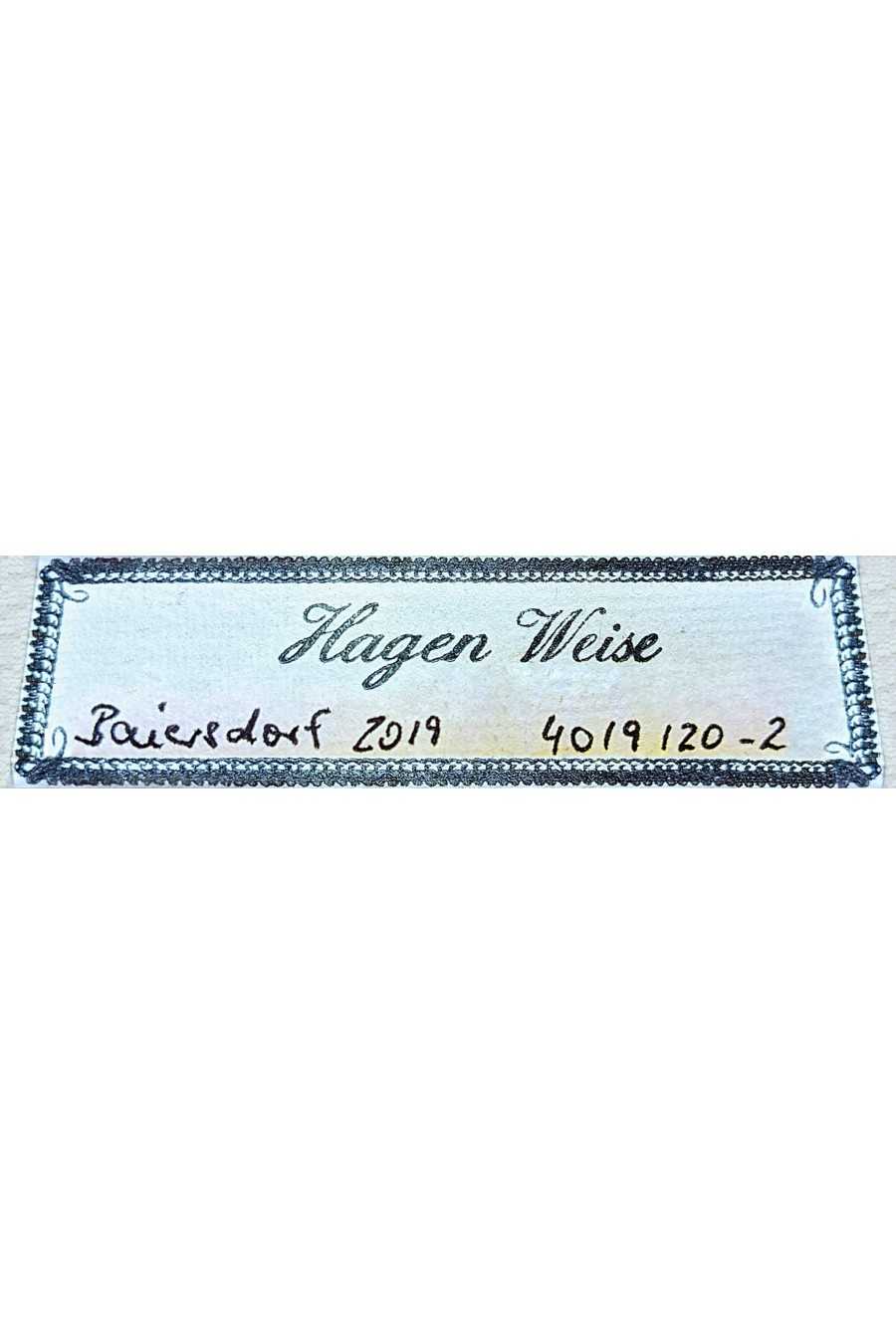
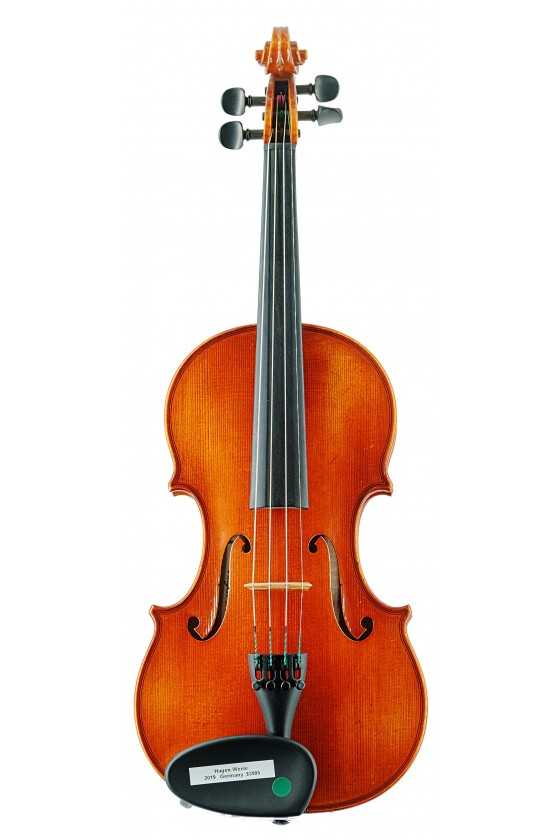
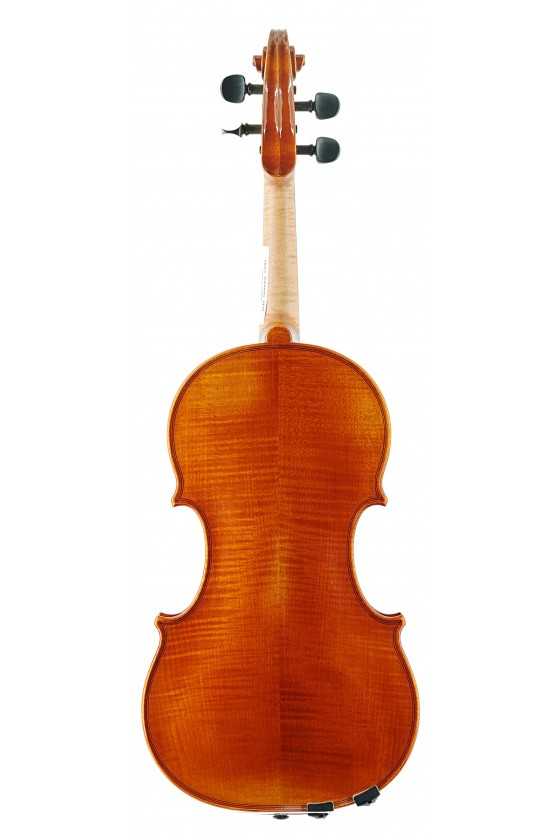
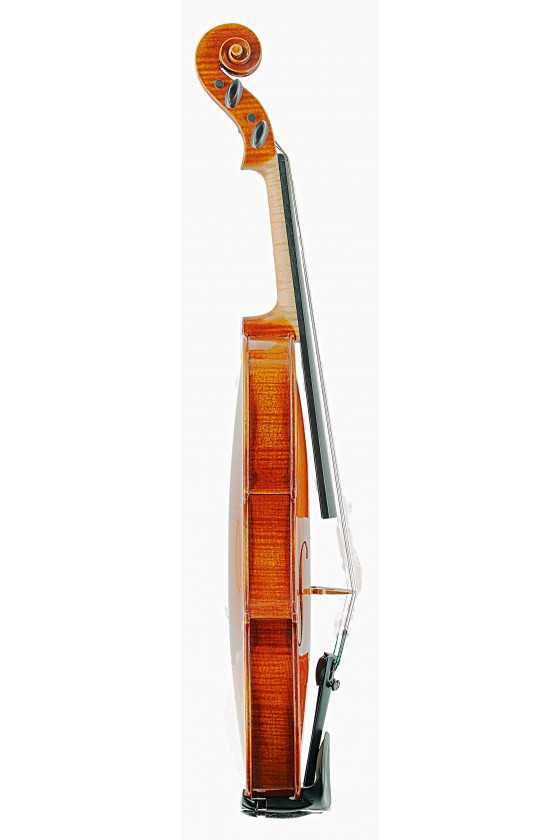
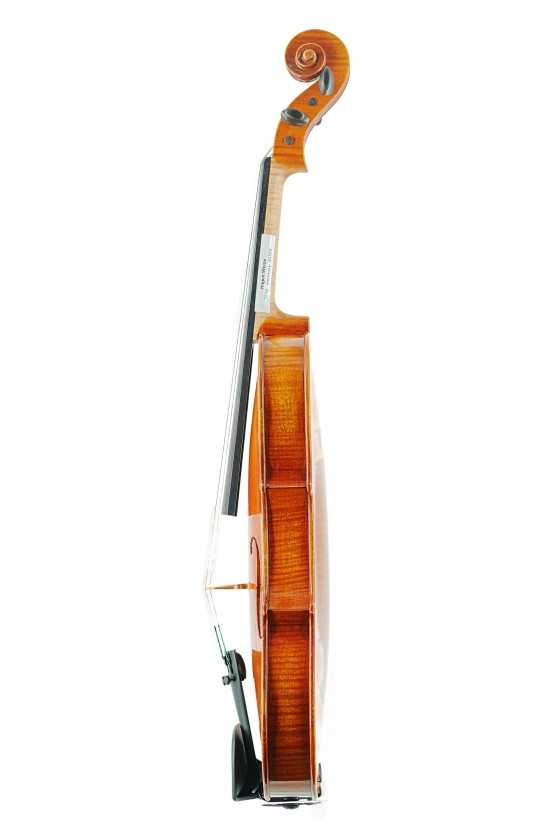
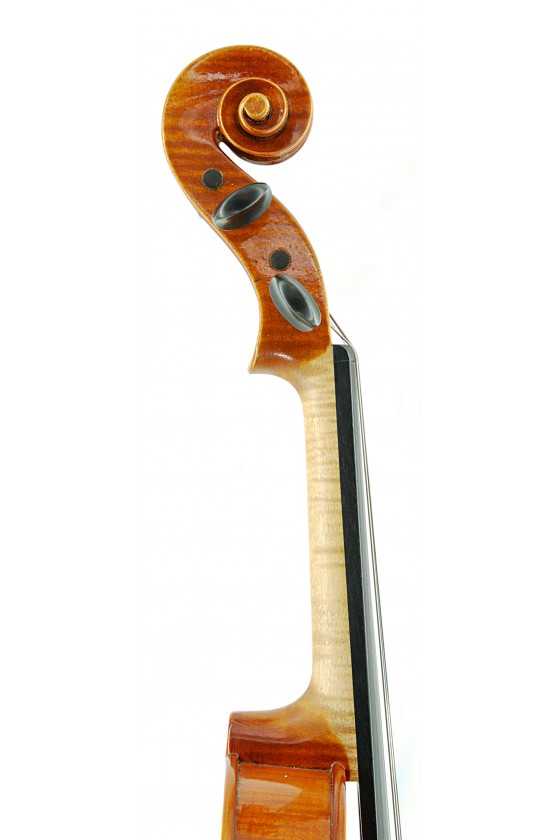
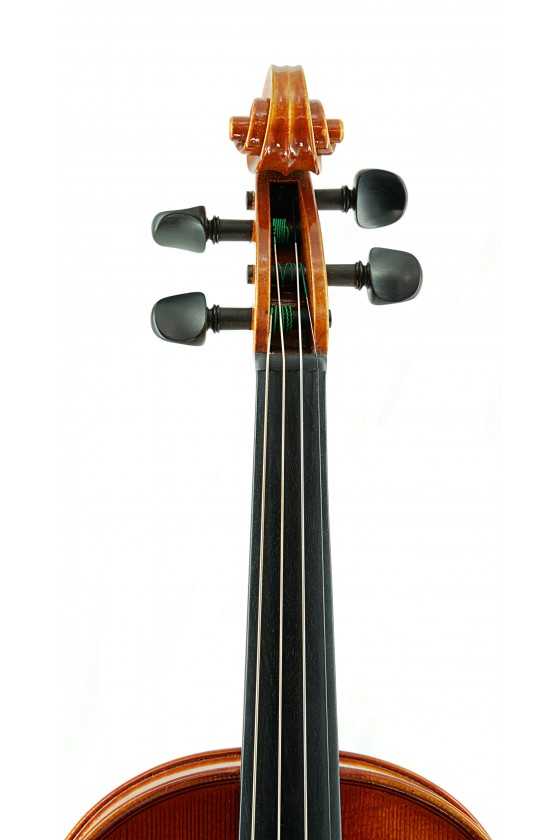
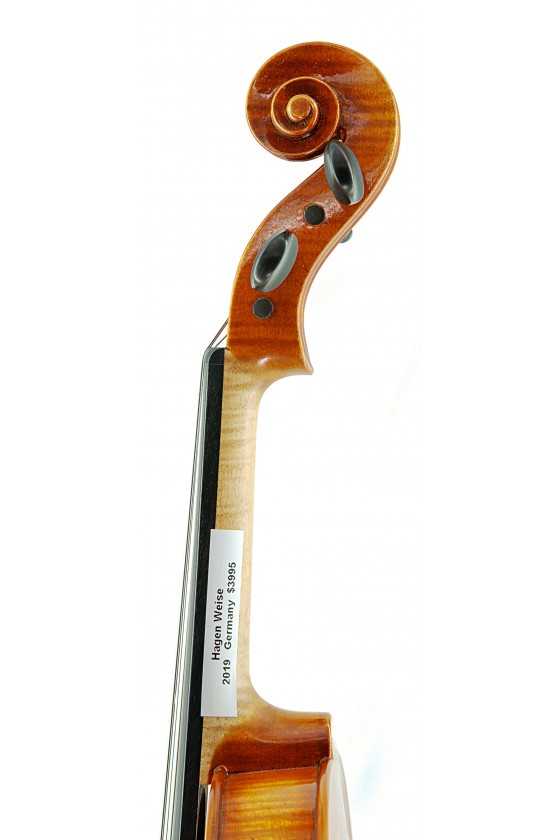
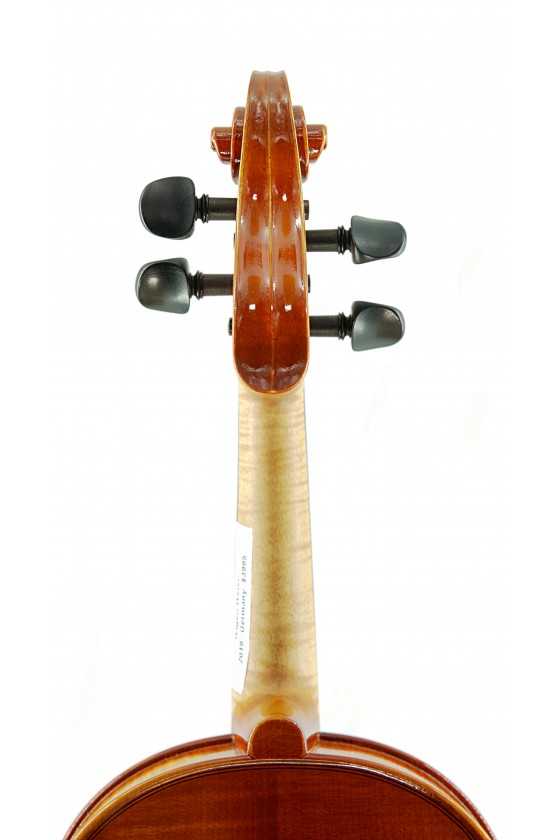
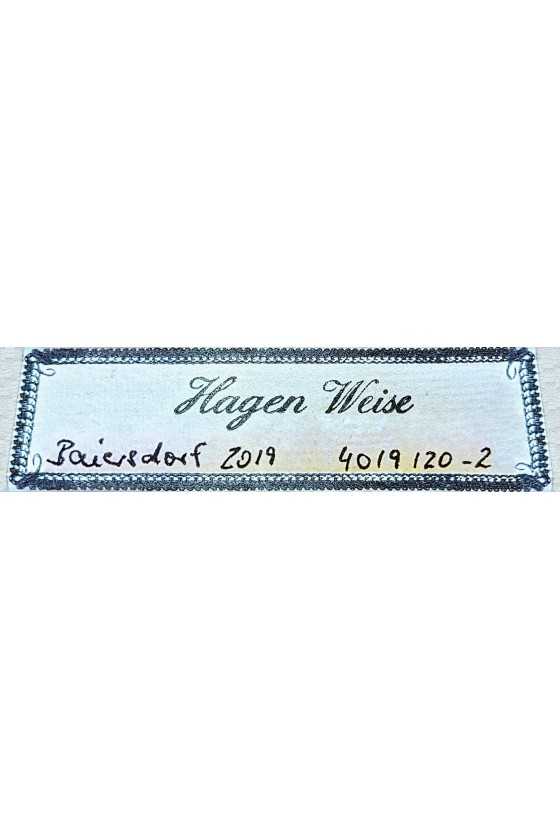
This Hagen Weise Violin is a Guarneri model made in Germany. The images show various features of the Guarneri pattern as well as the remarkable craftmanship of Hagen Weise.
Hagen Weise is a luthier born in Dresden. He started his apprenticeship in the late 1980s at Musima in East Germany. He was creating classical guitars ranging up to four hundred guitars per day. After that, Weise joined Roderisch Paesold Company in Bubenreuth, Germany in 1991 and switched to making violins. In 2004 Weise completed his Master's in violin making. Then he collaborated with a colleague who worked at Höfner Klaus Clement to start their own workshop. Since 2004 Hagen Weise dedicated himself to making fine violins and other instruments in his shop, producing 150 to 200 violins per day.

This is a René Quenoil-labelled violin, dated 1947. It was probably made in Eastern Europe. René Quenoil is a multi-awarded and recognized French luthier, a highly respected Parisian stringed instrument maker, luthier, and repairer.
This is a French violin built by Jérôme Thibouville-Lamy in Mirecourt. It's a sought-after "Compagnon" violin, known for its antique appearance and warm, mature sound.
This violin is Labelled Collin-Mezin and was made in Paris dated 1911. Charles Jean Baptiste Collin-Mezin came from a line of luthiers where he created various instruments considered superior to other new instruments. This violin is most likely an early copy.
A fine example of the Caspar da Salo Violin, made by C.F. Schuster & Sohn around 1900, as indicated on its label. This violin is known for its distinctive purfling design. Gasparo da Salò, also known as Gaspar Bertolotti, was one of the earliest luthiers and an expert double bass player, with around 80 surviving instruments.
This Violin is made in Germany for Knilling (USA) prob. Bubenreuth in about 1970. Knilling Violins c/o was named after Johannes Knilling (1795 -1842), a famous German luthier in the 17th century.