
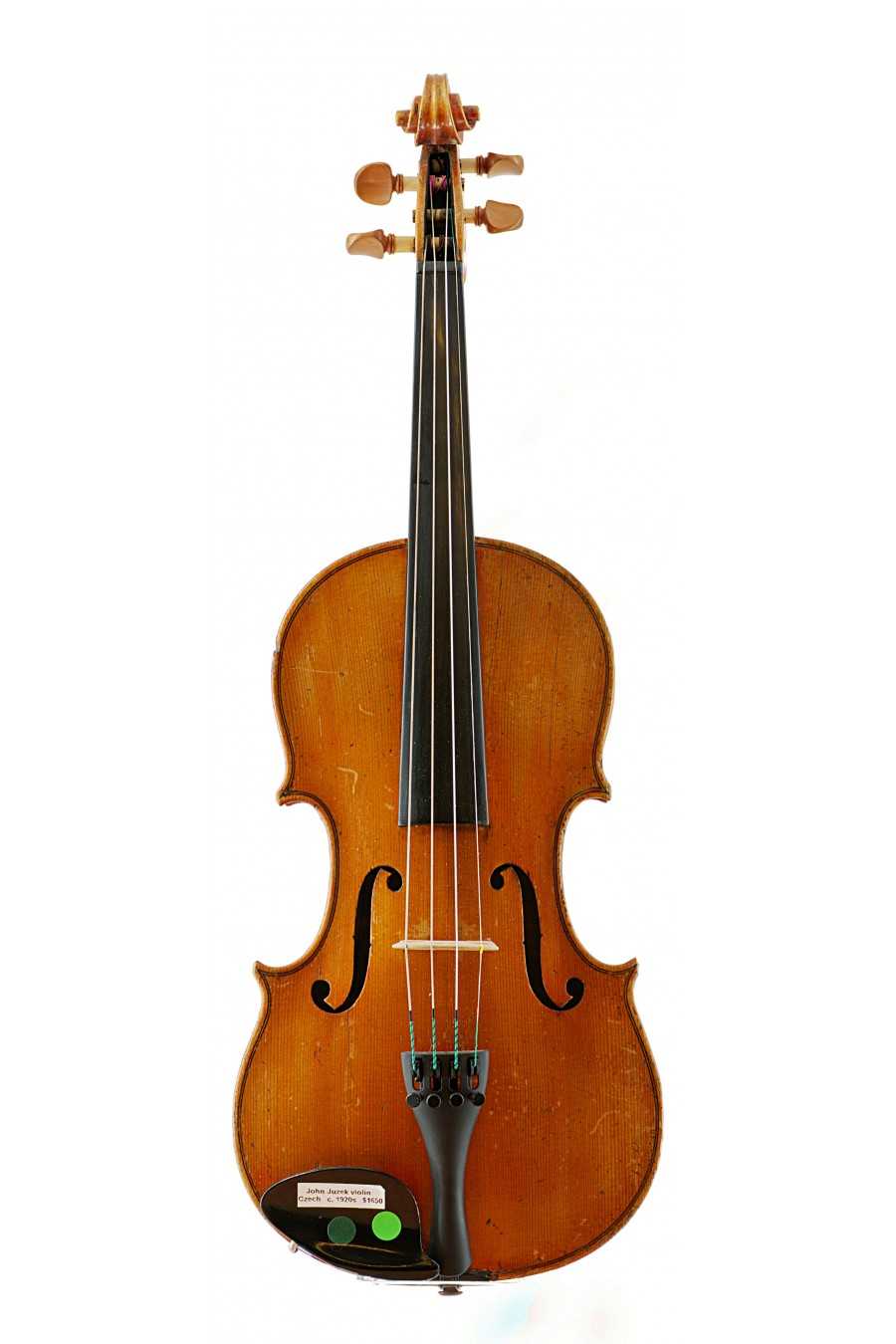
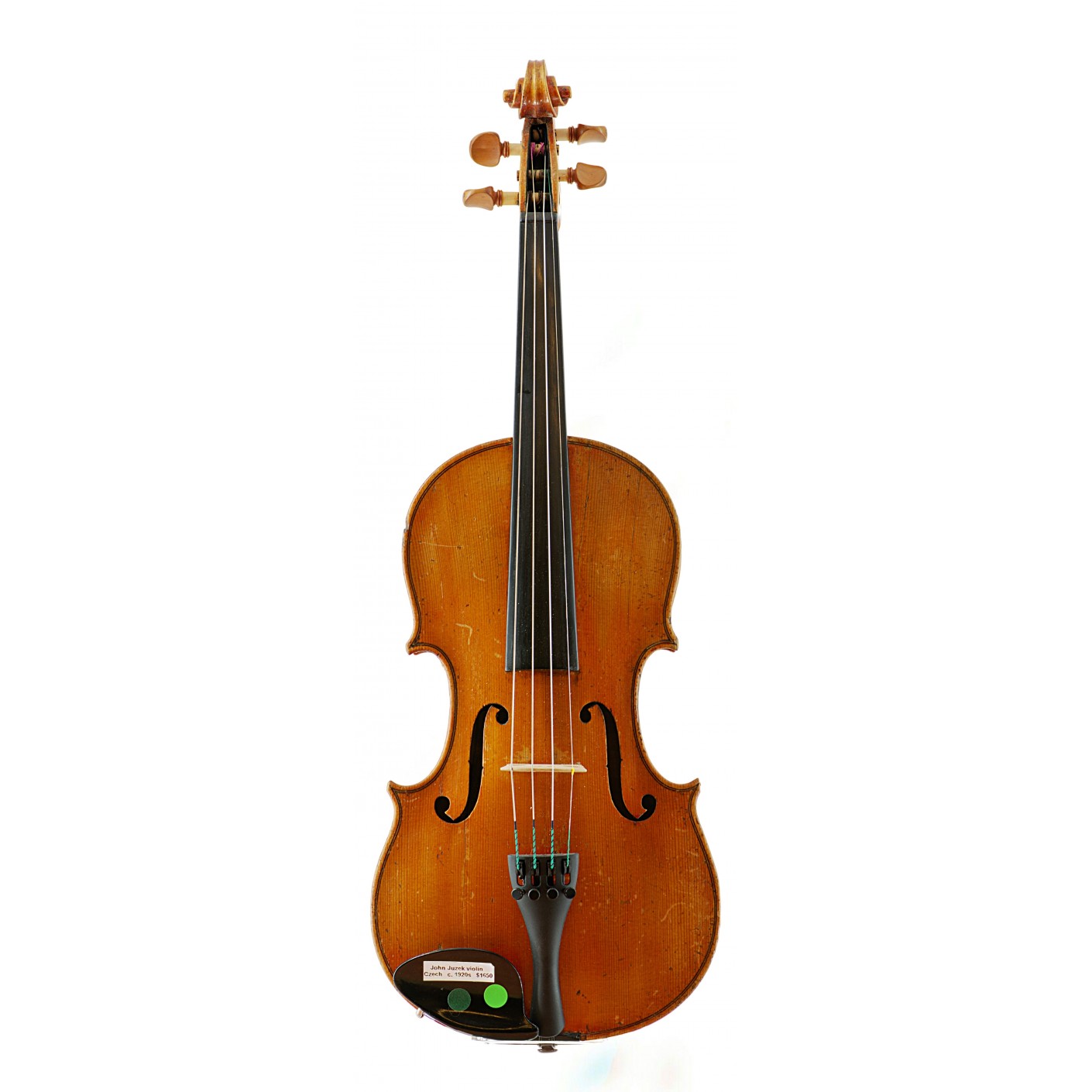
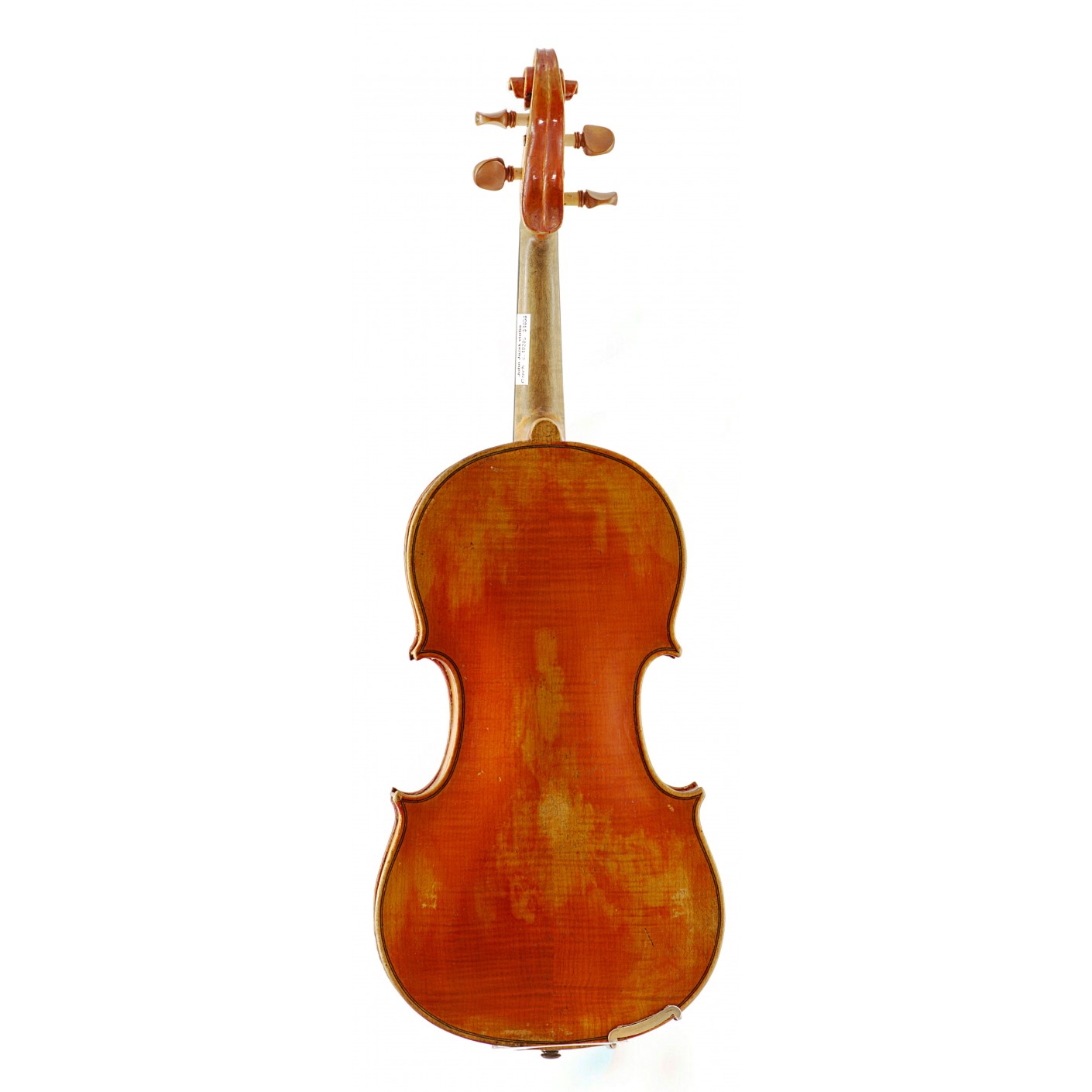
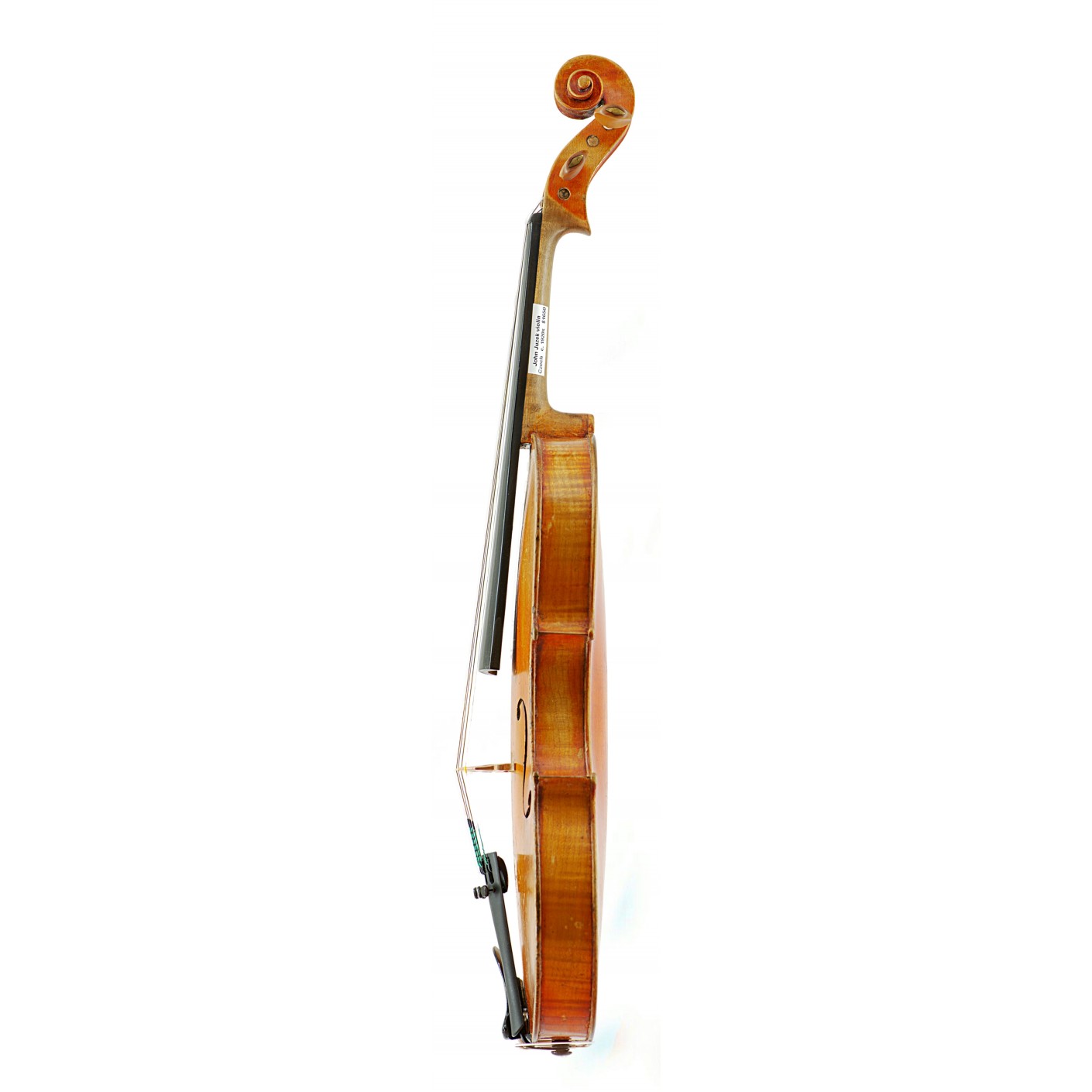
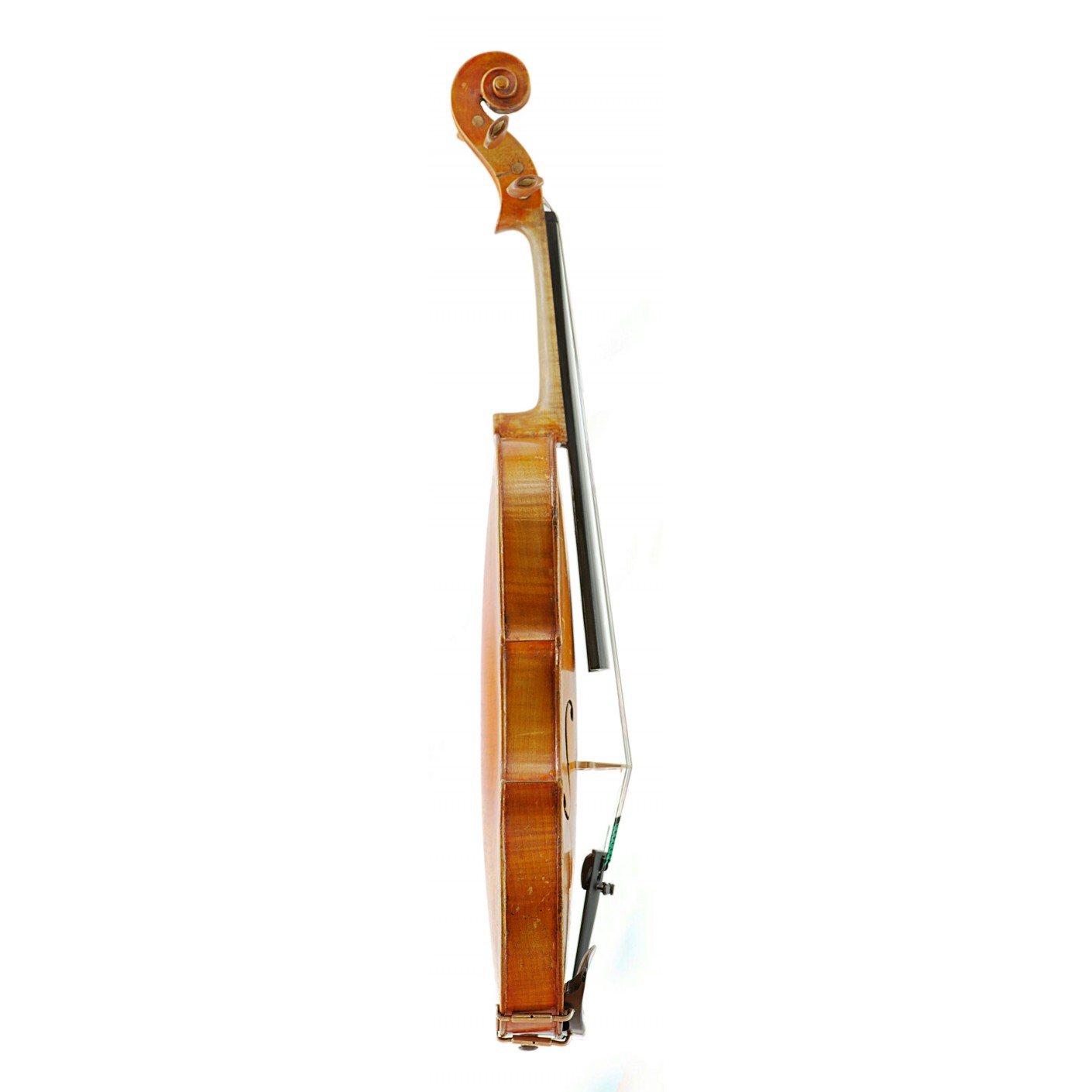
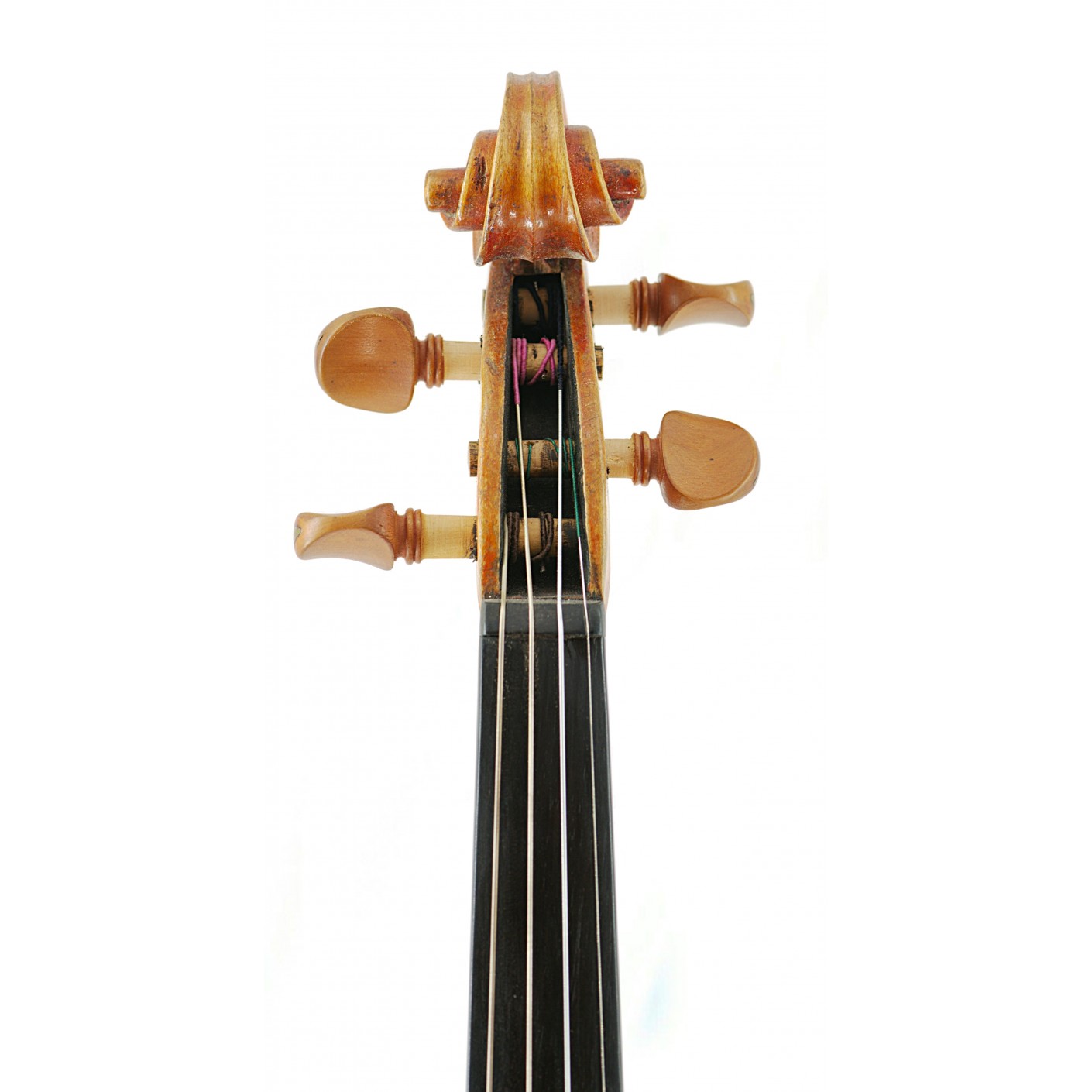
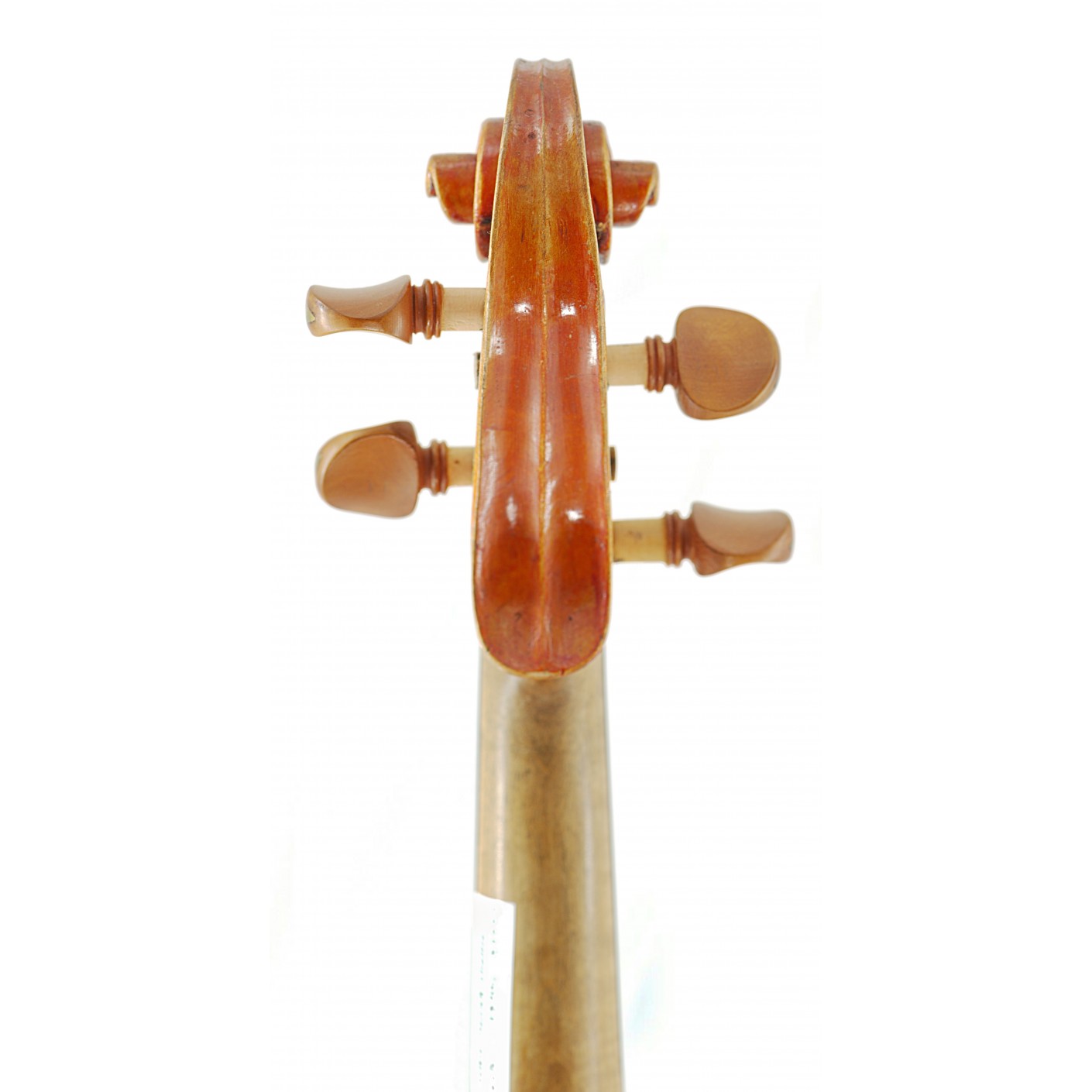
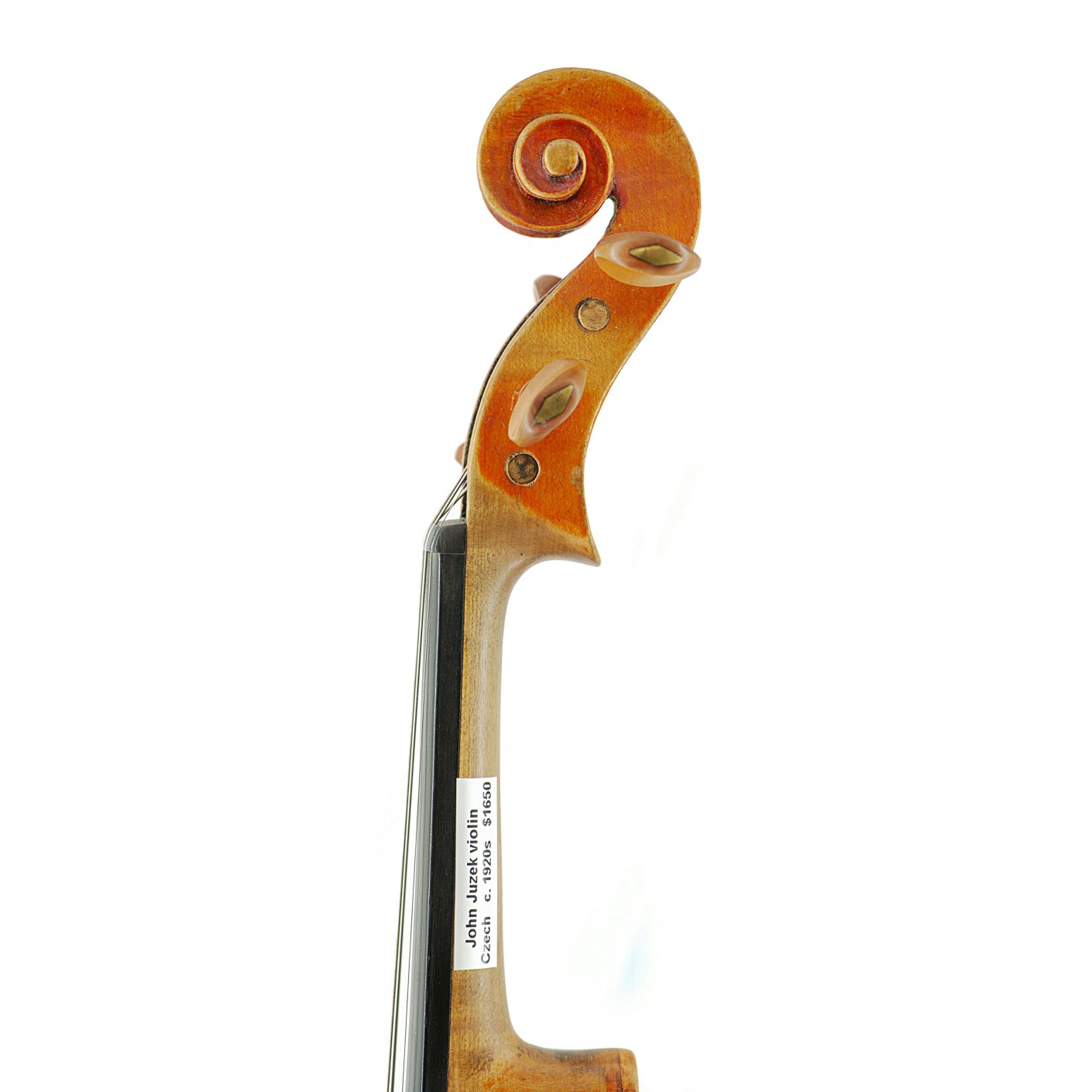
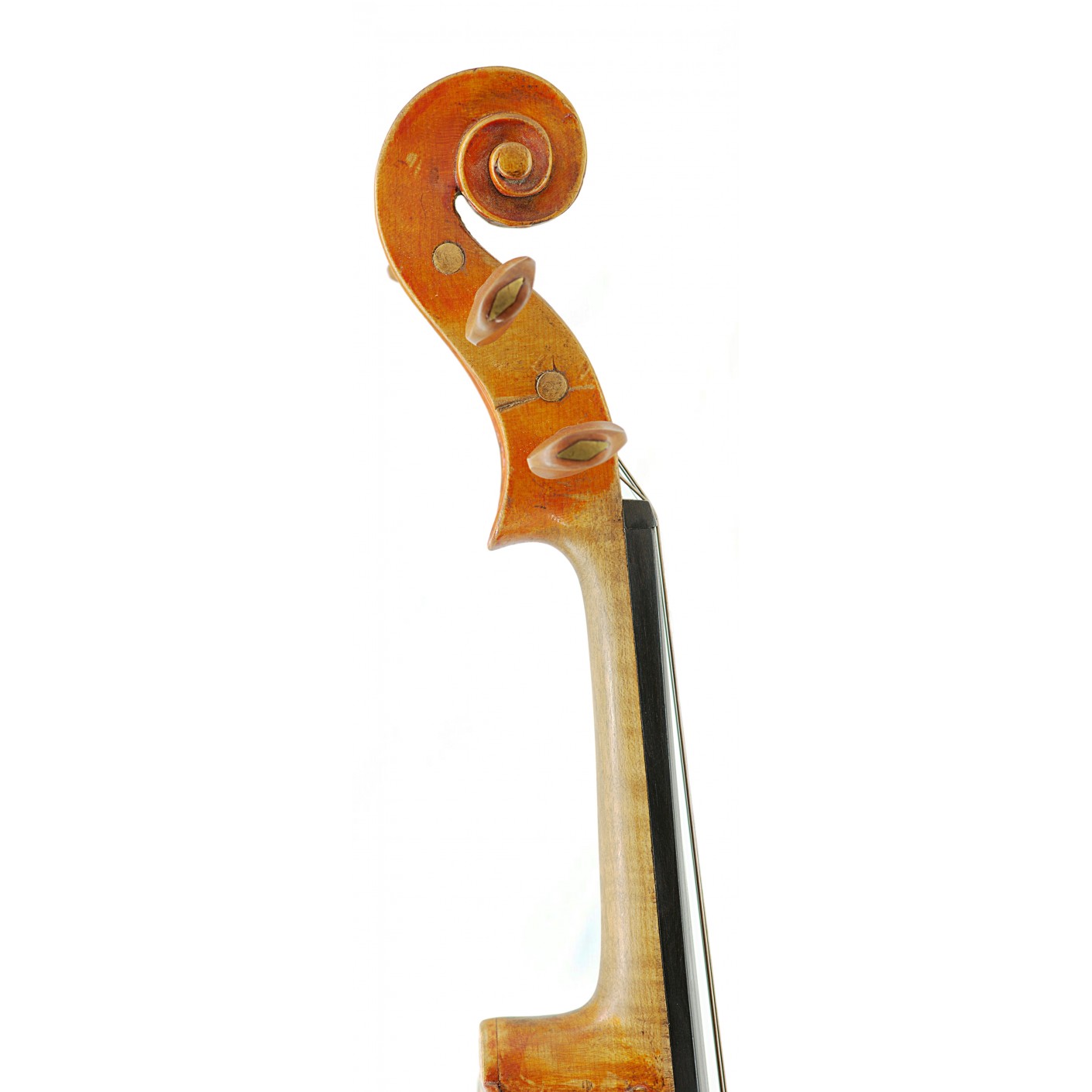
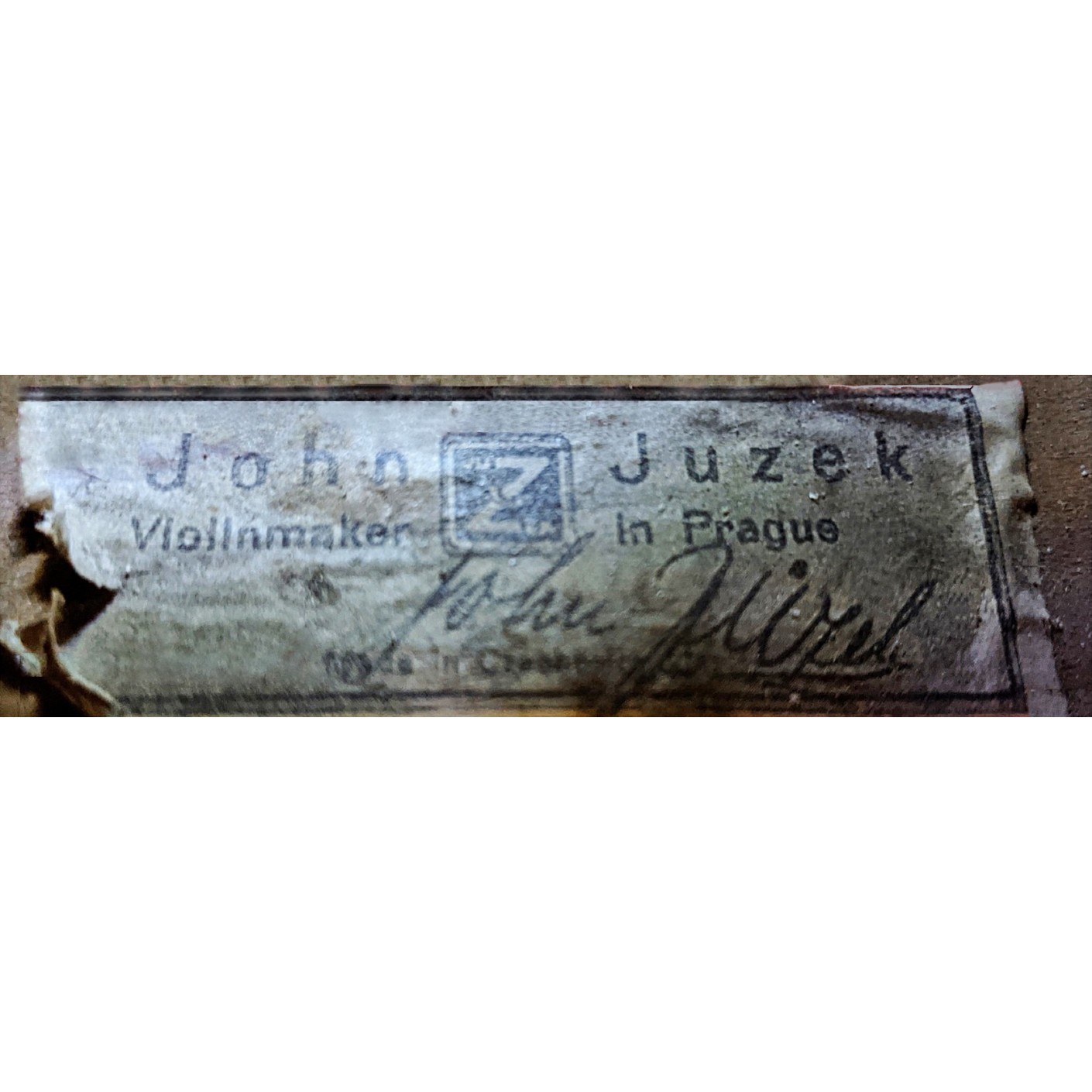
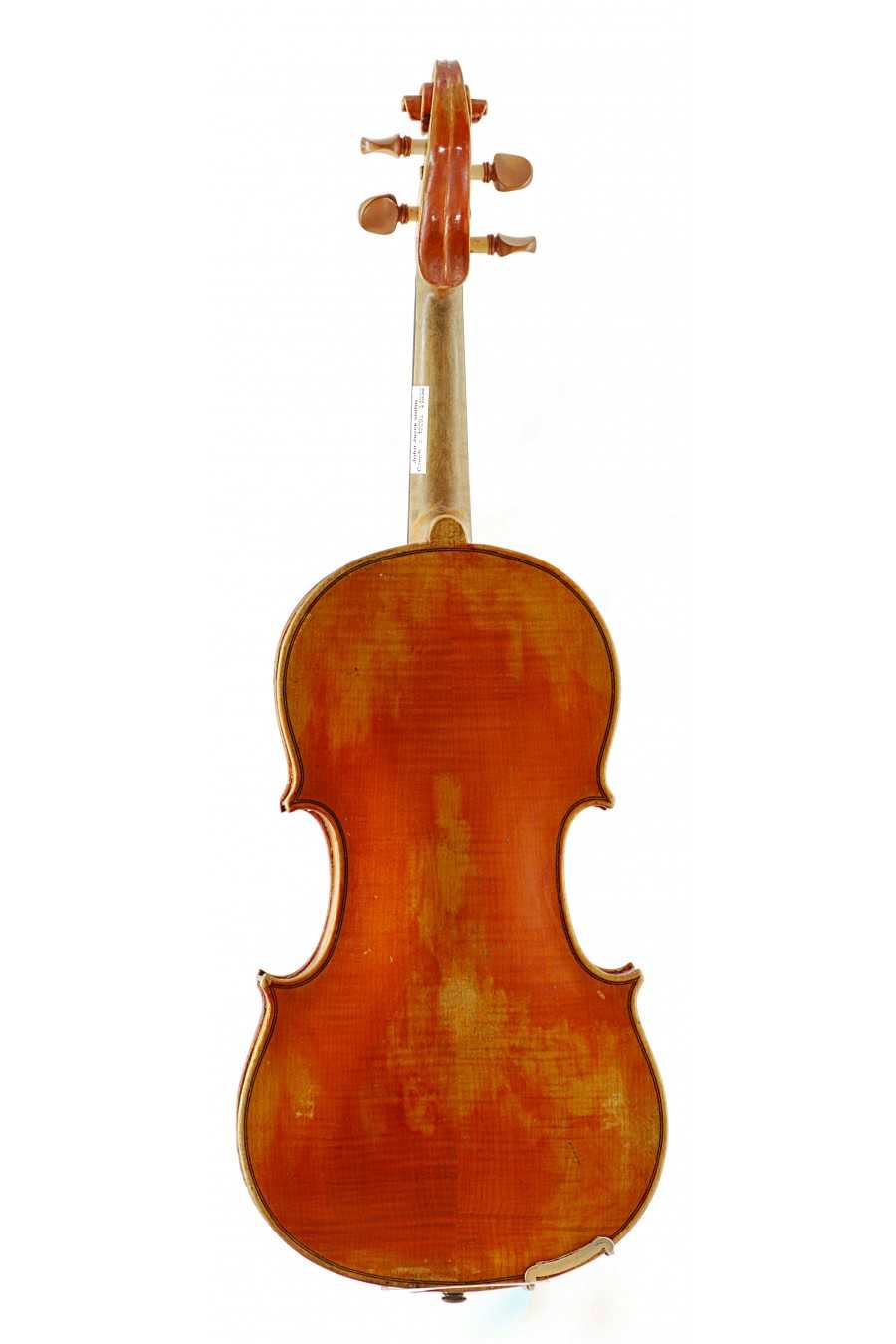
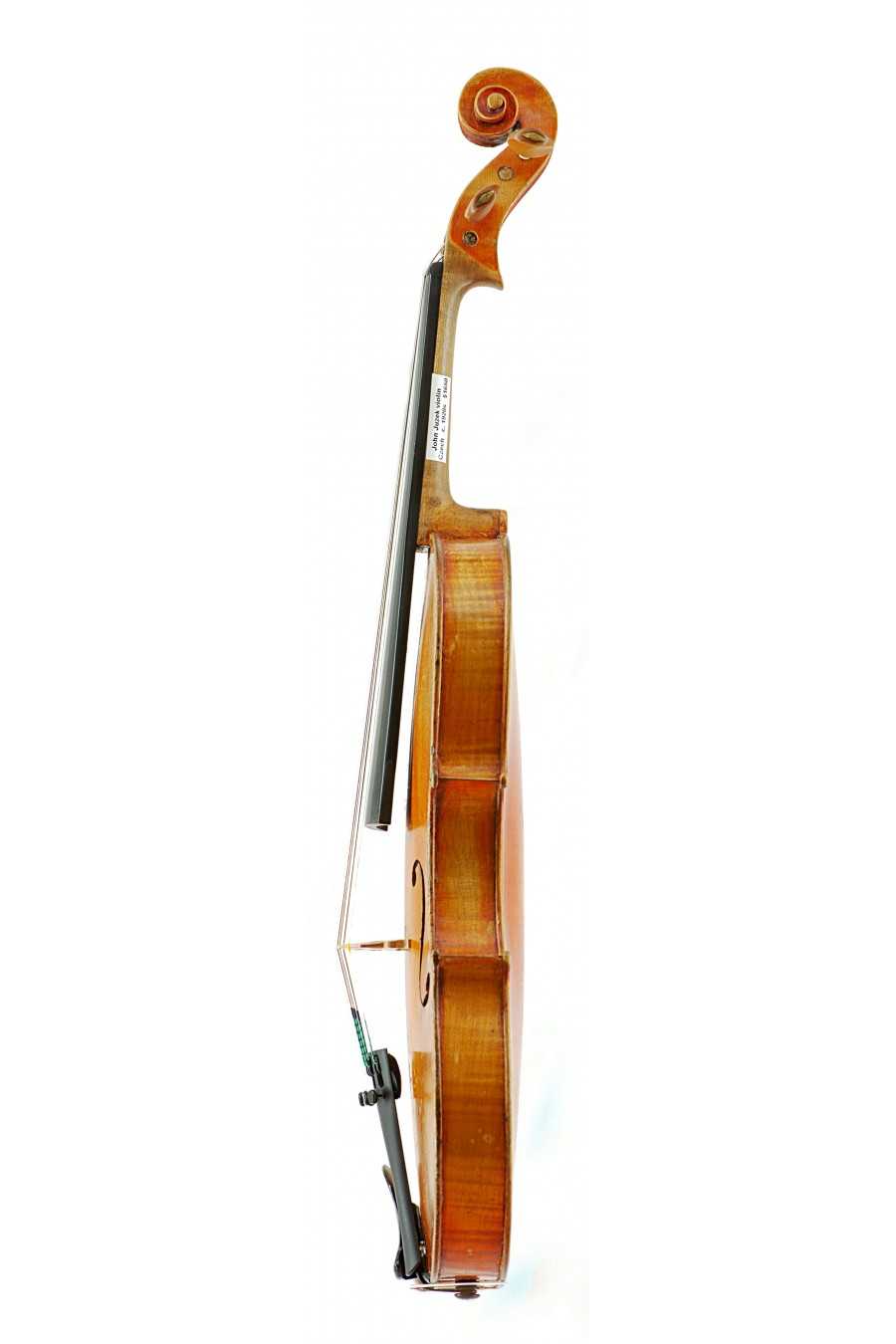
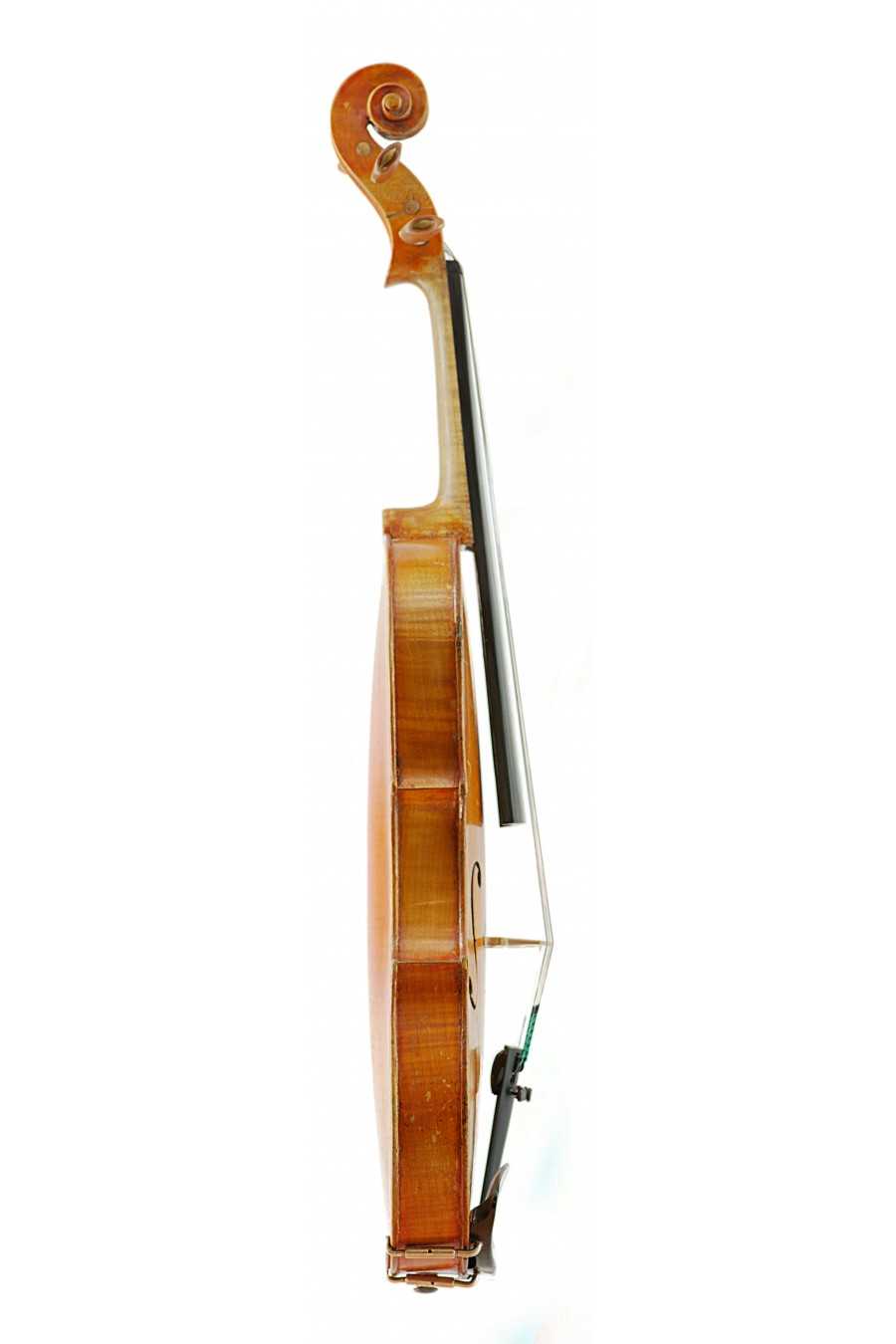
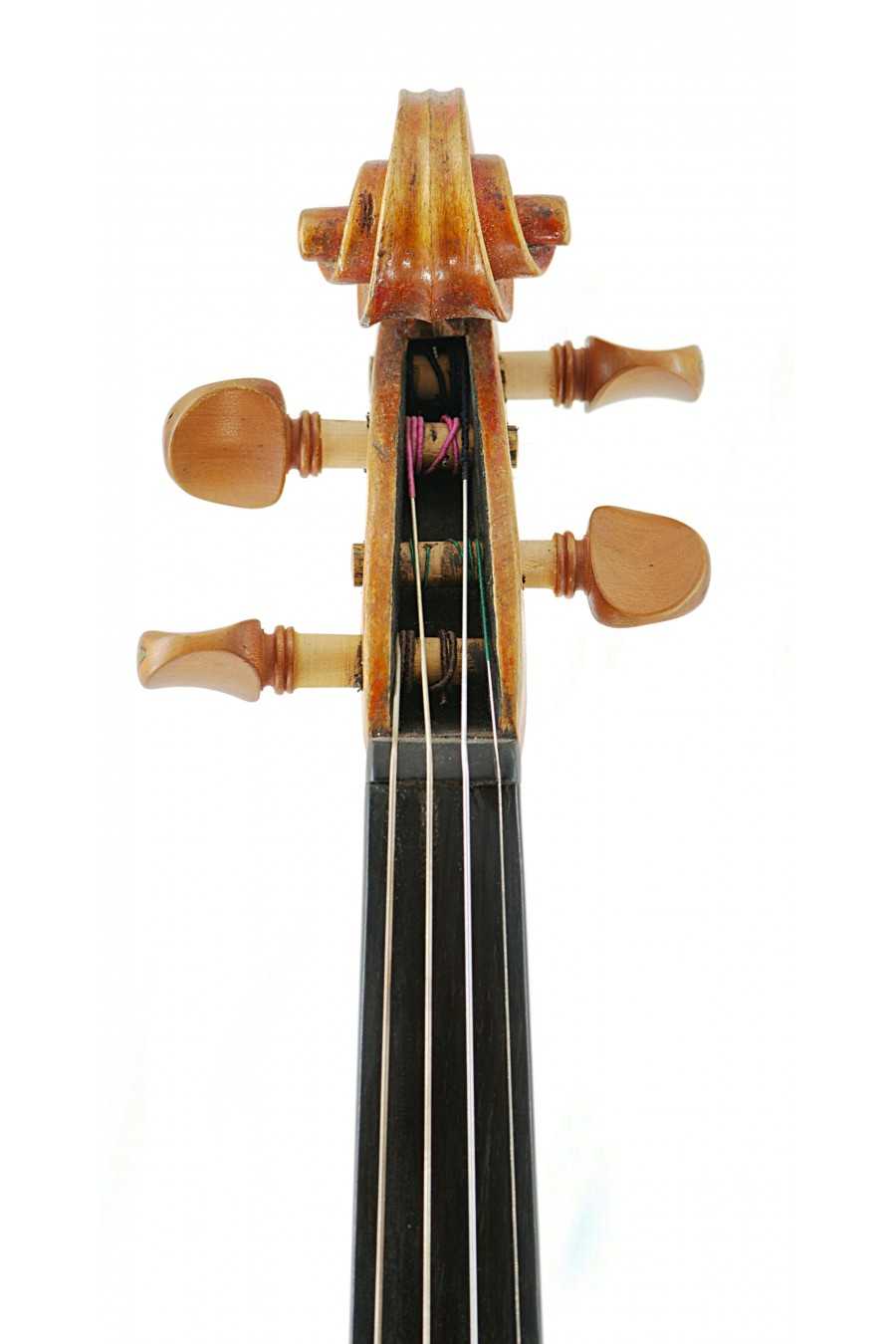
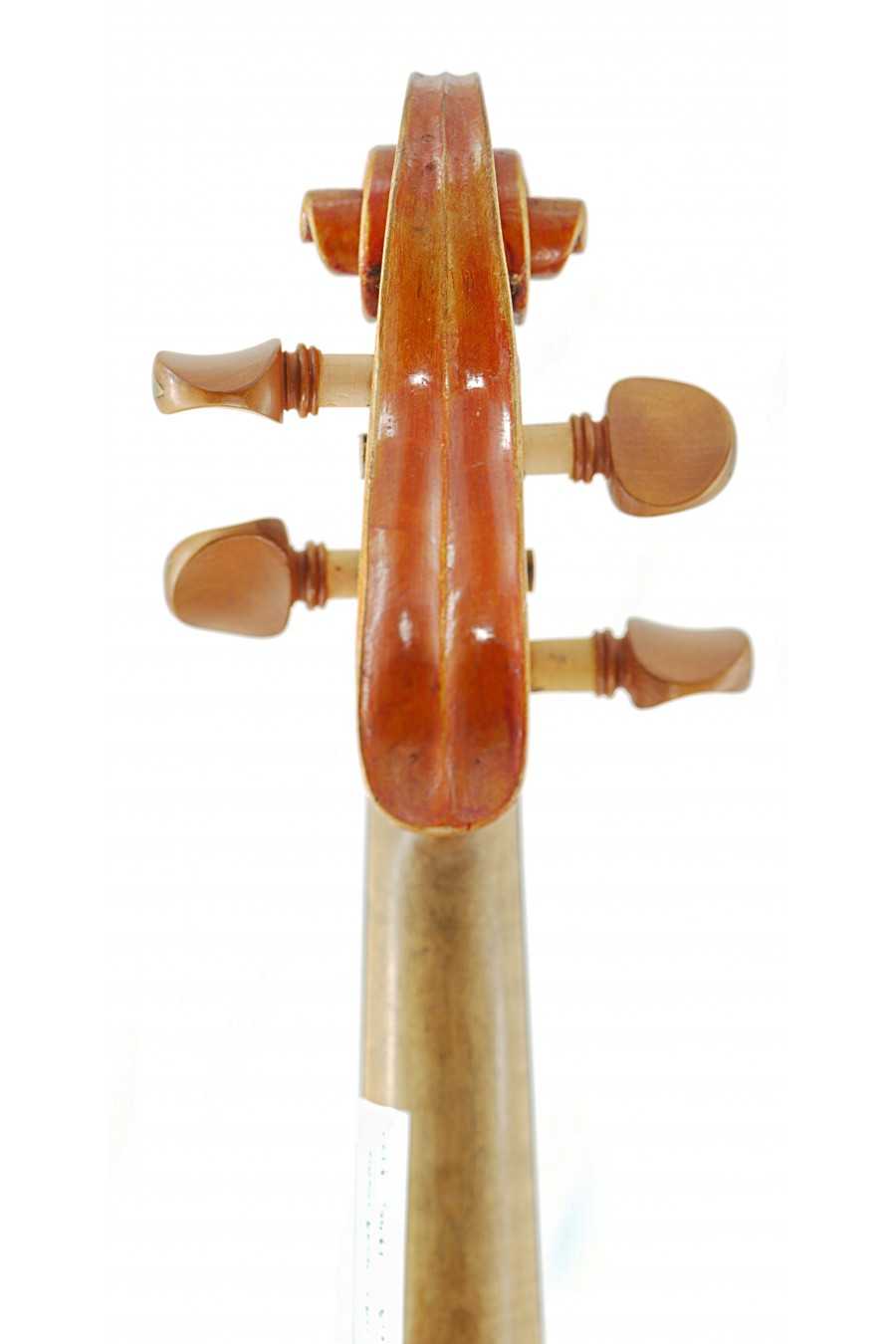
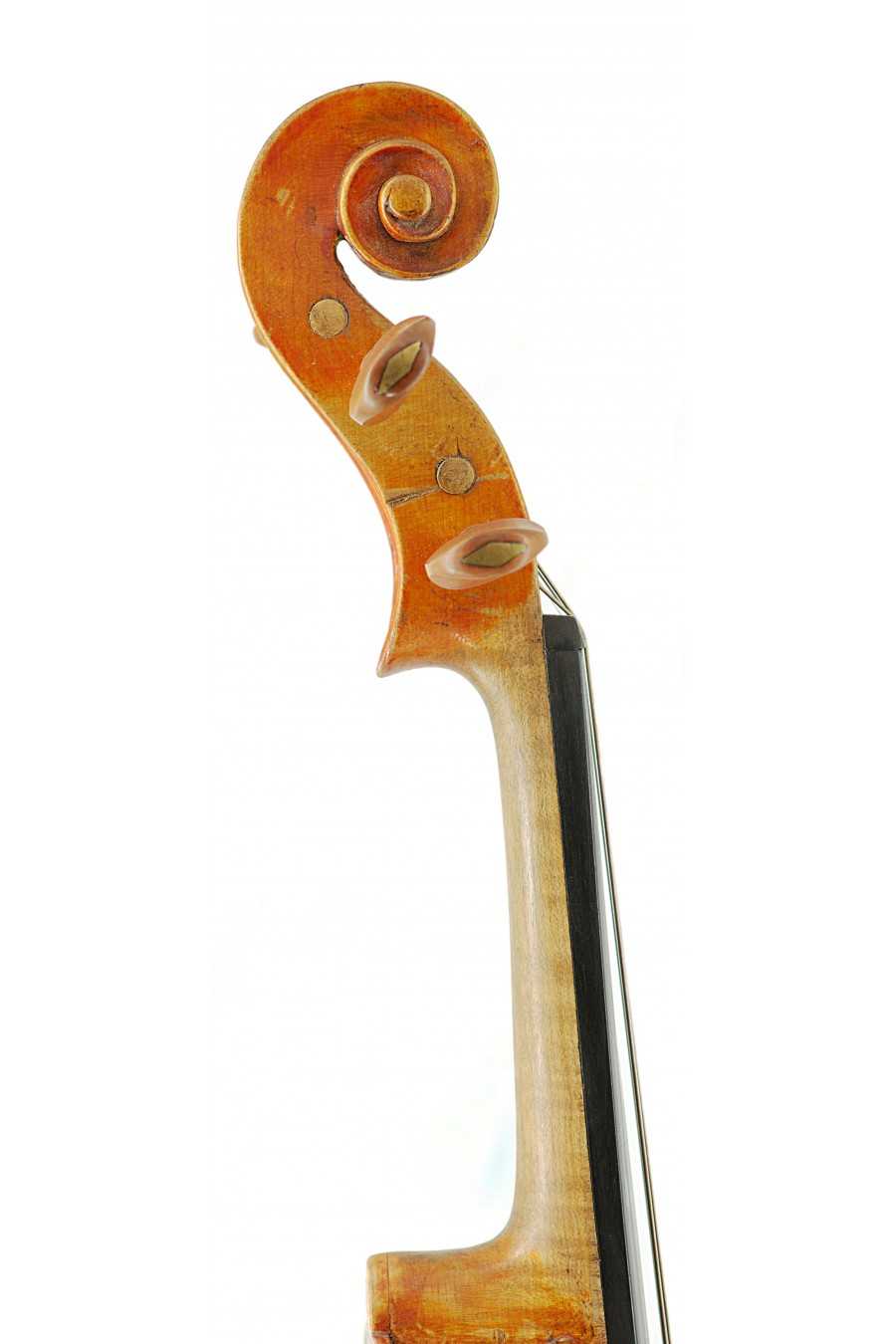
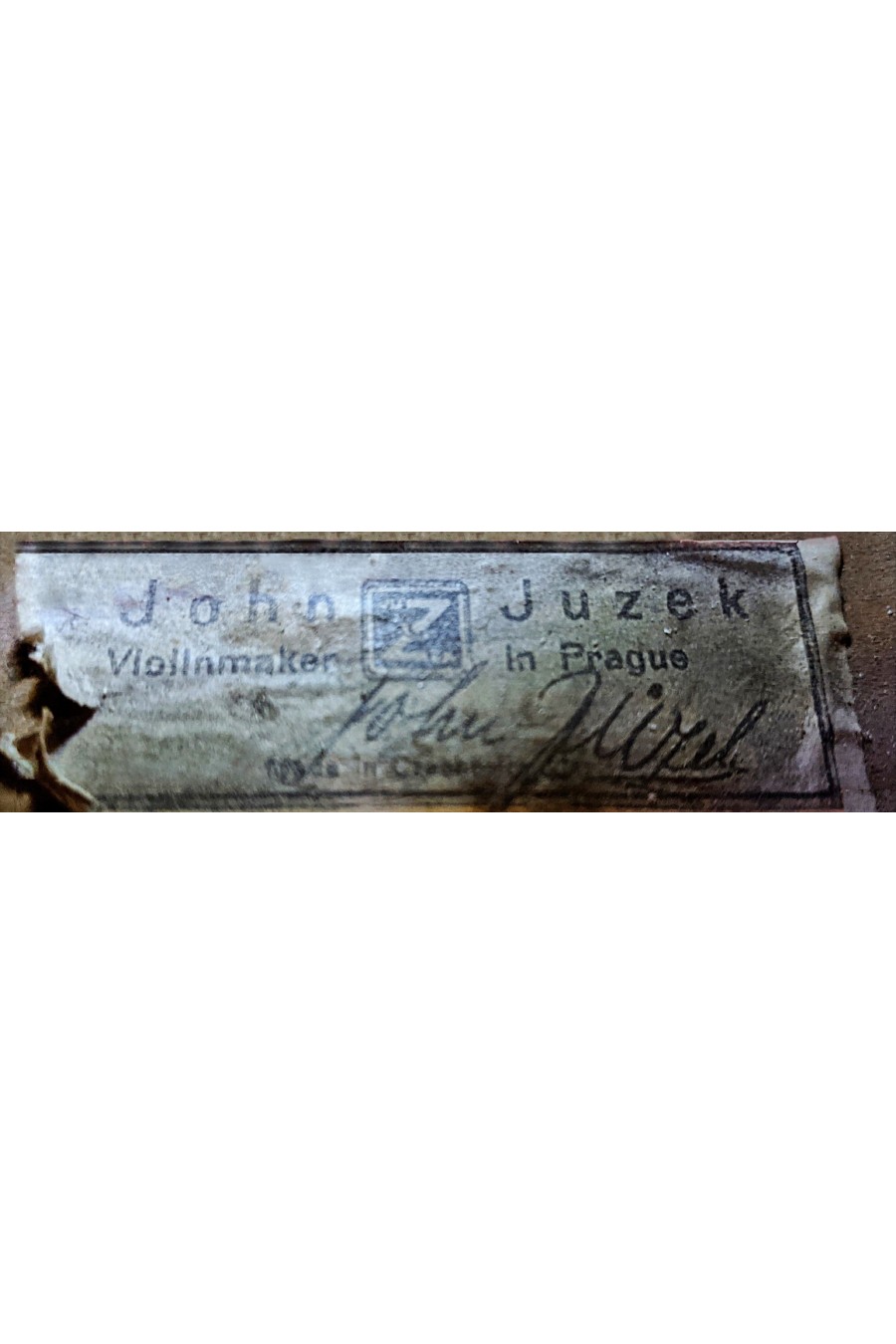
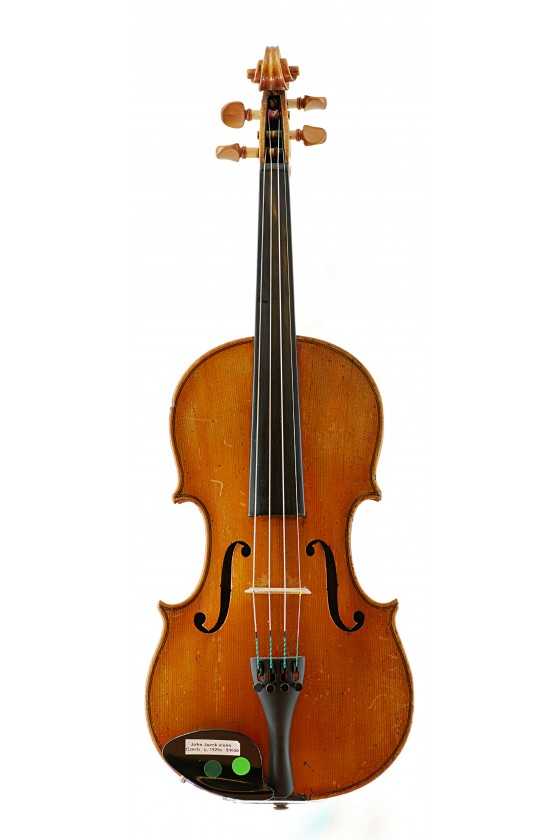
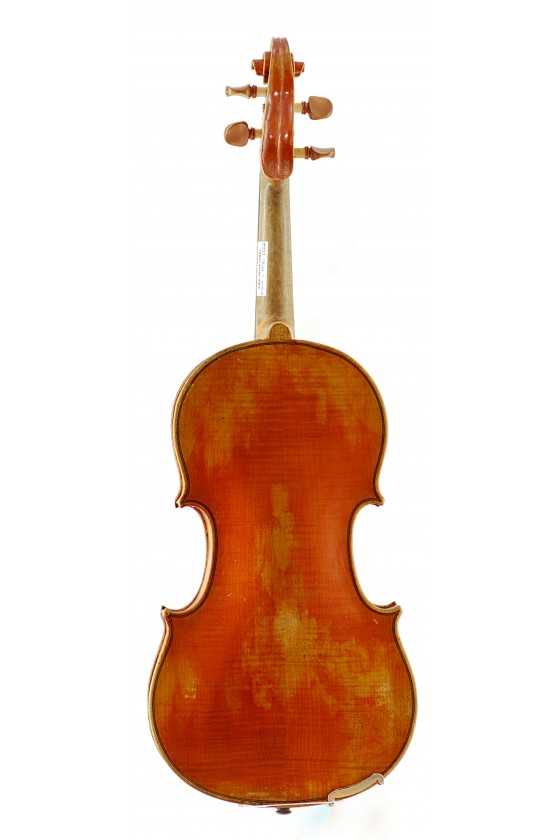
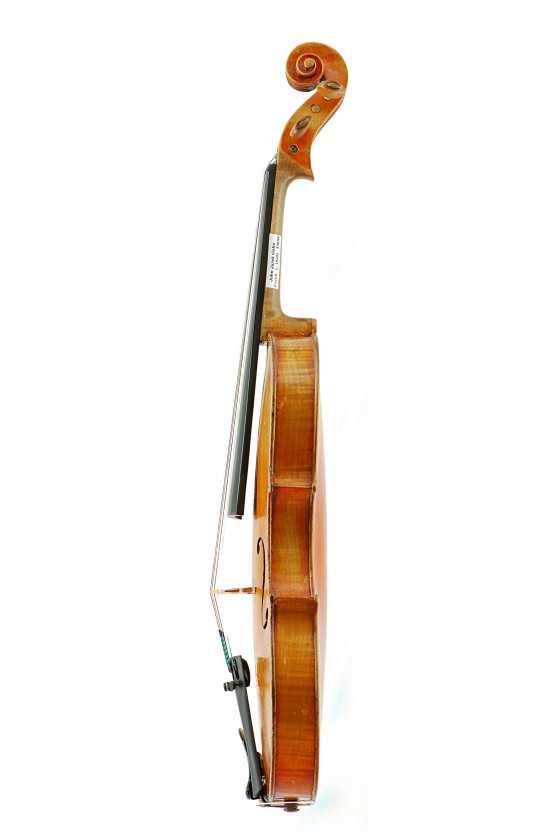
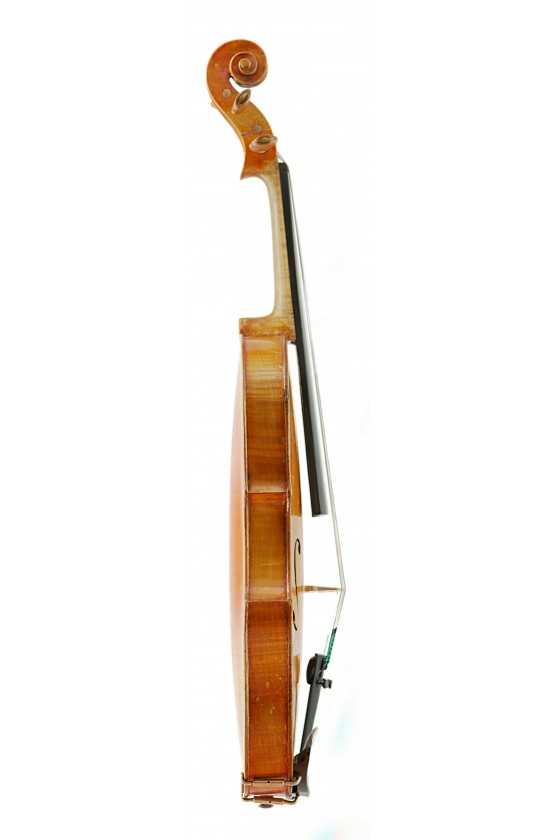
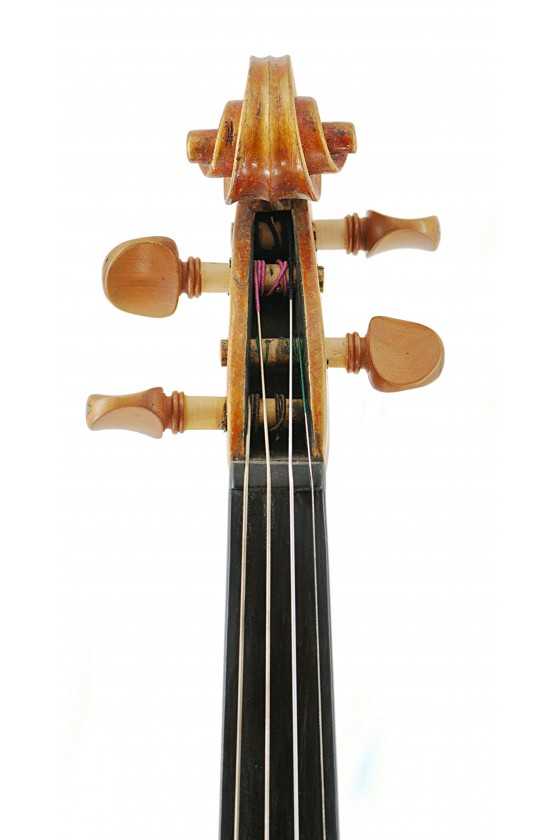
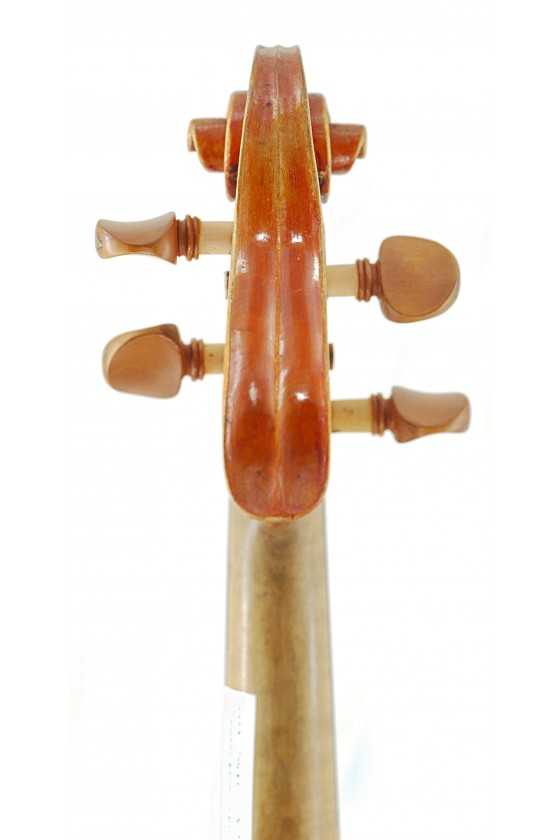
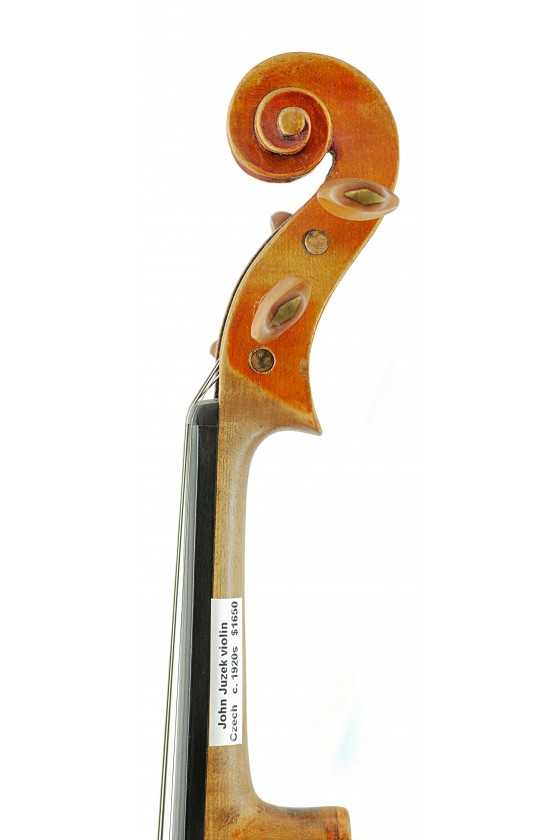
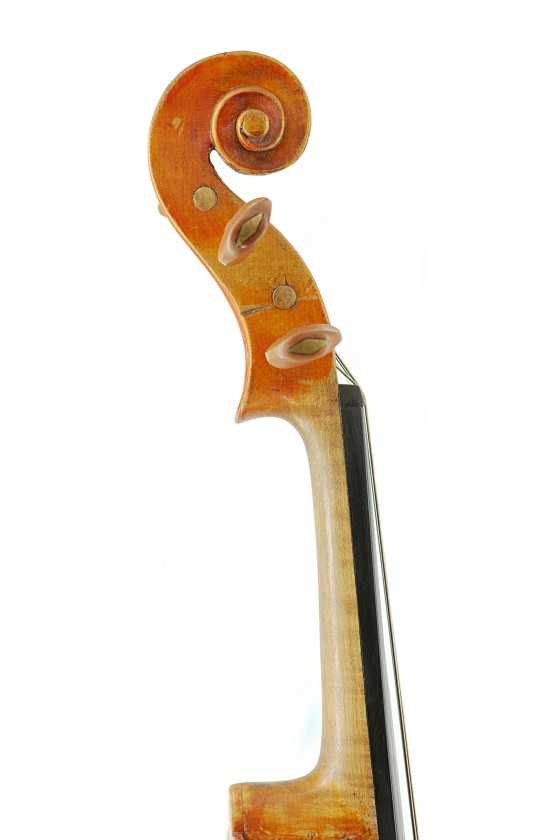
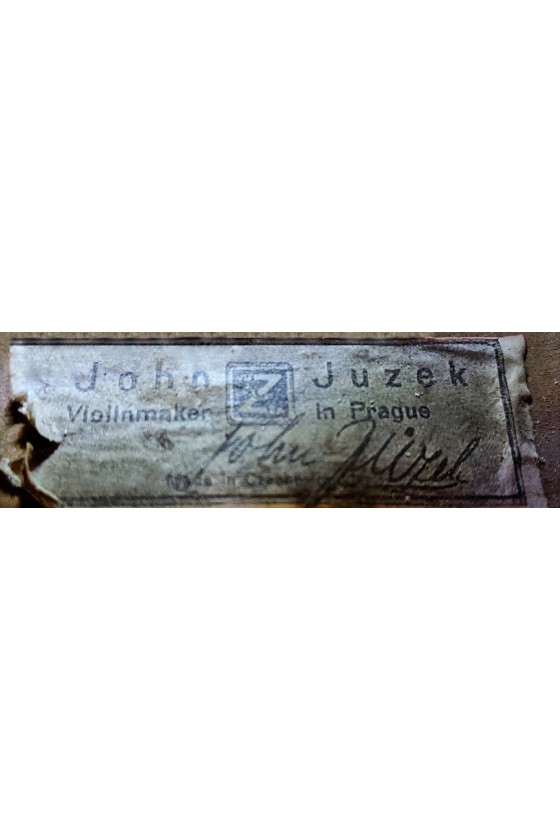
This is a John Jusek Violin made in Czechoslovakia around 1920 with its label and signature inside. This is one of the finest exported violins of the Czechoslovakian string instrument merchant John Juzek.
John Jusek Violin made in Czechoslovakia around 1920
John Juzek (1892 – 1965) was a merchant in Czechoslovakia. He was known as an exporter of violas, violins, cellos, and double basses in North America. The instruments were labeled as “John Juzek” which were crafted mostly by independent makers and guilds in the Bohemian region of the German border and Czechoslovakia.
The brand, line, and trademark of John Juzek’s orchestral string instruments are still in existence today through Metropolitan Music Co. a family-owned wholesaler for a hundred years. This company is owned and managed by the heirs of Robert Juzek (1894 – 1975) the brother of John Juzek and also a founding partner.

This Romanus Violin was crafted in Transylvania, Romania, in 2019 for Animato Strings. Animato Strings has the largest selection of new and old stringed instruments in Australia, including Asian-hand-made, European, U.S., Australian, and Antique instruments.
This is a Model B Violin made according to the specifications of Helmut Illner a renowned German luthier whose works had been sought after by many musicians in the past several decades. The violin features:
This Friedrich August Glass violin was made after Antonius Stradivarius Flew Copy Cremona. Friedrich August Glass is a German violin maker who concentrated his well-developed skill on producing Stradivarian models. He gained a gold medal for excellent work in London.
This is a Strad Violin Copy made in Germany around the year 1890. Antonio Stradivari is a renowned Italian violin maker who was said to have brought the craft of violin-making into its highest pitch of perfection.
This Hagen Weise Violin is a Guarneri model made in Germany. The images show various features of the Guarneri pattern as well as the remarkable craftmanship of Hagen Weise.
Norwegian folk violin music is primarily associated with the Hardanger fiddle, a national instrument with 8-9 strings, four/five of which are bowed and the rest are sympathetic strings that resonate and add overtones. This unique instrument is known for producing a polyphonic sound used in traditional dances and music, and it is often ornately decorated with carvings and inlay.
19th-century European violin—well crafted and meticulously preserved, featuring quality tonewoods and an attractive patina. It is valued for its resonant sound and appeals to both musicians and collectors seeking authenticity and character.