
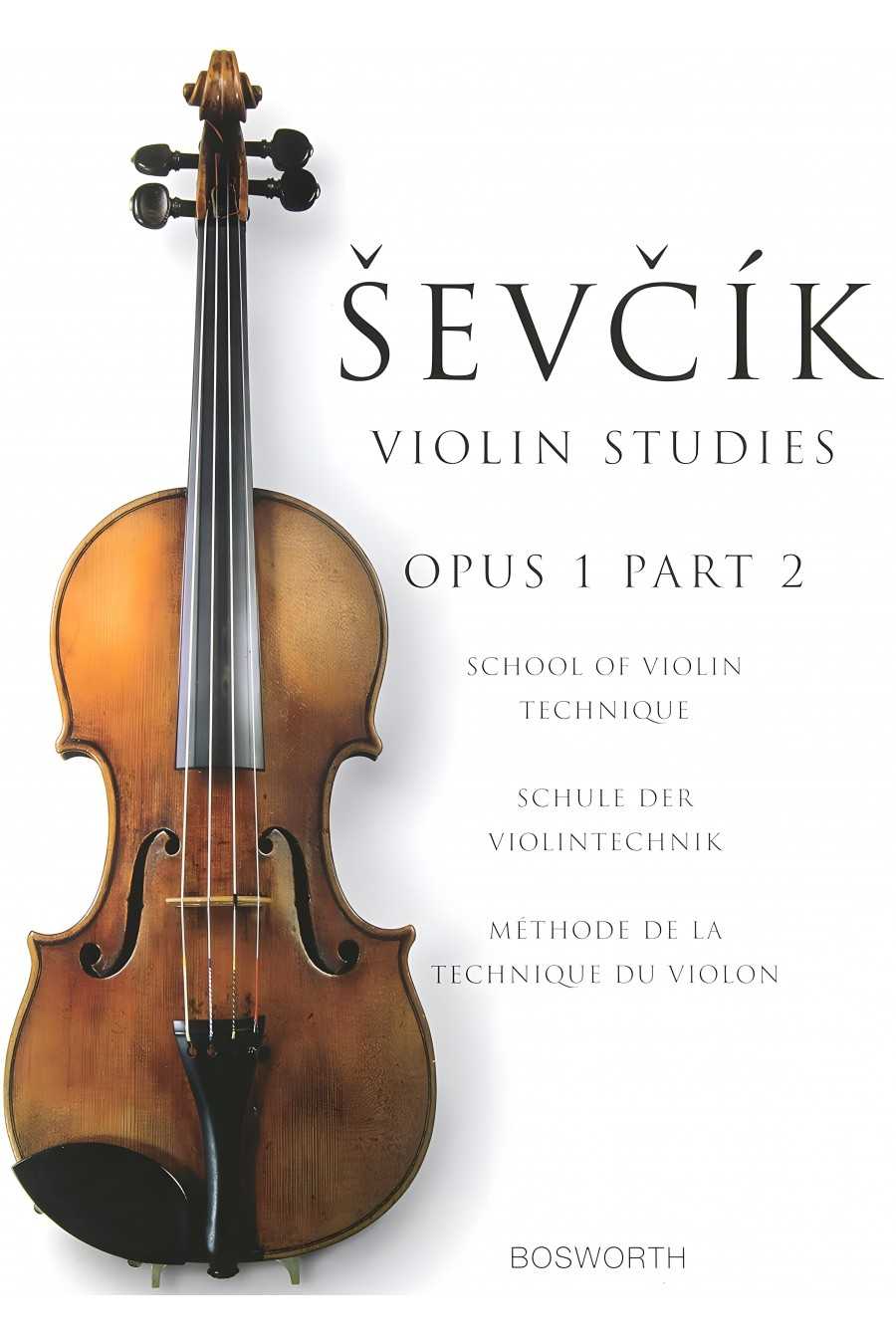
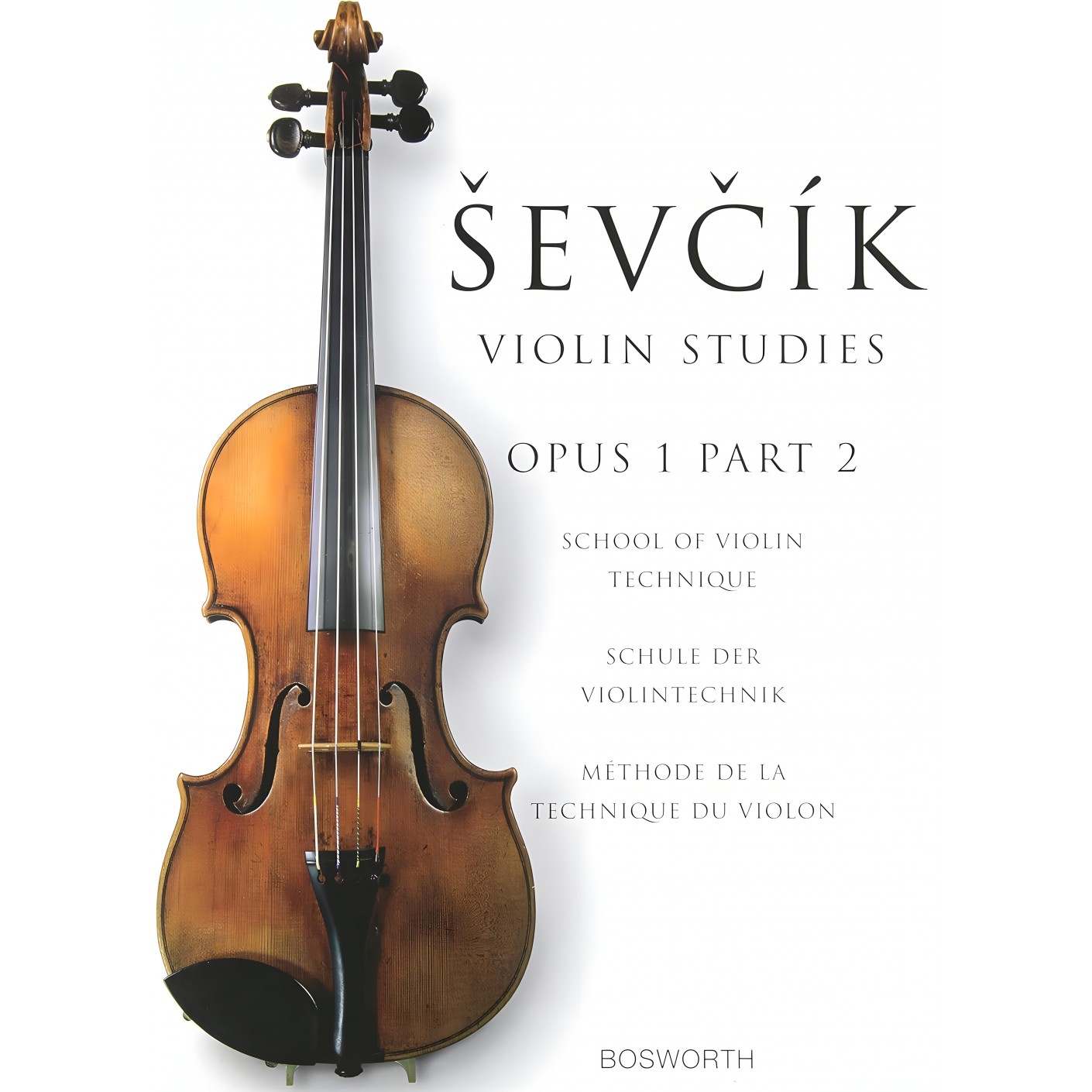
This book series is intended for advanced violin students to improve their technique in both right- and left-hand positions. Part 2 comprises exercises ranging from the 2nd to 7th positions.
This book series is a comprehensive resource designed to help advanced violin students enhance their technical proficiency. The exercises contained in Part 2 are specifically created to refine skills in both left- and right-hand positions. With a focus on the 2nd through 7th positions, this volume provides a challenging and rewarding learning experience for aspiring violinists looking to take their craft to the next level.
Ševčík’s complete works cover all aspects of violin technique, from elementary to advanced levels, including specific exercises for technical problems and analytical studies of standard violin concertos. His “Preparatory Trill Studies” cover finger placement, pressure on the strings, and fingerboard action. This edition is based on the original print with other sources found in Ševcík’s posthumous papers. The editor, Jaroslav Foltýn, is a violin professor at Prague Conservatory.
• Fundamental pedagogical work by a leading violin teacher
• With methodological notes by the editor (Cz/Eng/Ger)
Otakar Sevick was an esteemed musician and violin teacher from the Czech Republic. He authored numerous crucial studies, methods, and teaching aids. One of his works is a collection of 40 studies focusing on the right-hand technique. These exercises cover a range of areas such as string-crossing, arpeggios, triplets, changing bowing styles, staccato, legato, and more. Even after a century, these resources remain valuable for aspiring violinists.
Sevcik, 40 Variations Op. 3 Unaccompanied (Barenreiter), perhaps his best-known composition, is a favourite with violin students
Sevcik's Violin Studies is a century-old renowned method for improving violin technique. The Third part of Opus 1 reinforces strength, dexterity, accuracy, and position change exercises. It also includes scales and arpeggios spanning three octaves.
Since 1901, the works of Otakar Sevcik have been the foundation of various schools of string playing worldwide. Many players have found Sevcik's works to be of great value in their technical development. When practising Sevcik's exercises, there are four primary aspects to consider:
• Maintaining pure intonation.
• Ensuring evenness of tone.
• Achieving exactness of rhythm.
• Promoting physical freedom and ease.
Op. 6 Part 1 contains exercises in the First Position.
"School of Bowing Technique" op. 2 by Otakar Ševčík is a significant violin tutor with over 4,000 bowing exercises arranged by difficulty. The latest version combines the original six volumes into two and is primarily based on the first edition. The editor is Jaroslav Foltýn, a professor of violin at the Prague Conservatory.
Exercises for the Wrist I
• New edition of a tutor that generations of violinists have grown up with
• Fundamental work by a leading violin educator
• Three volumes in increasing order of difficulty: easy-moderate–difficult
"School of Bowing Technique" op. 2 by Otakar Ševčík is a significant violin tutor with over 4,000 bowing exercises arranged by difficulty. The latest version combines the original six volumes into two and is primarily based on the first edition. The editor is Jaroslav Foltýn, a professor of violin at the Prague Conservatory.
• New edition of a tutor that generations of violinists have grown up with
• Fundamental work by a leading violin educator
• Three volumes in increasing order of difficulty: easy-moderate–difficult
Otakar Sevcik's Violin Studies Op. 9 is a comprehensive collection of fifty-eight exercises for mastering Double Stopping on the violin. It includes extensive guidance and performance notes in four languages and provides a versatile approach to playing chords, harmonies and pedals. This book is an excellent source of technical challenges to refine your skills and expand your musical vocabulary.
Otakar Sevcik was a famous violin teacher who developed "Scales and Arpeggios," a comprehensive set of exercises for beginner and advanced players. The book includes scales, arpeggios, chords, broken chords, triads, and double-stopping exercises spanning over two octaves. The Bosworth Edition has helpful commentary.
