
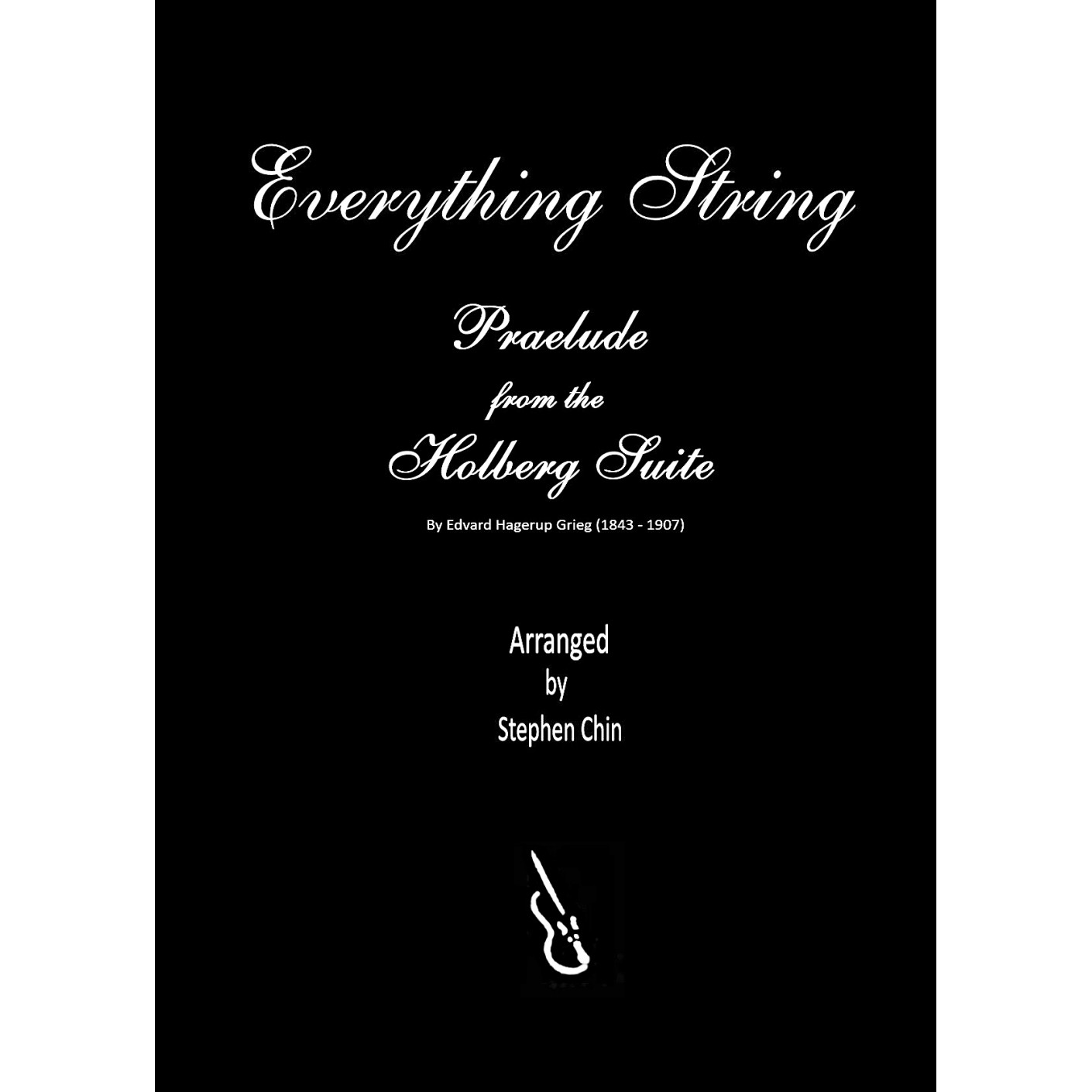

Praelude from the Holberg Suite by Grieg arr. Stephen Chin
$112.95
No need to wait years to perform Grieg's "Holberg Suite" with your ensemble. This arrangement is true to the original but with less tricky figurations. It features off-string work, trills, accented quavers, light legato bowing, martele and pizzicato to make the performance sparkle!
Praelude from the Holberg Suite by Grieg arr. Stephen Chin
Grieg's "Holberg Suite" is a beautiful and complex piece of music that many ensembles aspire to play. However, the challenging figurations, such as off-the-string work, trills, accented quavers, and light legato bowing, can make it a daunting task. This arrangement preserves the original's melodic, harmonic, and formal structures while eliminating some of the more difficult elements. This means that your ensemble can focus on showcasing their skills with the remaining techniques, including martele and pizzicato. With these elements in mind, your performance of the "Holberg Suite" is sure to sparkle and captivate your audience!
These majestic fanfares have inspired for centuries. Precision-crafted parts ensure easy playability and share main melodies amongst the ensemble. Roll out the red carpet!
Daniel Steibelt (1765-1823) composed elegant pieces that embody the Classical period's poise and vivacity. His piece includes an Andante section with beautiful melodies and an Allegro con brio section that presents a fun challenge for students. The E minor middle section highlights the first violins' talent and is perfect for String Orchestra Grade 2.
This nautical-themed piece starts with violas and cellos evoking the swell of waves. The seconds create sea breeze sounds; the first violin plays the main theme energetically. Everyone gets a chance to participate, and the middle section featuring cellos is eerie. The suspenseful wait for the sea breezes to pick up again adds to the effect, and the piece ends with a fun and lively section.
Mozart composed over 30 violin sonatas during his lifetime. Among these works, only one sonata stands out for being entirely in a minor key. This particular sonata is known for its dark, brooding and energetic nature. It also features spiccato and martele articulations, which were crucial to the Classical style of music. This piece is appropriate for Grade 4 string orchestras.
Debussy was inspired by mysticism and exotic items. He combined Gregorian chant with Eastern influences in "Funeral Urn" and showcased his unique style with "The Girl with the Flaxen Hair". Students will enjoy the challenging rhythms and harmonies in these works.
The Ming Dynasty (1368–1644) was a remarkable period in China’s history, characterised by extensive exploration and the expansion of trade routes to Europe, Africa, and the Indian Ocean, which resulted in a nearly doubled population. The Imperial Court became a hub for the arts, showcasing a diverse range of talents in literature, music, painting, sculpture, and ceramics. Artistic representations often depicted the calming lotus and dynamic horses, symbolising both serenity and strength, while music featured sustained notes and energetic rhythms that echoed these themes.
"Arctic Fire" is a mesmerising composition that takes the listener on a journey of tonal surprises. The sound of the first violin harmonics is piercing and ethereal, evoking the image of blowing ice in a desolate Arctic landscape. The piece features effective textures and shifts in melody, with even the bass having a significant solo. It's a powerful composition that inspires musicians to let their imaginations soar.
Carl Bohm (1844 - 1920) was a renowned composer and teacher for violinists. His famous pieces, "Moto Perpetuo" and "Galop," showcase double semiquavers and highlight the cellos in the latter. The work is shared around for everyone to shine.
