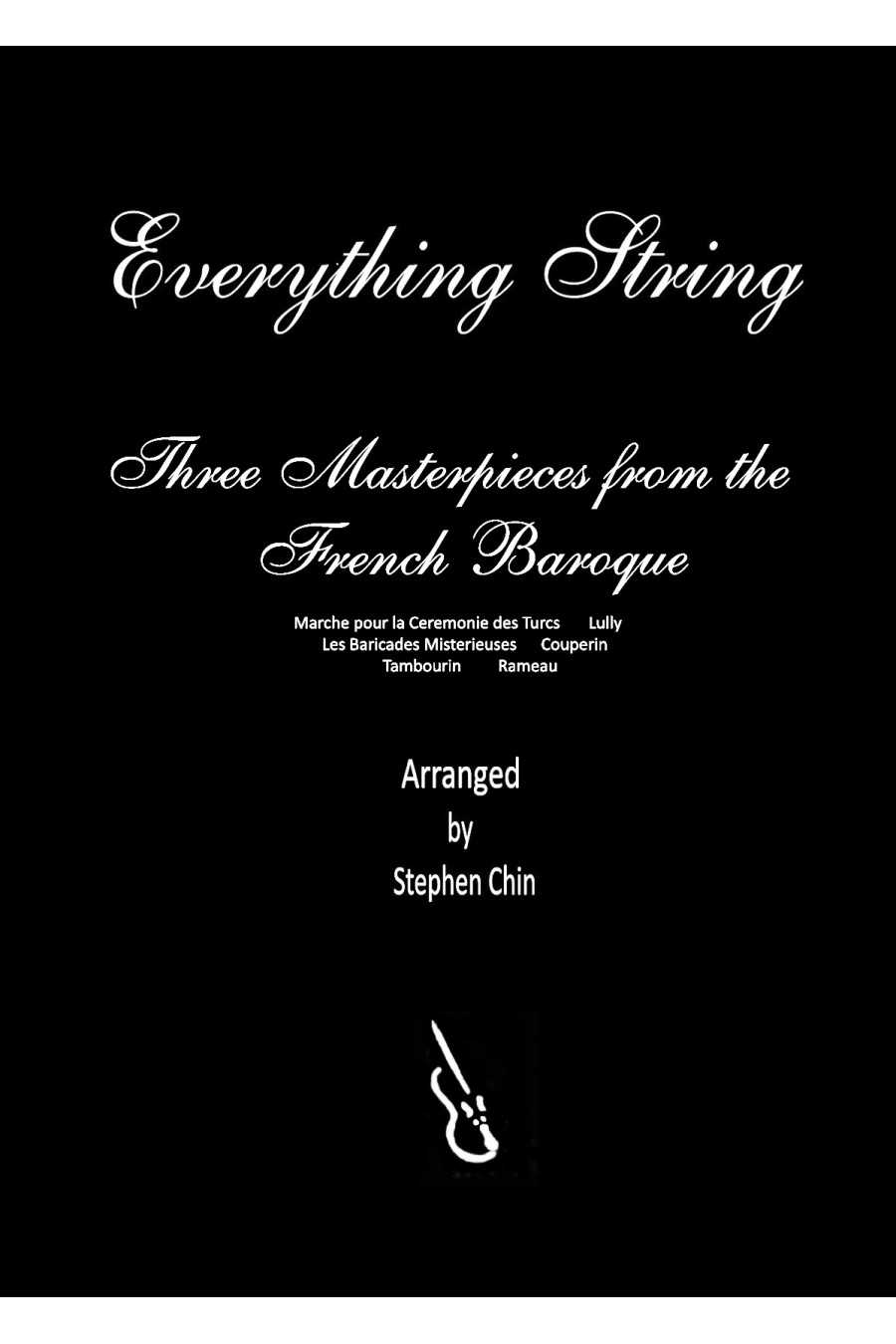
The French court of the 17th and 18th centuries was renowned for its grandeur and beauty, envied by all composers in Europe. These three works embody that spirit.
1. Marche pour la Ceremonie des Turcs
2. Les Baricades Misterieuses
3. Tambourin
For String Orchestra Grade 3
The splendour of the seventeenth and eighteenth-century French court was unmatched. From the grandeur of its architecture to the opulence of its clothing and decor, every detail was carefully crafted to convey a sense of majesty and beauty. It was a wonder of the world that left all European composers in envy. The three works mentioned here perfectly capture the spirit of that time- the grandeur of the court, the beauty of its people, and the magnificence of its culture.
1. Marche pour la Ceremonie des Turcs
2. Les Baricades Misterieuses
3. Tambourin
For String Orchestra Grade 3
Enjoy your food, move your body to the beat, and have fun! This amazing set of seven compositions even features a piece by Henry VIII. Intermediate musicians will appreciate the diverse range of musical styles from different regions of the Renaissance era. The homophonic writing style is ideal for developing precise intonation and consistent bowing techniques.
For String Orchestra Level 2
The Midnight Serenade starts with faint calls of the night. The haunting melody is shared throughout the piece over a waltz-like accompaniment. Dark Train is a dynamic composition based on a simple three-note ostinato, with whistle effects that excite younger players.
1. Midnight Serenade
2. Dark Train
For String Orchestra Grade 1
Handel's famous works, "Largo" and "Hallelujah Chorus," are presented together. "Largo" explores Baroque arioso sonorities, while the Hallelujah Chorus is the most renowned chorus ever written. All parts have been adapted to retain the original antiphonal effect between the chorus and orchestra.
1. Largo
2. Halleluja Chorus
For Grade 3.5 String Orchestra
In a snowy, mythical forest, knights ride fiercely, battling dark forces. Your orchestra will enjoy the haunting melodies and thrilling momentum.
For String Orchestra Grade 1.5
Mazas, a renowned composer, is known for his effective etudes and chamber ensemble works. This duet for two violins, dating back to the early 19th century, showcases the late Classical and early Romantic styles. The music is characterized by sharp rhythms and lyrical melodies, making it an excellent choice for a String Orchestra at level 3.5.