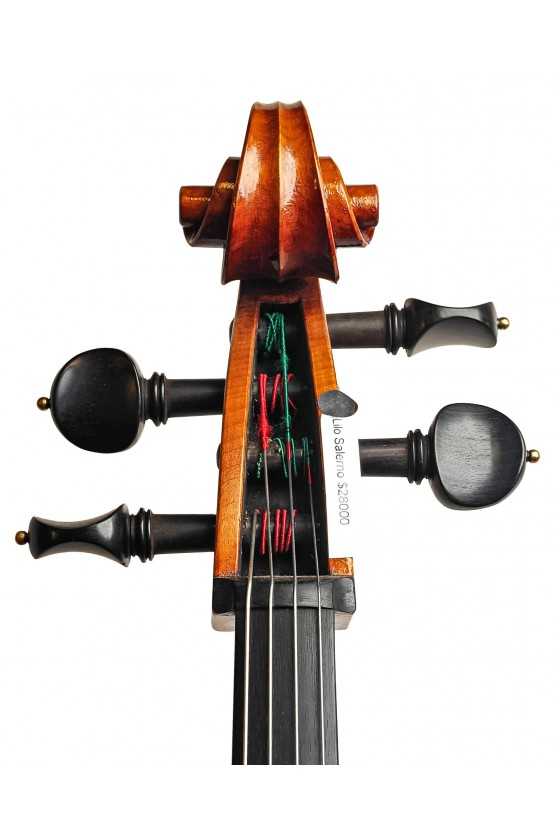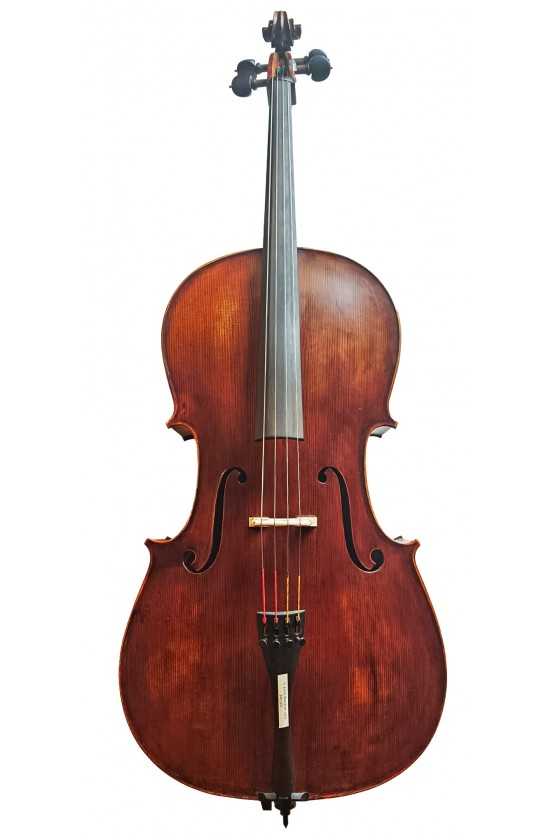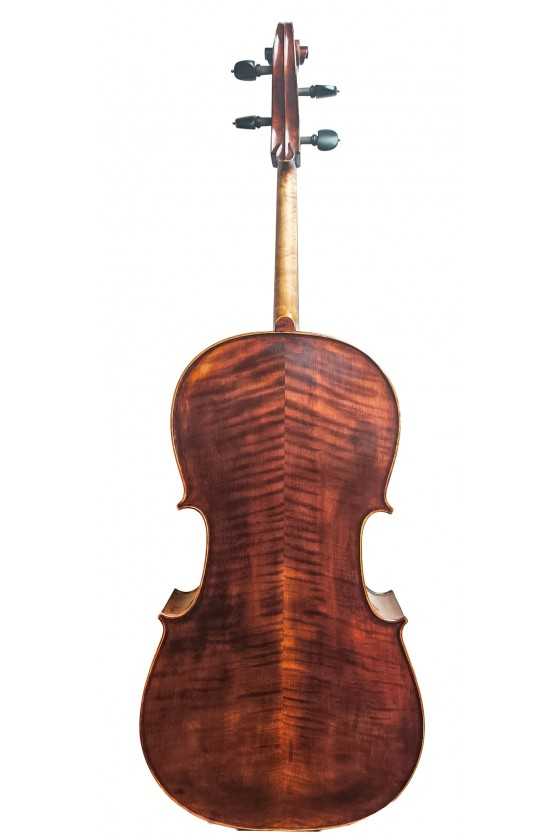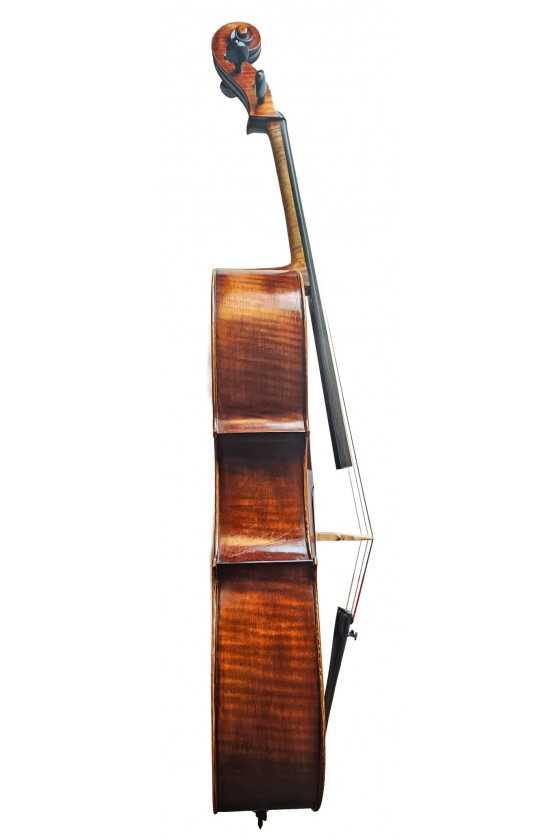
- SOLD


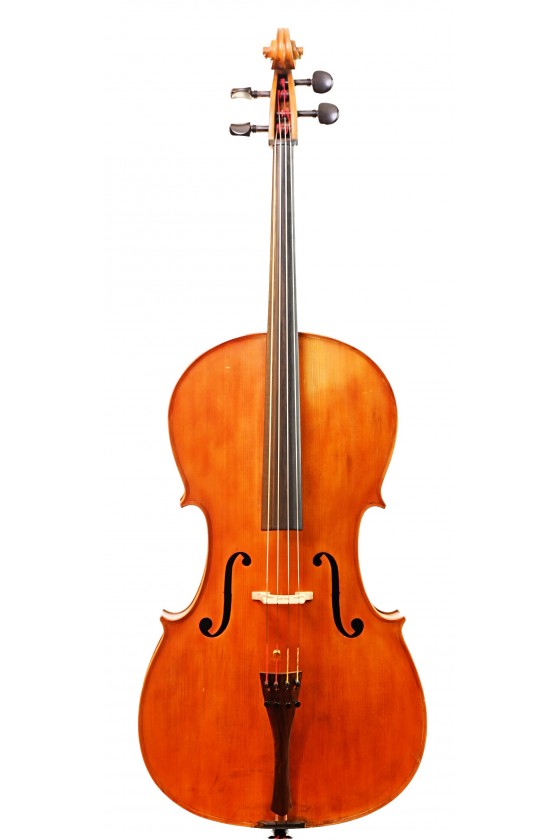
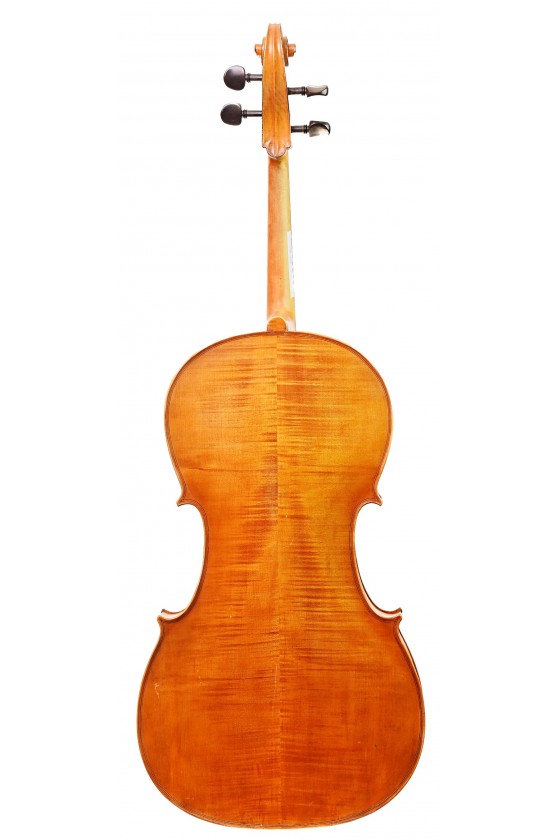
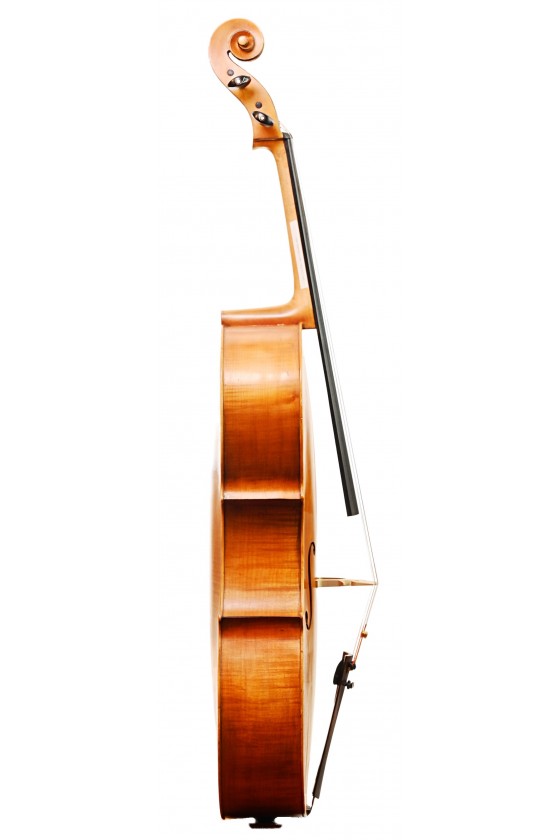
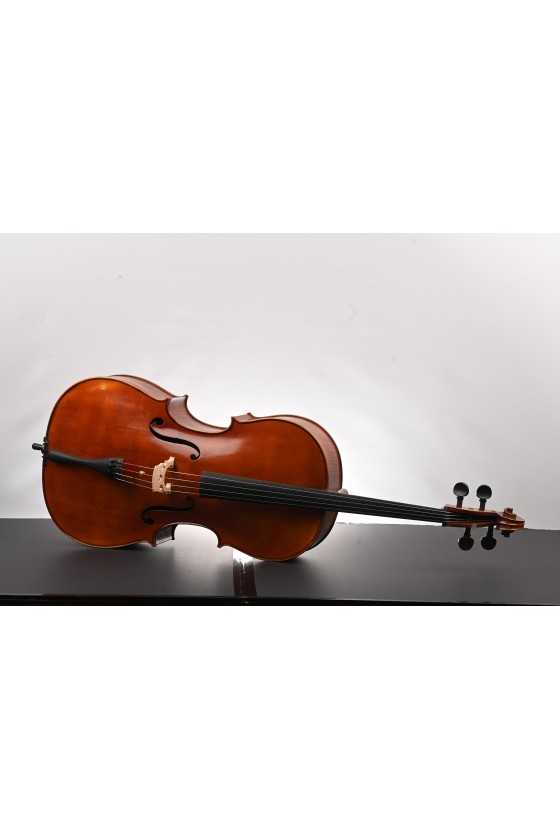
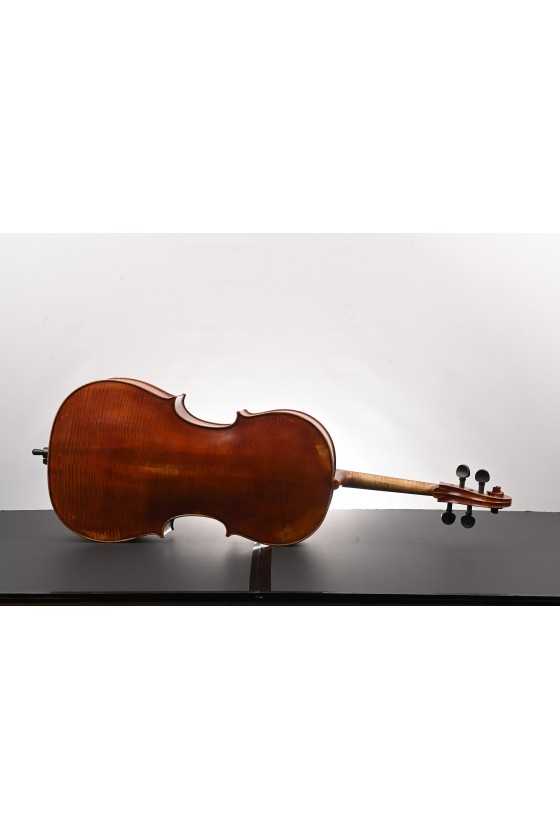
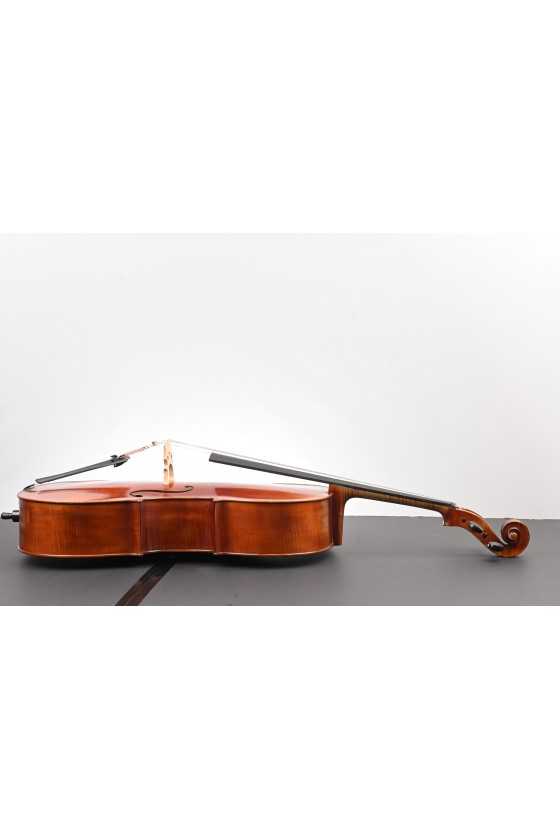
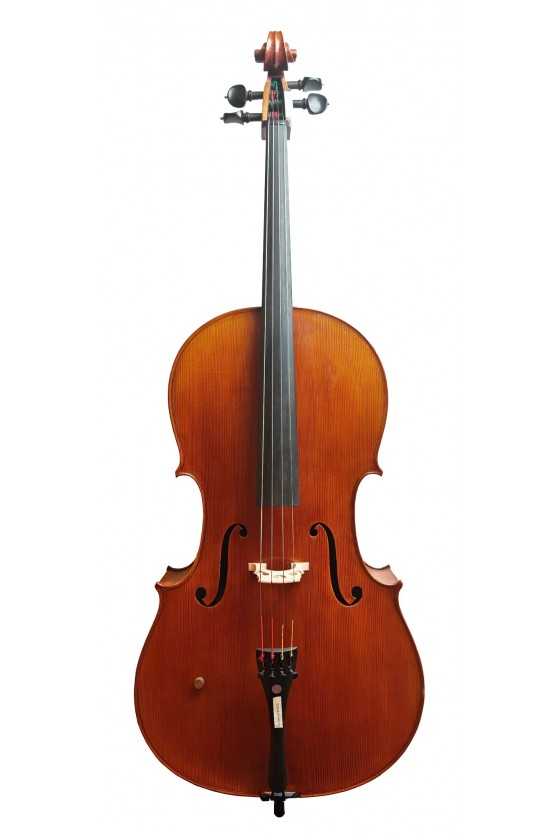
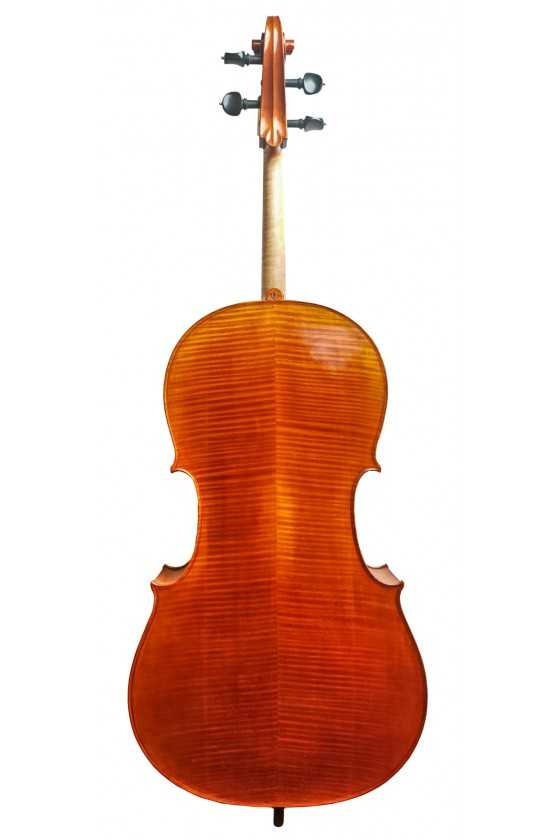
Stoehr cello - to be set up. The price includes setting up that includes a Bavarian spruce sound post, the highest quality French bridge, ca $600 worth of strings, and a German Carbon Tailpiece.
• Use of matured, high-quality tonewoods
• Beautifully flamed Bosnian maple for the back, rib and neck
• Slow, evenly-grown mountain spruce is used for the top.
• Use Traditional Guild knowledge with modern technology to achieve a tonal optimum.
• Varnish is personally produced, following traditional recipes using only select resins.
• With loving care, each cello, such as this one, is given a special touch.
• Customers repeatedly praised him for the instrument’s light response and strong, full tone paired with the instrument’s inner melodiousness.
“Over the years, I have acquired a wide range of personal knowledge pertaining to my craft: this is another cornerstone upon which I base my work and efforts to achieve the ultimate in substance, purity and melodiousness of sound.” - Thomas Stoehr
Master Luthier Thomas Stoehr
Motto: “Be serious about what you enjoy.”
Thomas Stoehr is a German luthier born in Erlangen, Germany, in 1976. He had his vocational baccalaureate diploma in 1995. The same year, he started his apprenticeship under Master Luthier Guntler Lobe. After three years of apprenticeship, he was declared the “Best journeyman” by the examining board of the Trade Corporation of Middle Franconia during their final examination.
He participated in the Youth Craftsmanship Competition from 1998 to 1999 and won several awards, such as the Middle Franconian Chamber’S of Luthery Award, the Bavarian Chamber of Luthier’s Award, and the winner of German Youth Craftsmanship. He became a member of the Swiss Luthiers’ and Bowmakers’ Association in 2007 and a member of the Violin Society of America in 2008.
Other achievements and awards:
This Antique French violin was made by the famous luthier Jean Baptiste Colin at Mirecourt, Paris, in 1903, a superb example of a quality French instrument.
The Lillo Salerno Cello 2025 is a contemporary workshop instrument bearing the label “Strumento di bottega – Salerno Lillo – ex cremonensis fecit anno 2025” and numbered LS 2025-04. Italian-born Lillo Salerno trained at the violin-making schools of Cremona and Mittenwald before establishing his workshop in Pforzheim, Germany, in 2005. His instruments blend traditional Italian and German violin-making influences, making this 2025 cello an appealing modern instrument with strong European craftsmanship credentials.
Key Features:
• Maker: Lillo Salerno
• Year: 2025
• No.: LS 2025-04
• Type: Workshop cello
• Training: Cremona & Mittenwald
The H. Émile Blondelet Cello, Paris 1923, is an early 20th-century French instrument bearing the label of Hugues Émile Blondelet (1875–1928) and numbered B 616. Born in Mirecourt, Blondelet joined the renowned JTL workshop at fifteen and became co-director in 1908. Known for finely crafted instruments inspired by Amati and Stradivari models, he was made a Chevalier of the Legion of Honour in 1923, the same year this cello is dated. Its Paris provenance and association with Blondelet's mature working period make it an appealing historic French cello.
Key Features:
• Maker: H. Émile Blondelet
• Dates: 1875–1928
• Instrument: Cello
• Year: 1923
• No.: B 616
• Place: Paris
• Origin: France
• School: Mirecourt
• Early 20th century
Recently SOLD Thomas Stoehr Master cello - to be set up. The price includes setting up that includes a Bavarian spruce sound post, the highest quality French bridge, ca $600 worth of strings, and a German Carbon Tailpiece.
• Use of matured, high-quality tonewoods
• Beautifully flamed Bosnian maple for the back, rib and neck
• Slow, evenly-grown mountain spruce is used for the top.
• Use Traditional Guild knowledge with modern technology to achieve a tonal optimum.
• Varnish is personally produced, following traditional recipes using only select resins.
• With loving care, each cello, such as this one, is given a special touch.
• Customers repeatedly praised him for the instrument’s light response and strong, full tone paired with the instrument’s inner melodiousness.
Achieving ultimate in substance, purity and melodiousness of sound.
• Use of matured, high-quality tonewoods
• Beautifully flamed Bosnian maple for the back, rib and neck
• Slow, evenly-grown mountain spruce is used for the top.
• Use Traditional Guild knowledge with modern technology to achieve a tonal optimum.
• Varnish is personally produced, following traditional recipes using only select resins.
• With loving care, each cello, such as this one, is given a special touch.
• Customers repeatedly praised him for the instrument’s light response and strong, full tone paired with the instrument’s inner melodiousness.
• Use of matured, high-quality tonewoods
• Beautifully flamed Bosnian maple for the back, rib and neck
• Slow, evenly-grown mountain spruce is used for the top.
• Use Traditional Guild knowledge and modern technology to achieve a tonal optimum.
• Varnish is personally produced, following traditional recipes using only select resins.
• With loving expert care, each cello, such as this one, is given a special touch.
• Customers repeatedly praised him for the instrument’s light response and strong, full tone paired with the instrument’s inner melodiousness.
Louis Noebe was a German cellist who studied at the Leipzig Conservatory and played in several orchestras. He became a solo cellist and later established a workshop for creating violins, violas, and cellos. He improved violin making and developed the System Noebe, which increased the vibrations of the cello. He was also a German violin maker whose clients included famous musicians. He innovated in piano construction and developed a four-part coupling pedal in 1893. Today, his former residence is a listed building, and the Bad Homburg Municipal Historical Museum bought a violin by Louis Noebe for its 100th anniversary in 2016.