
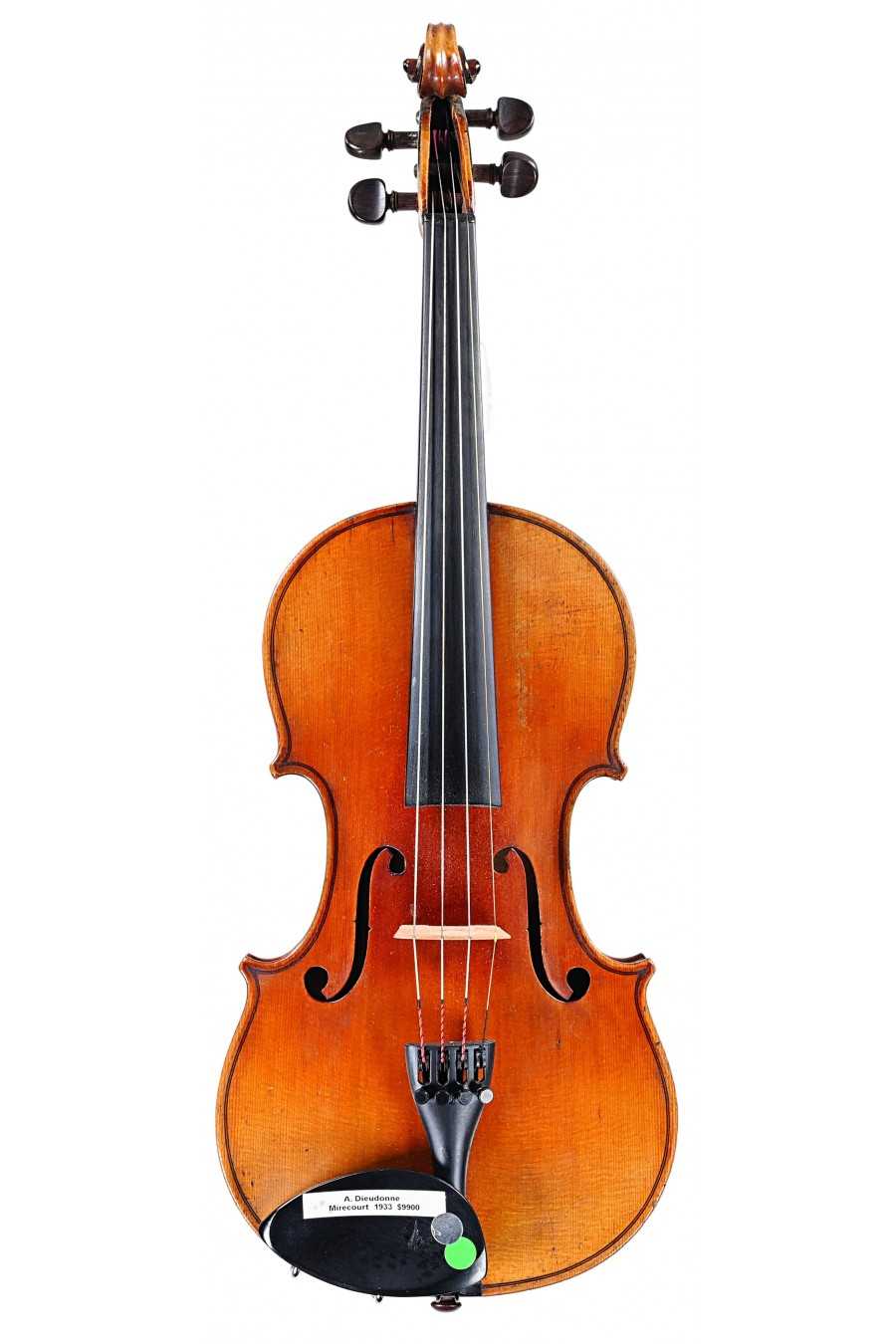
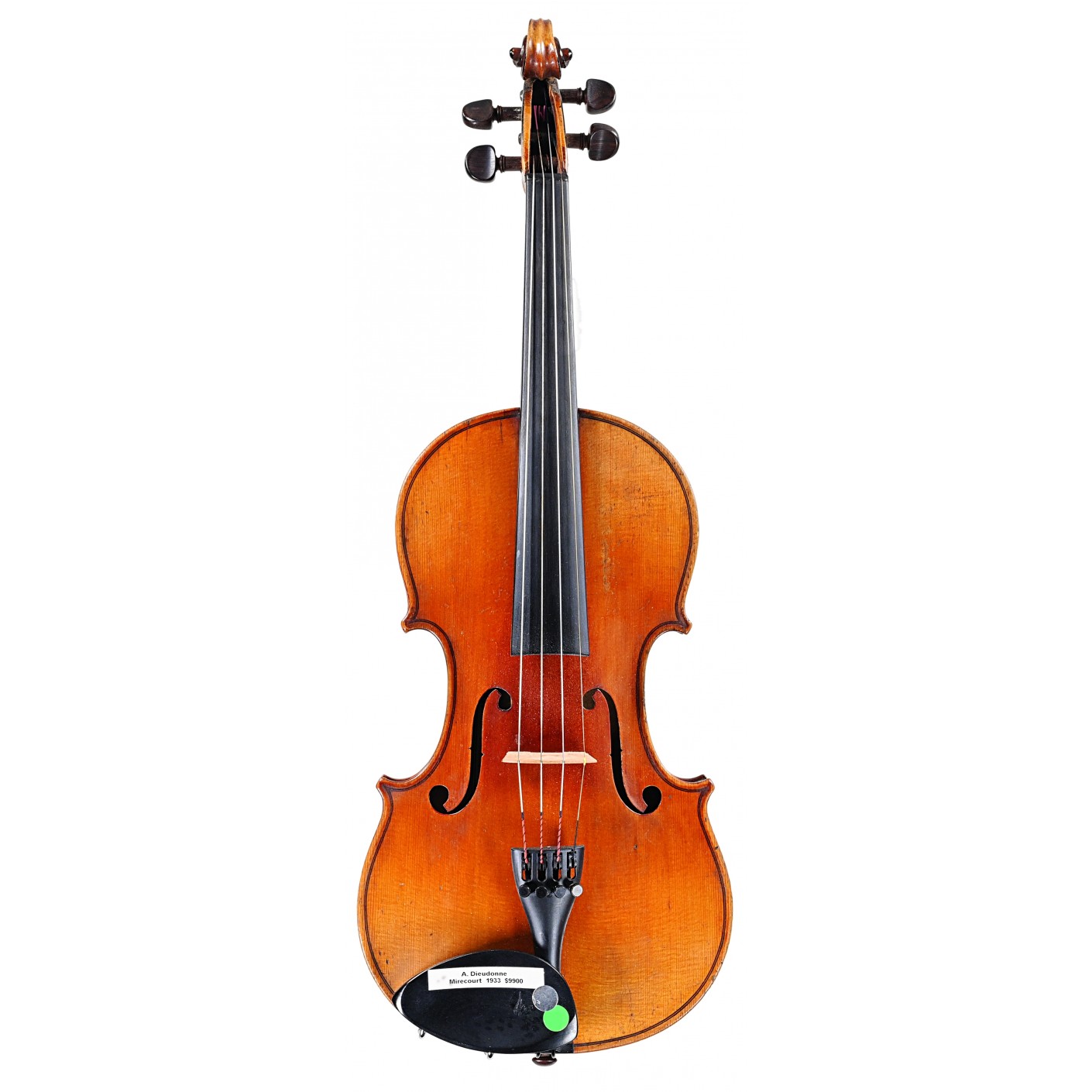
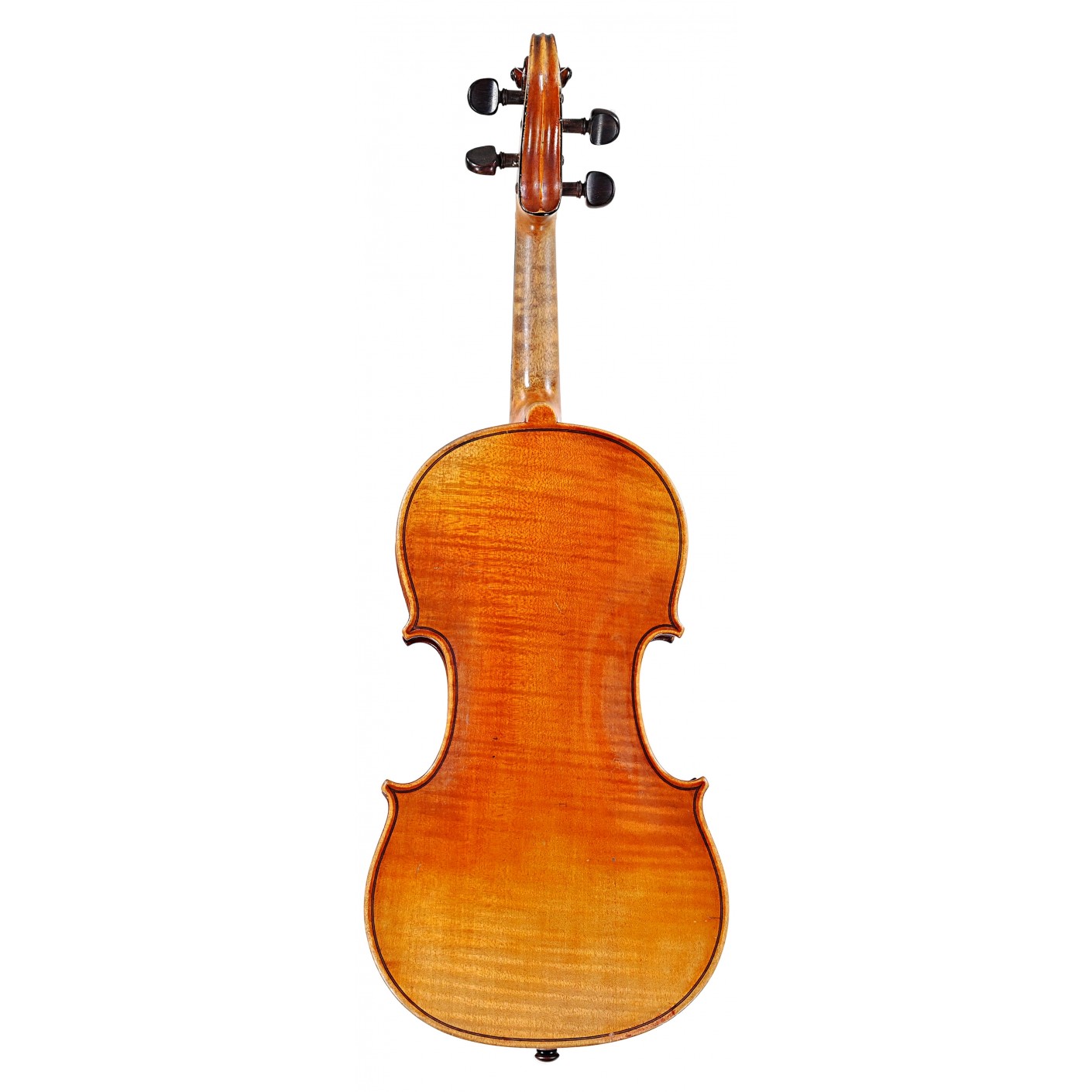
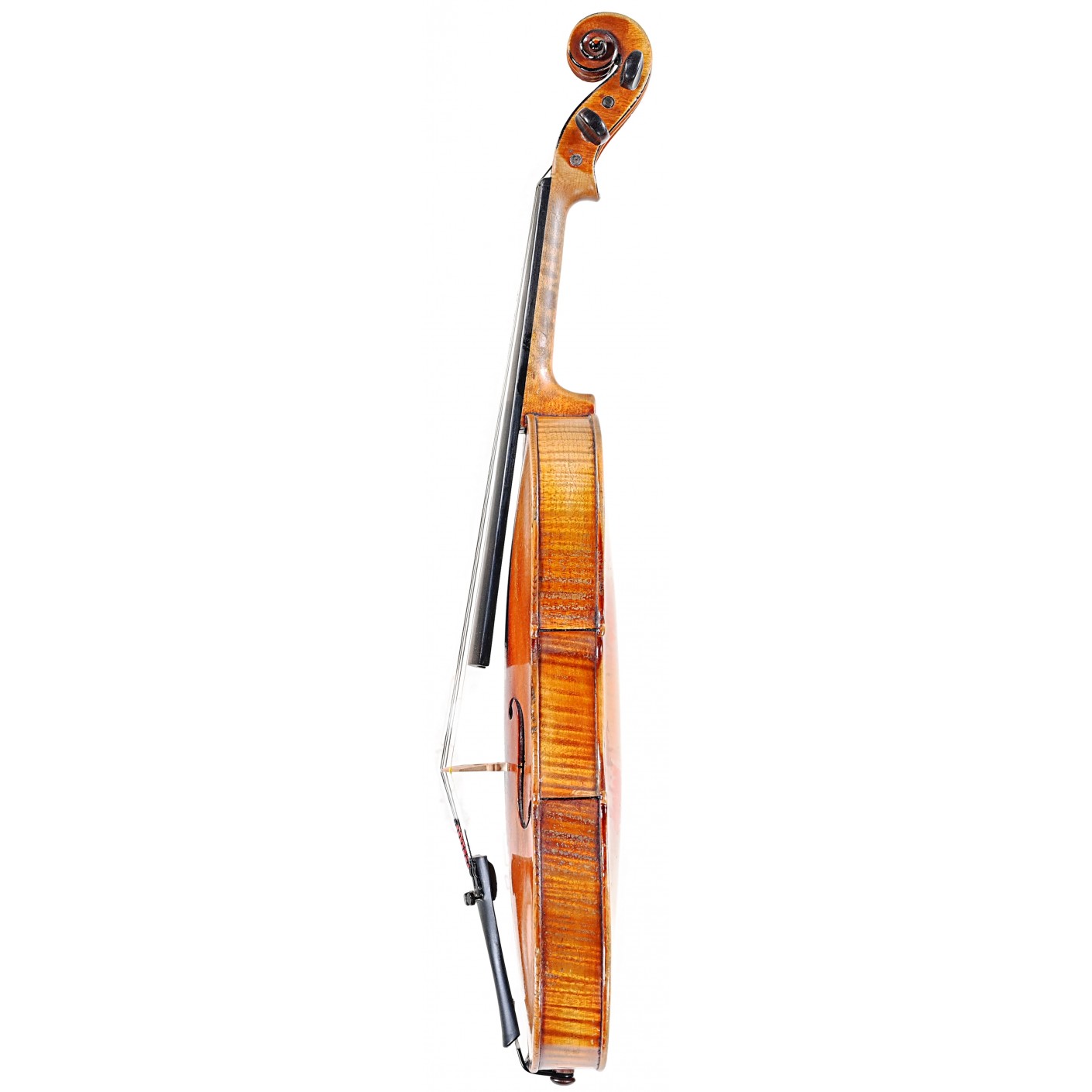
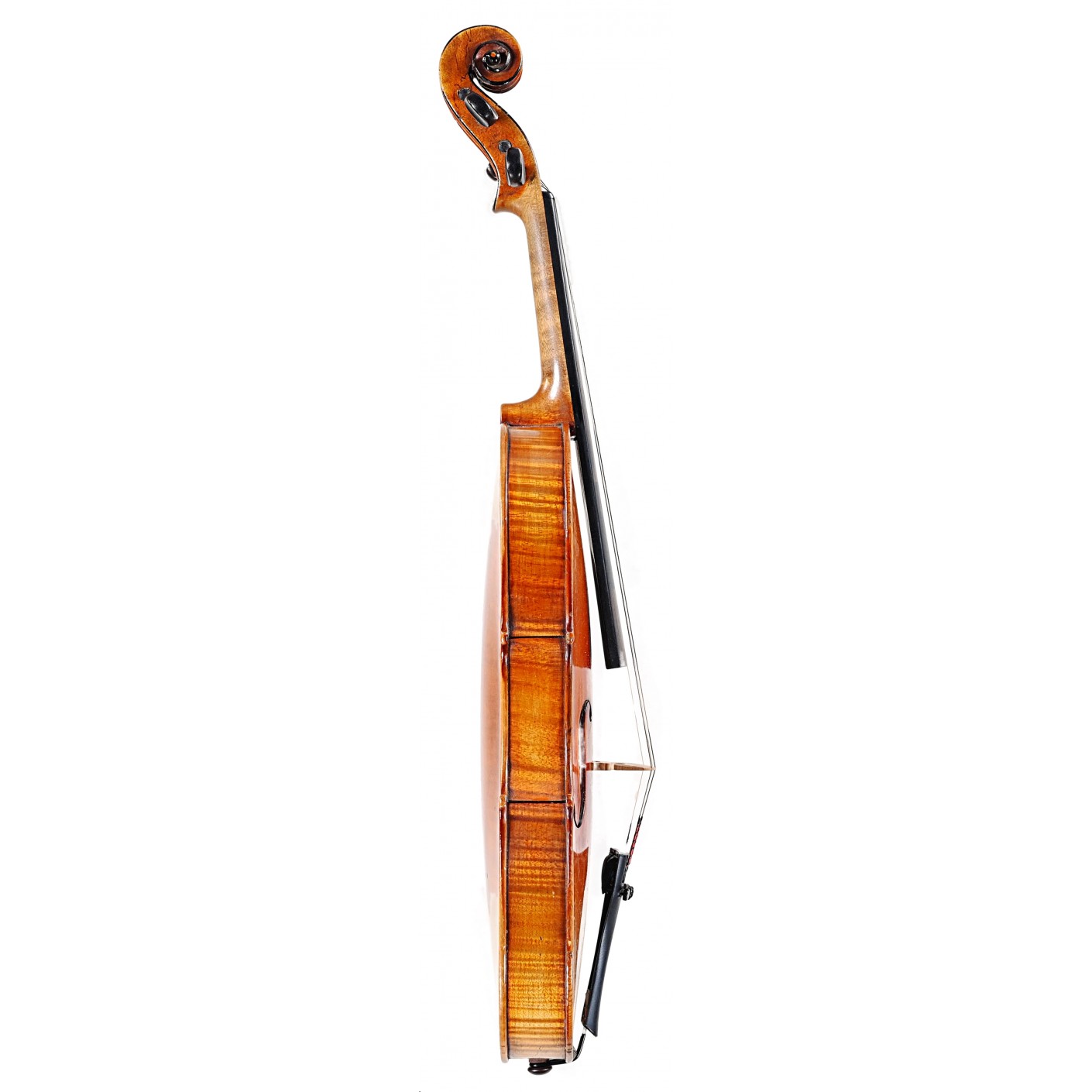
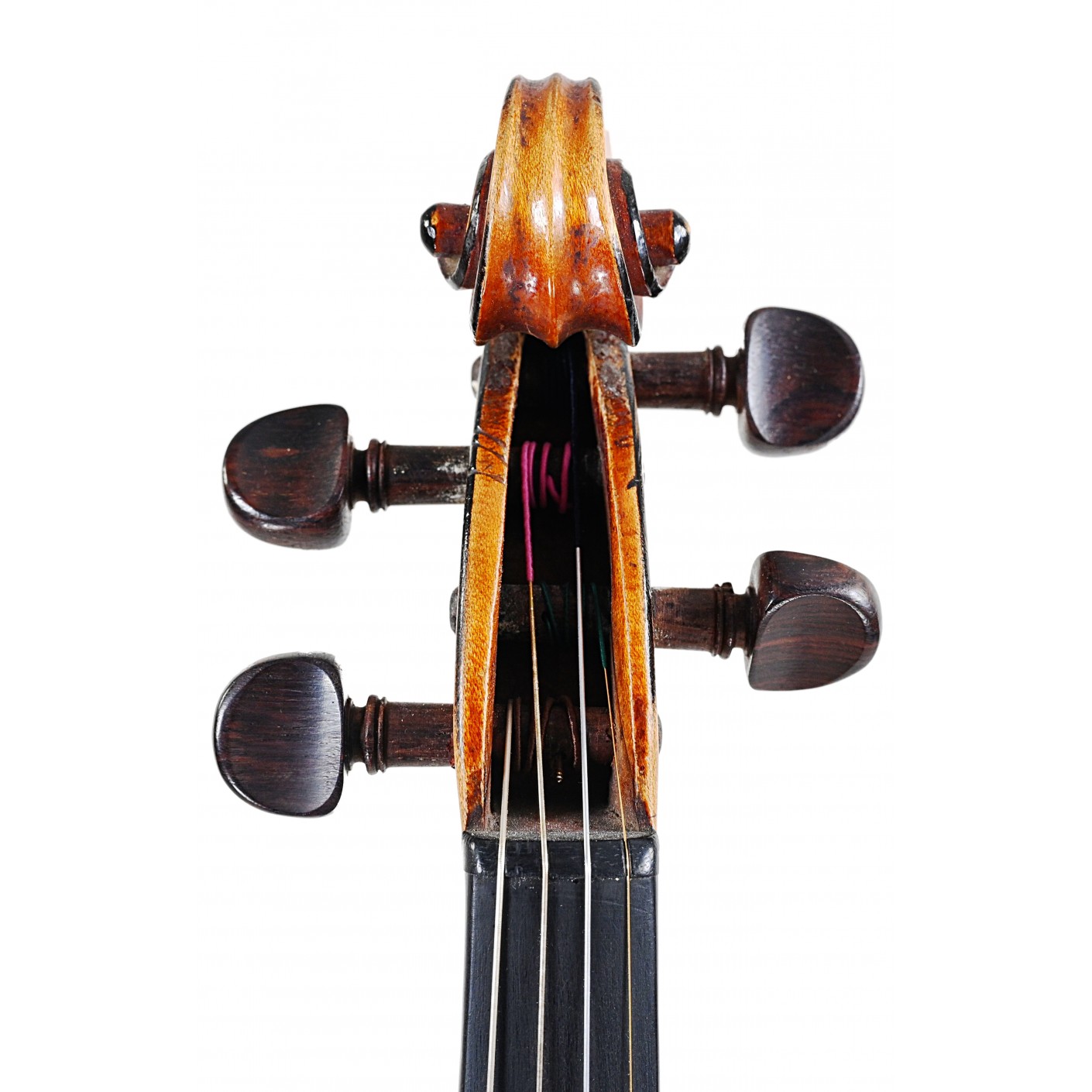
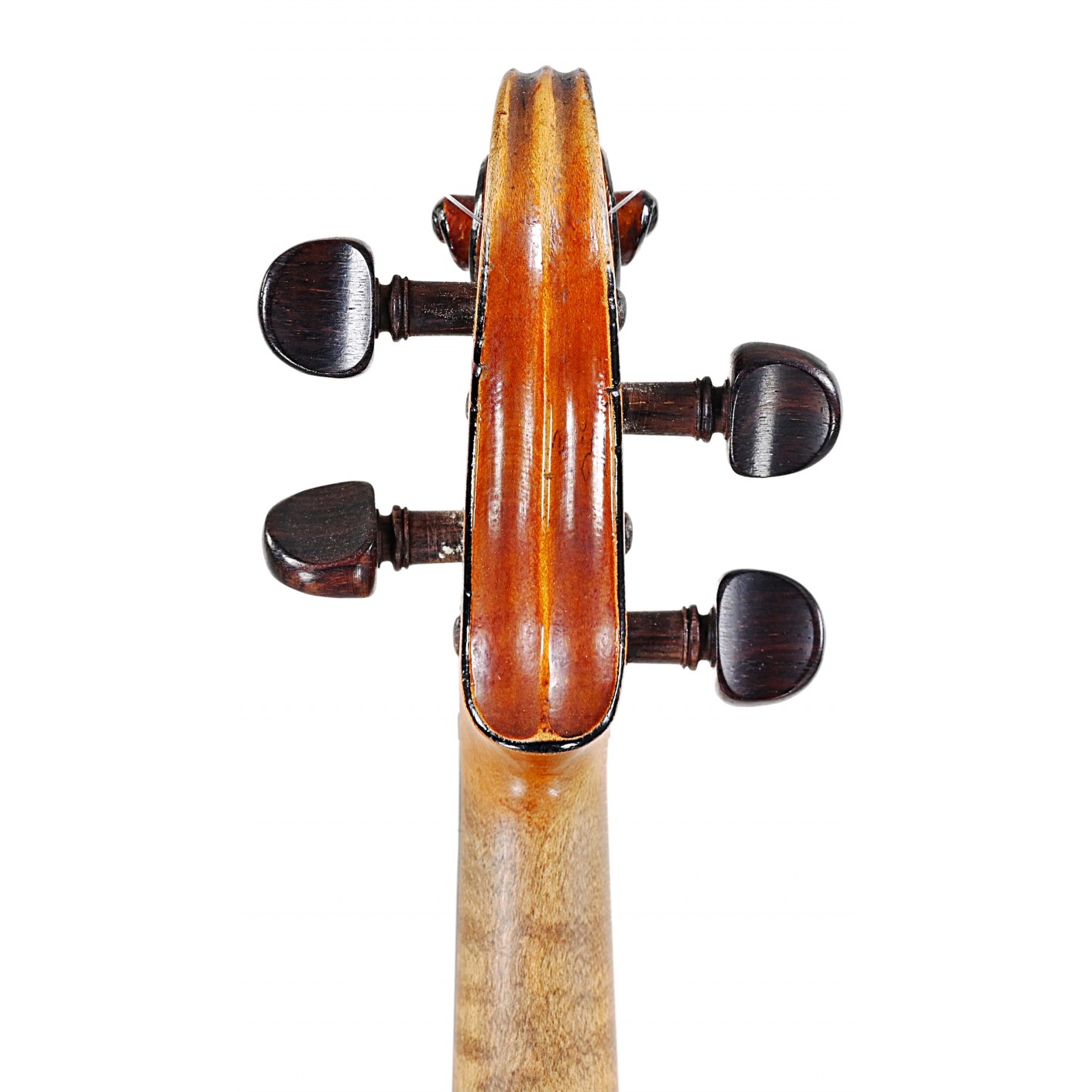
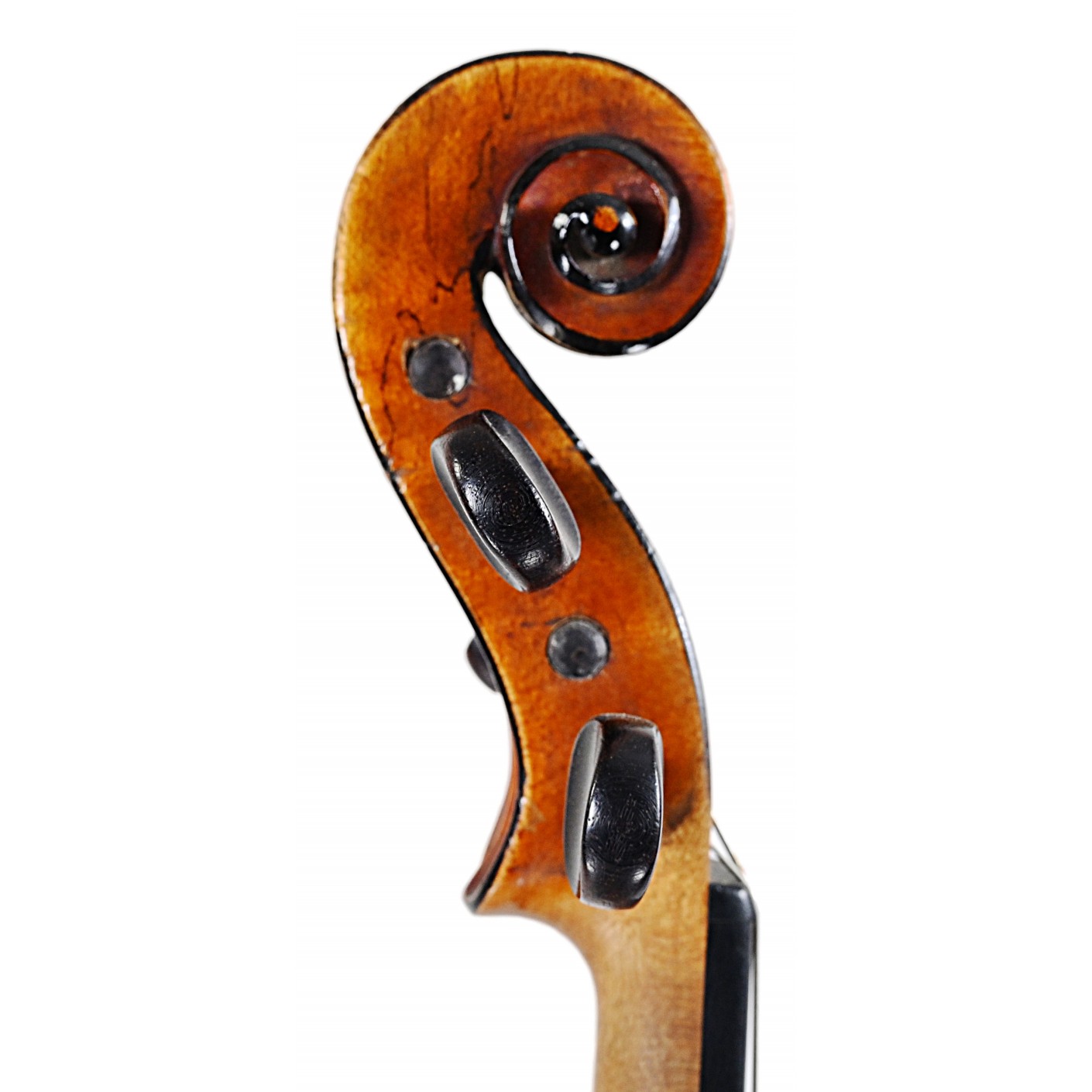
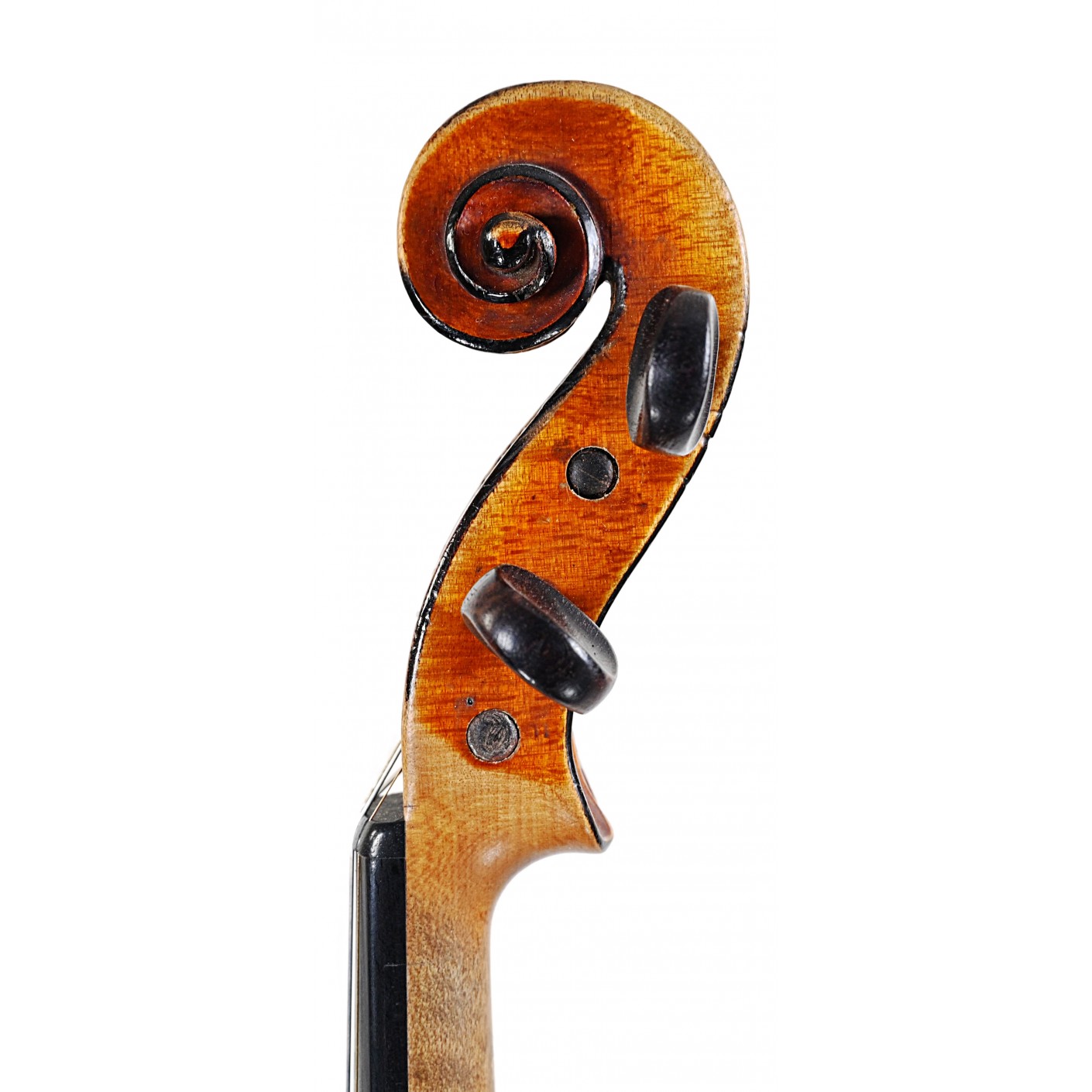
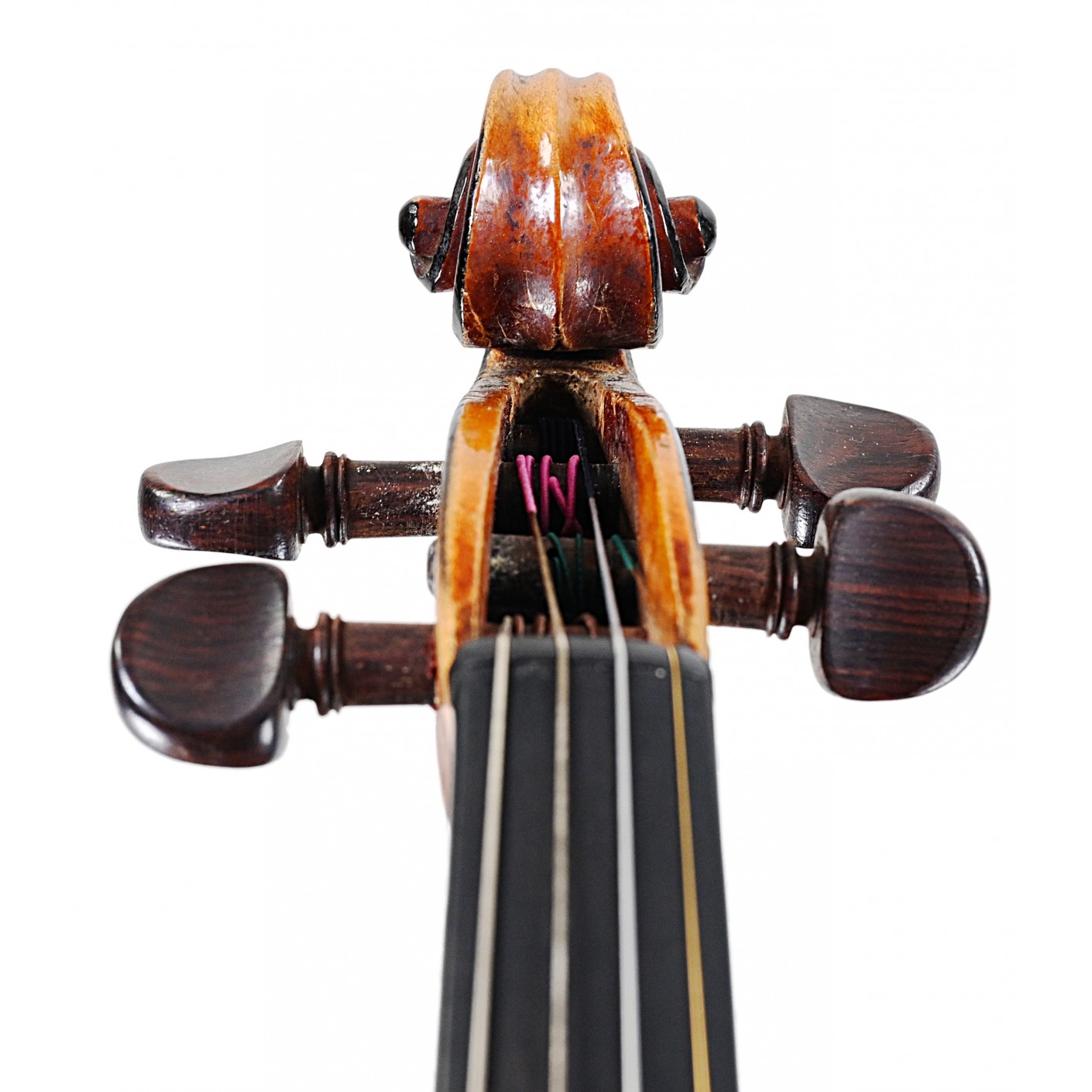
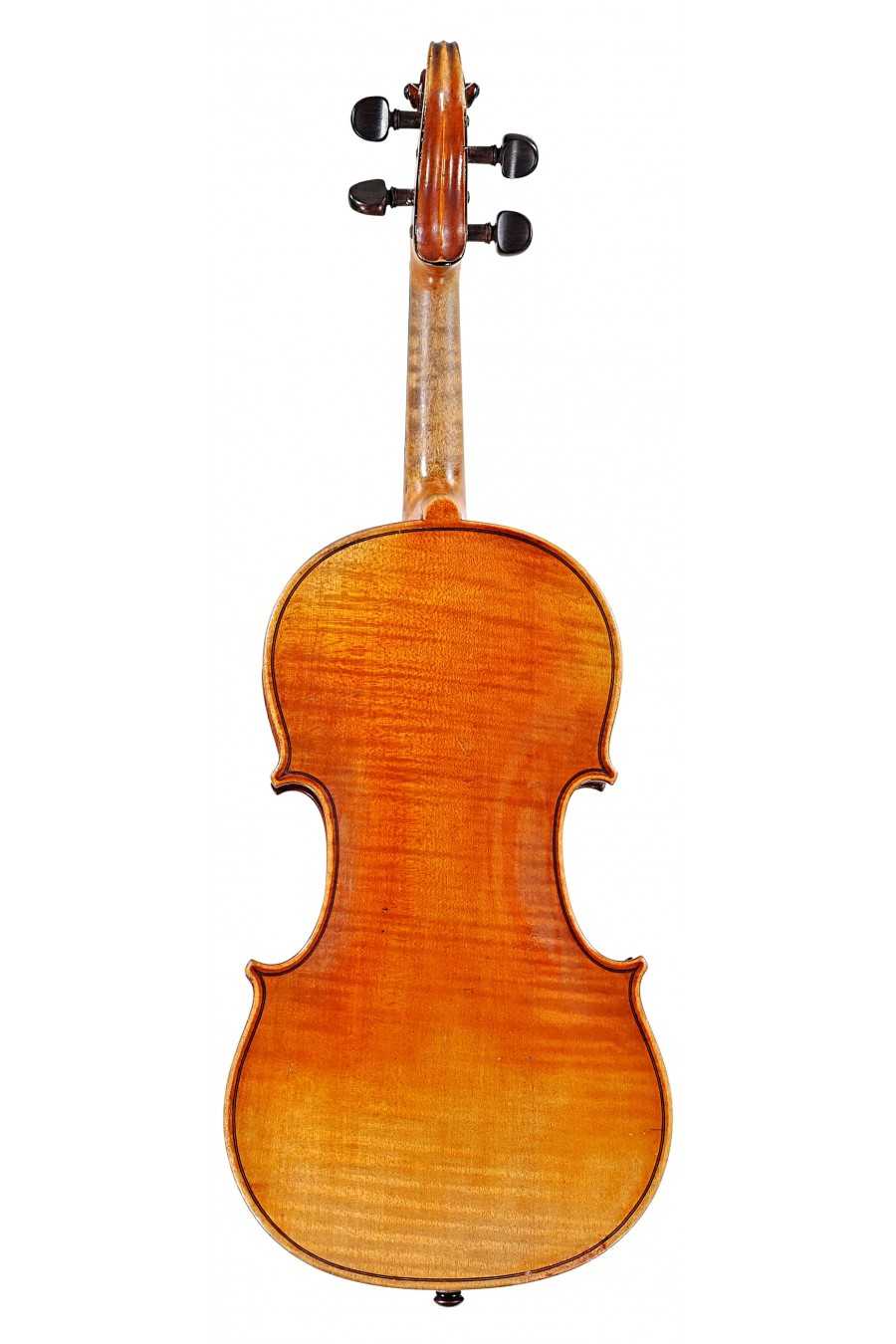
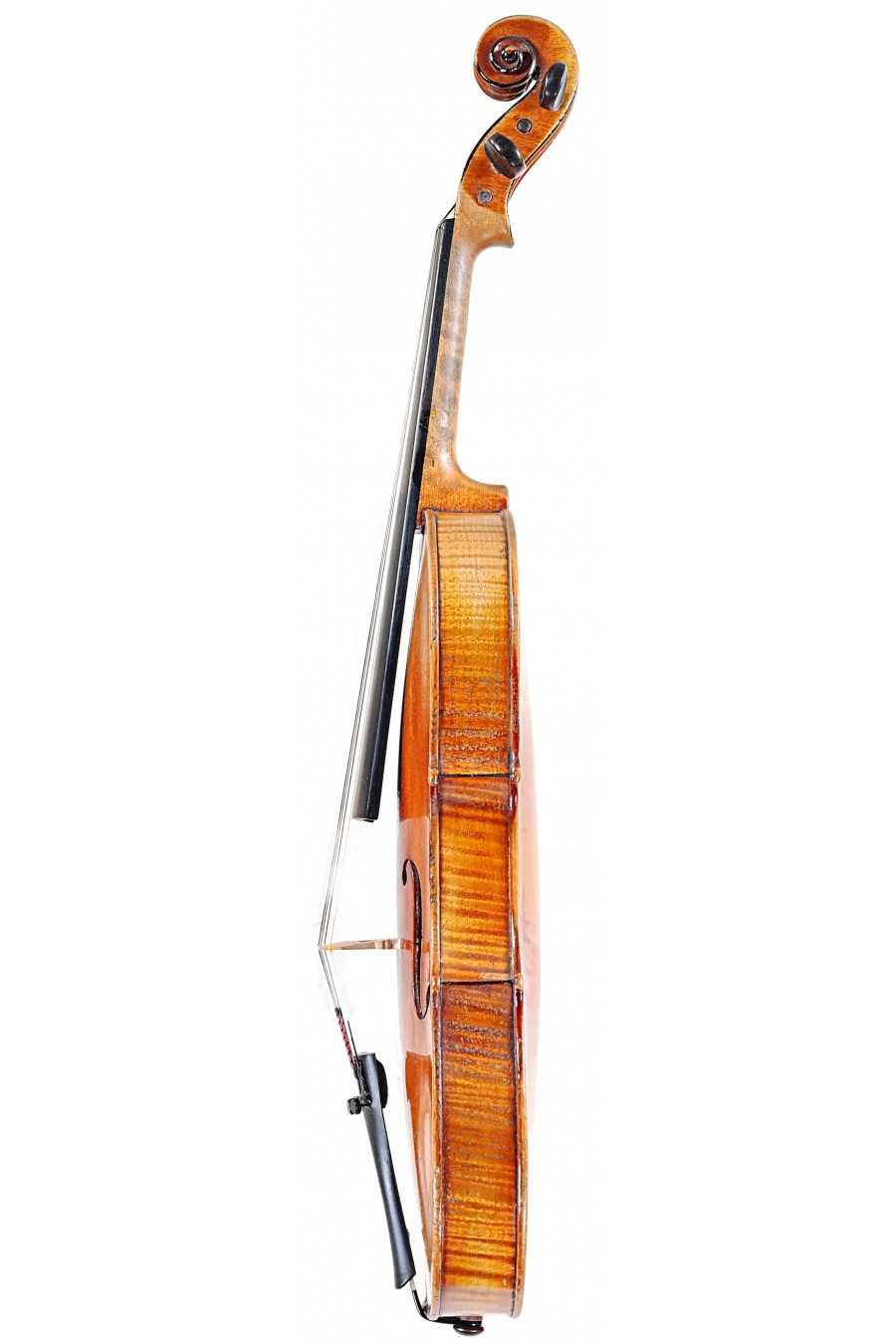
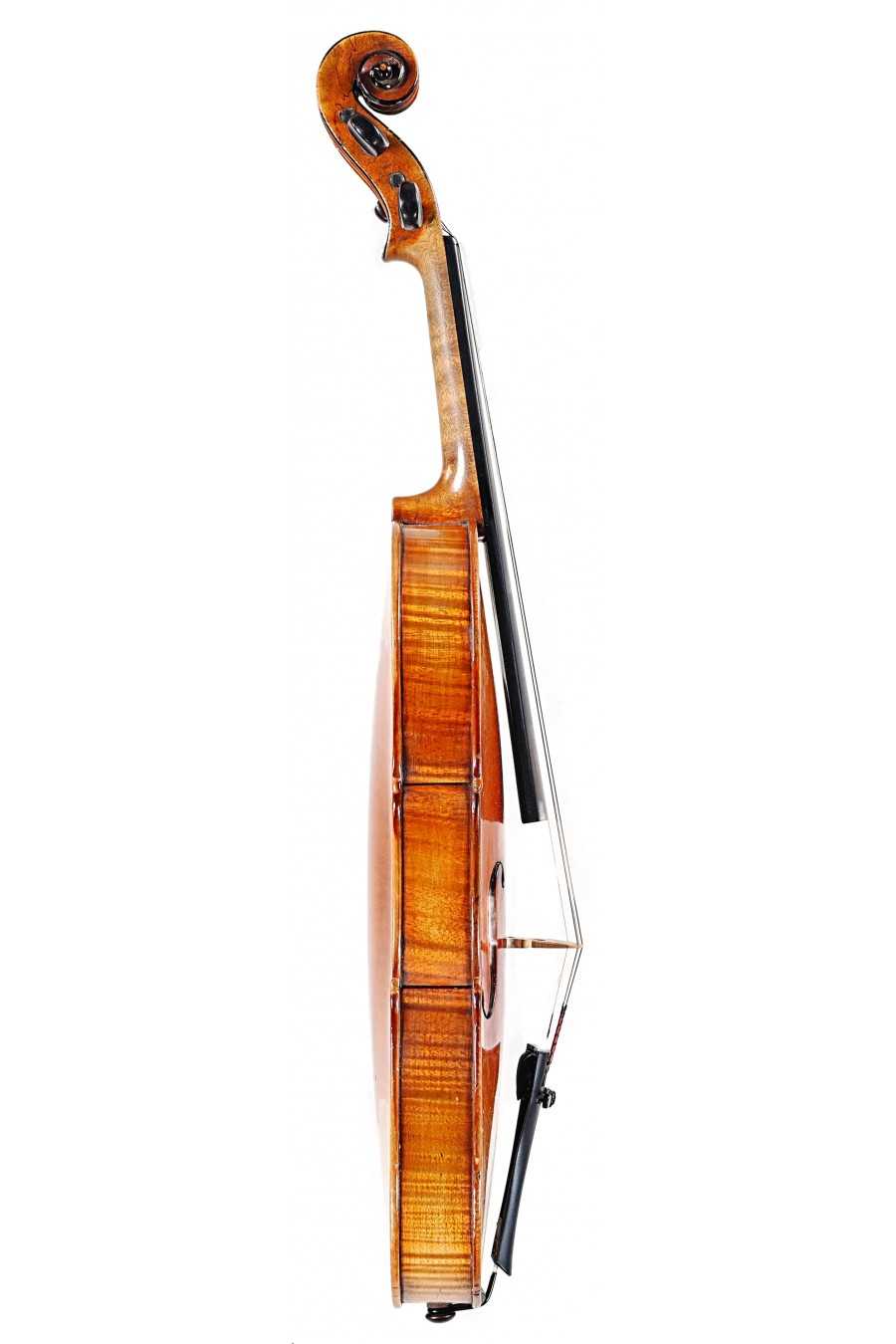
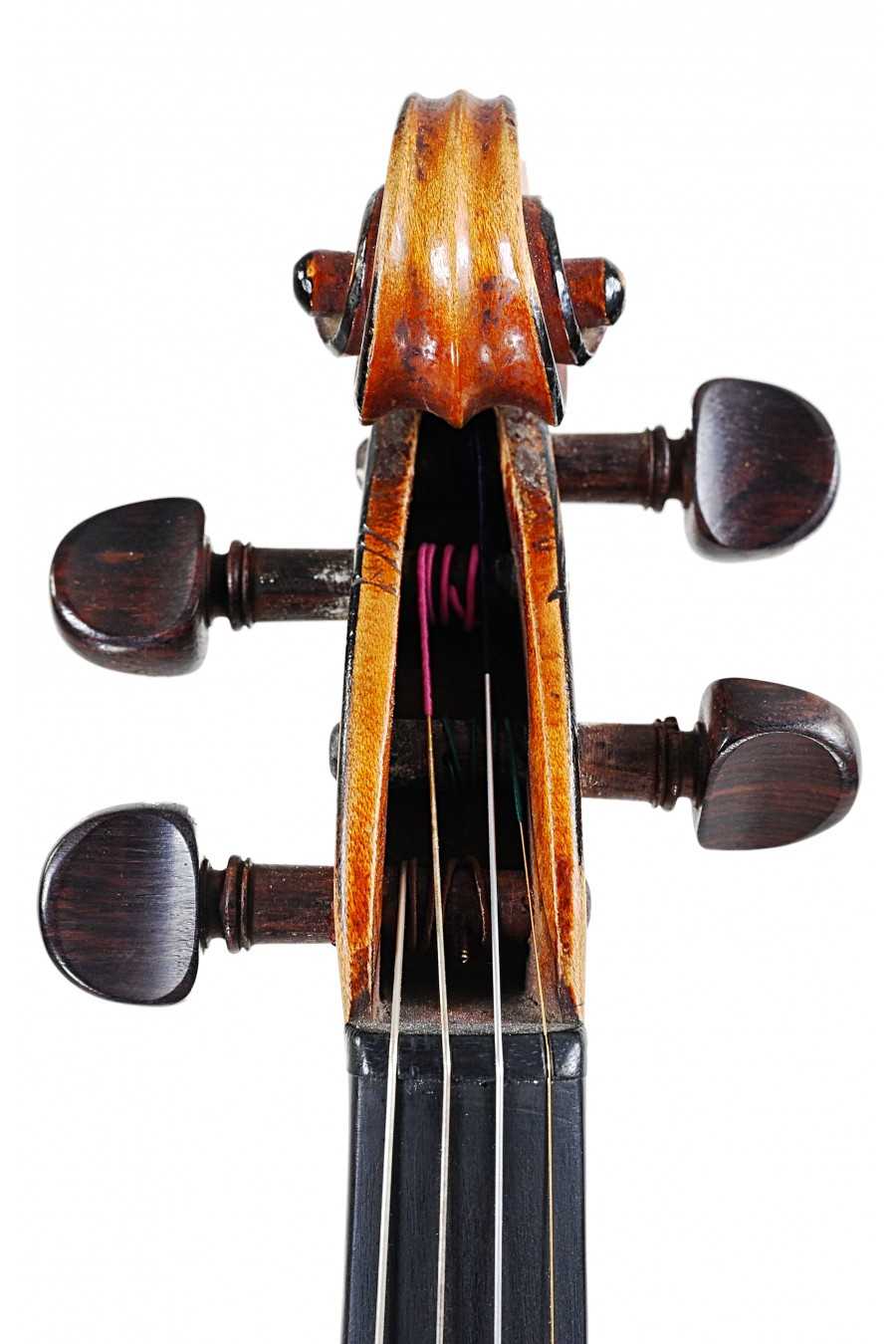
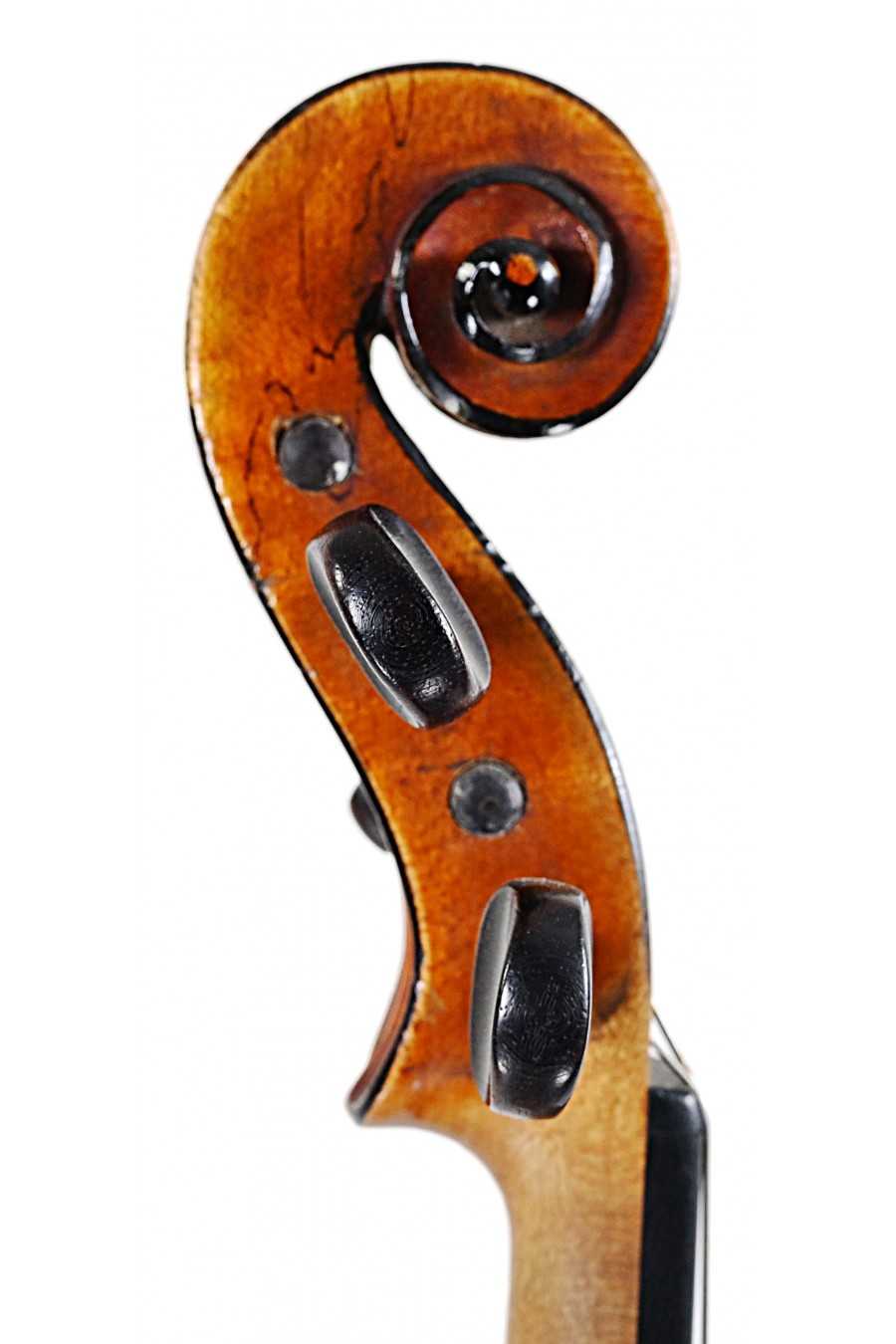
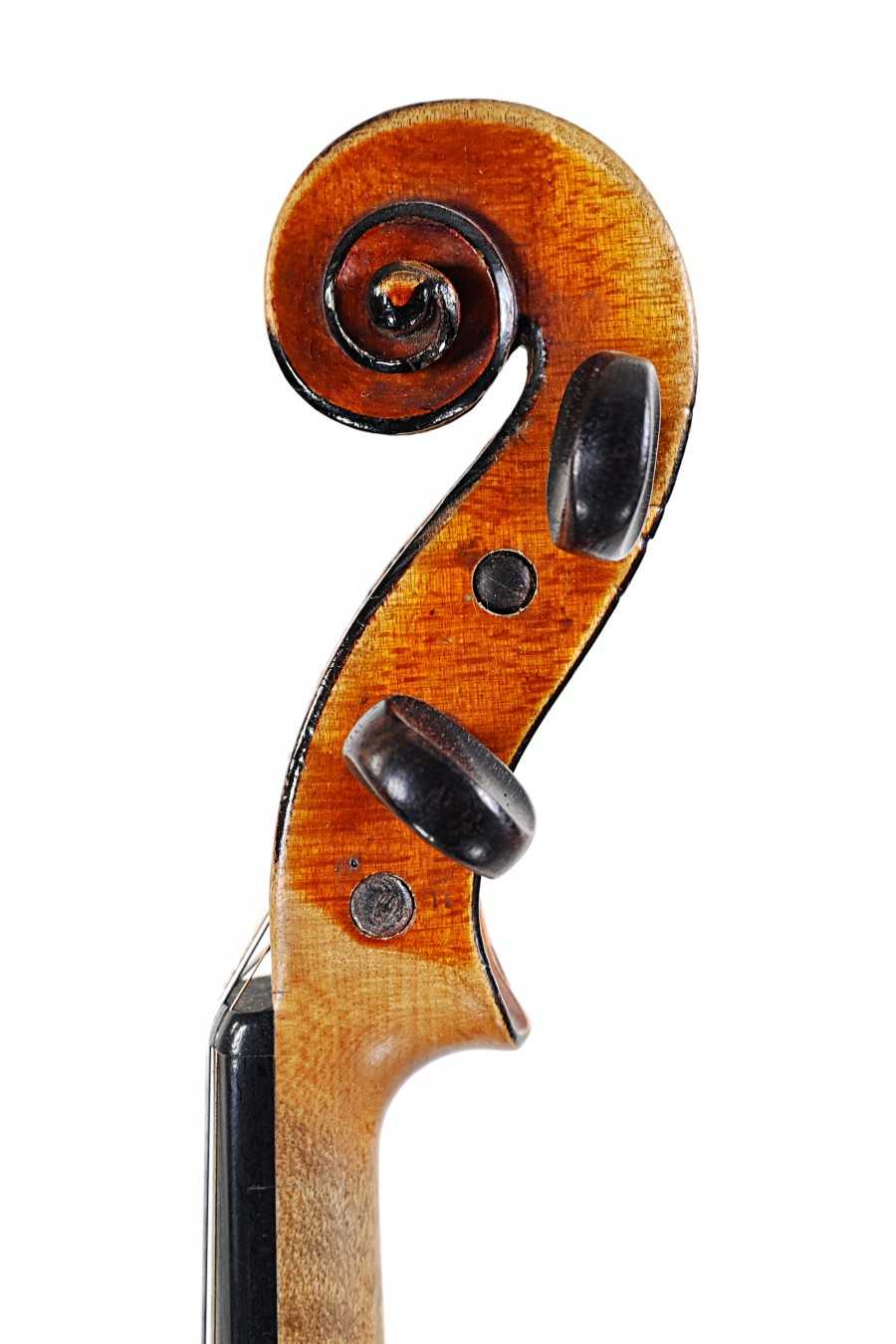
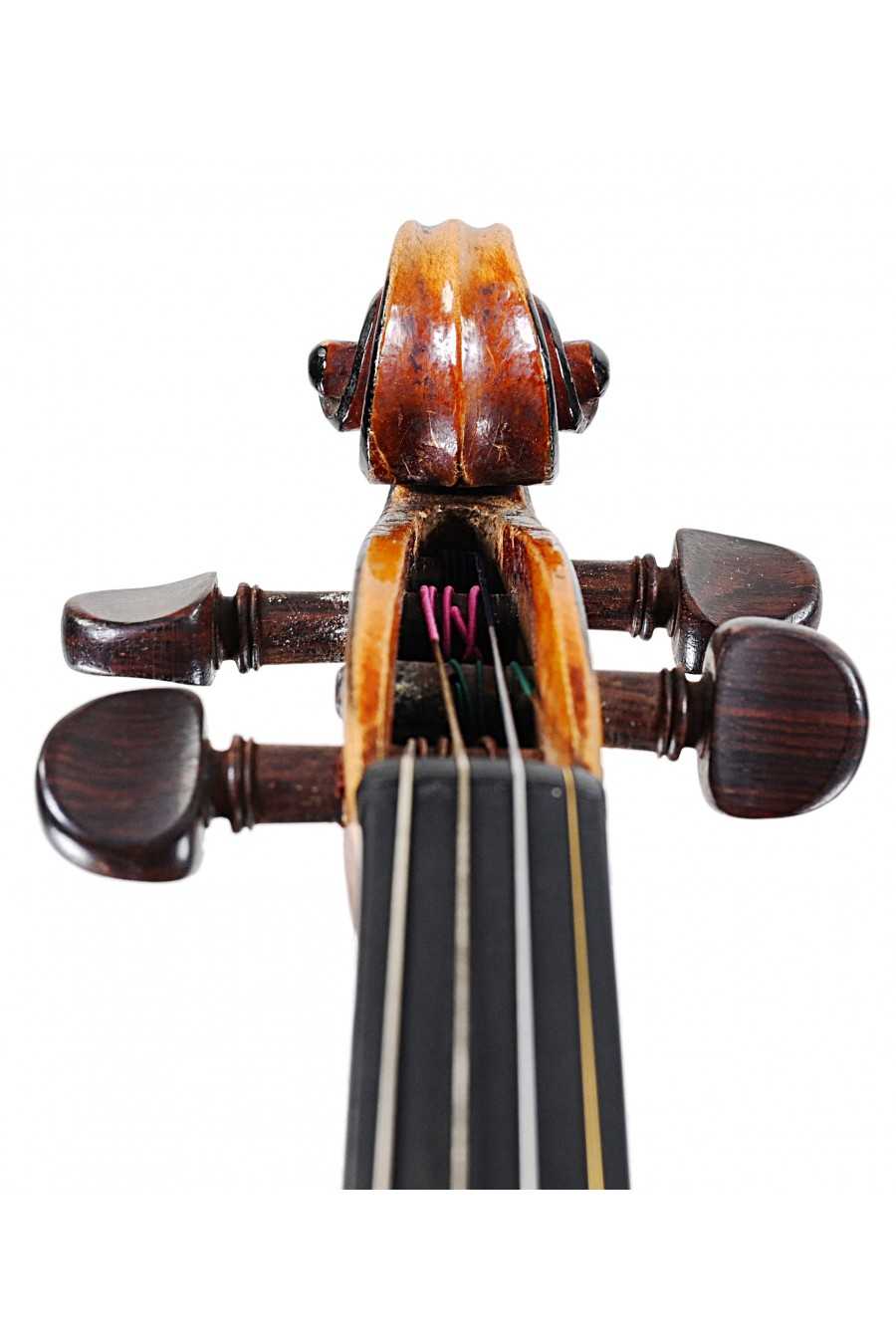
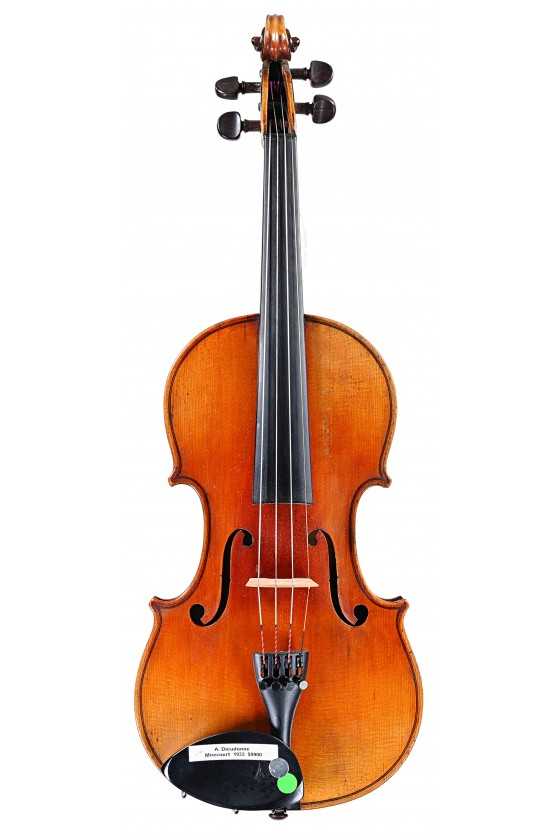
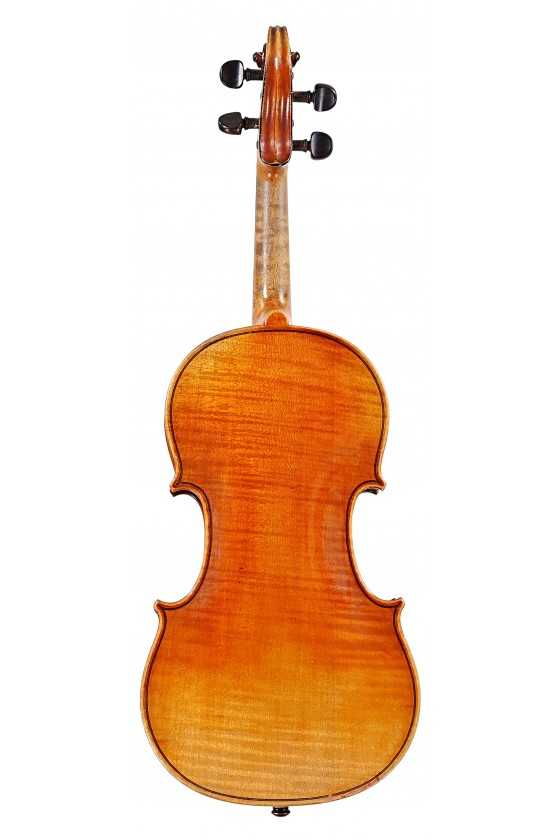
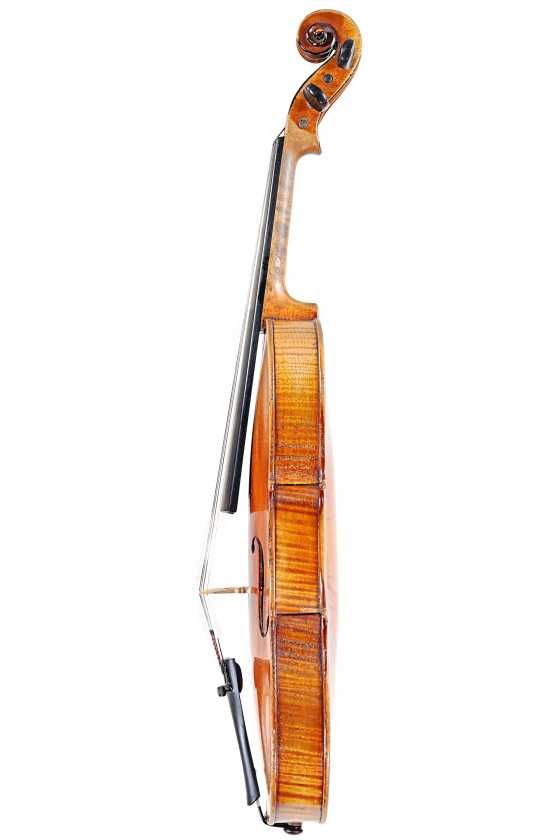
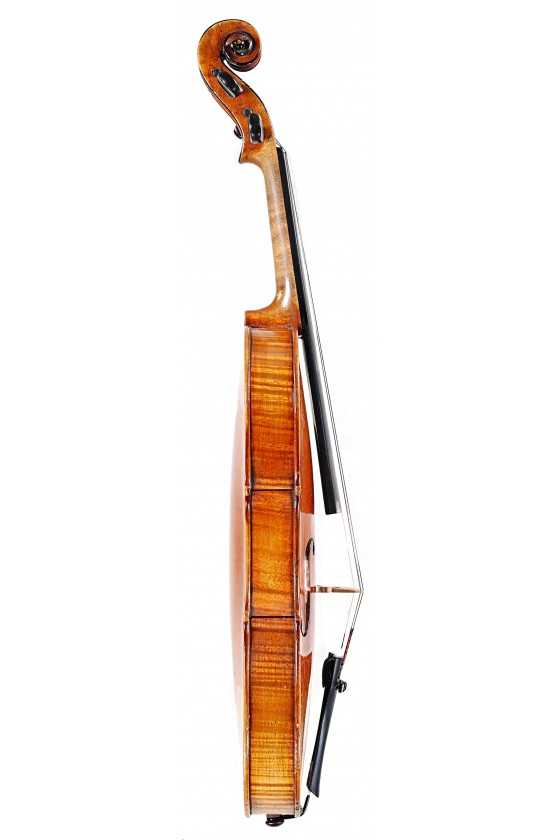
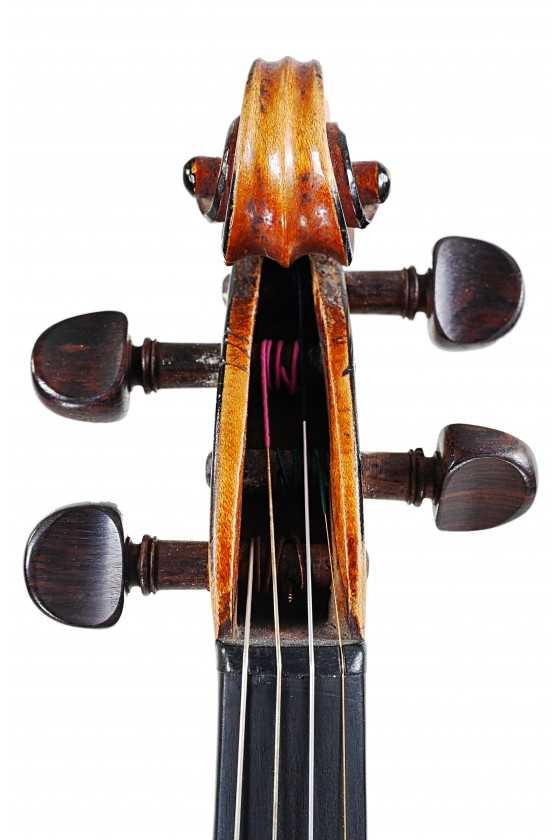
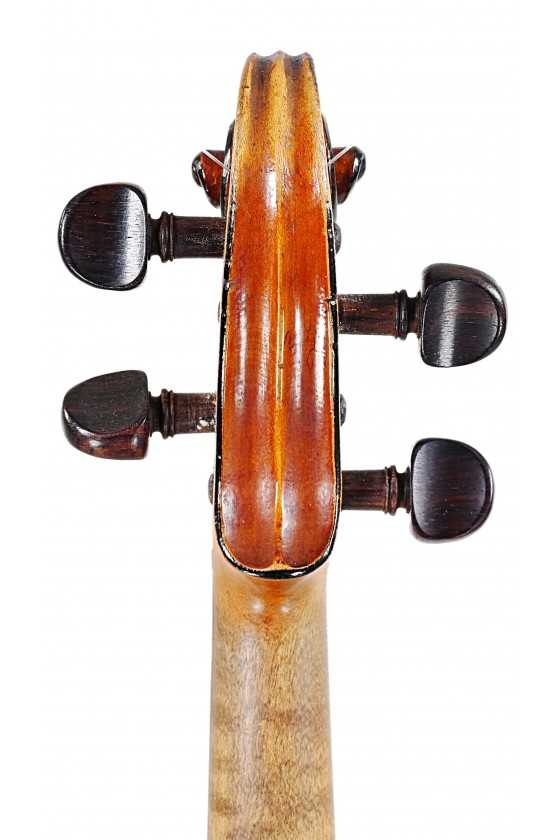
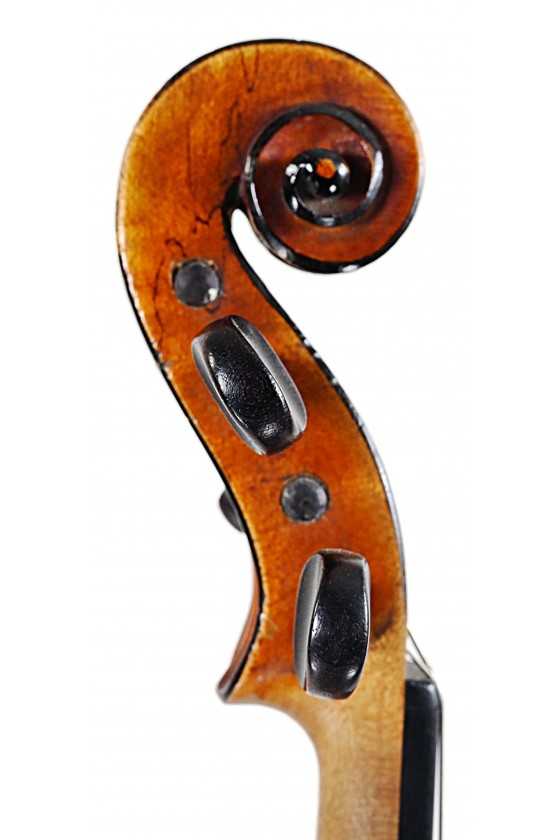
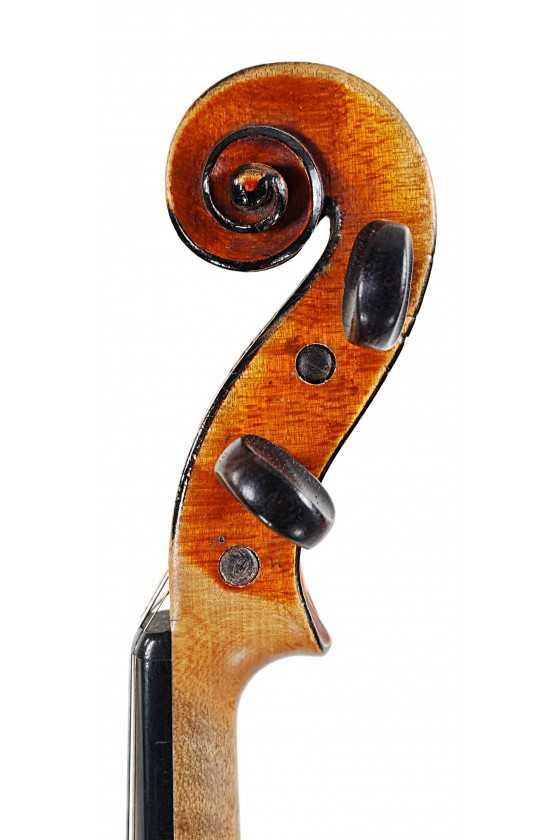
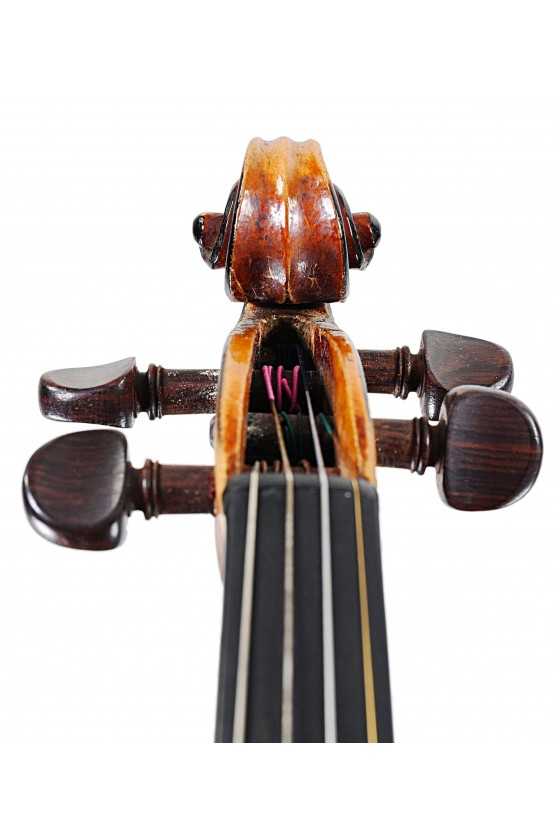
This is an A. Dieudonne Violin made in Mirecourt in about 1933. Amédée Dominique Dieudonné is a French luthier who specializes in copying the works of Cremona masters.
A. Dieudonne Violin made in Mirecourt in about 1933
Amédée Dominique Dieudonné is a French luthier born in Mirecourt in the Vosges department on August 6, 1890. Since Amédée Dominique Dieudonné’s father Albert Dieudonné is a luthier, he developed his skills in the Darche workshop in Brussels under the tutelage of Gustave Bazin.
He started his own workshop and became a luthier after the First World War in Mirecourt where he specializes in copying the works of Cremona masters. Varnishing is his most notable expertise in violin making. Amédée Dominique Dieudonné died in February 1, 1960.

Marc Laberte (1880–1963) was trained as a violin maker and joined the family company in 1911. By 1919, the Laberte firm had around 400 craftsmen and was successful. However, the war in 1942 devastated the business, leading to its closure. Despite this, Laberte was known for his exceptional instruments and bows, earning several honours and medals.
This violin has the original Marc Laberte label and bears the number #3010. A second label states Grand Prix Paris 1931, Exposition Internationale Bruxelles 1935 Membre Du Jury, and Exposition Internationale New York 1939. The prices they won before and during the start of the world war 2.
Victor Audinot (1870-1943), also known as Audinot-Mourot, came from a family of luthiers in Mirecourt. Mentored by Francois Chardin and Telesphore Barbé, Audinot was mainly influenced by Barbé, who had honed his skills working for Jean Baptiste Vuillaume in Paris. This experience helped shape Audinot’s successful career in instrument making.
Victor worked in Mirecourt, known for luthier tradition, before moving to Paris to set up his workshop on Rue Truffaut in 1913. He dedicated himself to his craft until retiring in 1936. He passed his expertise to five of his six sons and aspiring luthiers. Renowned for creating exact replicas of classical instruments, he crafted an exceptional copy of the ornately decorated Stradivari violin known as the ‘Sunrise’, showcasing his artistry.
This Ryszard Osowski Gold model violin was built in the finest craftsmanship by Ryzard Osowski in Forchheim, Germany, dated 2024.
Ryszard Osowski, born in 1966, is a Polish luthier who moved to Muggendorf, Germany in 1993. Living with his uncle, he learned the local tradition of building stringed instruments and eventually perfected the sound and quality of his instruments after 25 years of experimentation. He now focuses on crafting advanced violins while occasionally creating cellos and violas.
This violin features the original label "Made by Ian W. Clarke, Biddeston, Australia. March 1982," identifying it as a handcrafted Australian violin completed in March 1982. Ian W. Clarke (born 1948) is one of Australia's leading contemporary luthiers, having graduated with distinction from the Newark School of Violin Making after winning a Silver Medal at the Cremona Triennale. Since returning to Queensland in 1981, he has continued to build and restore fine stringed instruments from his Biddeston workshop. Crafted during the early years of his Australian career, this violin offers documented provenance, outstanding craftsmanship, and the enduring appeal of an instrument made by one of Australia's most respected living violin makers.
Check out this Violin Made in Germany Mittenwald dated around 1920. This is one of Animato Strings' largest selections of new and old instruments in Australia including Asian-handcrafted instruments, new European instruments, and a wide range of antique stringed instruments.
Over 25 years, Ryszard conducted numerous experiments, conducted intensive studies, gained valuable experiences, and was influenced by his colleagues, all of which contributed to his gradual perfection of the sound and quality of his instruments.
We have here a Collin - Mezin Violin made in Paris in 1911. Charles Jean Baptiste Collin-Mezin is a French violin maker who started at a young age under the tutelage of his father, Claud-Nicolas Collin. His own workshop started in 1867 at the 14 and 18 rue du Faubourg Poissonnièr in France.
Paul Lorange, a renowned French luthier from Lyon, worked in Marseille during the early to mid-20th century. He established his independent workshop in the city in the early 1930s and was known for his fine workmanship on classical models and his use of various shades of red varnish. The violin in question was made in 1932, and it's noted that the handwriting on the violin and his original label may differ.