
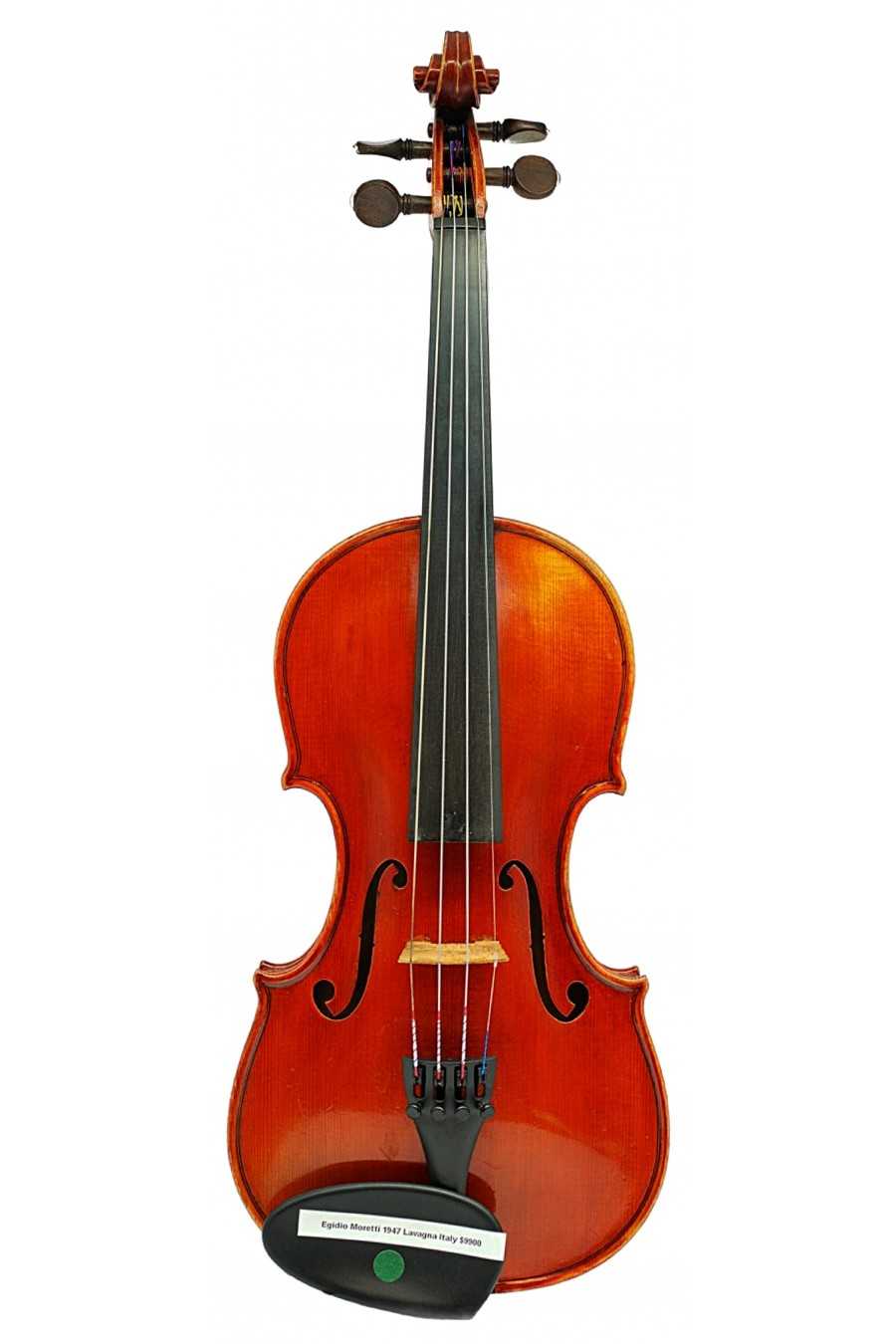
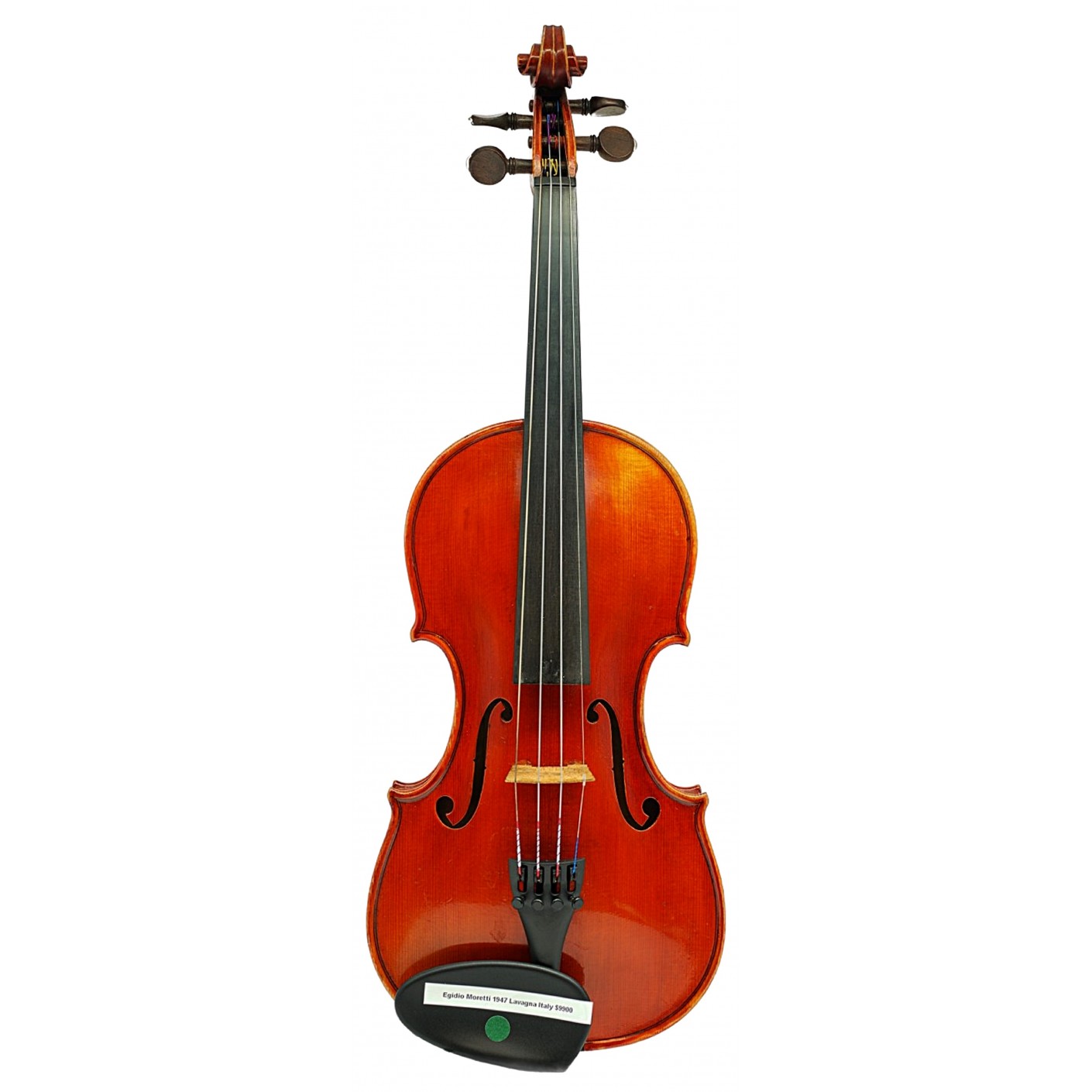
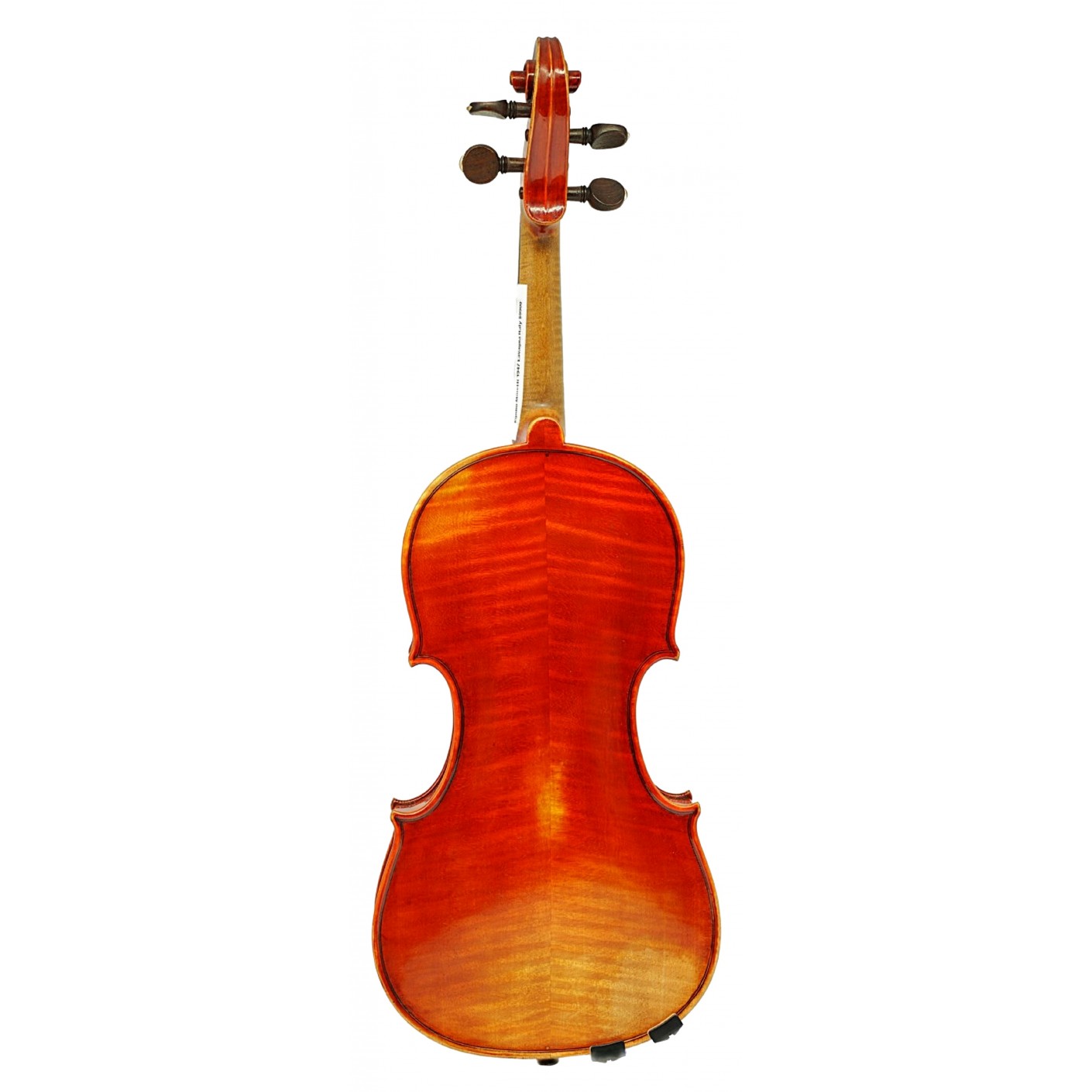
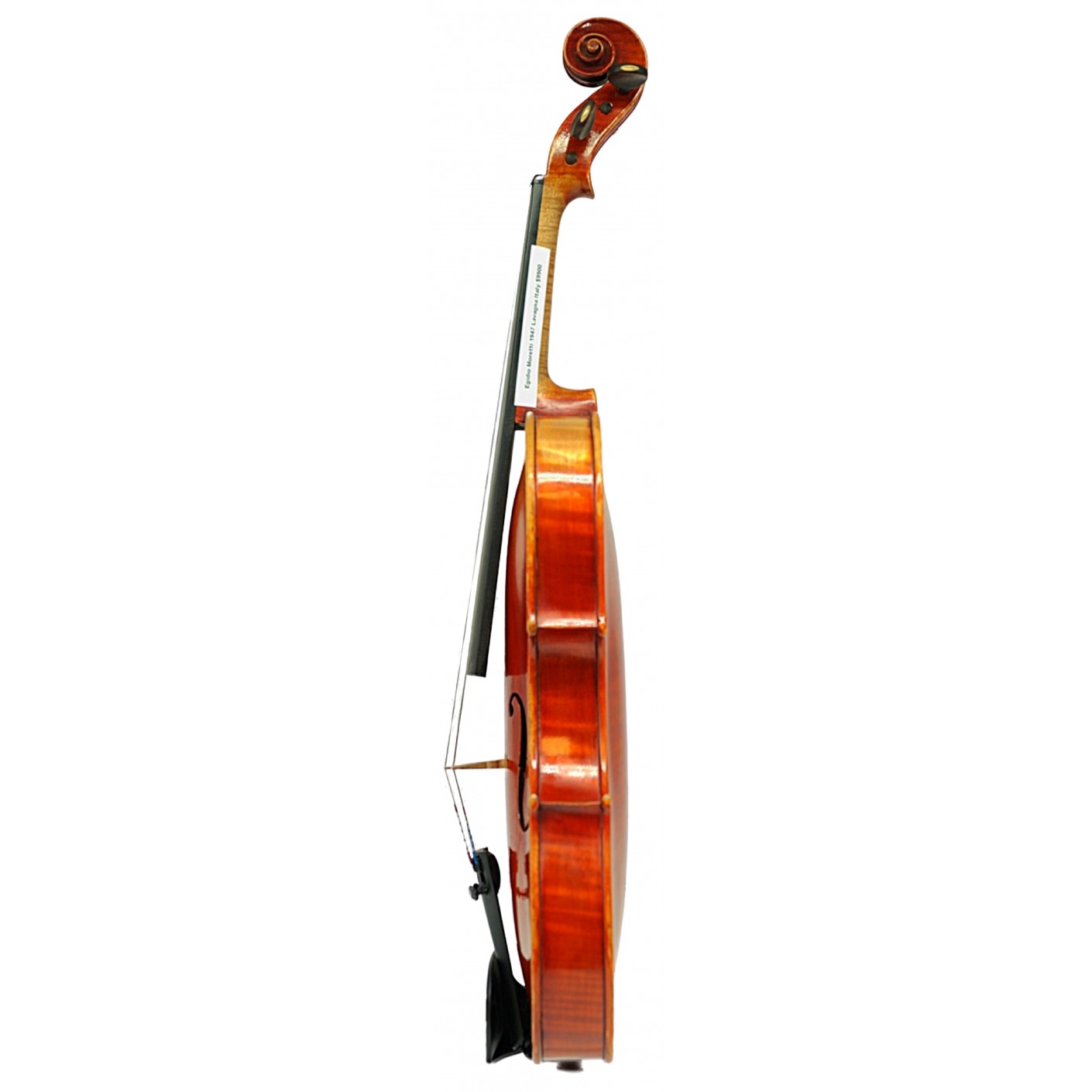
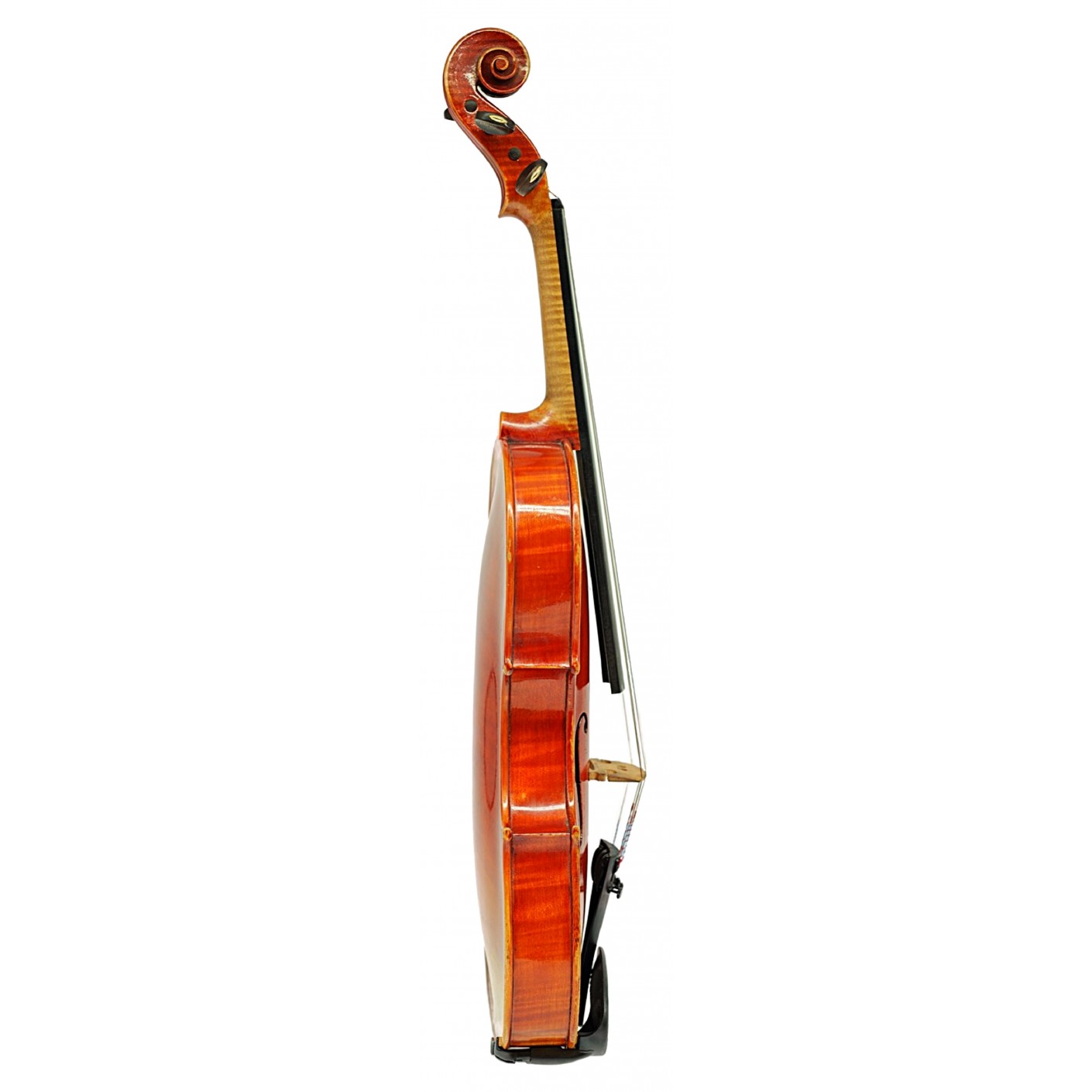
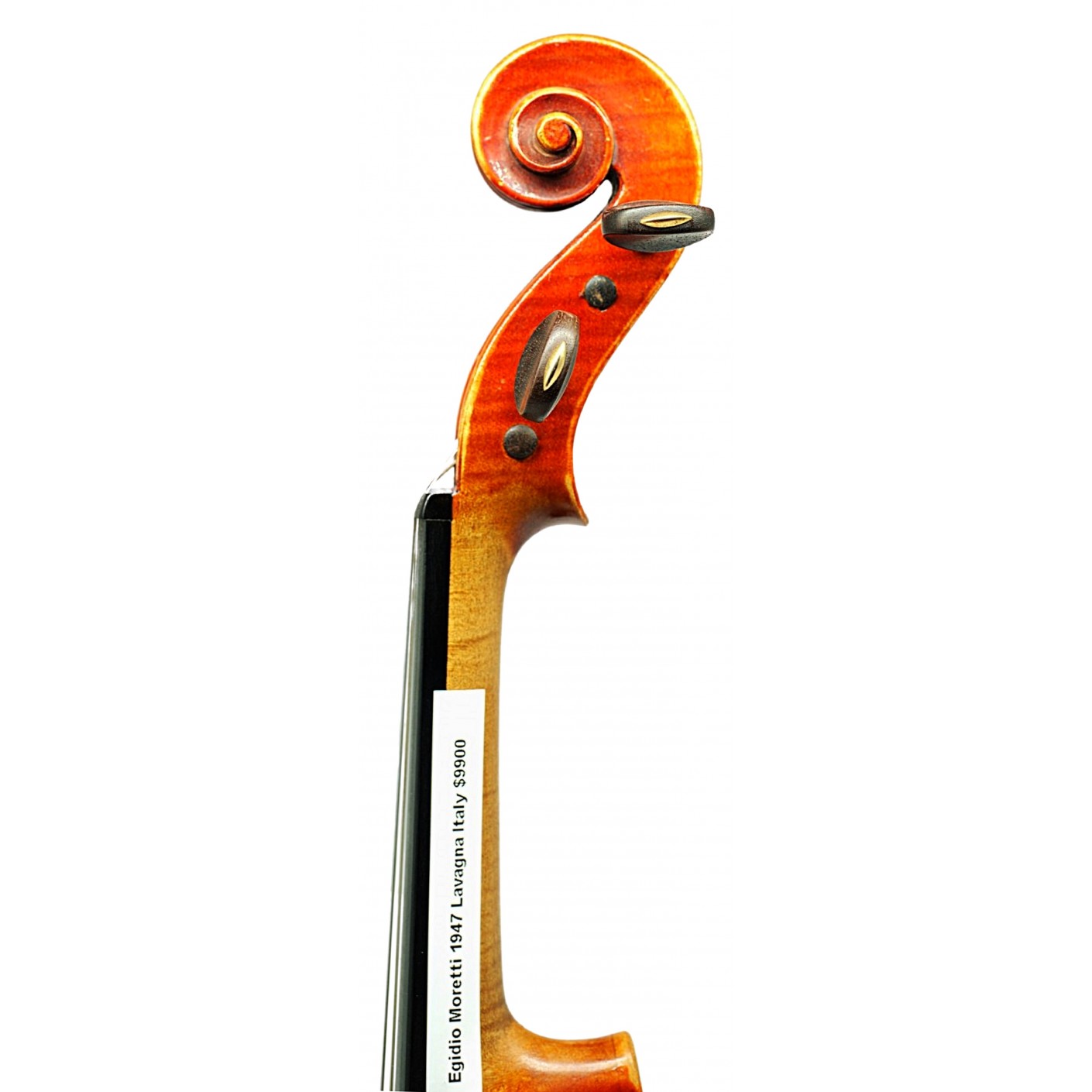
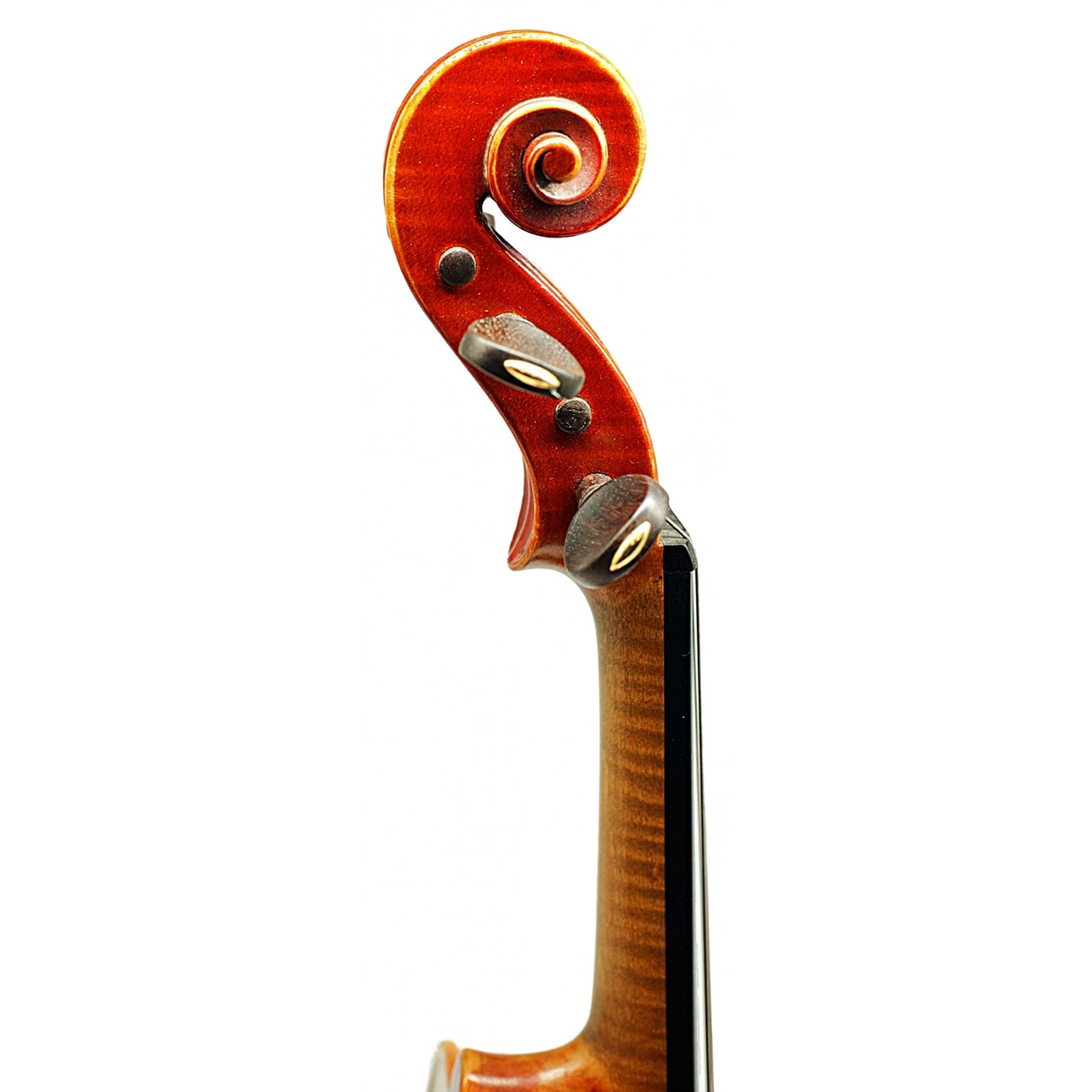
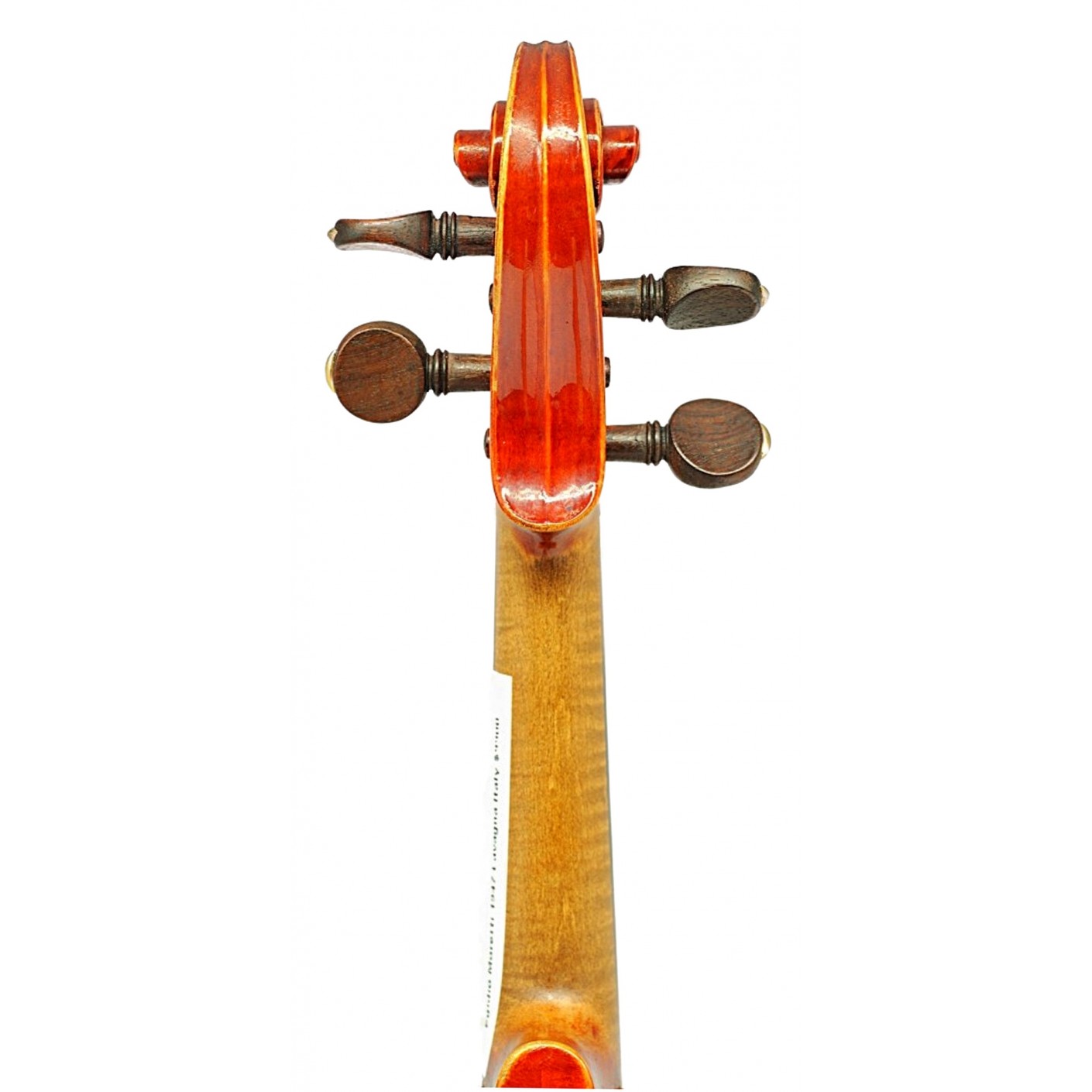
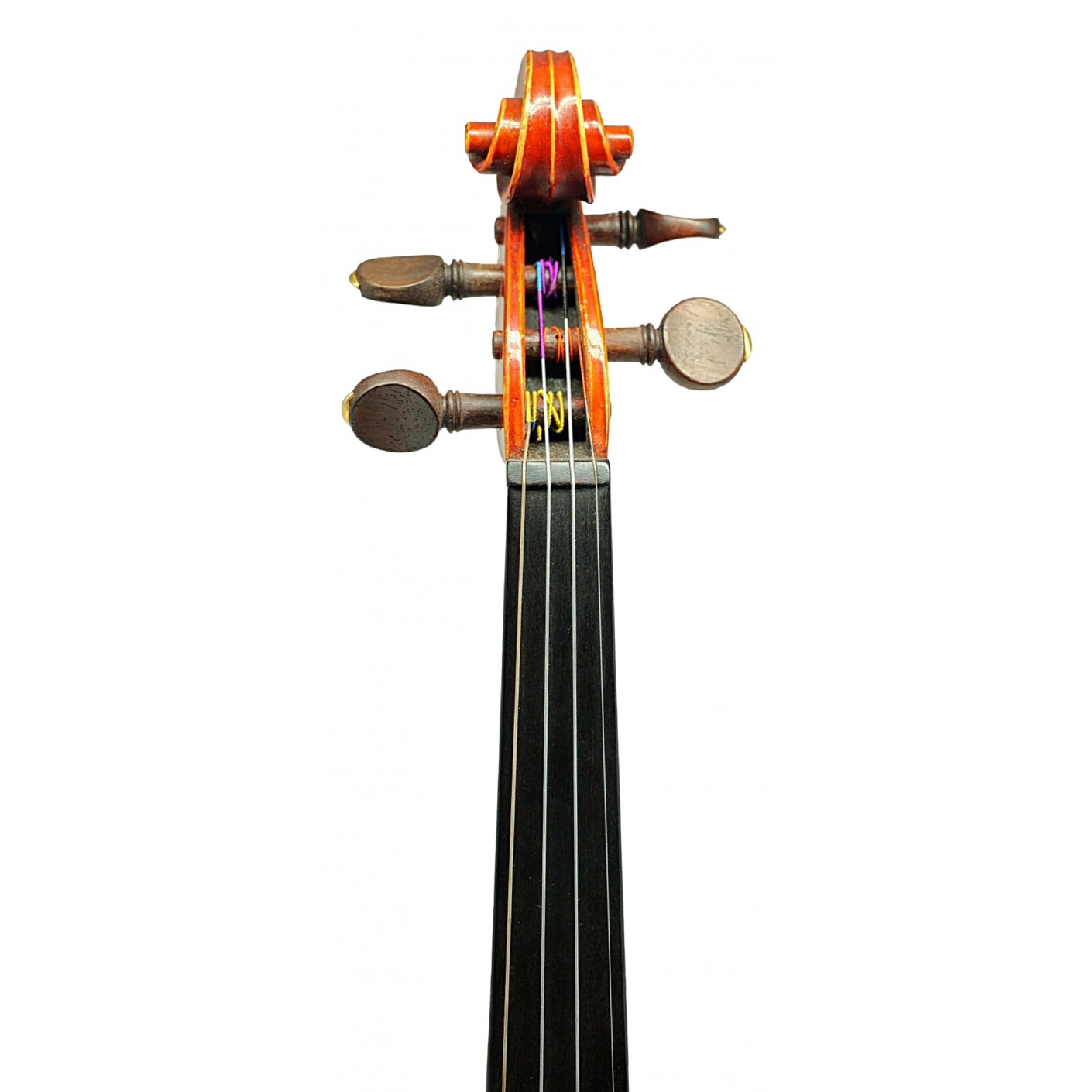
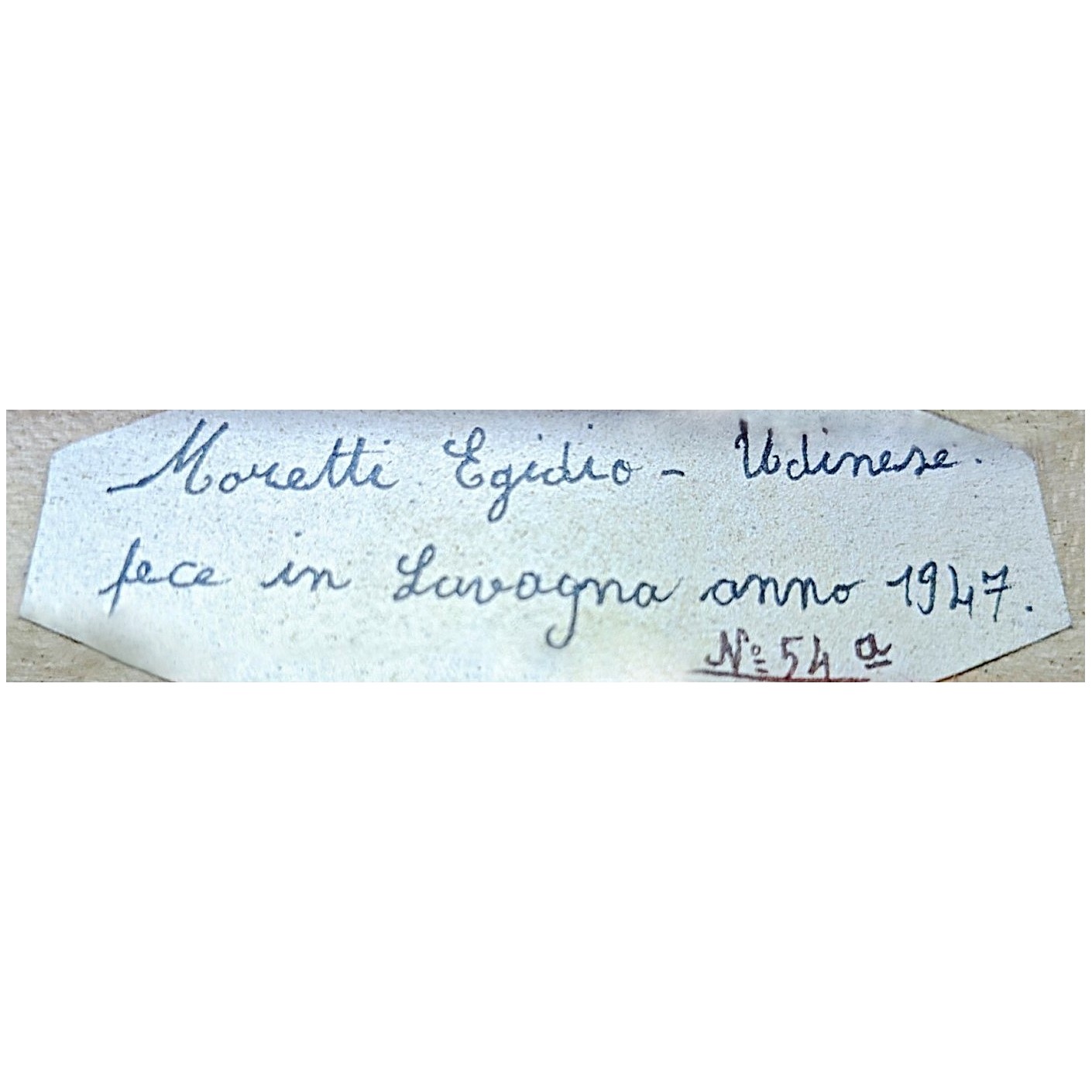
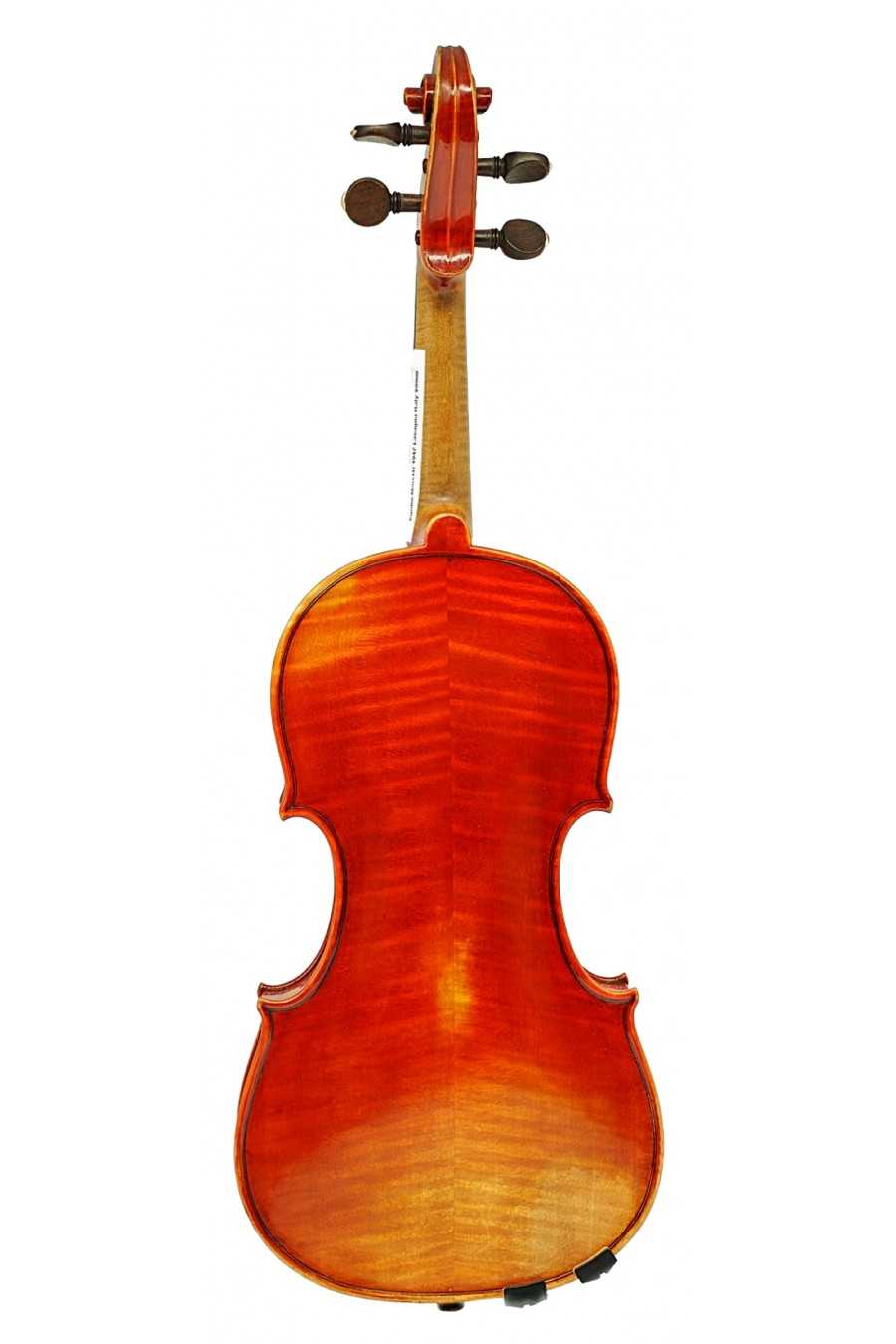
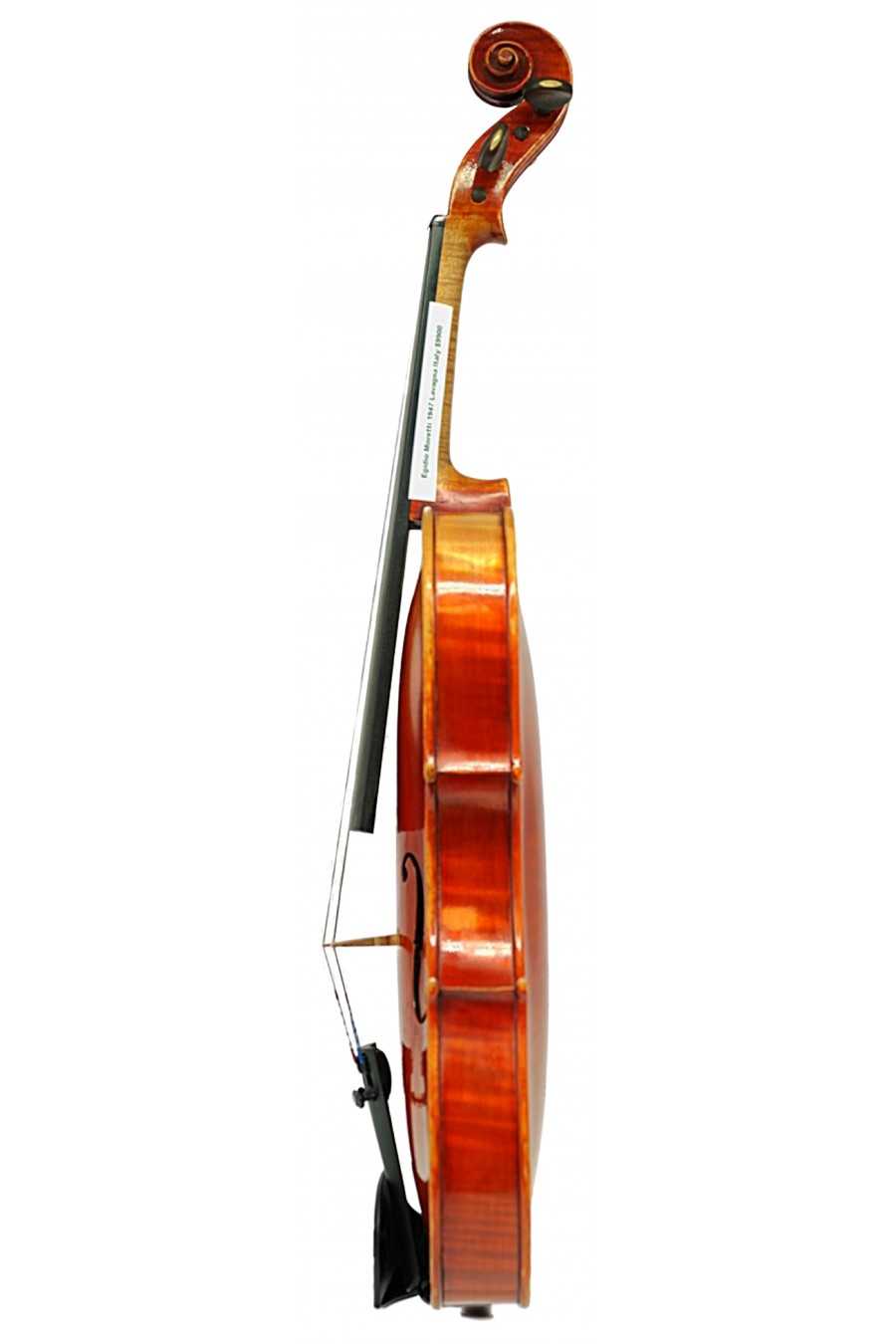
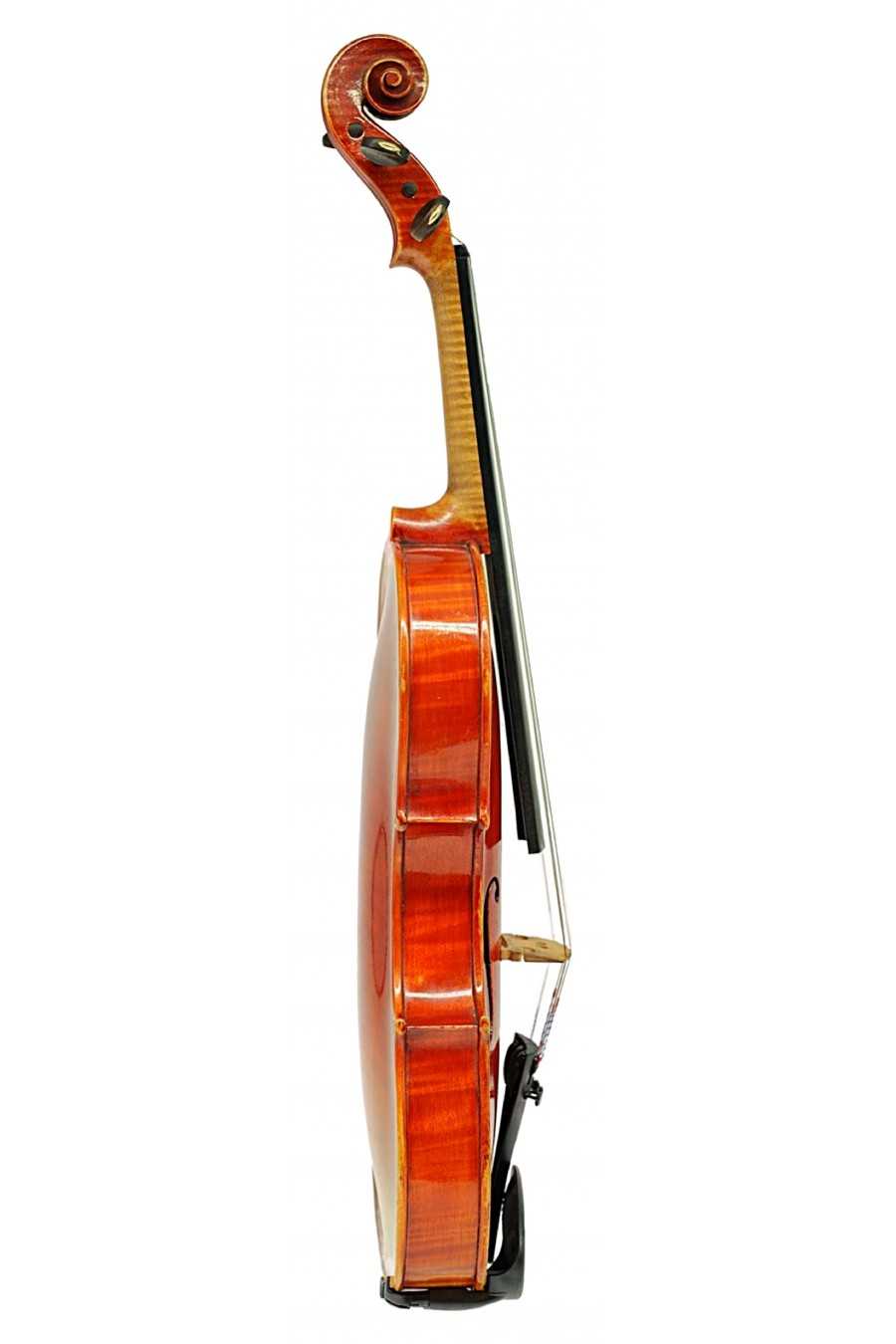
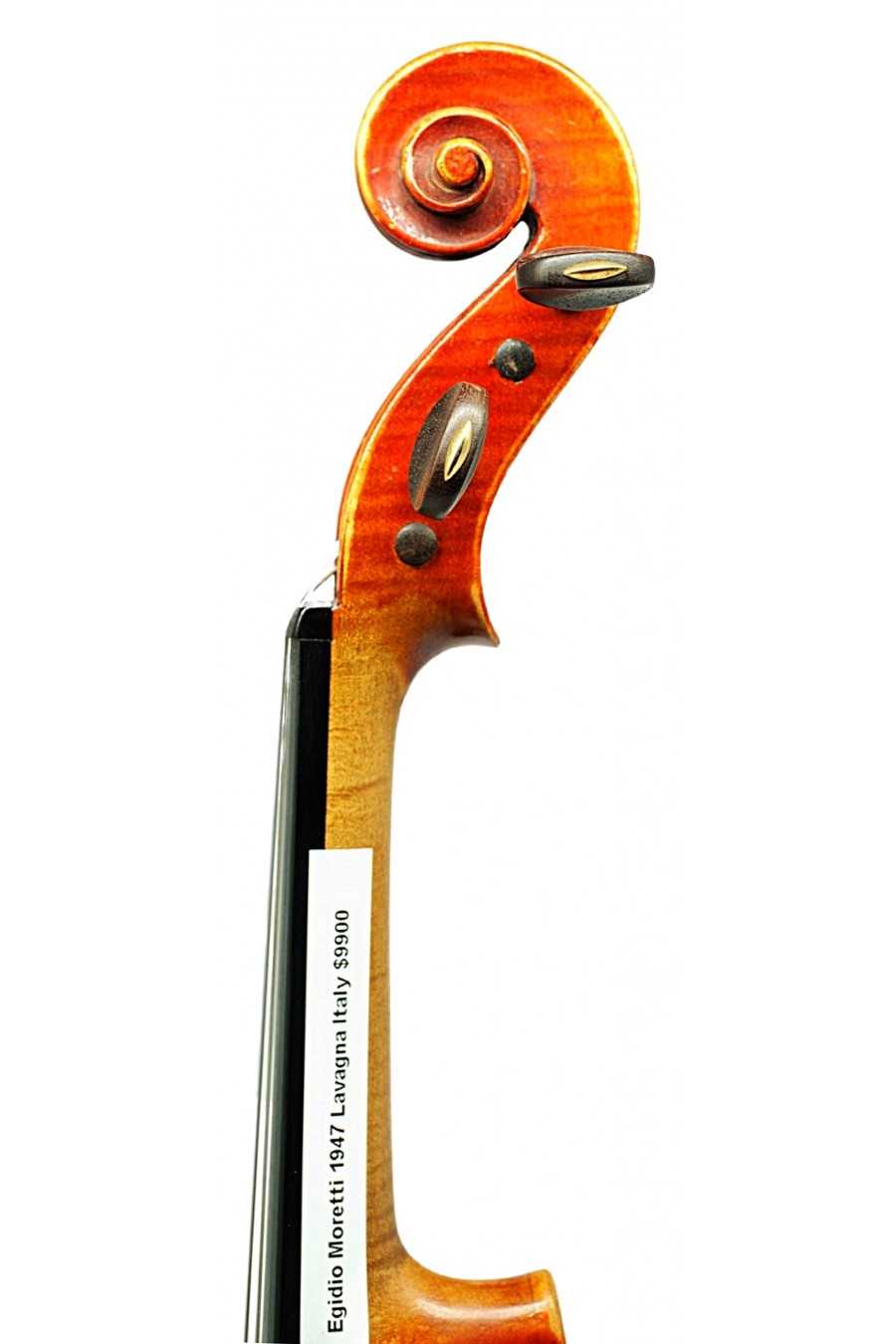
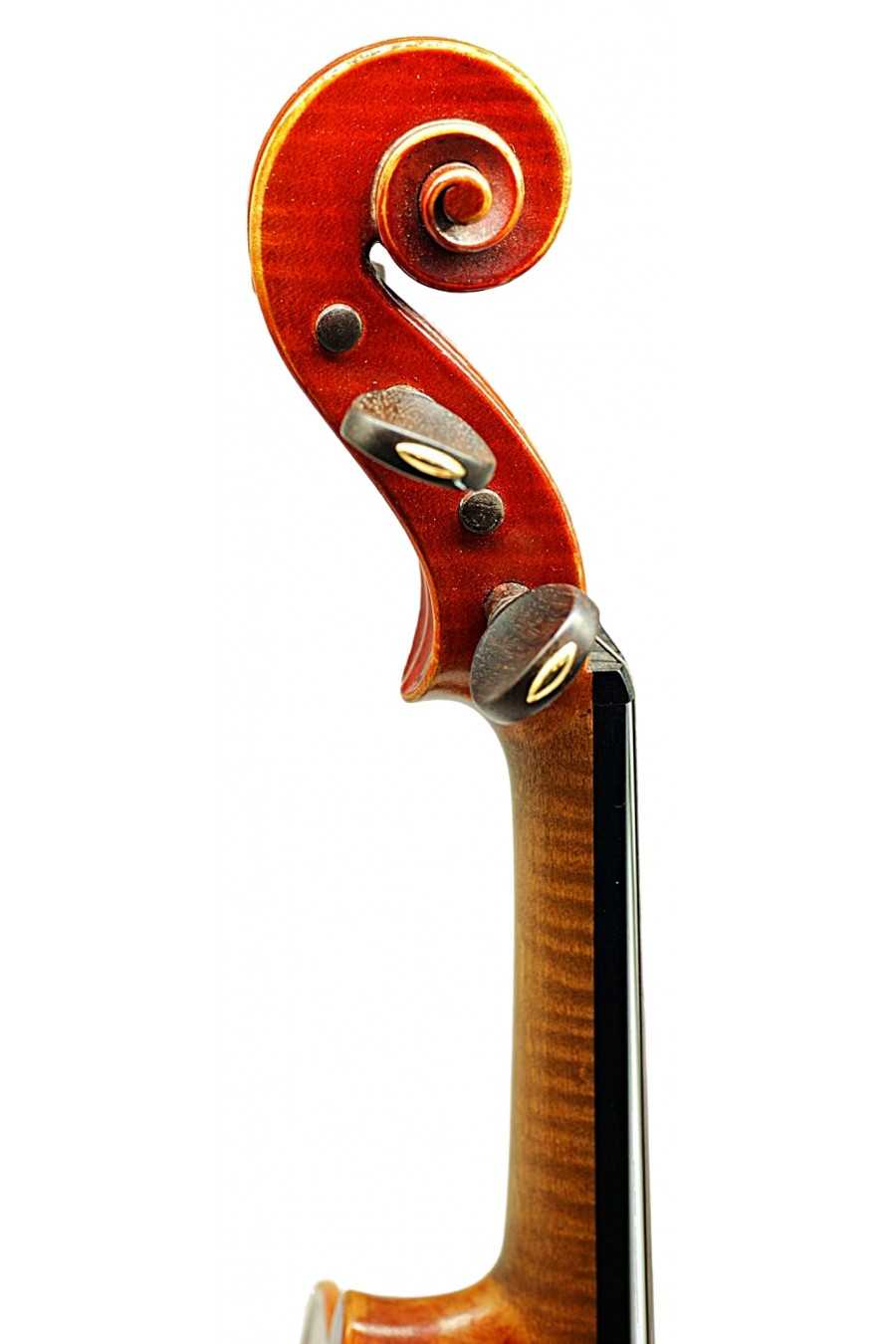
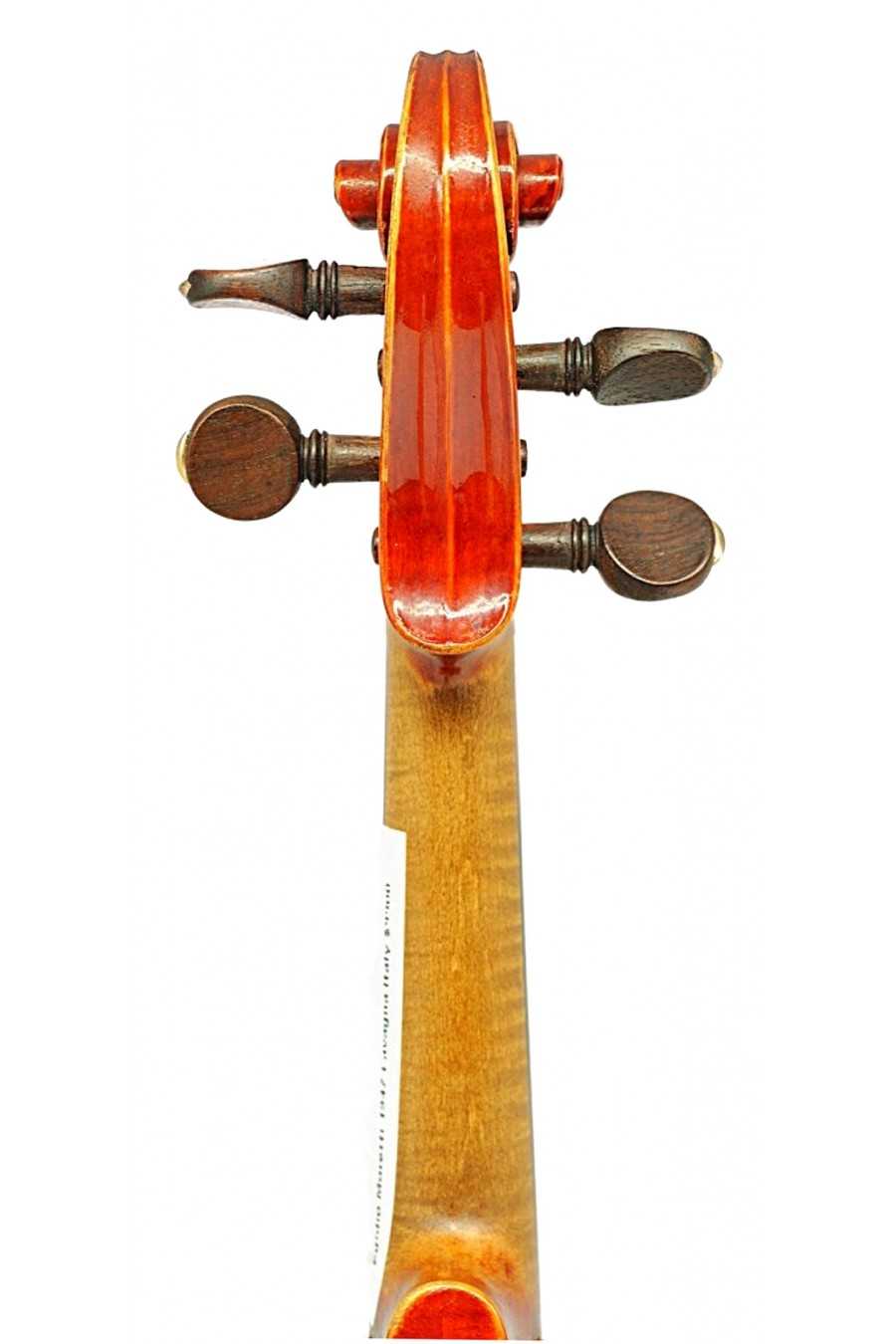
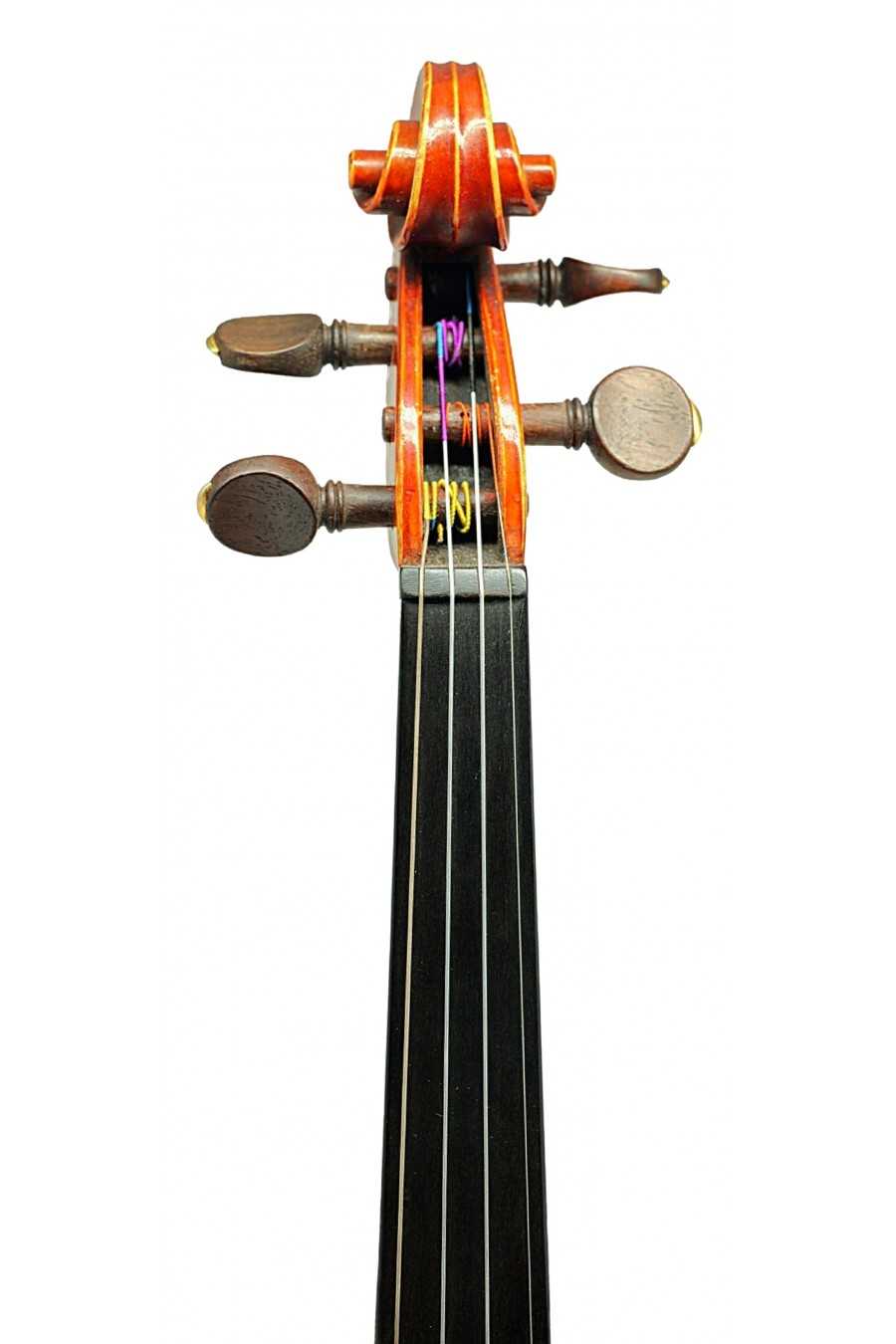
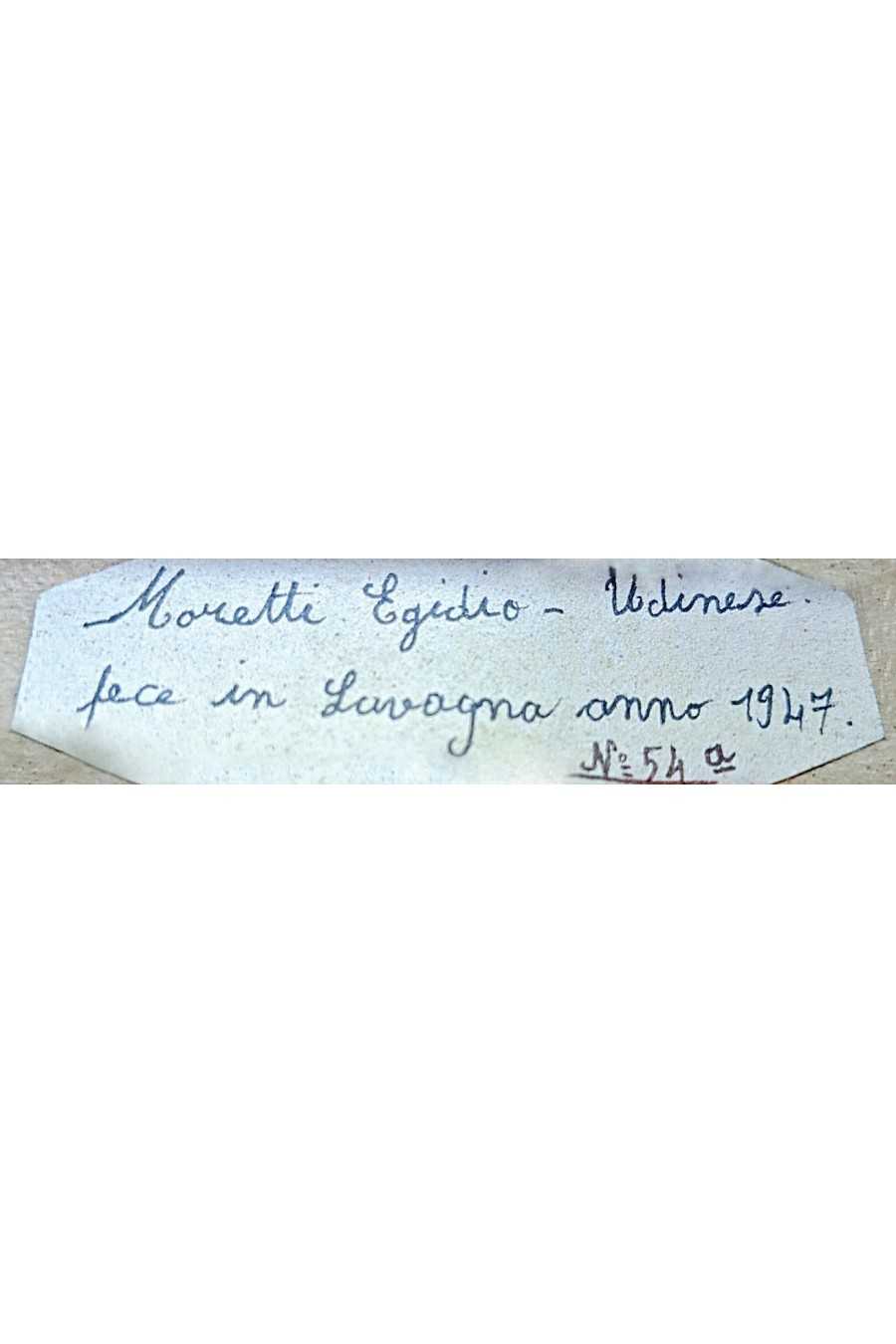
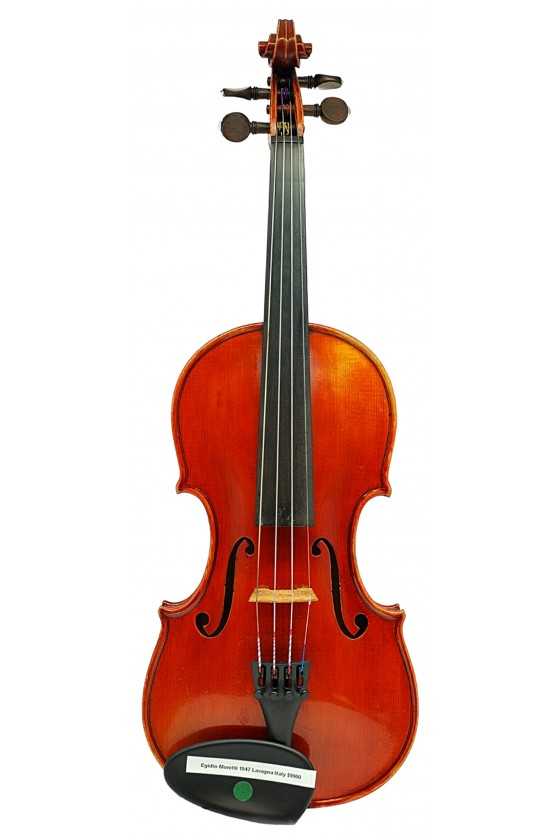
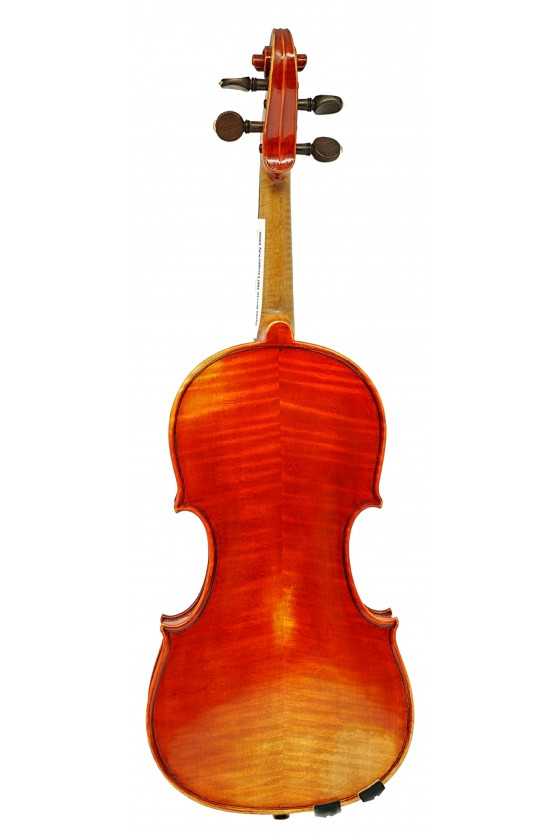
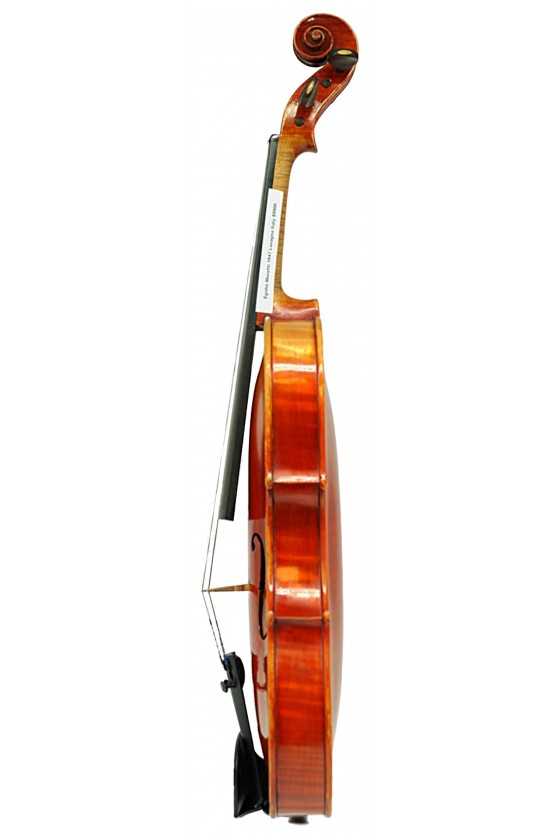
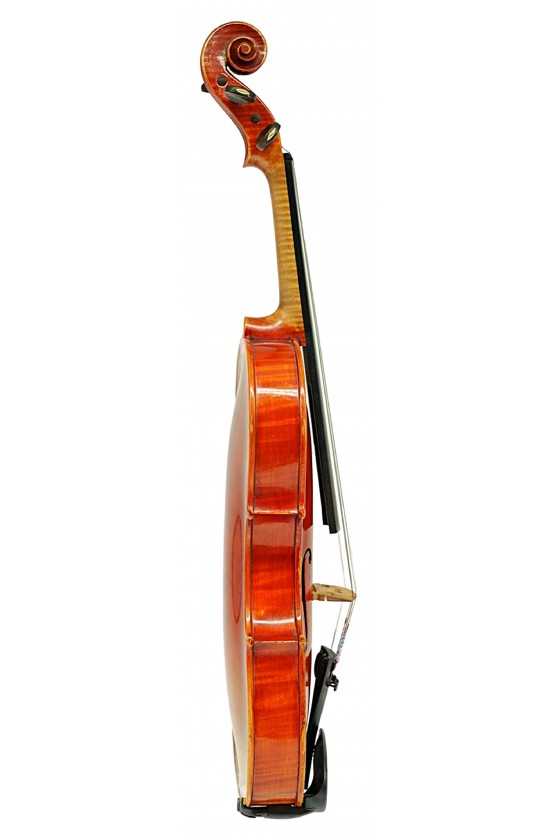
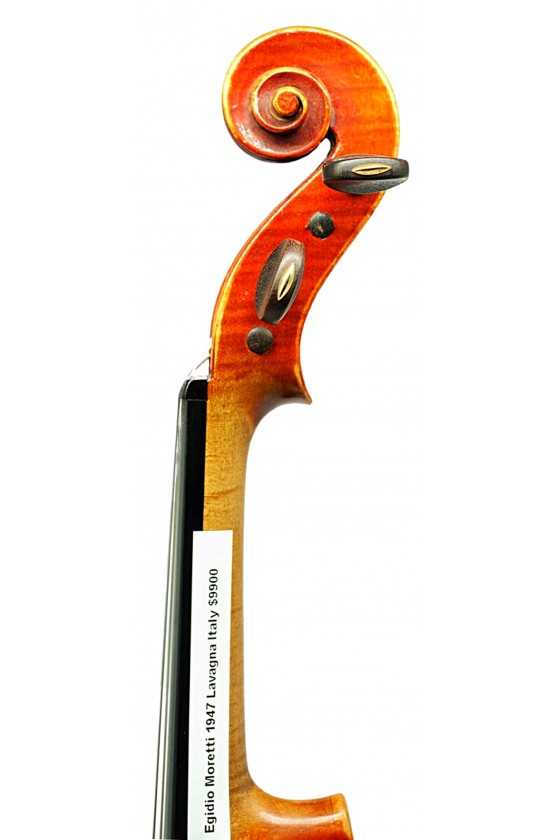
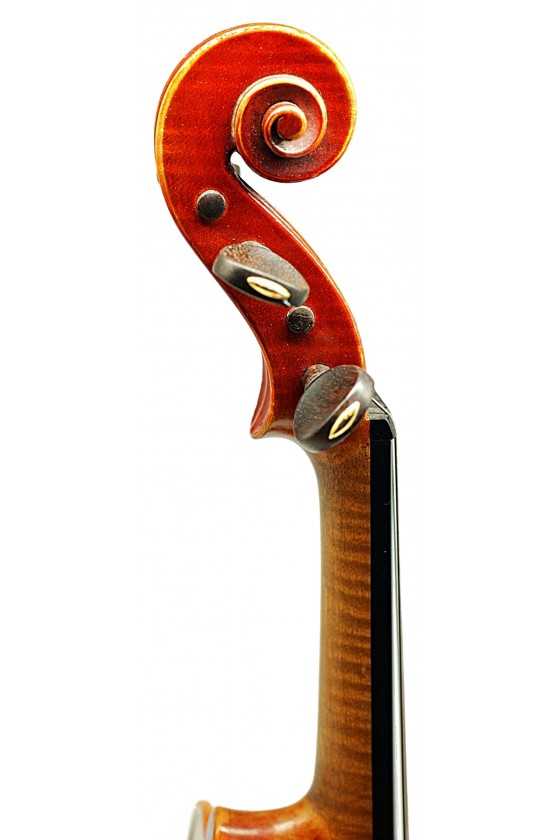
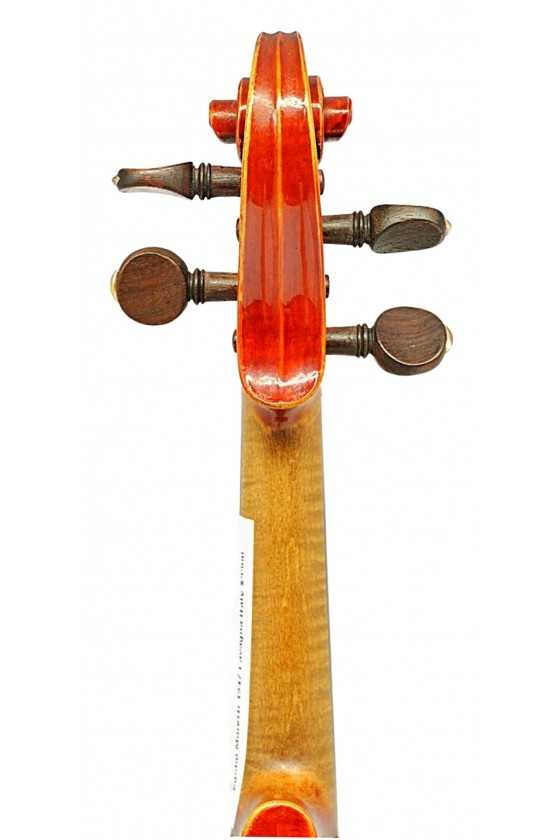
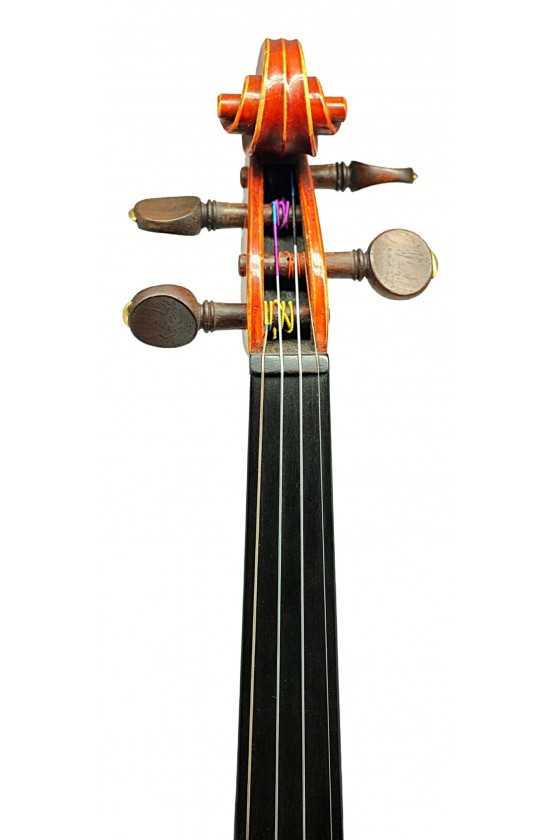
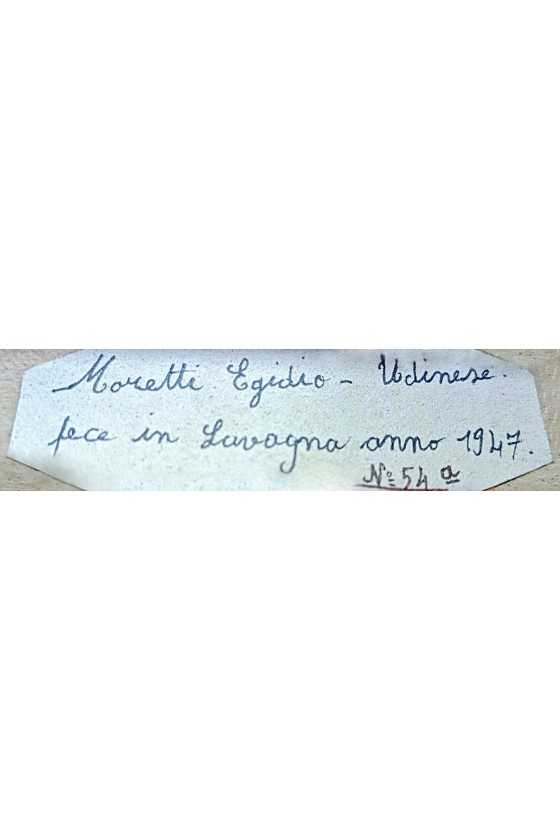
Moretti Egidio transitioned from cabinetmaking to violin making in 1924-1928. During 1945-1955 in Lavagna, Genoa, his instruments were known for their accuracy and good varnish, with two different labels used - handwritten and printed.
Egidio Moretti Violin made in 1947 in Lavagna, Italy
Between 1924 and 1928, Moretti Egidio seamlessly transitioned from cabinetmaking to violin making. He gained an excellent reputation for his work in Lavagna, Genoa, from 1945 to 1955, where residents noted the two labels he used for his instruments - handwritten and printed. His classical models were characterized by their precision and high-quality varnish in intense red or light colours. His work was highly regarded by many.

We have here a Lillo Salerno Italian violin made in 2019. Lillo Salerno is an Italian luthier born in Sicily, Italy. He went to Cremona Violin Making School then finished his studies in Mittenwald School of Violin Making in Germany in 2005.
Instrument - Violin
Model- Personalized Stradivari
Top - Italian spruce in two pieces
Back - Balkan maple in two pieces
Scroll - From the same wood as the back
Varnish - Oil and amber with a yellow background, red-brown violin.
Notes - The instrument was made with an antique and shows a black bevel on the scroll and points of the bouts.
Lambert-Humbert Frères firm (fl. 1876 – 1969) was a major violin manufacturer in Mirecourt, offering a wide range of models and quality levels, established in 1876 by violin-making brothers Maurice-Emile and Pierre Alexis Auguste Laberte.
This remarkable 7/8 size 1933 violin exhibits a timeless beauty that reflects Giacchetti's artistic skills.
Giuseppe Giacchetti (1890-1980) studied music and the violin in Rome under Rodolfo Fredi. He later established a workshop in Paris and used a “Roma” label throughout his career. This violin has a “fait a Paris” inscription, indicating it was made in Paris.
This is the Paul Kaul violin made in France dated 1918. Paul Kaul is a French violin maker who joined several workshops such as Thibouville Lamy, Silvestre and Maucotel, Vuillemin-Didion. He started several workshops on rue Racine, Nantes in 1907, rue du Pont Communeau in 1908, and at 130 Boulevard Brune in 1926.
Victor Audinot (1870-1943), also known as Audinot-Mourot, came from a family of luthiers in Mirecourt. Mentored by Francois Chardin and Telesphore Barbé, Audinot was mainly influenced by Barbé, who had honed his skills working for Jean Baptiste Vuillaume in Paris. This experience helped shape Audinot’s successful career in instrument making.
Victor worked in Mirecourt, known for luthier tradition, before moving to Paris to set up his workshop on Rue Truffaut in 1913. He dedicated himself to his craft until retiring in 1936. He passed his expertise to five of his six sons and aspiring luthiers. Renowned for creating exact replicas of classical instruments, he crafted an exceptional copy of the ornately decorated Stradivari violin known as the ‘Sunrise’, showcasing his artistry.
This is a Josef Kreuzinger Violin Made in Germany around 1924. Josef Kreuzinger was a German luthier whose works were deemed as excellent and professional.
Amati Mangenot made this violin, but he "Italianised" his name and city, resulting in Mageno and Bordo.
Amati Mangenot (1901 – 1966), a French luthier, crafted this violin. He collaborated with the Laurent brothers and later took over Emile Laurent's workshop in Bordeaux.
We have here the Orfeo Carletti Violin made in 1932. Orfeo Carletti is an Italian violin maker who opened a workshop together with his father and brother in Bologna.