
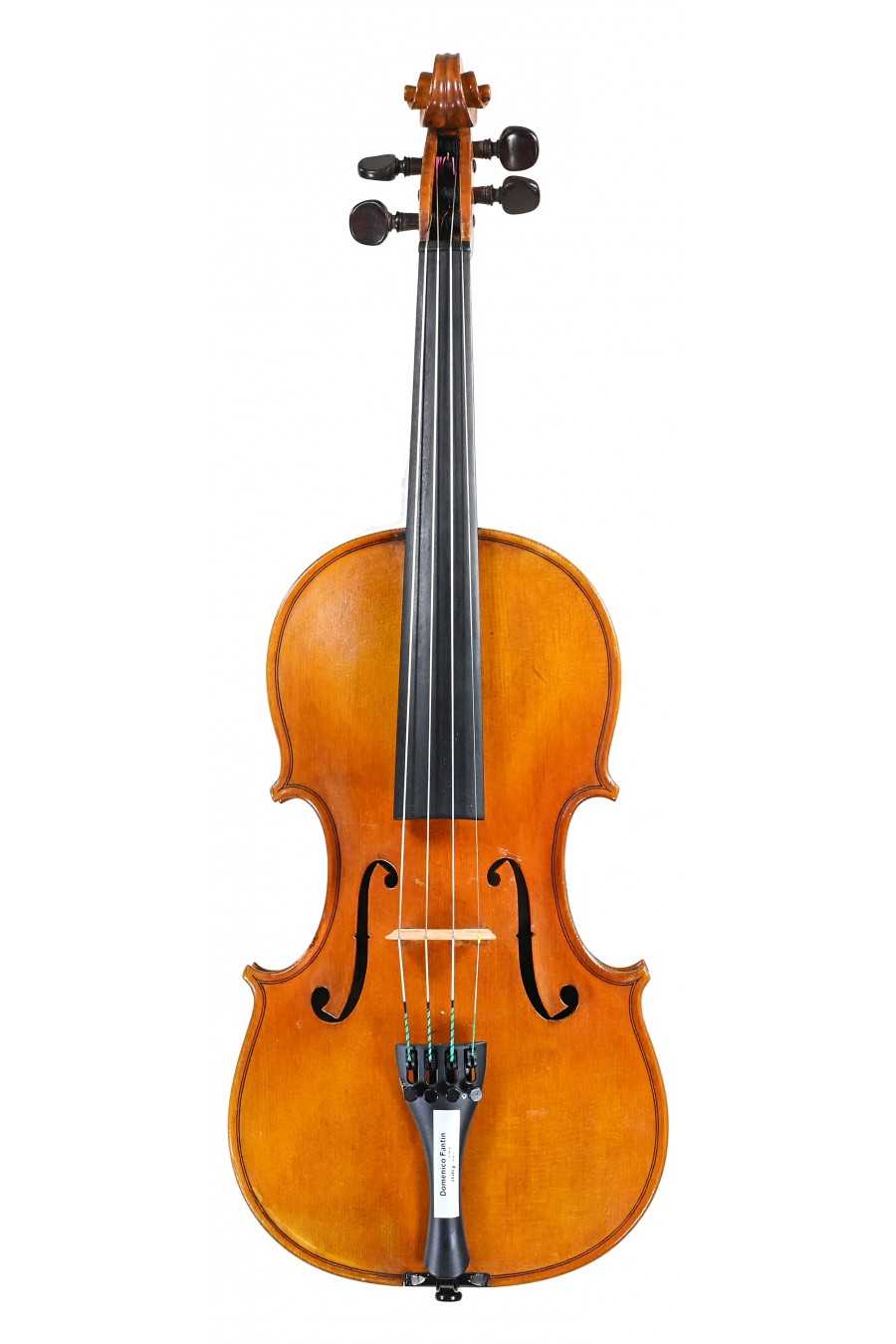
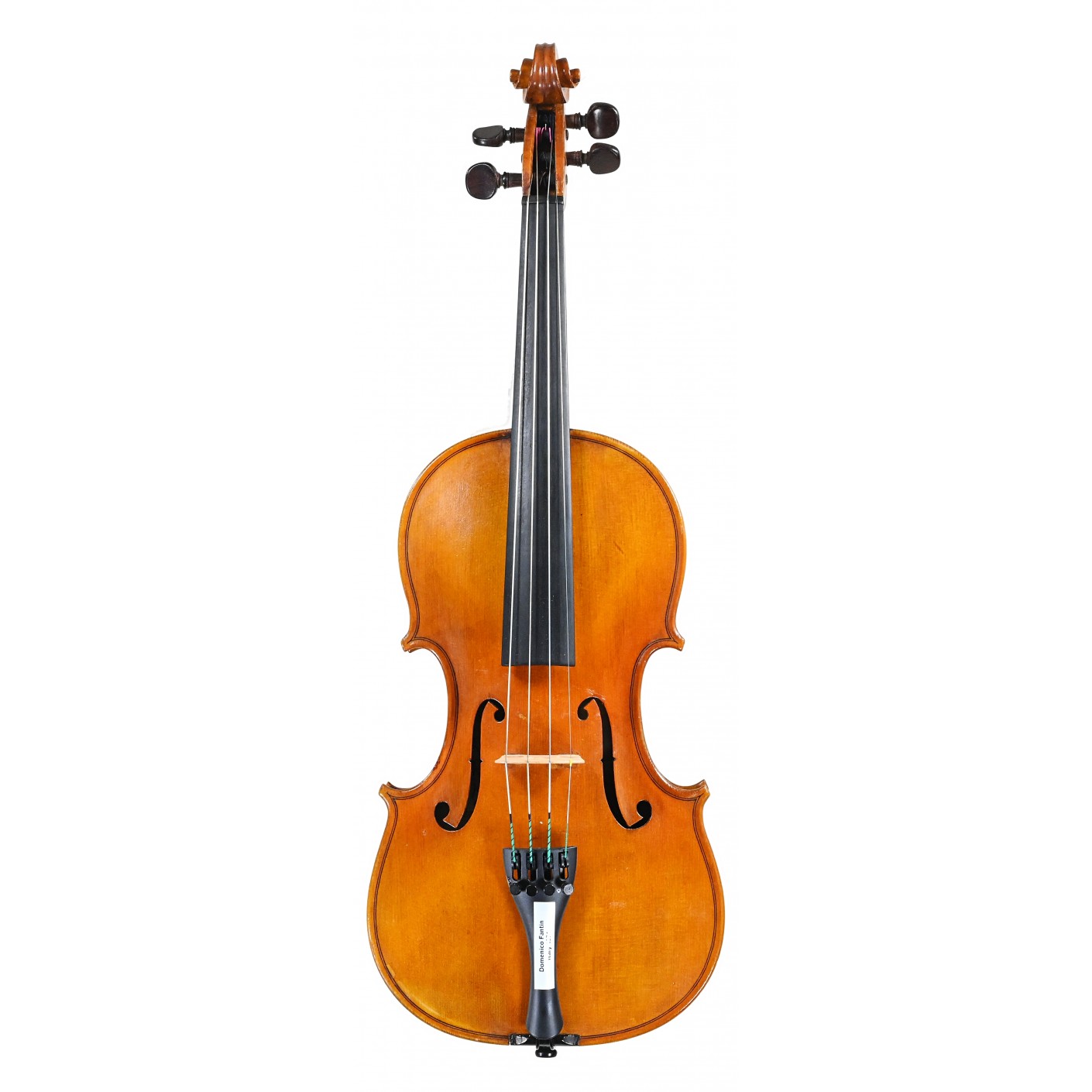
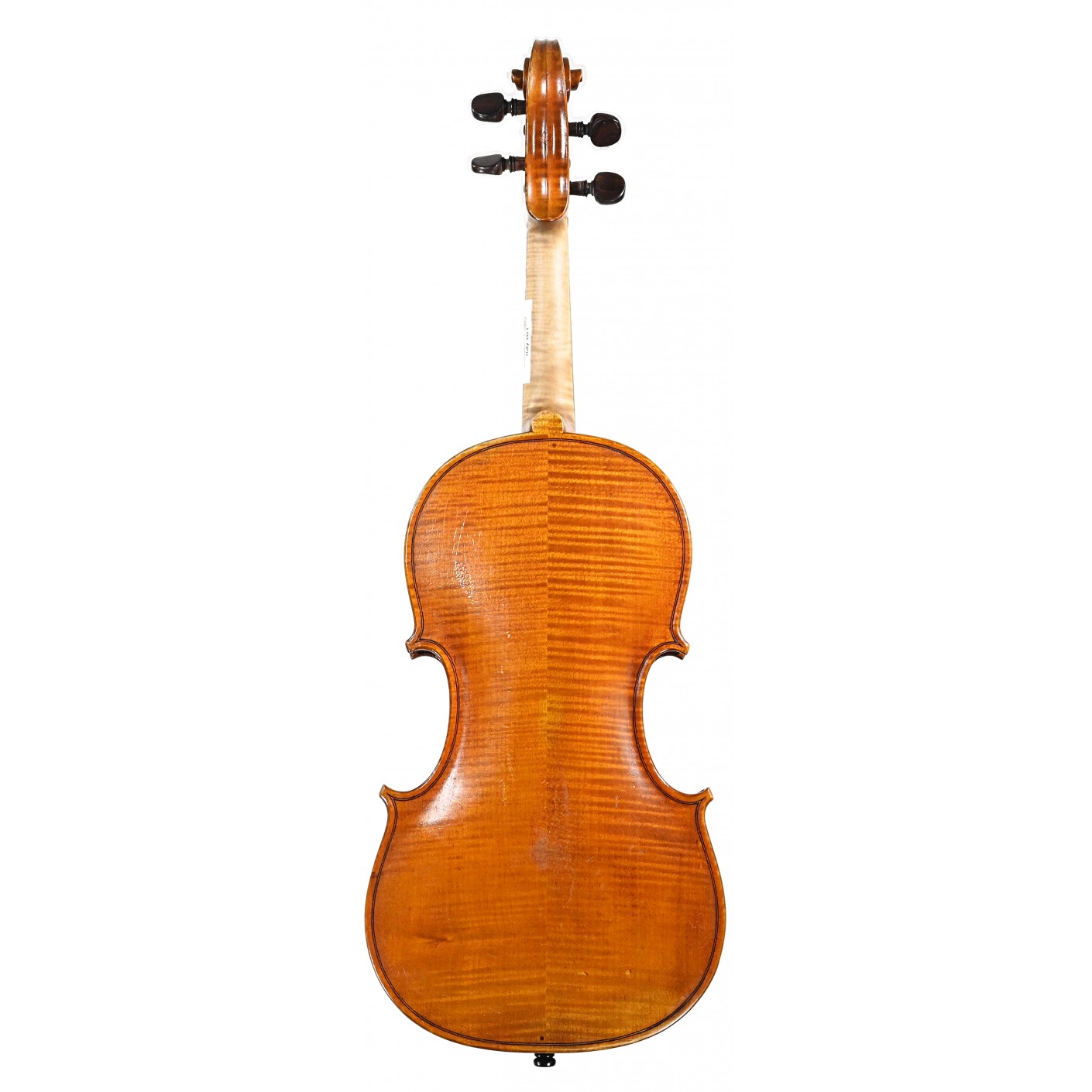
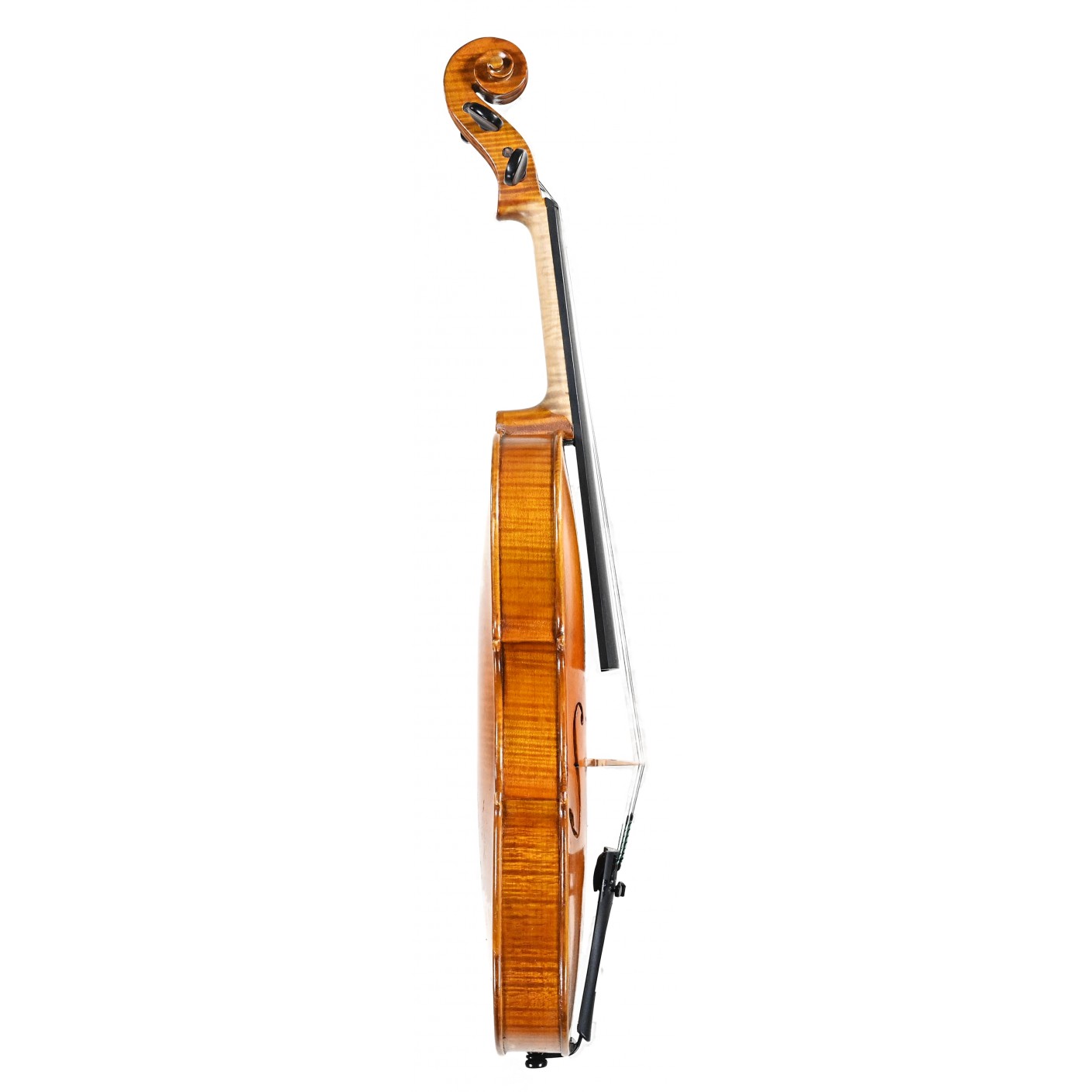
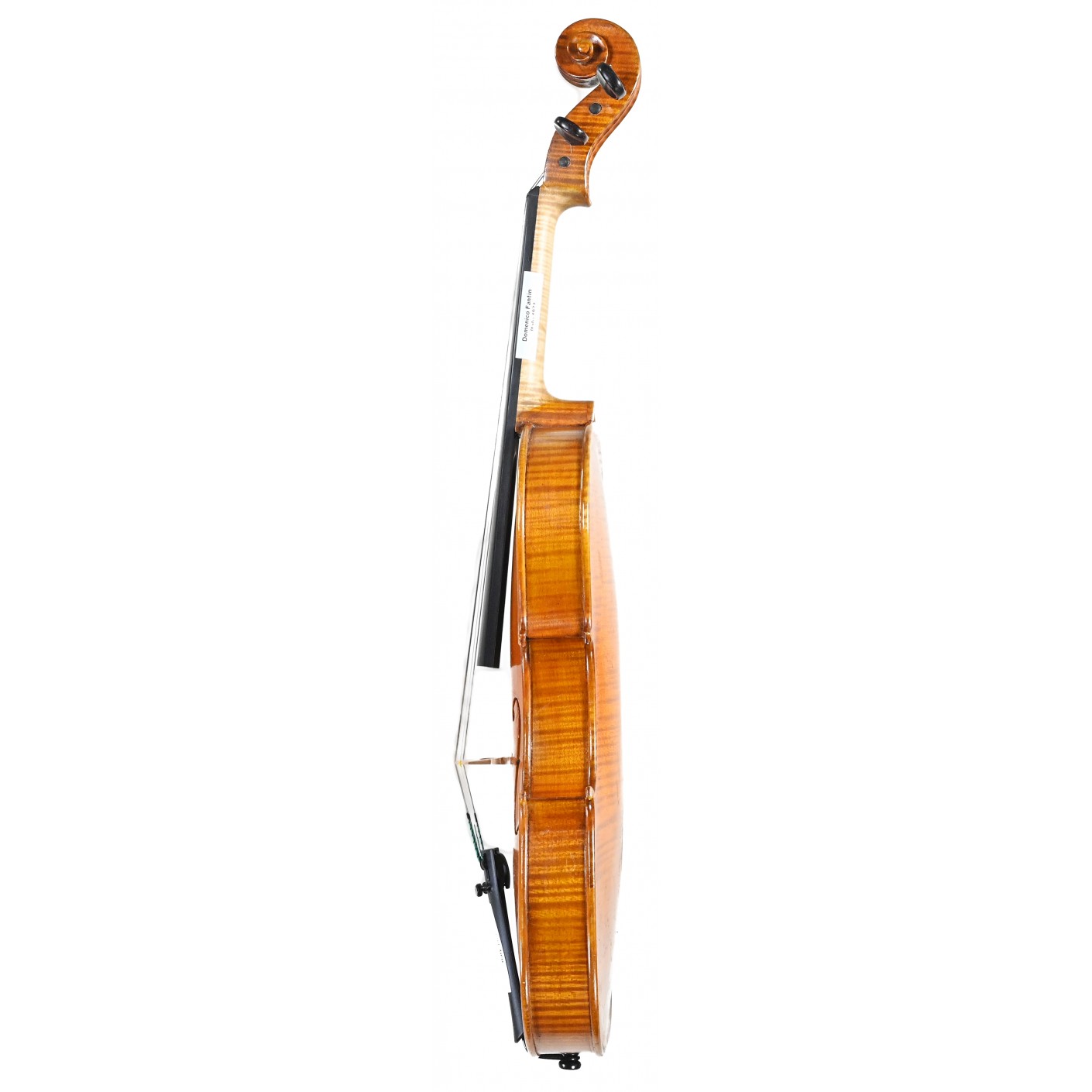
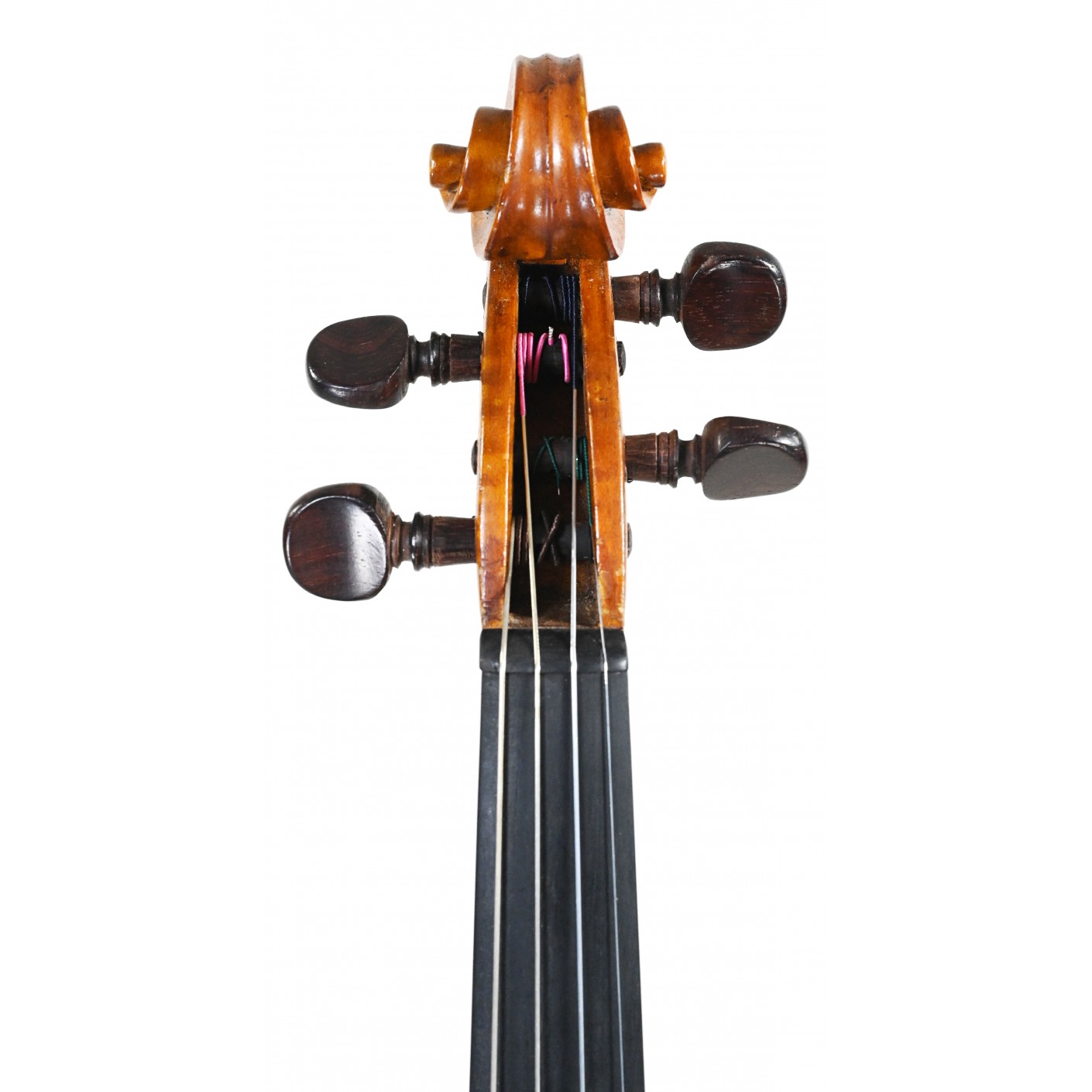
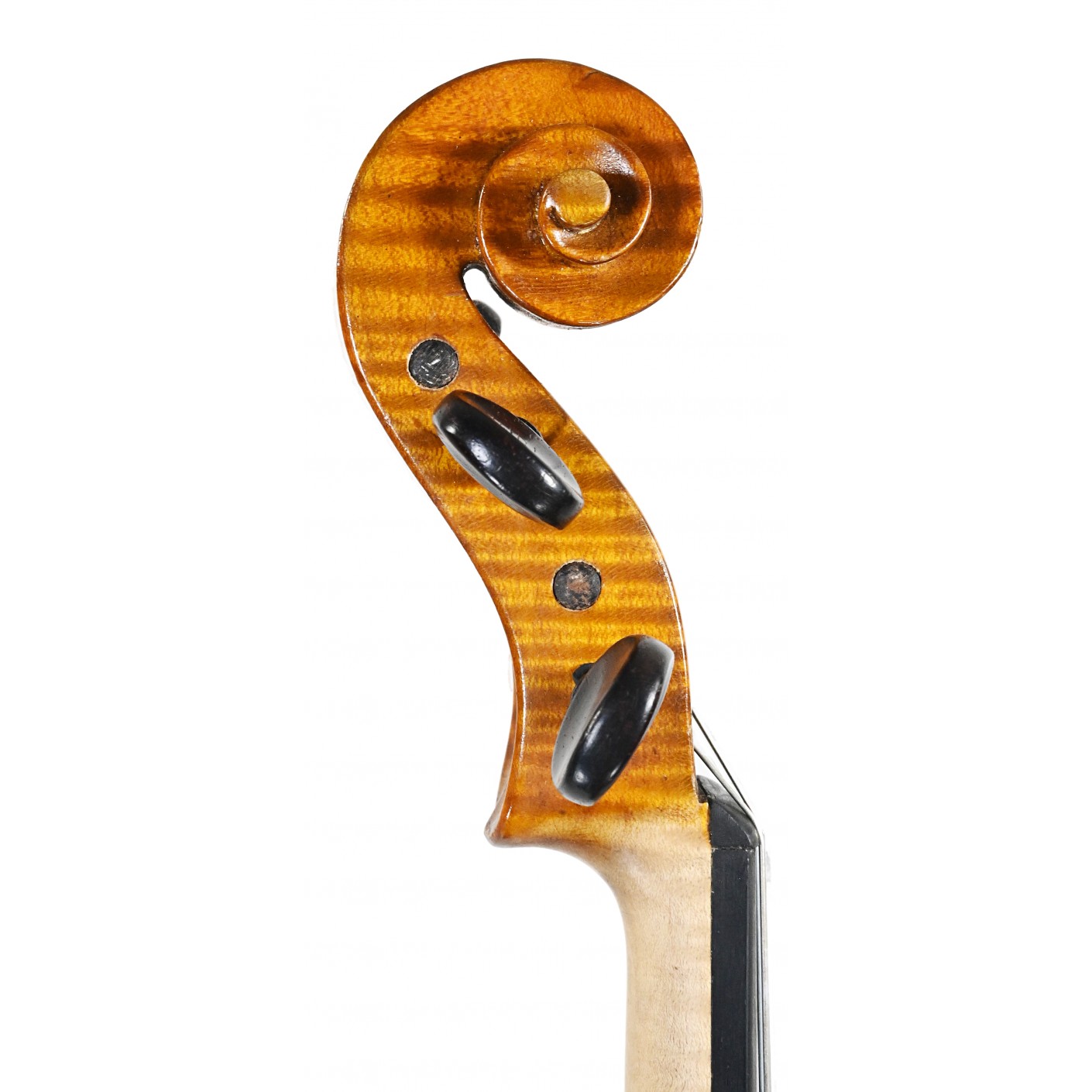
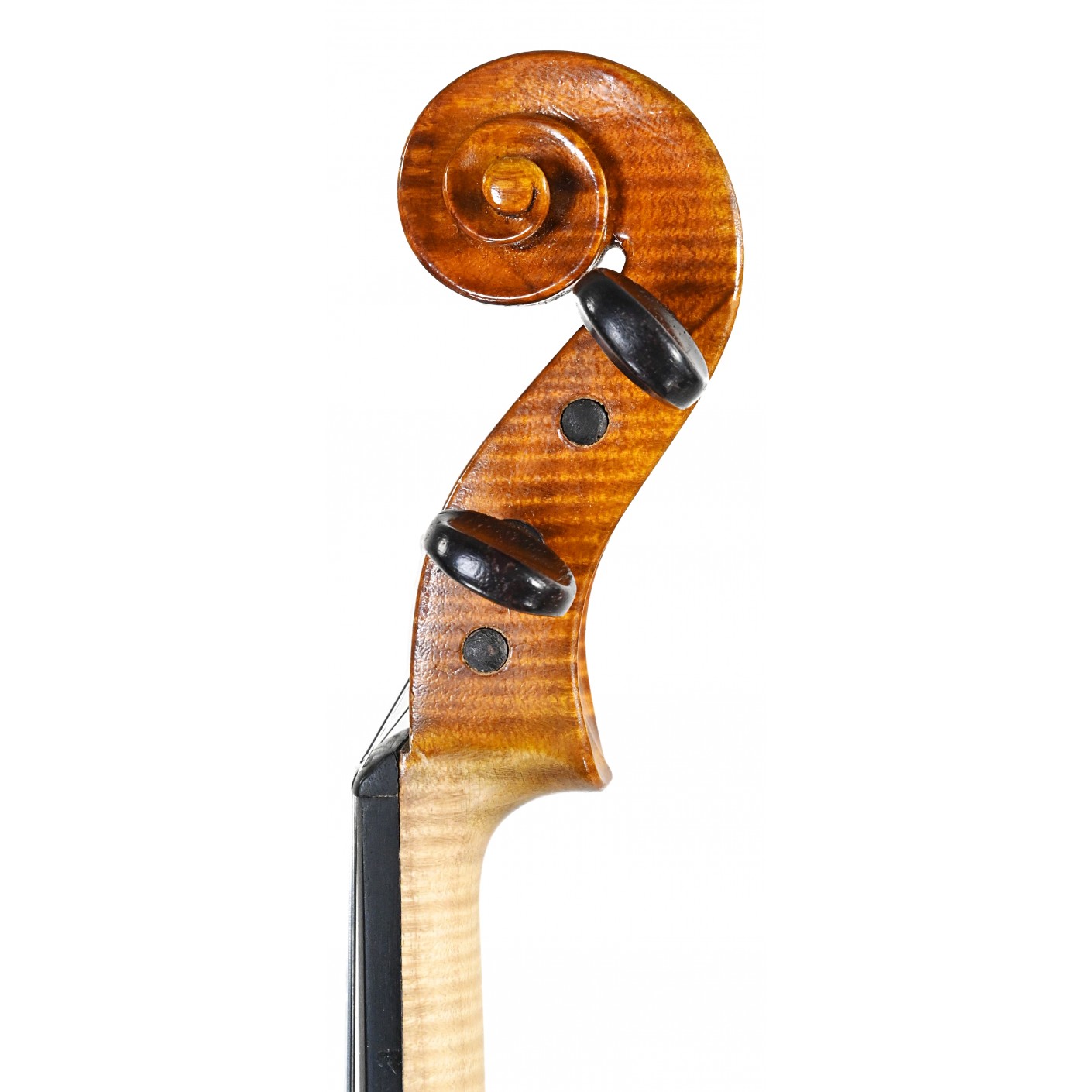
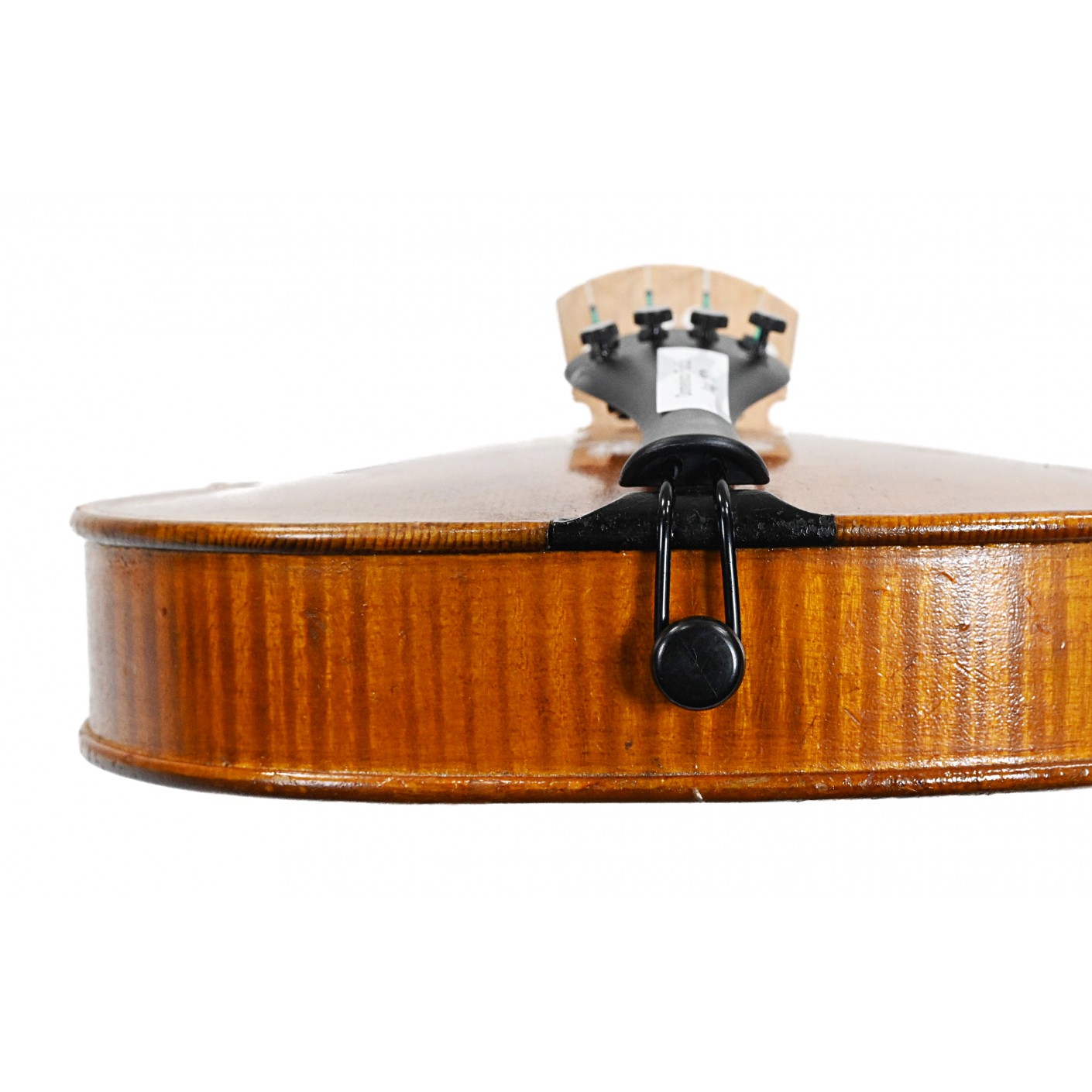
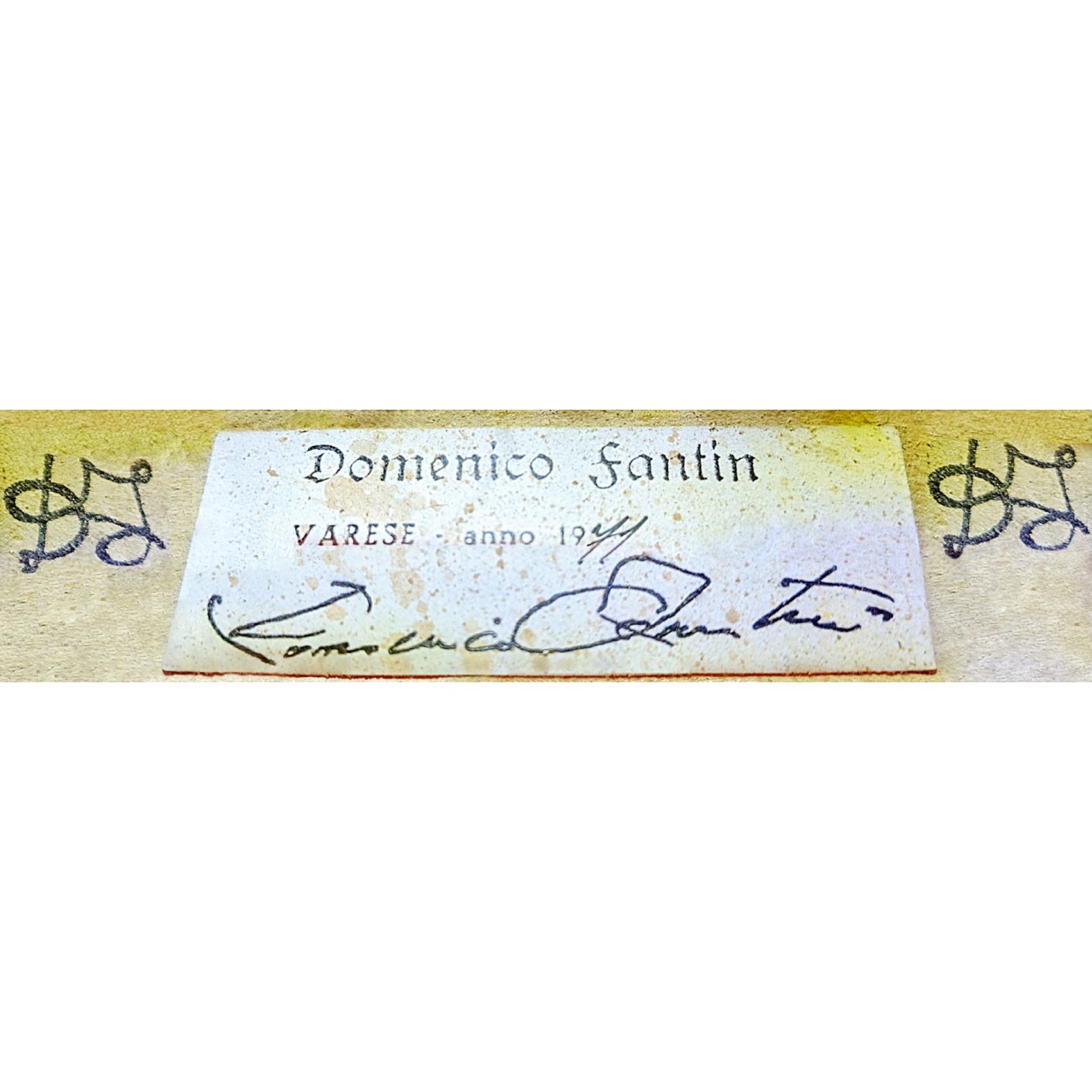
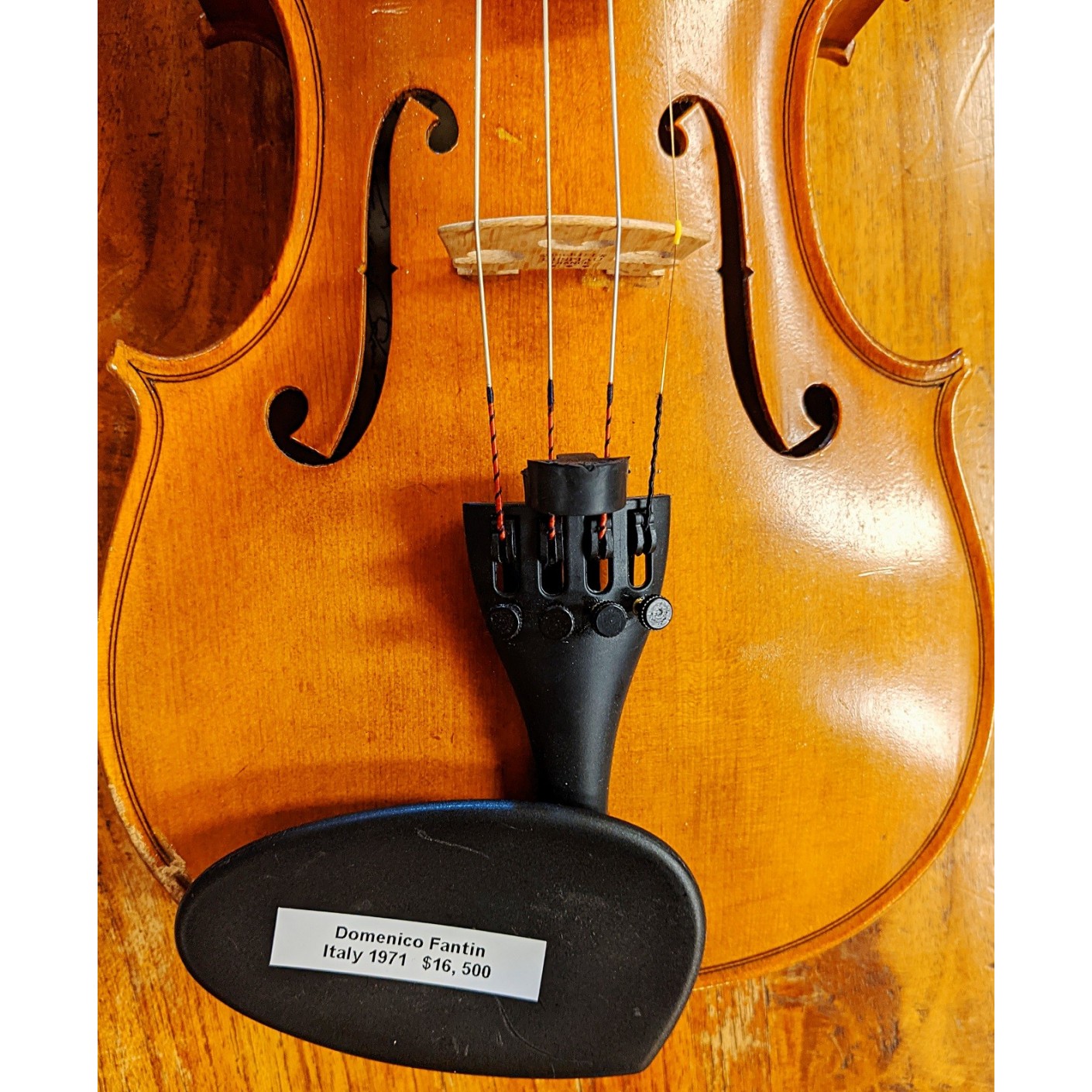
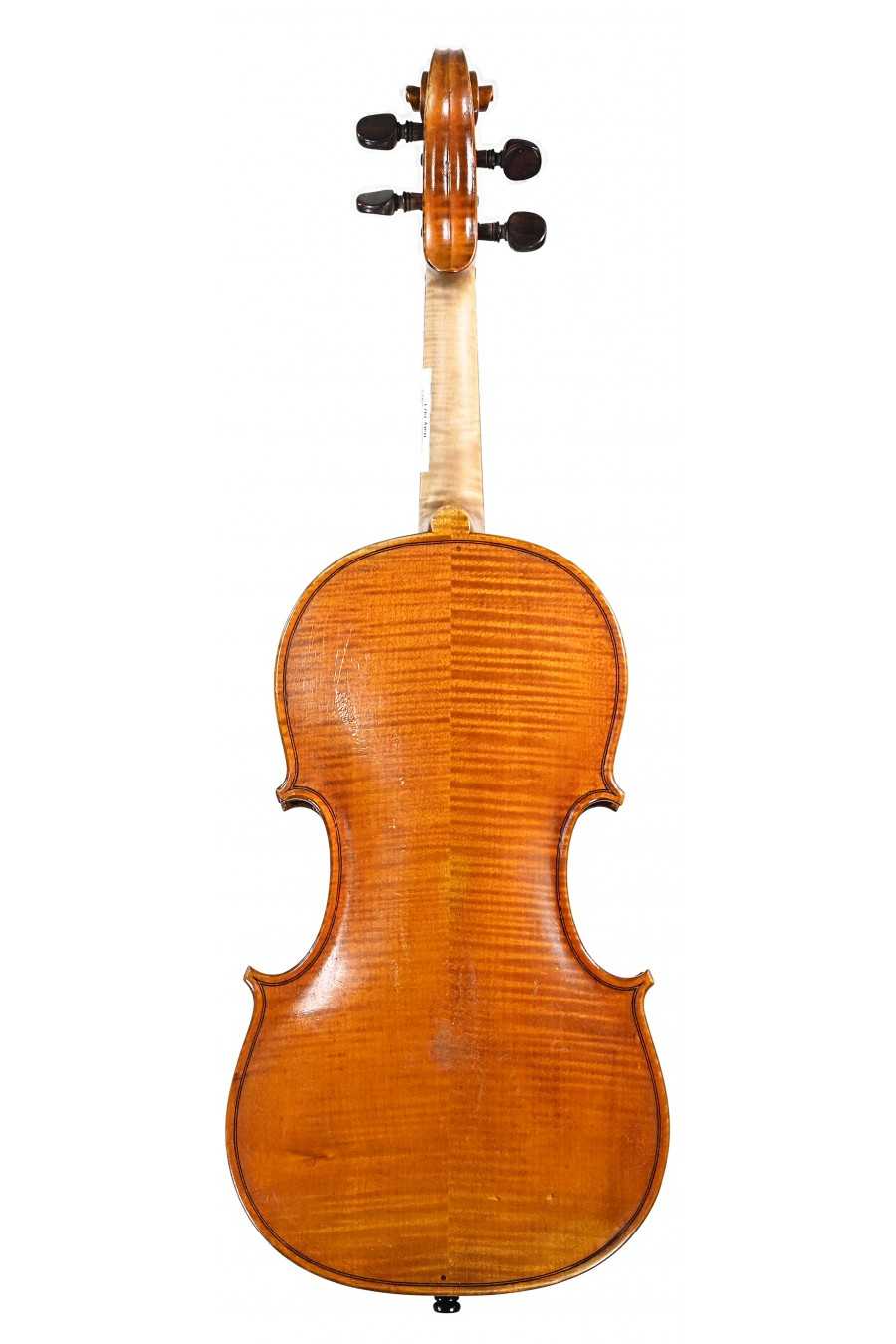
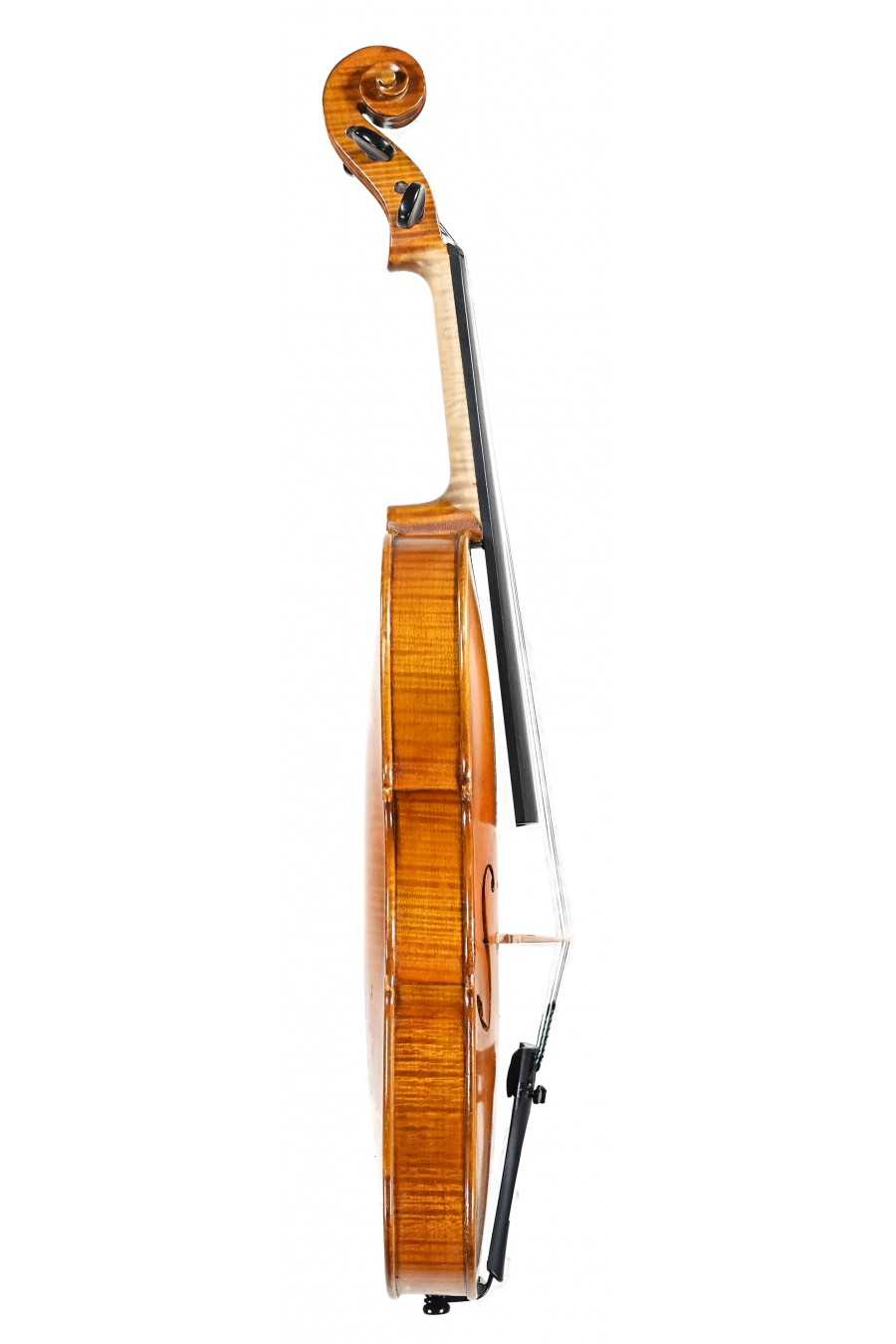
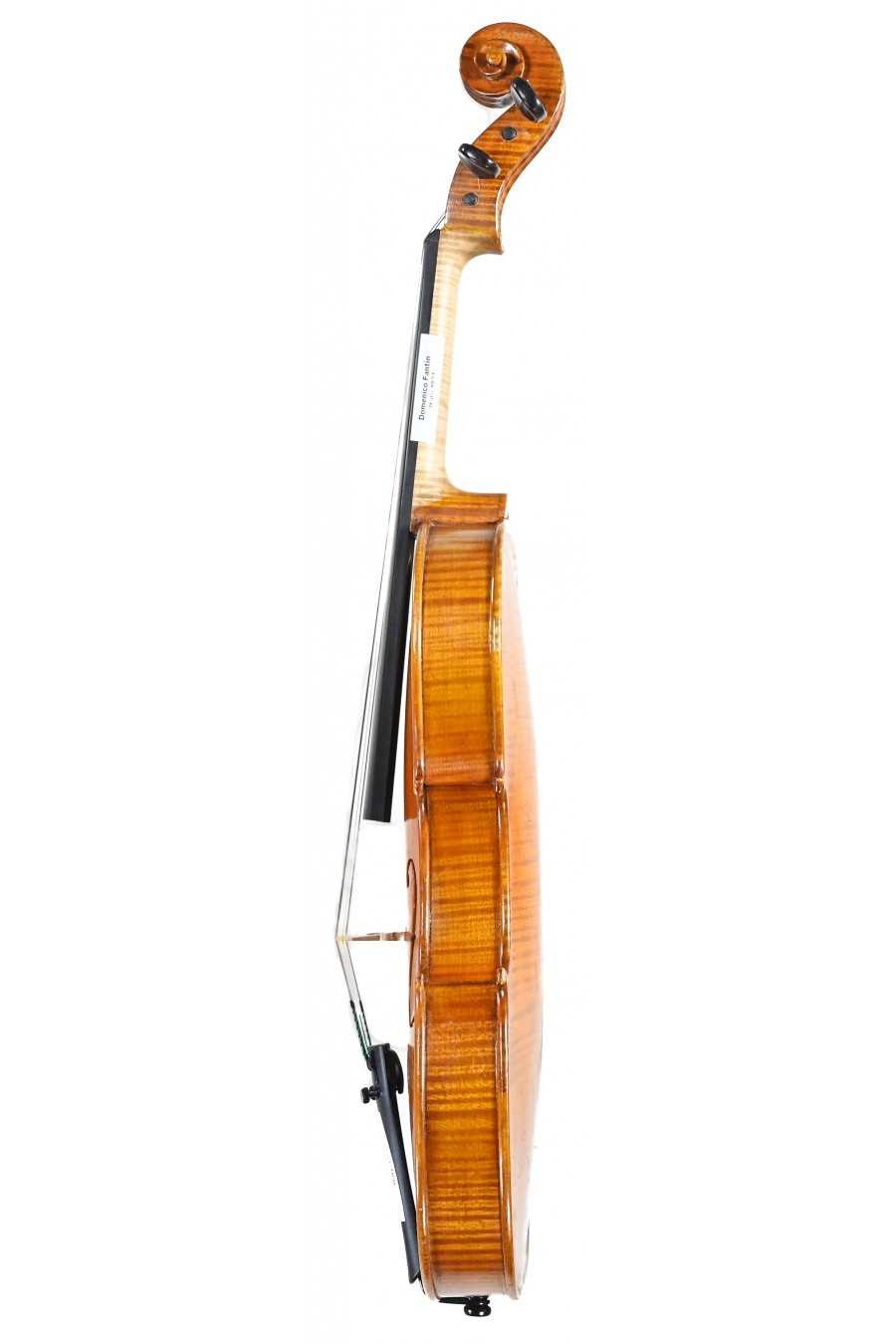
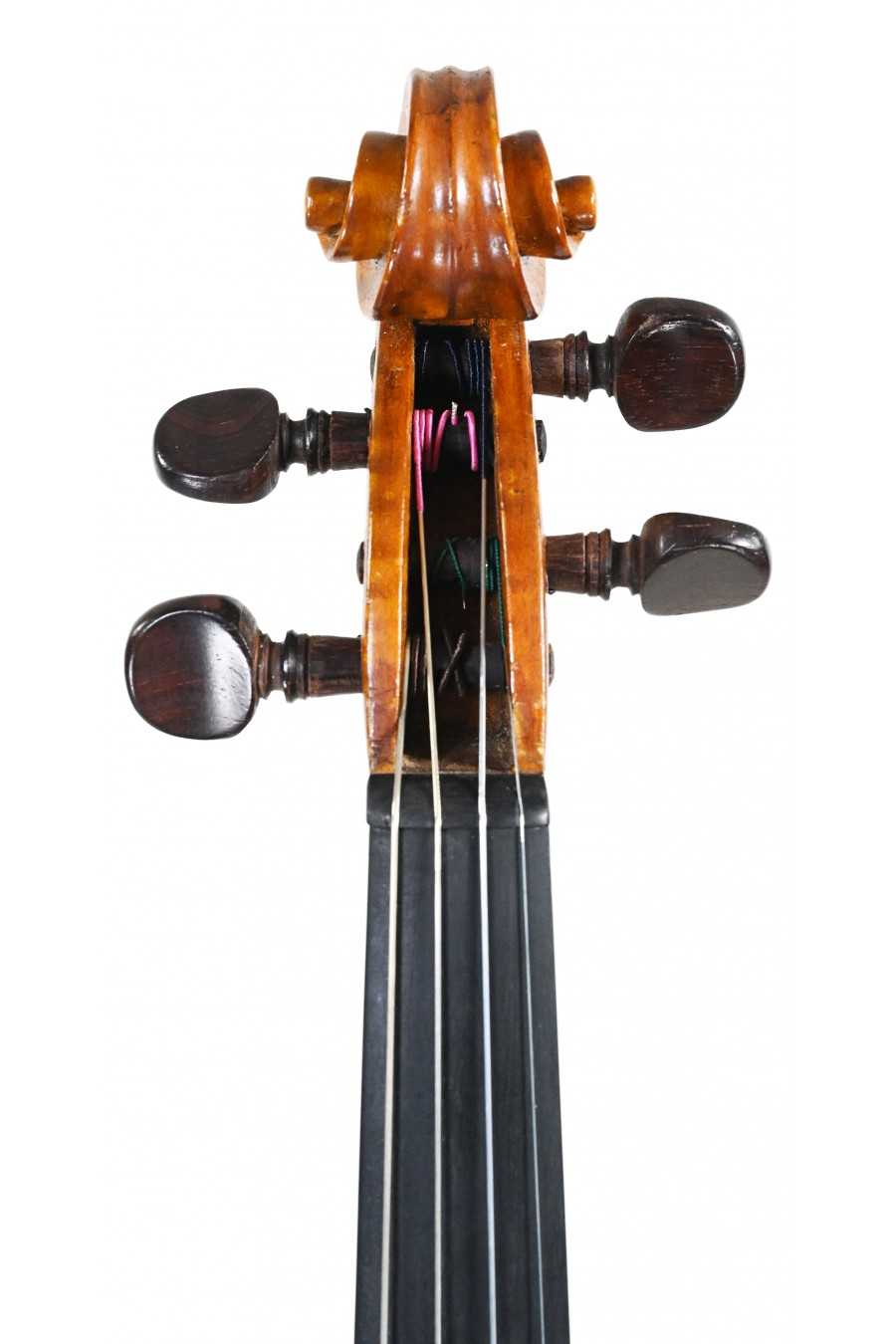
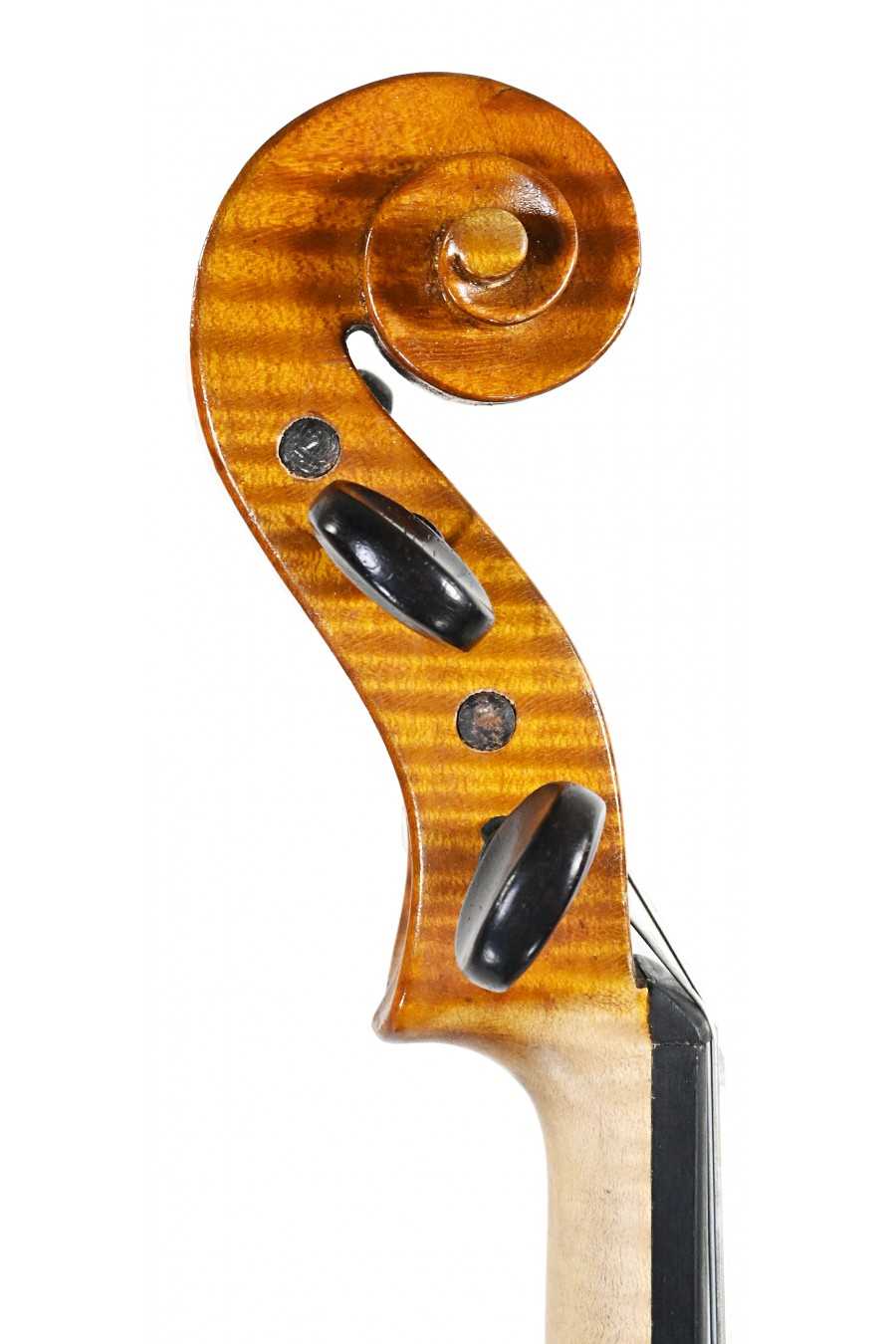
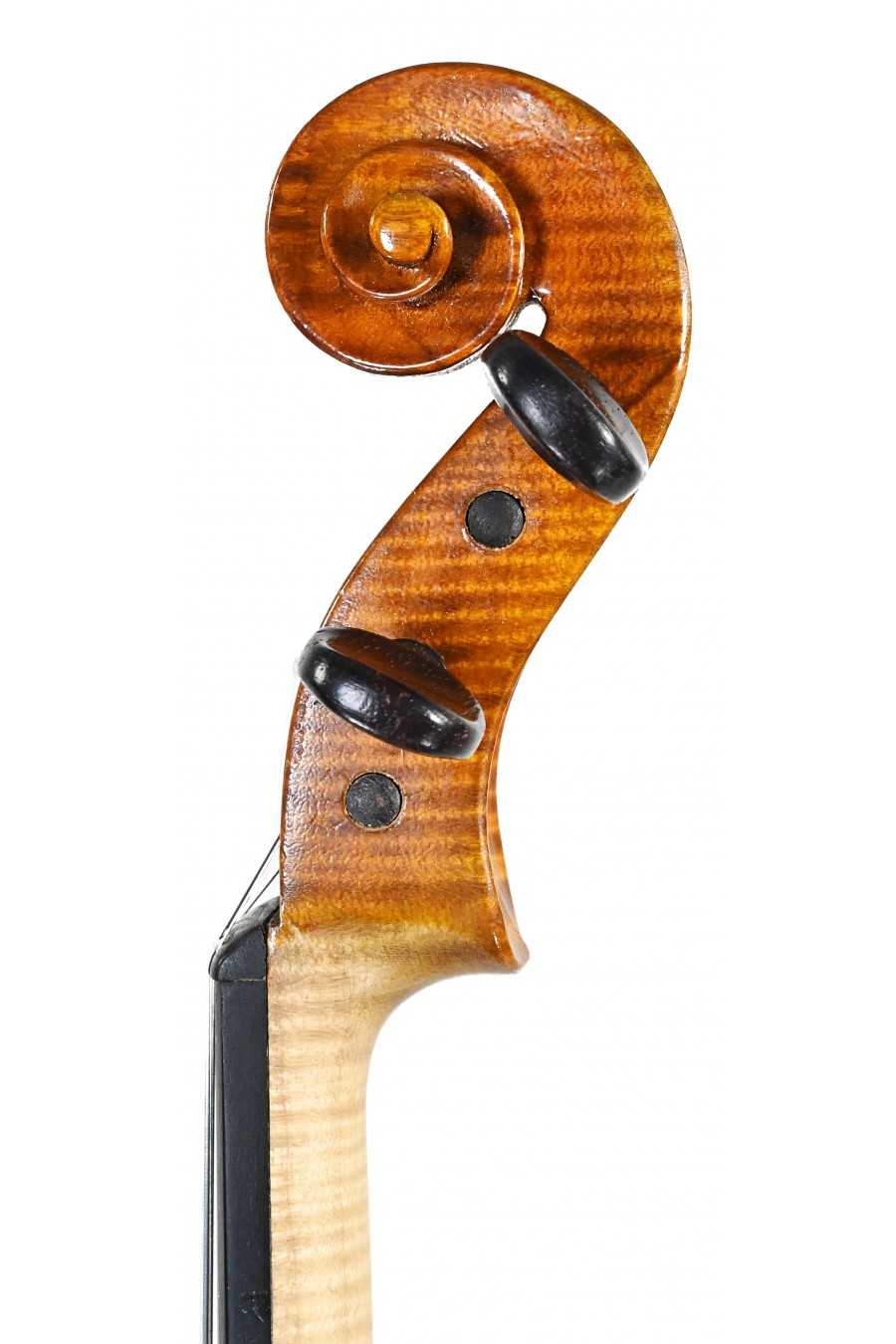
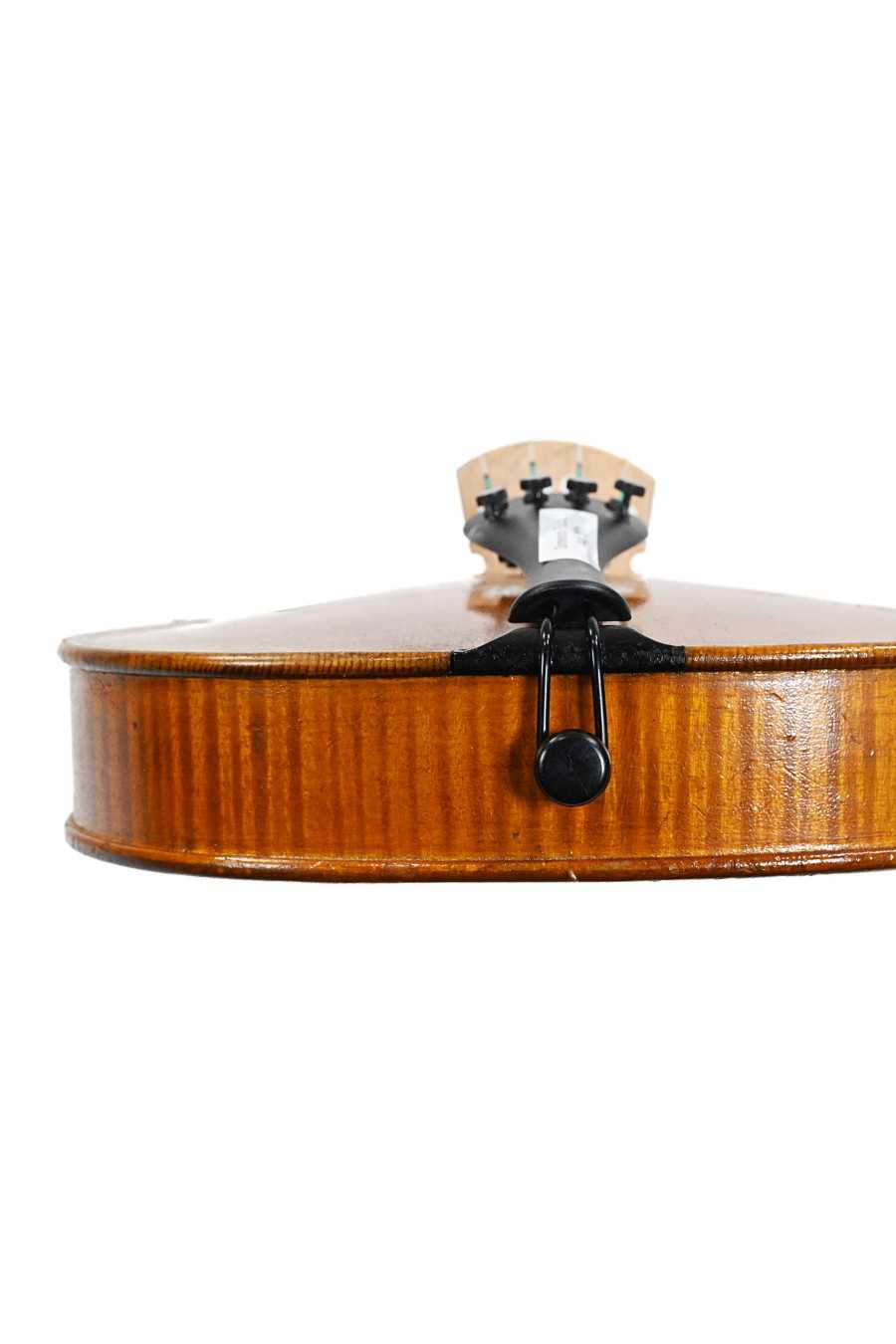
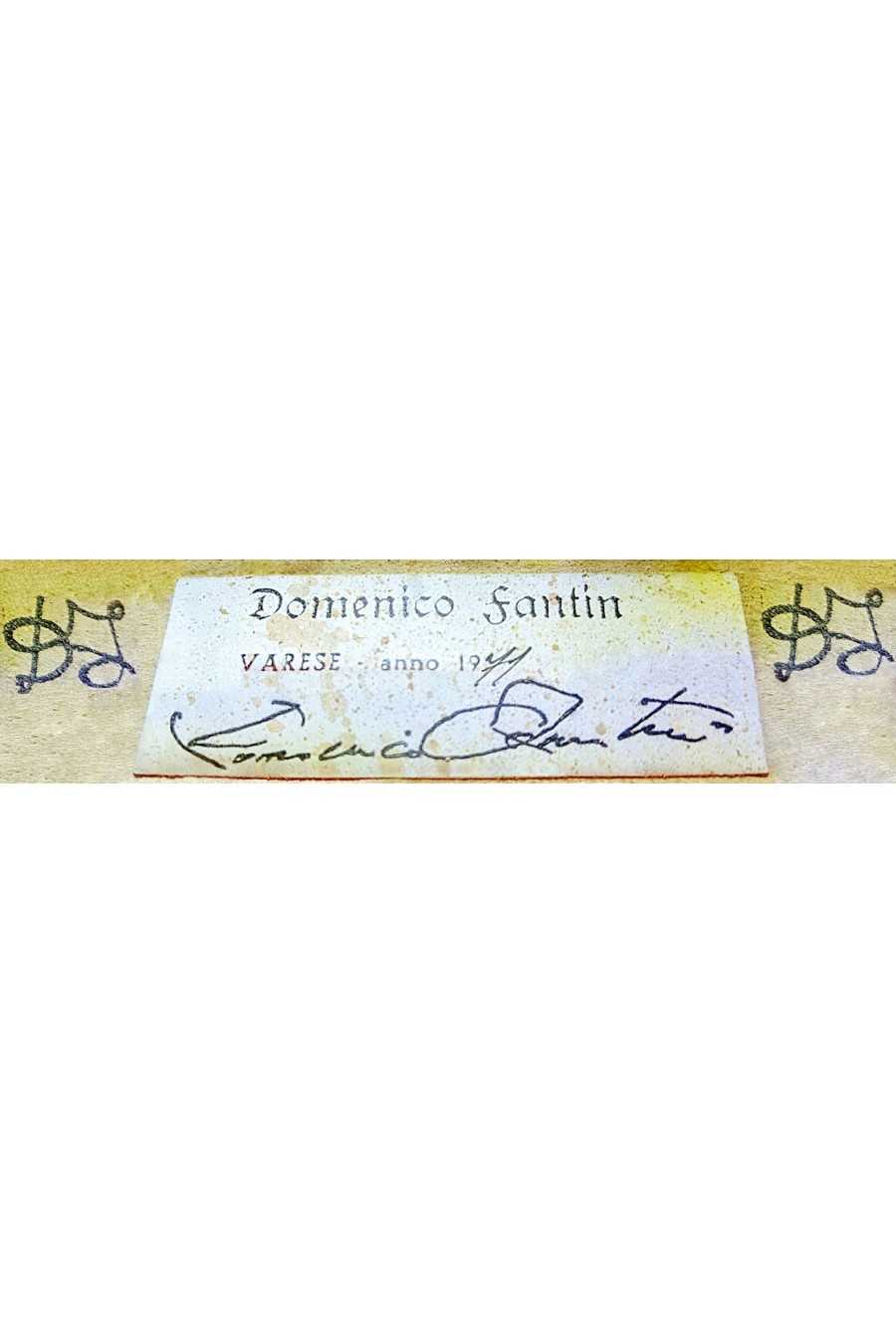
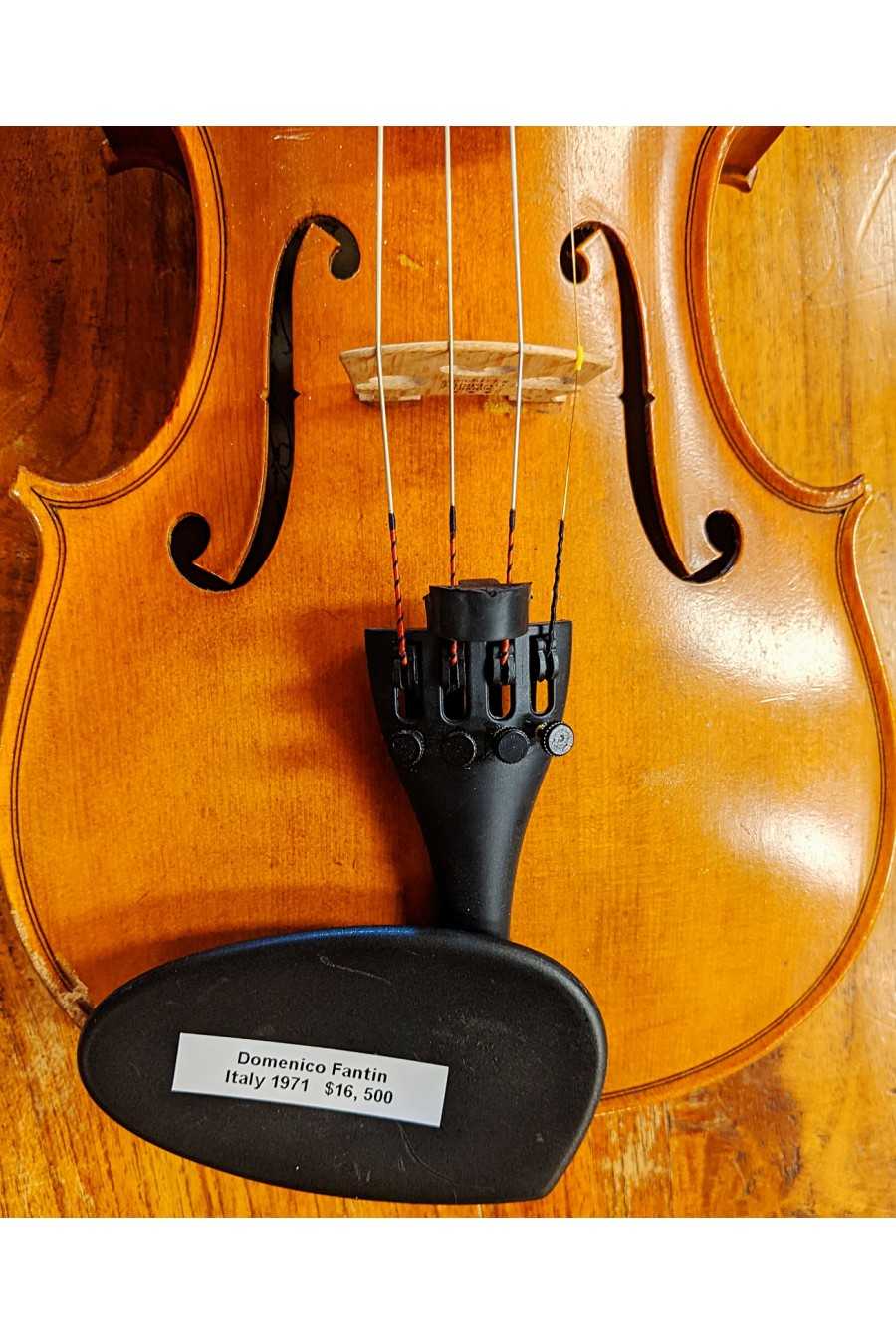
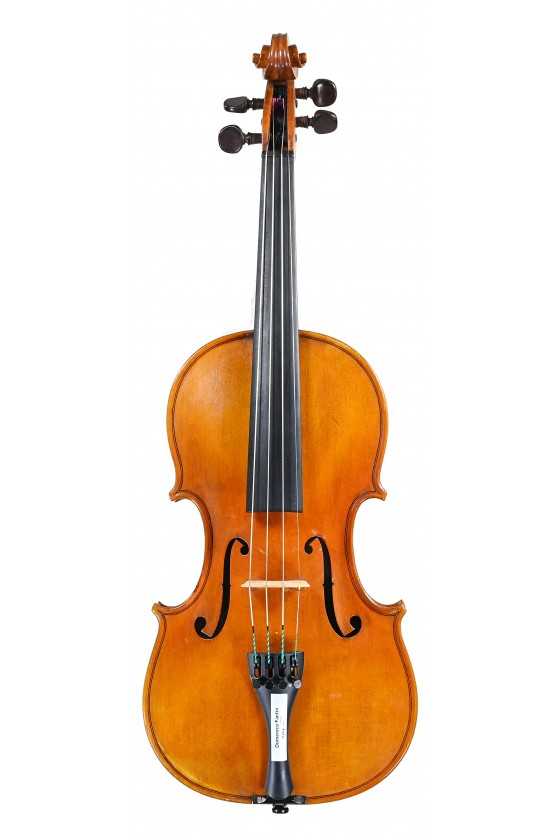
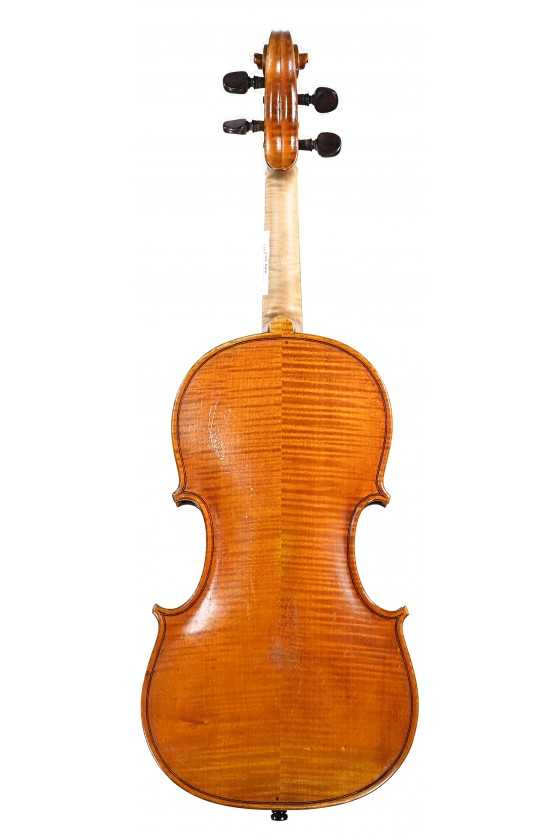
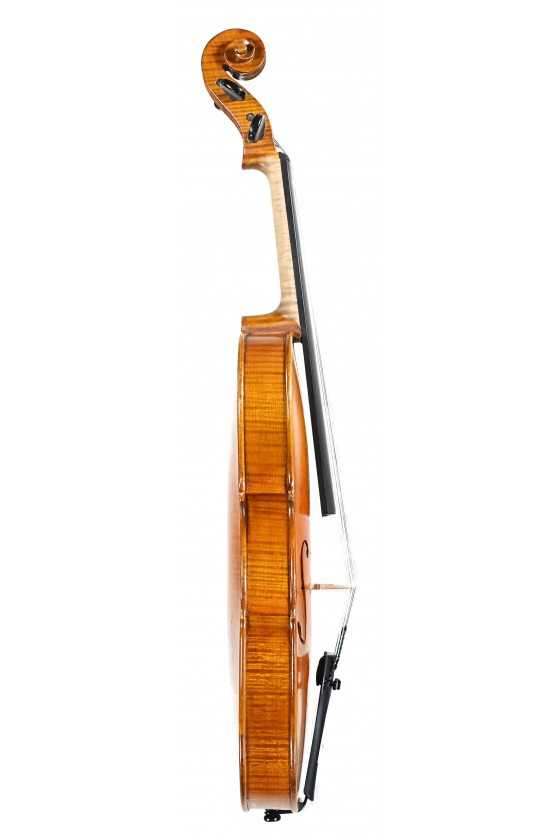
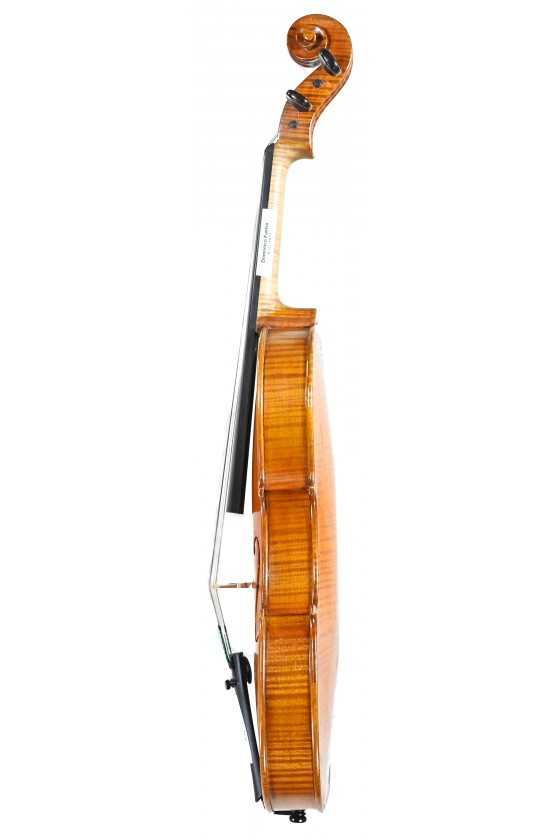
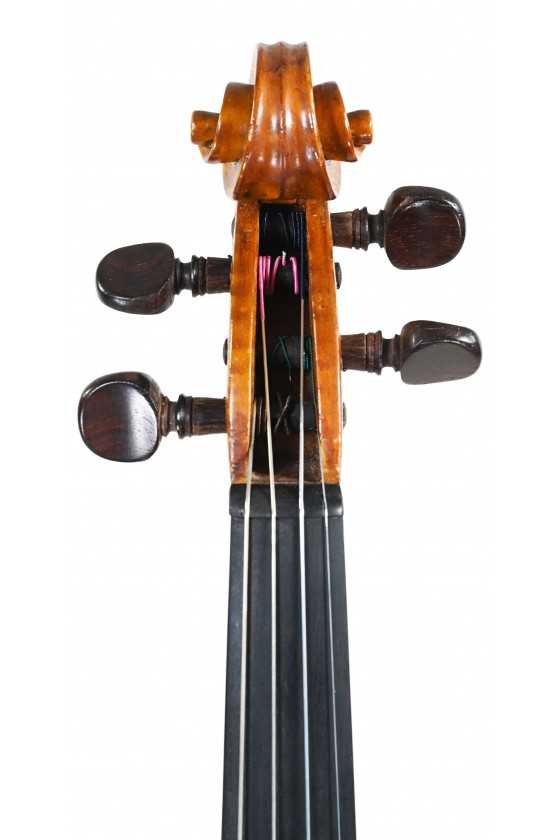
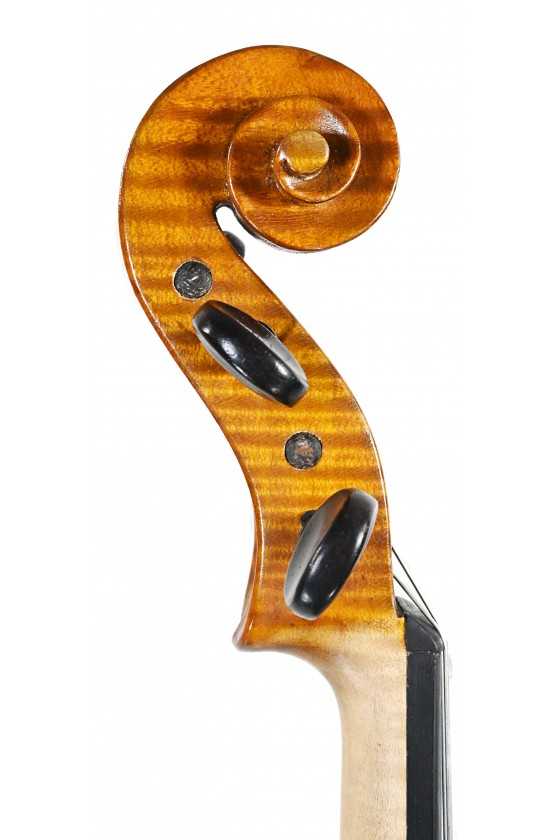
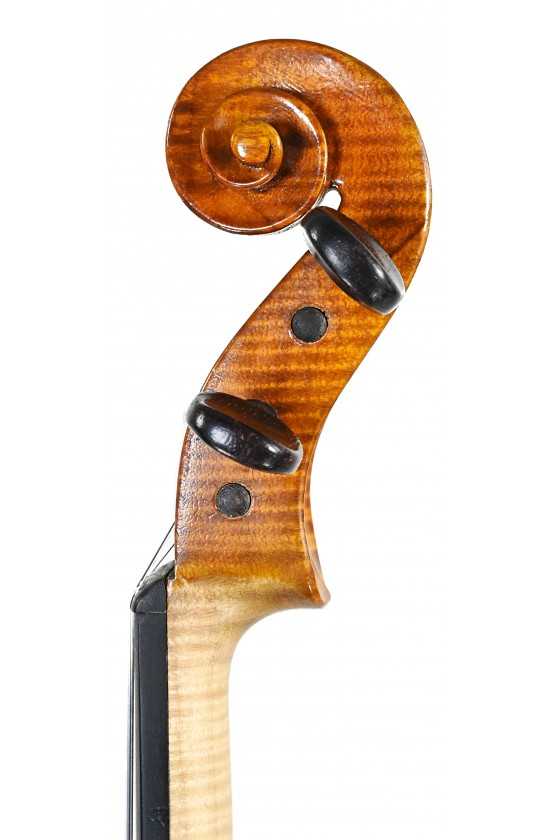
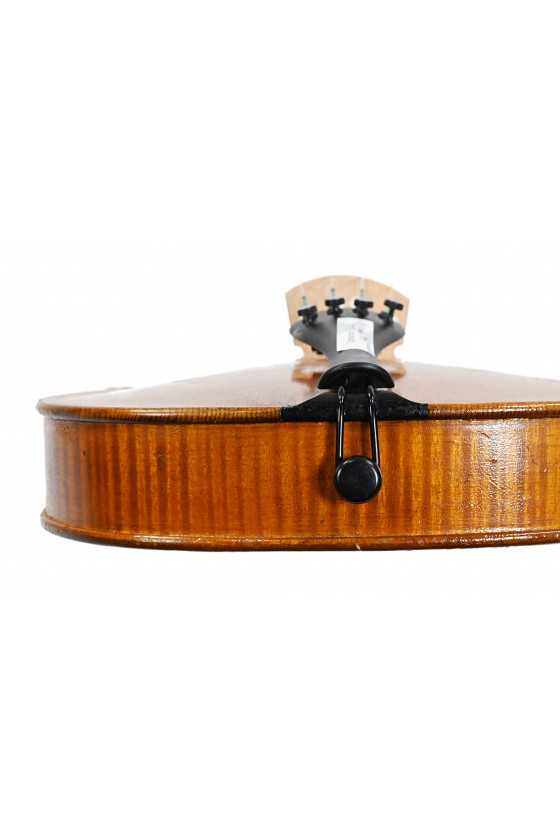
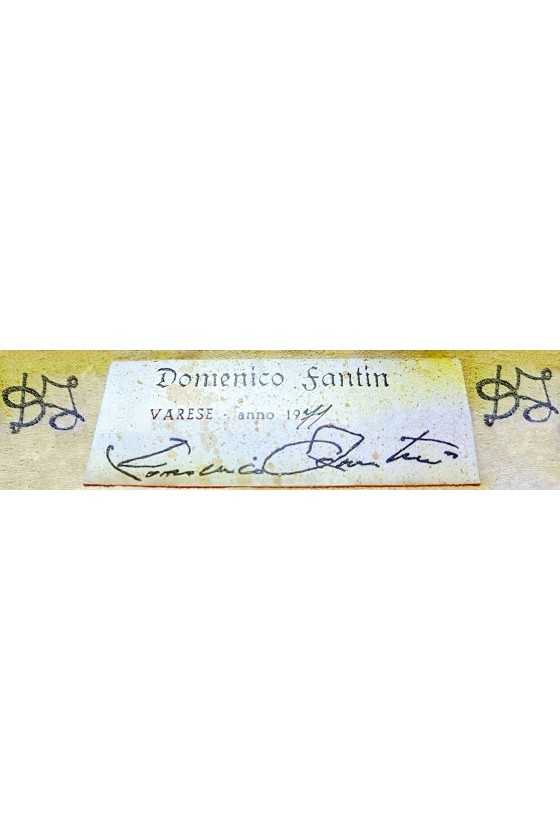
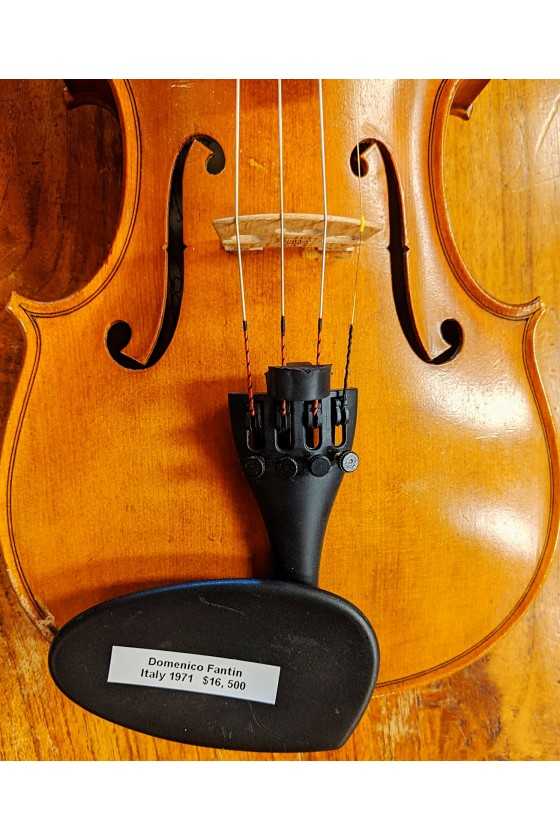
We have here the Domenico Fantin Violin made in Varese, Italy 1971. Domenico Fantin’s instruments are played in major European and American orchestras. Great soloists like Yehudi Menuhin purchased one of his violins in 1969, and Uto Ughi, who owns two of his instruments.
Domenico Fantin’s instruments are played in major European and American orchestras, including the La Scala Philharmonic (Milan), the Orchestra of the Teatro di San Carlo (Naples), the Berlin Philharmonic, the Chicago Symphony Orchestra, and many others. Mr Fantin is proud to have made instruments for great soloists like Yehudi Menuhin – who purchased one of his violins in 1969 – and Uto Ughi, who owns two of his instruments. Other musicians who play a Fantin violin are Caroline Adomeit and Christian Kim Sitzmann.

This Violin has the signature of an Italian Maker Renato Scrollavezza who was greatly admired and considered to be among the most notable modern Italian makers of the post-war era. He also won numerous prizes and medals in international competitions. This violin could have been made by one of his Japanese students - see the descrirtoion for details.
Check out the Italian Copy of Geovanni Schwarz violin made about 1920. Geovanni Schwarz was born in 1865 in Padua, Italy who by the influence and tutelage of his uncle Eugenio Degani honed his skills, established his own workshop, and won a gold medal in 1916 in Rome Italy.
Moretti Egidio transitioned from cabinetmaking to violin making in 1924-1928. During 1945-1955 in Lavagna, Genoa, his instruments were known for their accuracy and good varnish, with two different labels used - handwritten and printed.
This is a copy of Nikolaus Amatus's violin made in 1636 with a label. Nicola Amati was a master luthier born in 1596, in Cremona Italy. He came from a family of luthiers but was considered the most famous luthier in their clan.
This violin is labelled "Antonius Vinaccia, Napoli in Via Constantinii, a. 1792" and shows evidence of being repaired in 1902. Antonio Vinaccia was a renowned instrument maker in Naples during the mid-18th to late 19th centuries. He was known for making violins in the style of Gagliano and exceptional mandolins. His craftsmanship is preserved in Naples's Museo Spagnuolo (Palazzo degli Studi). Antonio's sons, Gennaro and Gaetano, also became instrument makers.
This violin features the original handwritten label "Mario Gadda – Fece in Mantova – Anno 1982" together with the inscription "Modello Ansaldo Poggi," identifying it as a handcrafted Italian violin made in Mantua in 1982 and inspired by the renowned Poggi model. Created during the peak of Mario Gadda's career, the instrument combines the rich Mantuan violin-making tradition inherited from his father, Gaetano Gadda, with Gadda's own exceptional craftsmanship, producing the powerful tone, refined workmanship, and enduring quality for which his instruments are internationally admired.
Bearing the label "Laurentius Bellafontana fecit Genuae Anno Domini 1943," this violin is the work of Lorenzo (Laurentius) Bellafontana (1906–1979), a distinguished member of the Genoese school and a pupil of Oreste Candi. The Latin label translates to "Laurentius Bellafontana made [this] in Genoa in the year of Our Lord 1943" and includes his characteristic LBG monogram and handwritten signature. Bellafontana's violins are admired for their refined craftsmanship, warm Italian tone, elegant design, responsive playability, and rich orange-red varnish, making them highly regarded examples of 20th-century Italian violin making.
We have here a Lillo Salerno Italian violin made in 2019. Lillo Salerno is an Italian luthier born in Sicily, Italy. He went to Cremona Violin Making School then finished his studies in Mittenwald School of Violin Making in Germany in 2005.
Instrument - Violin
Model- Personalized Stradivari
Top - Italian spruce in two pieces
Back - Balkan maple in two pieces
Scroll - From the same wood as the back
Varnish - Oil and amber with a yellow background, red-brown violin.
Notes - The instrument was made with an antique and shows a black bevel on the scroll and points of the bouts.