
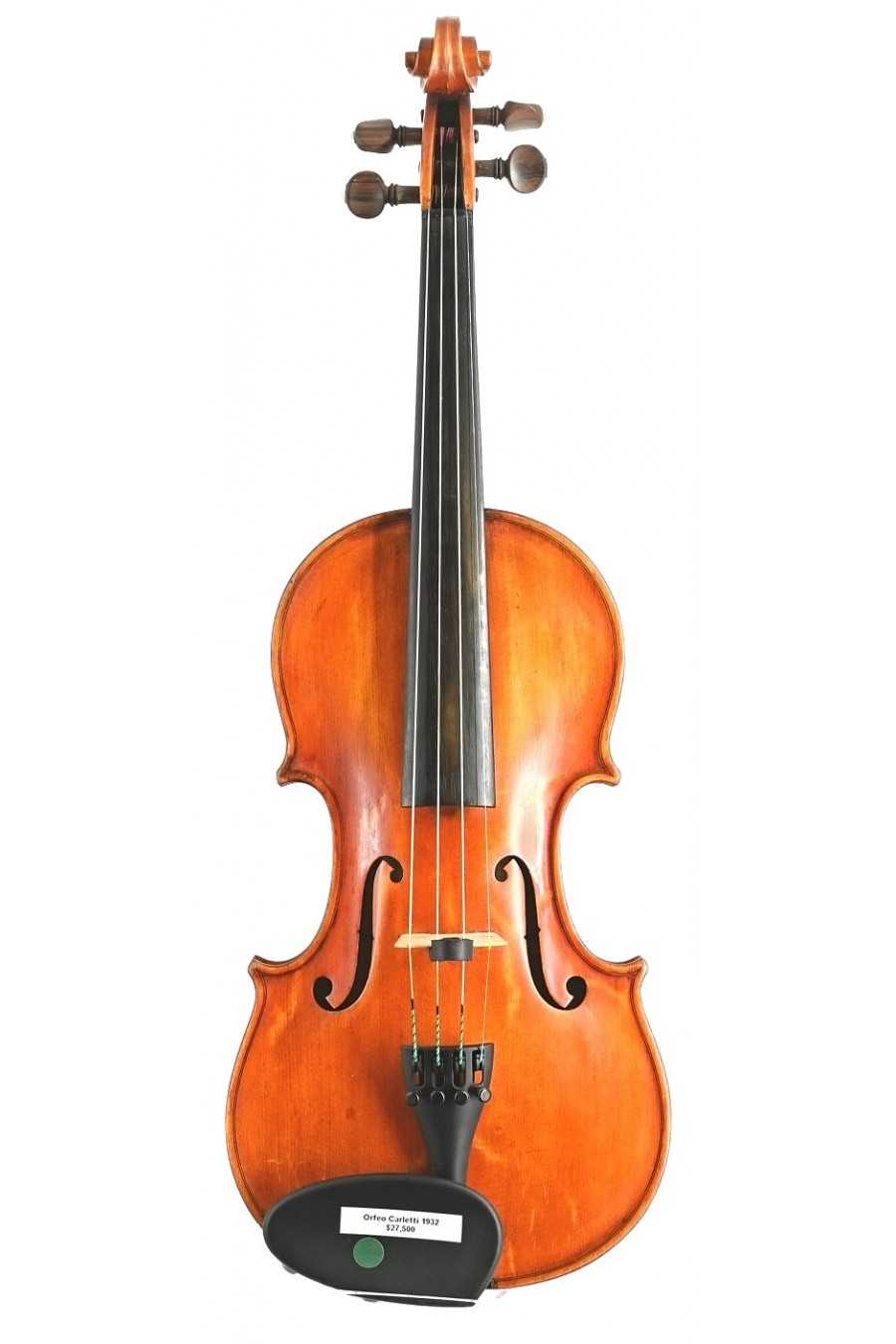
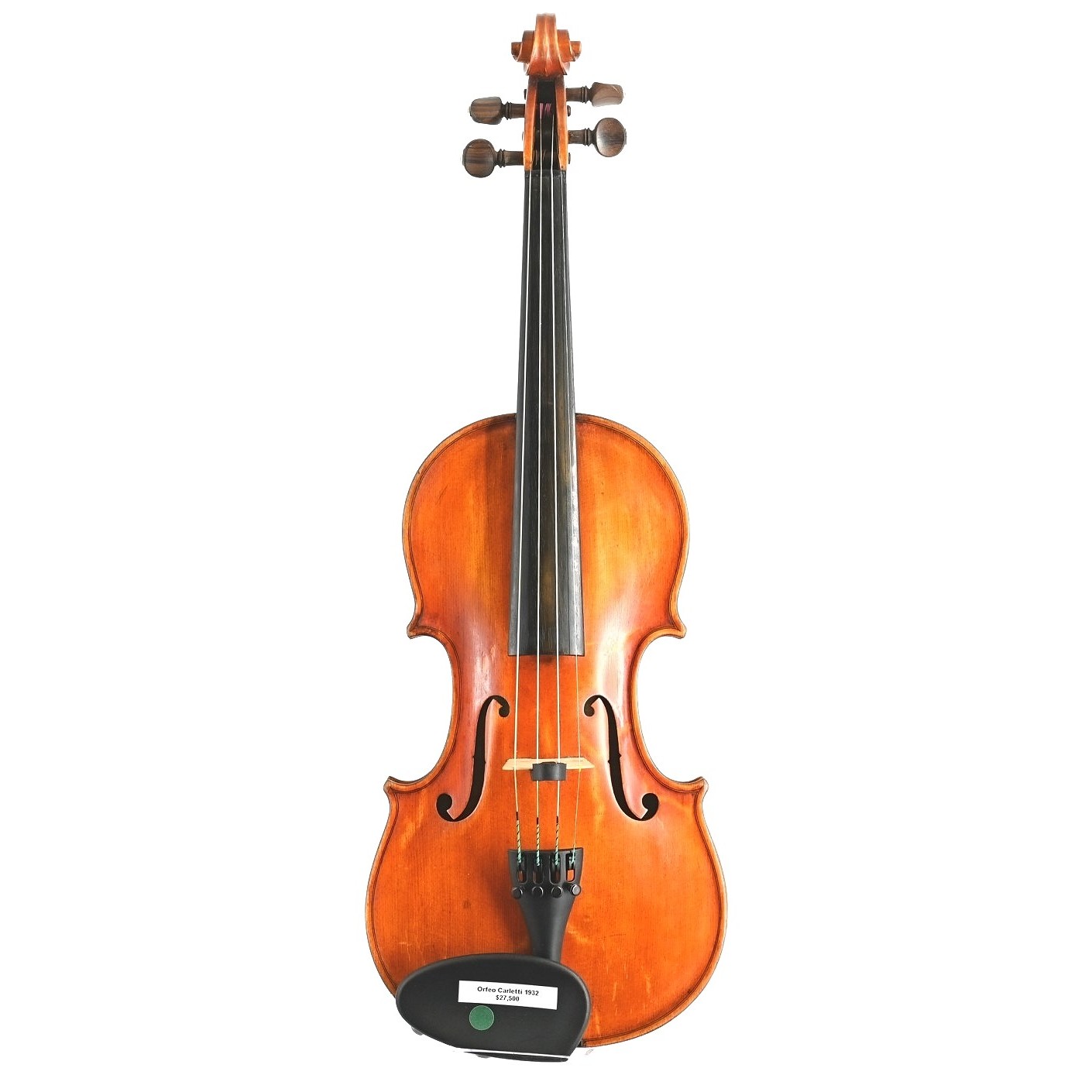
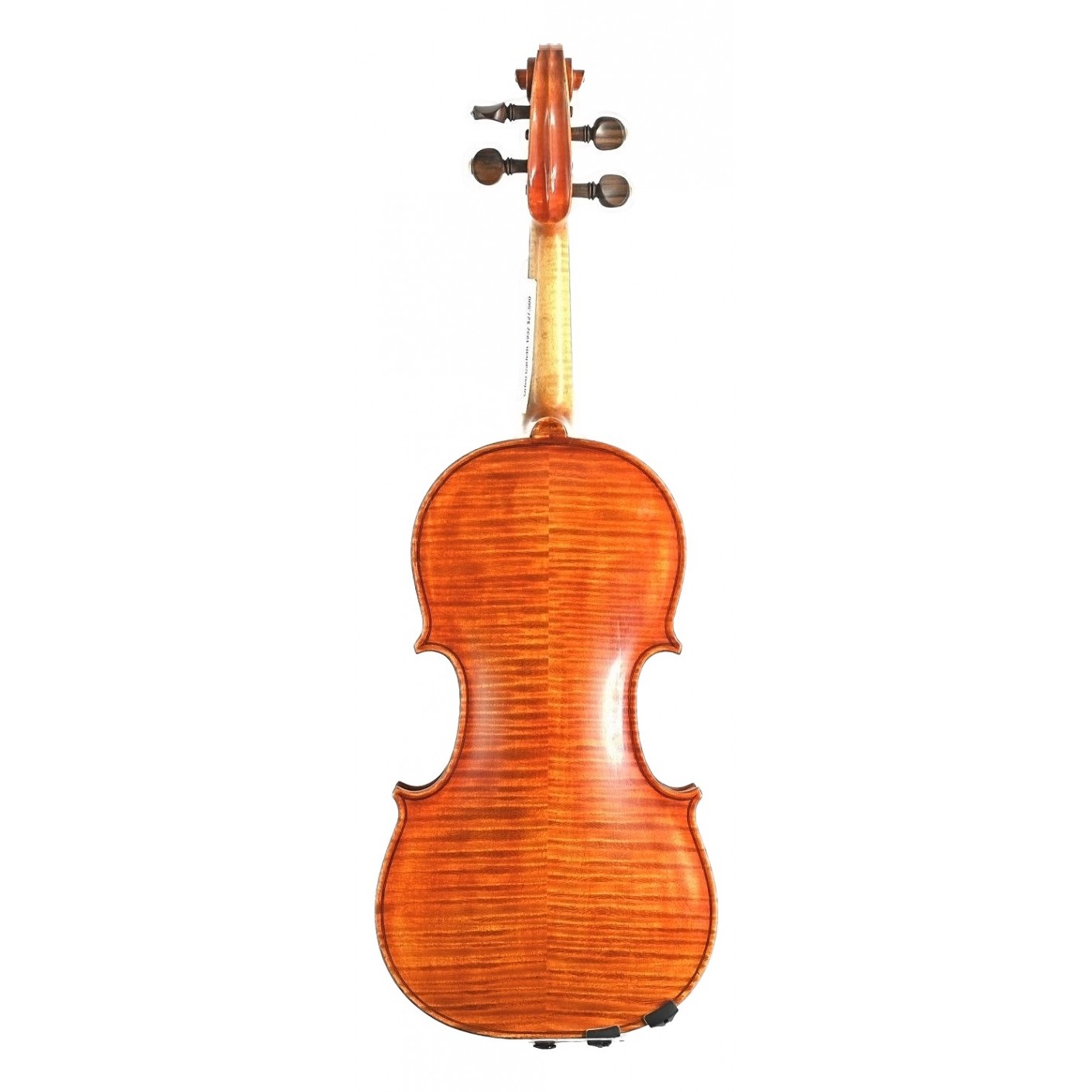
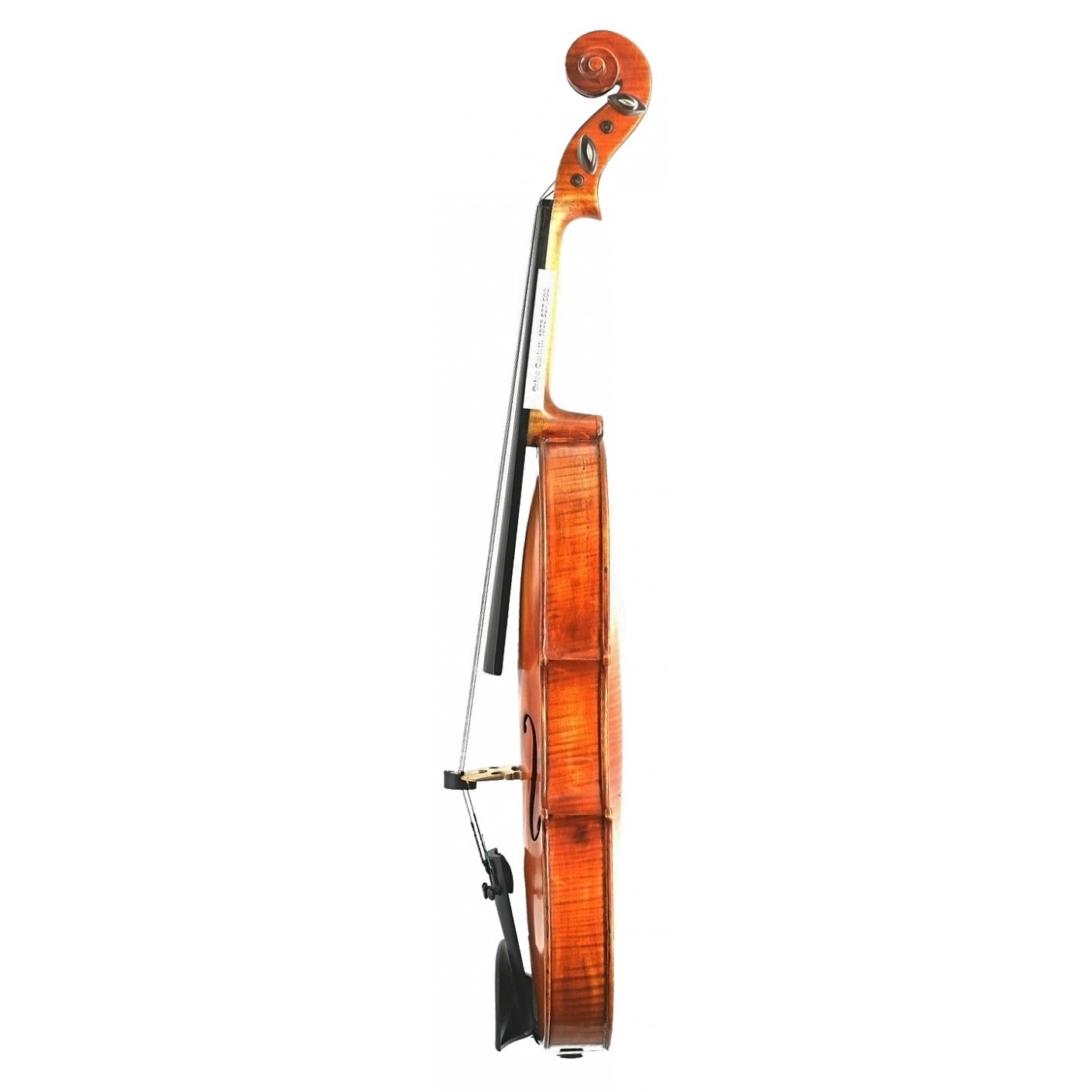
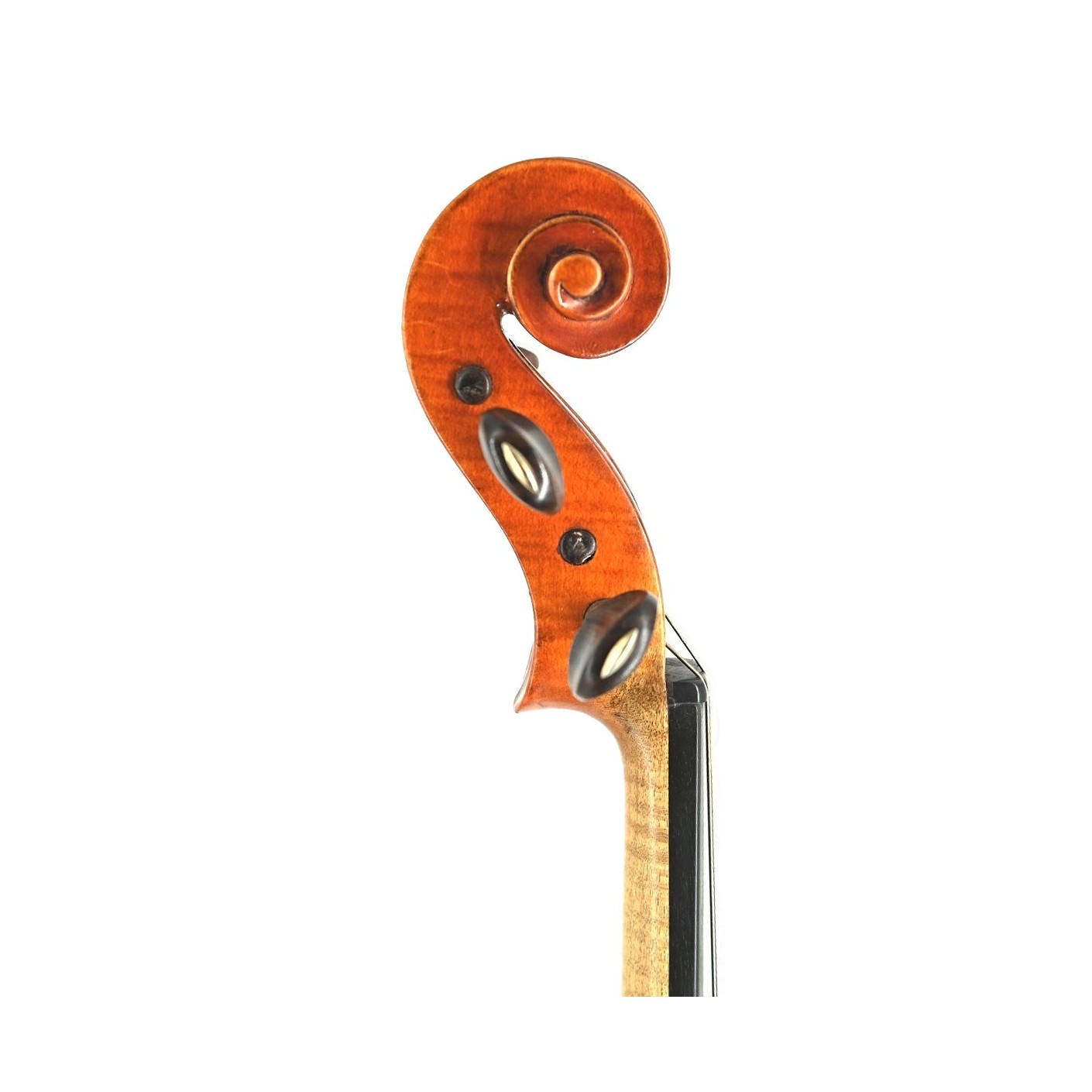
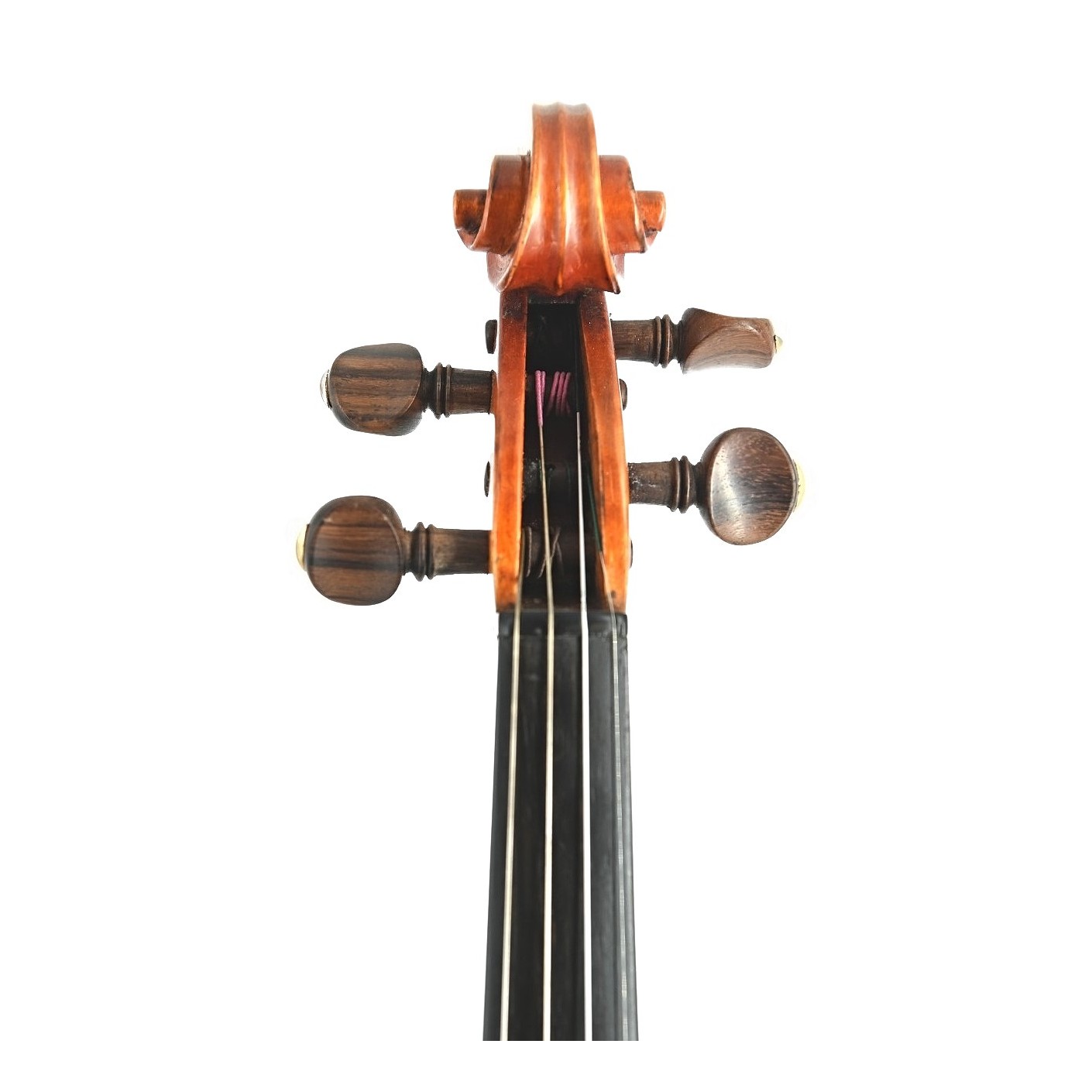
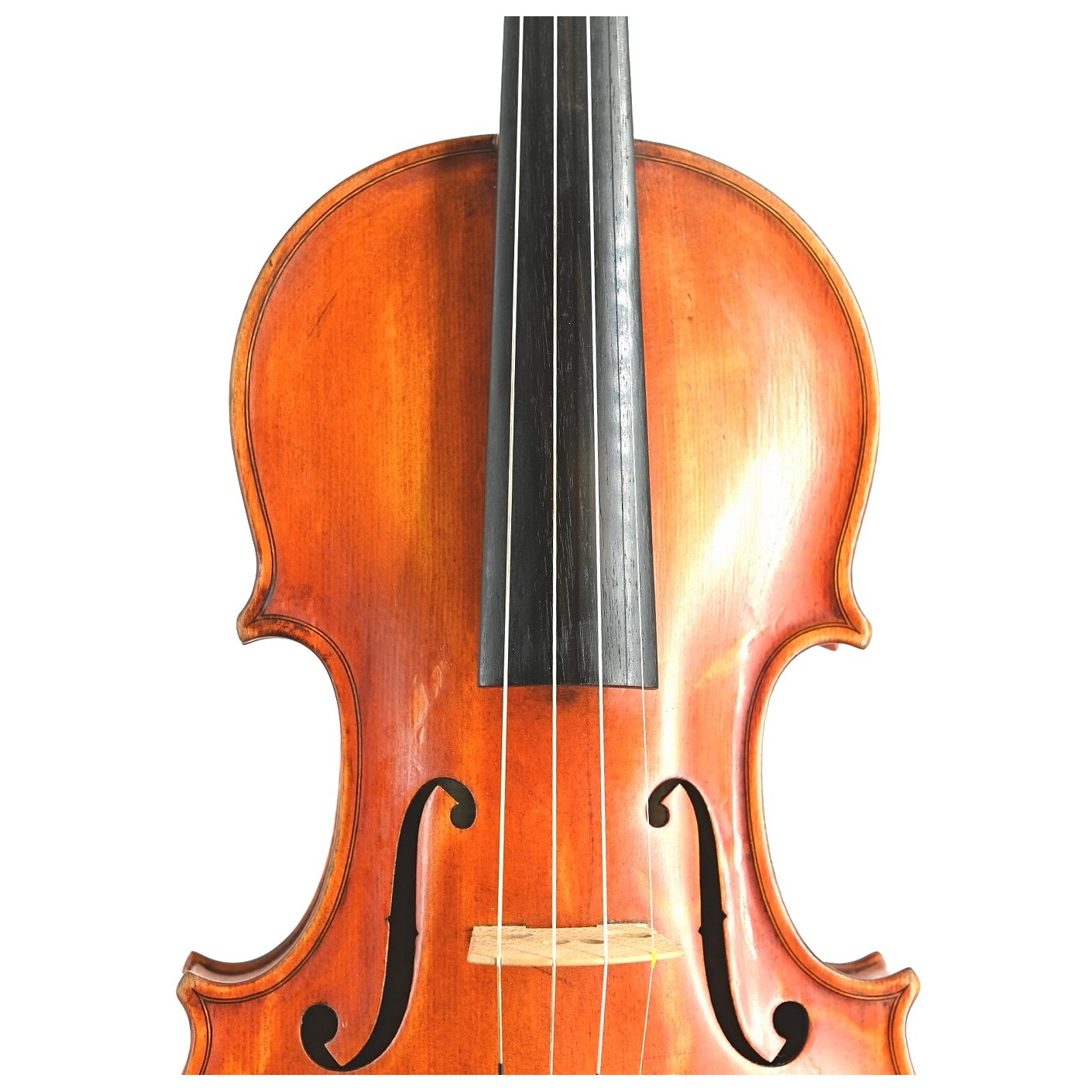
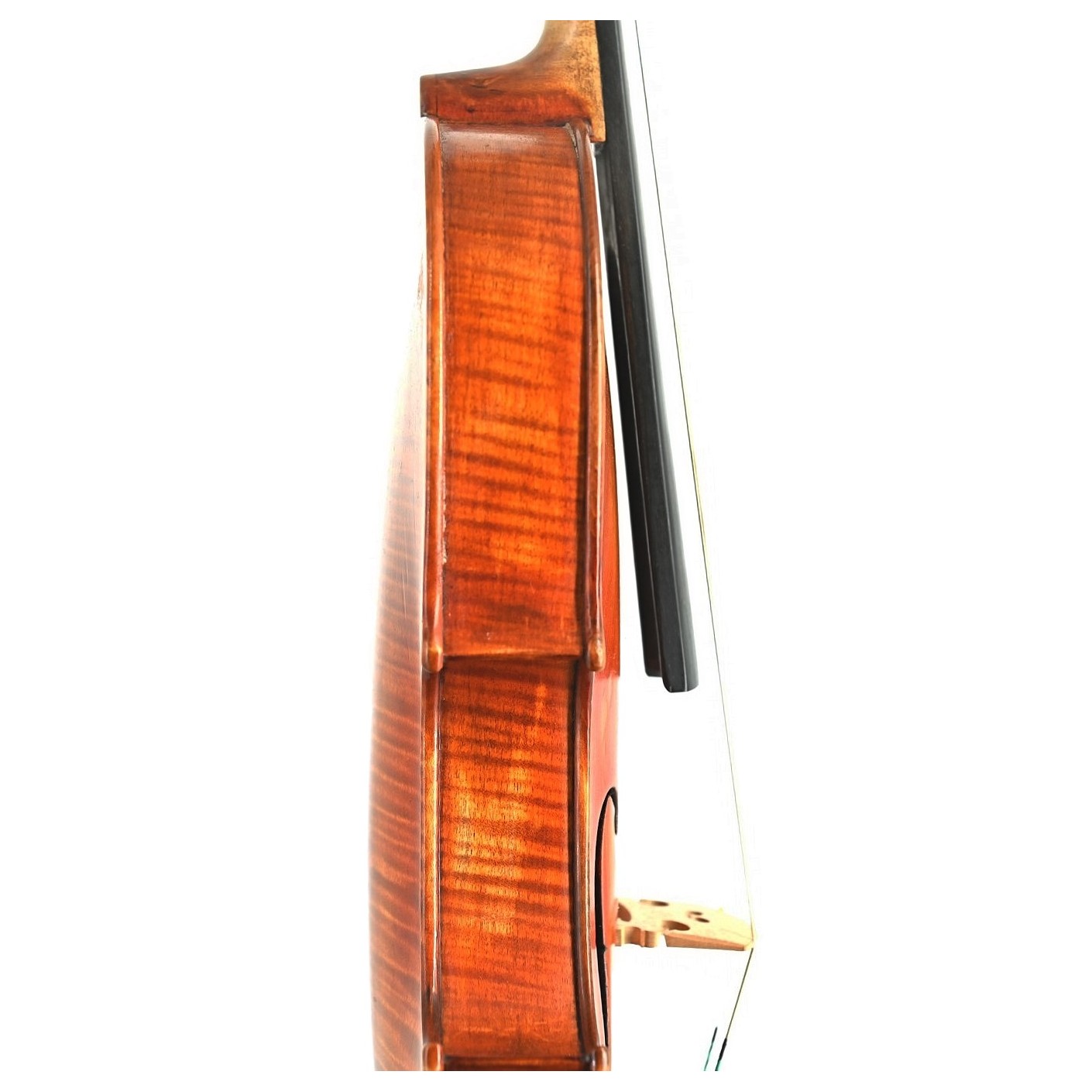
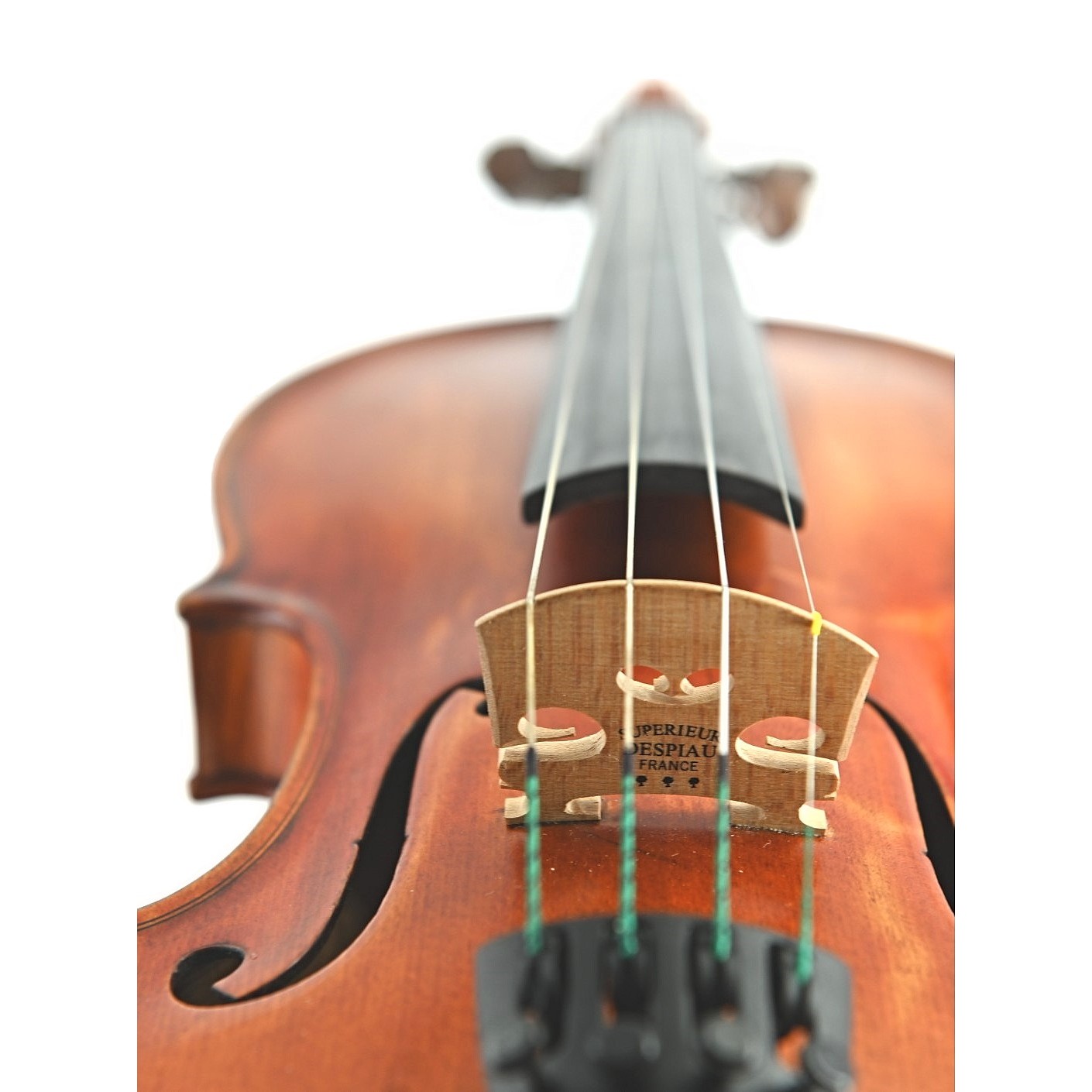
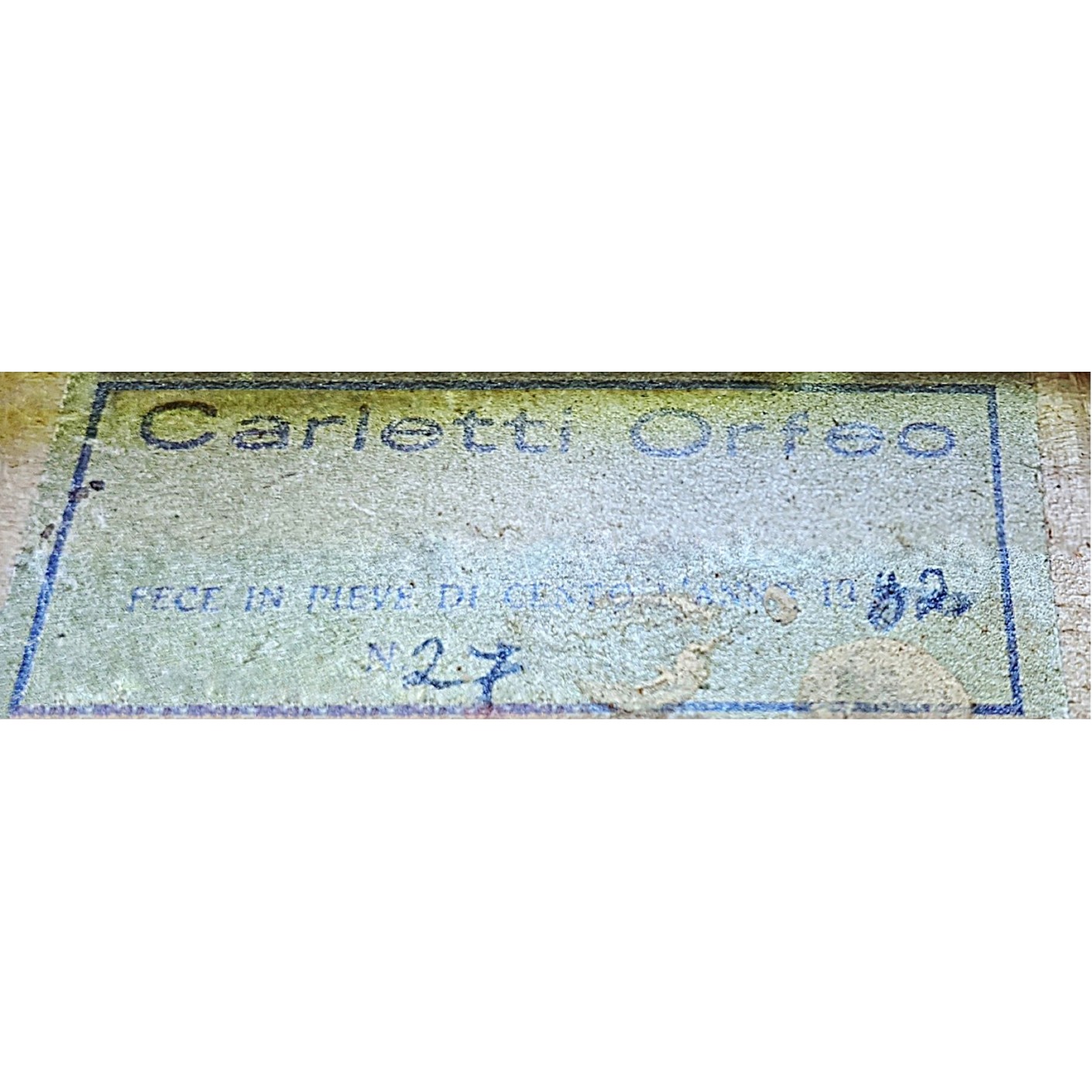
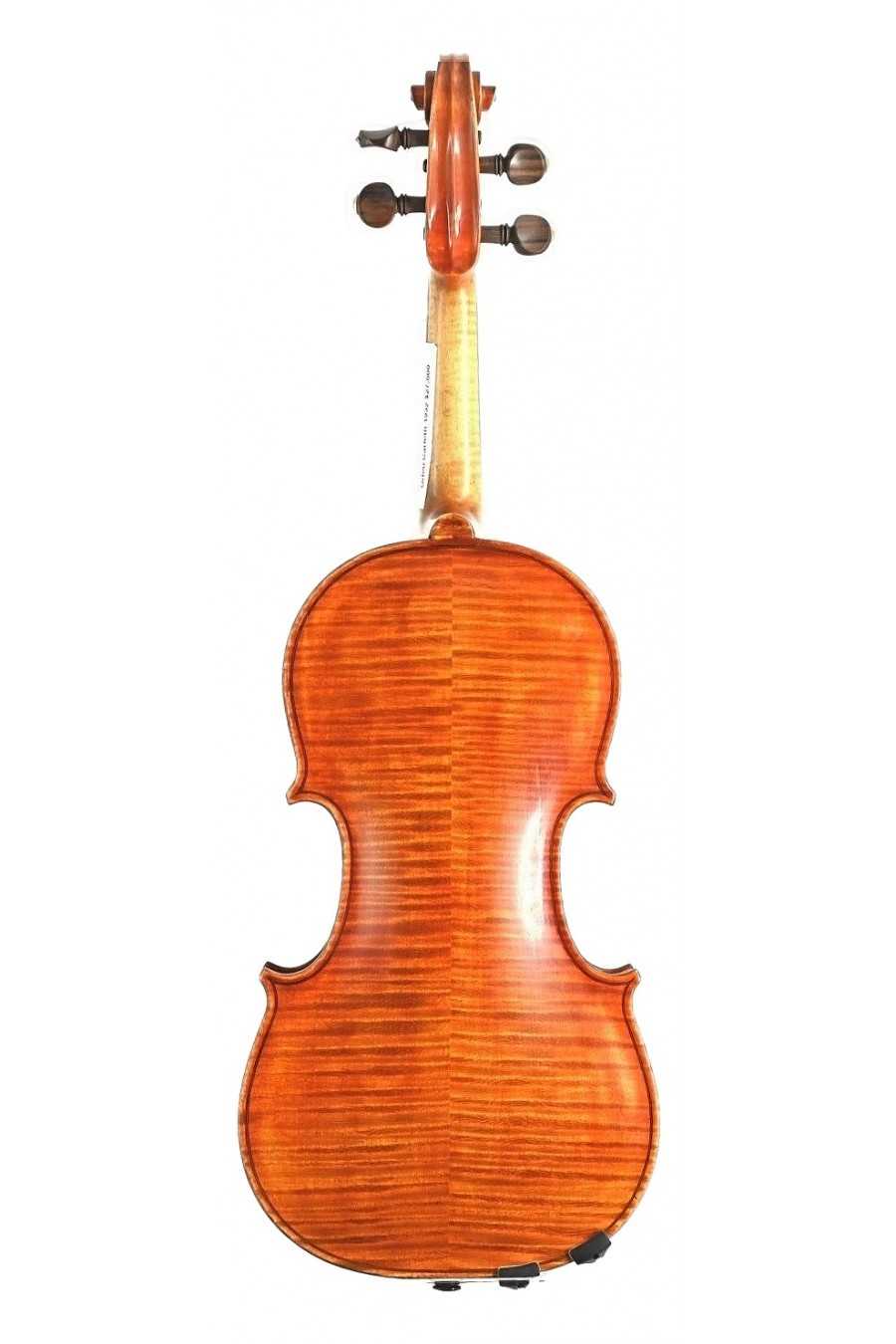
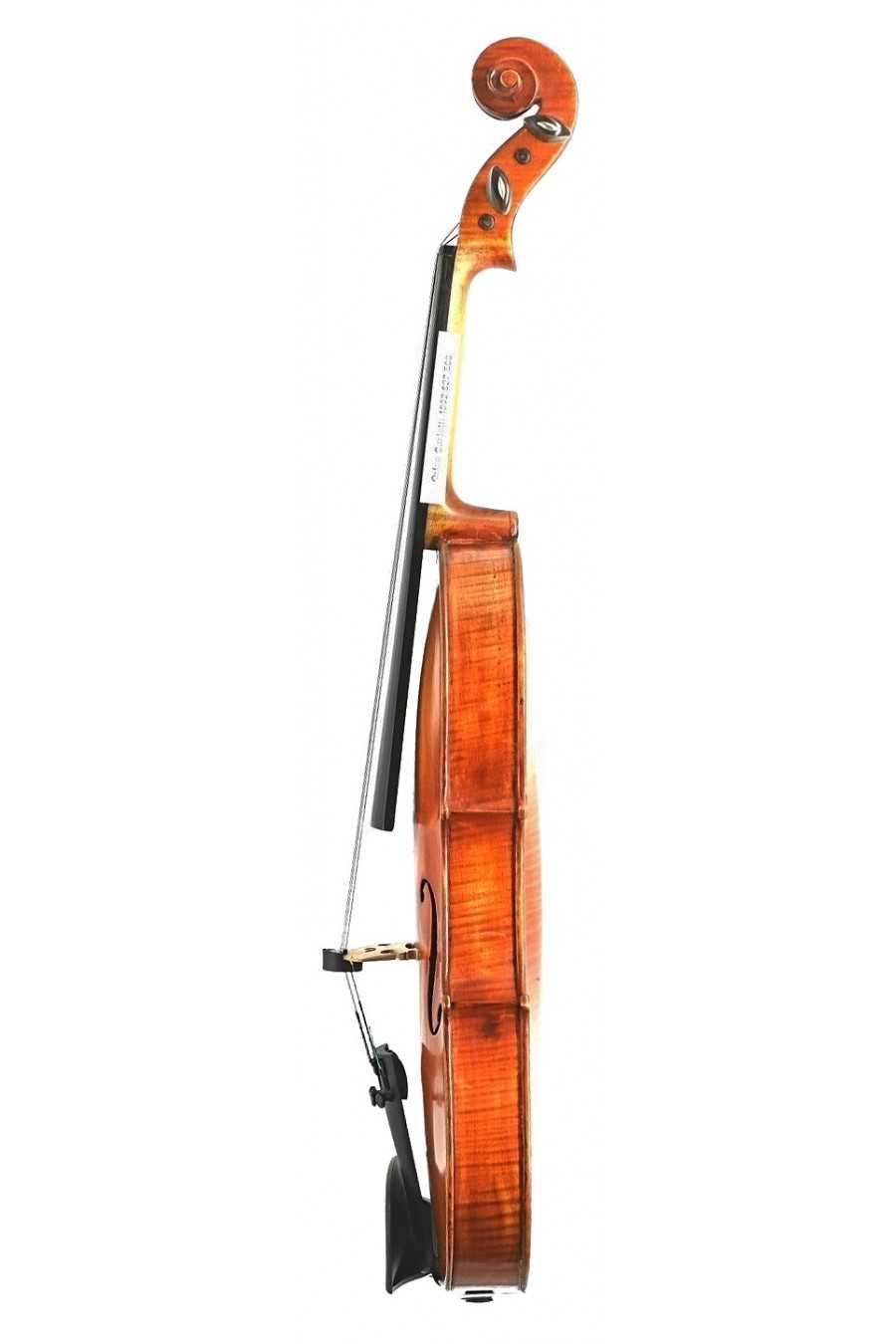
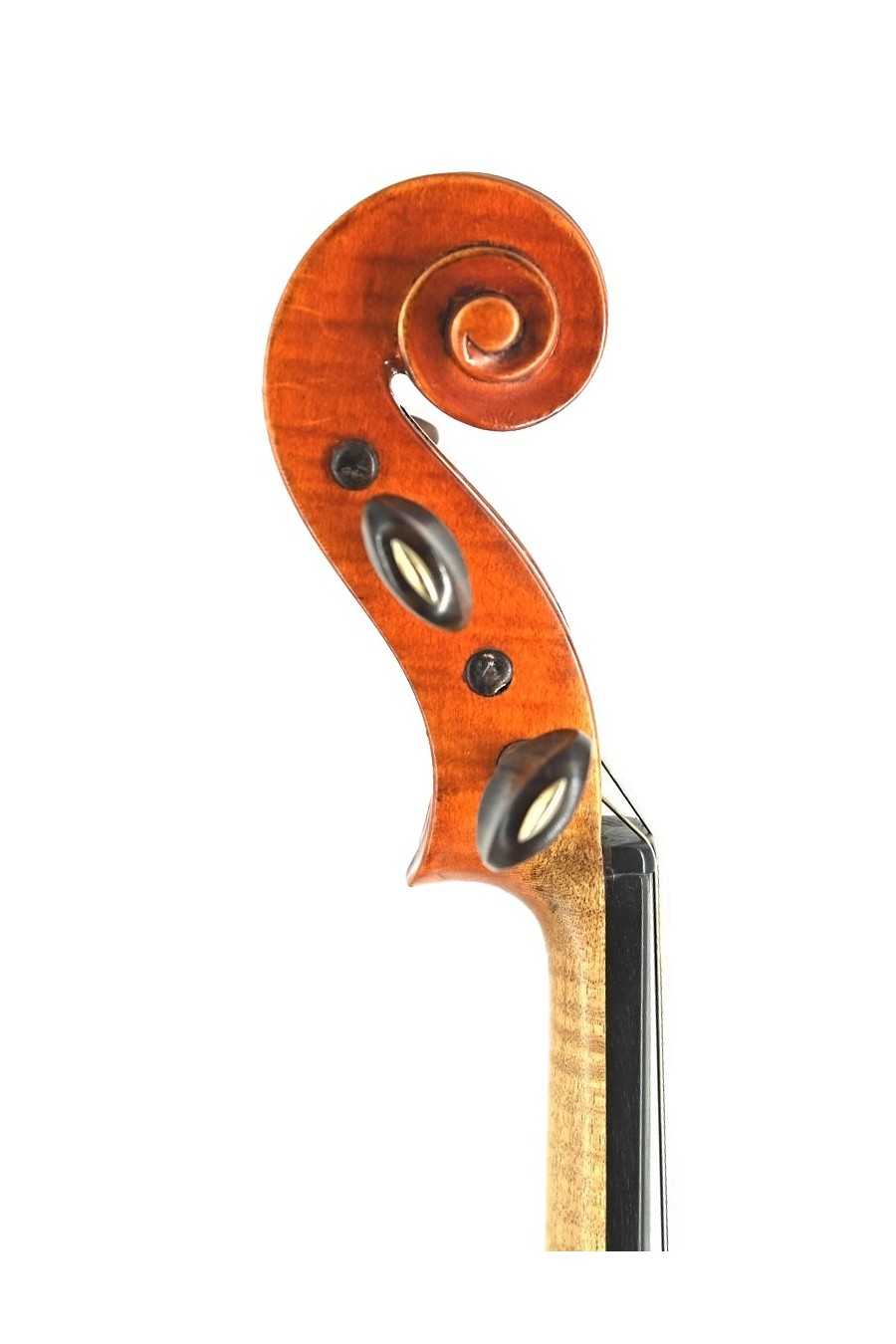
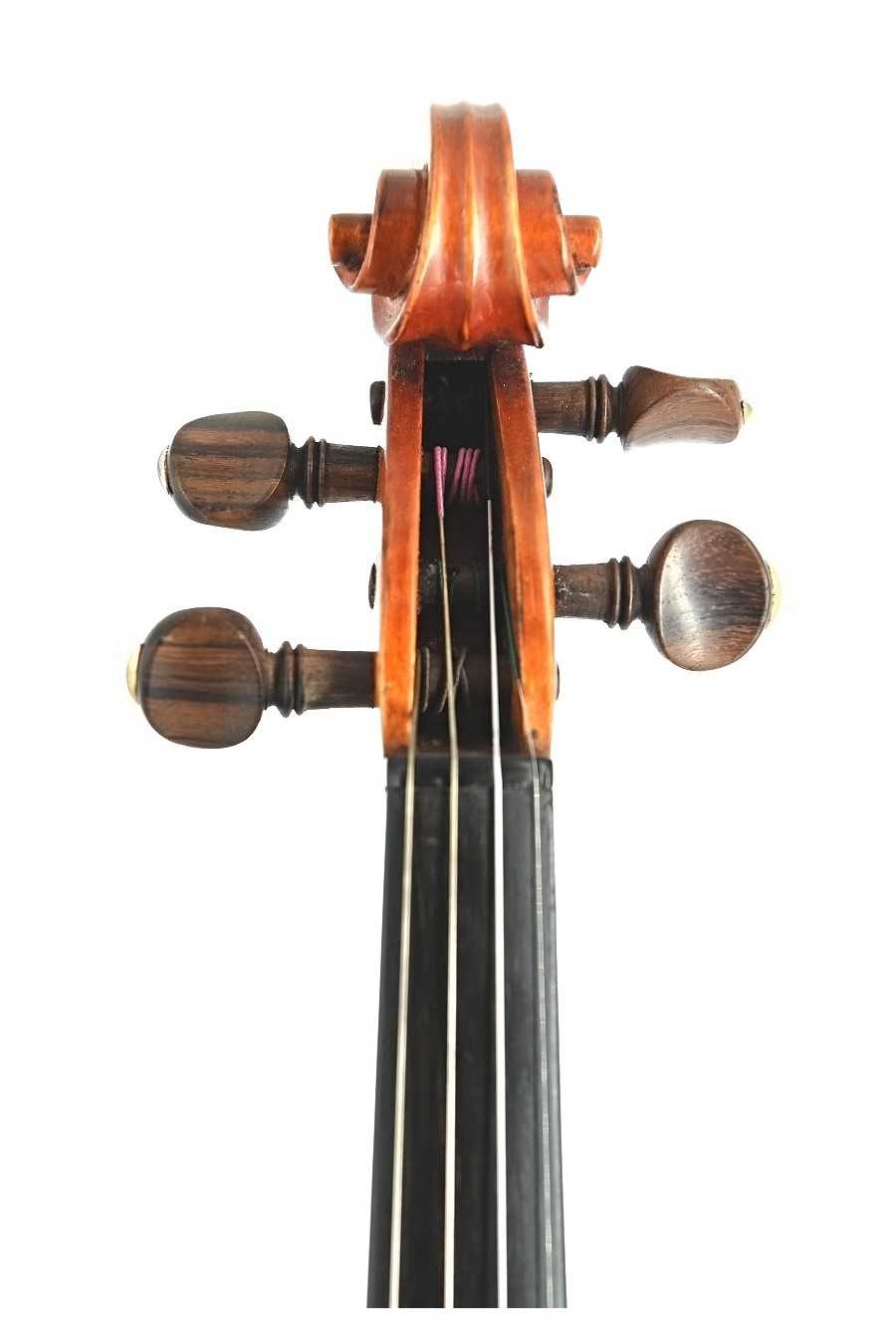
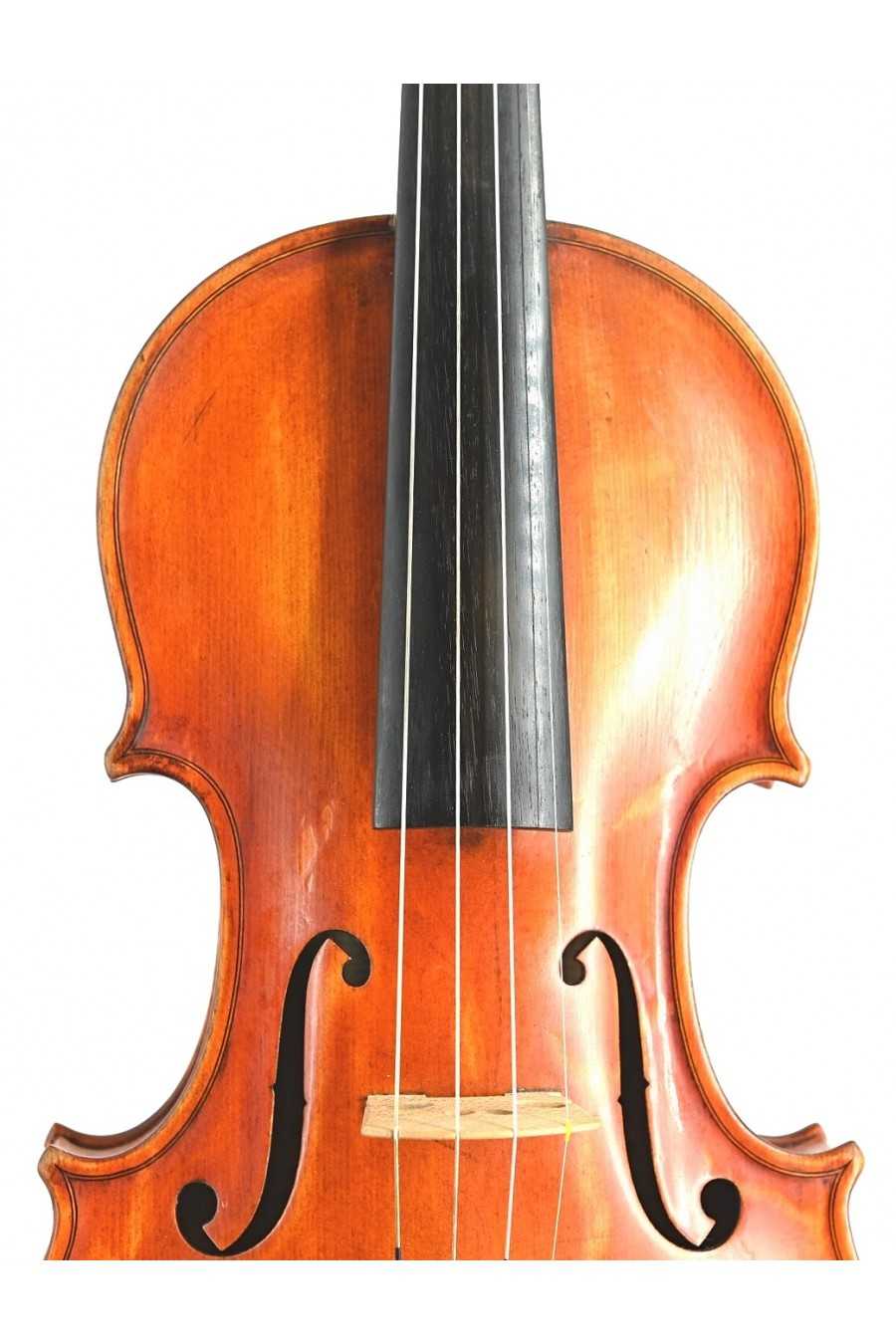
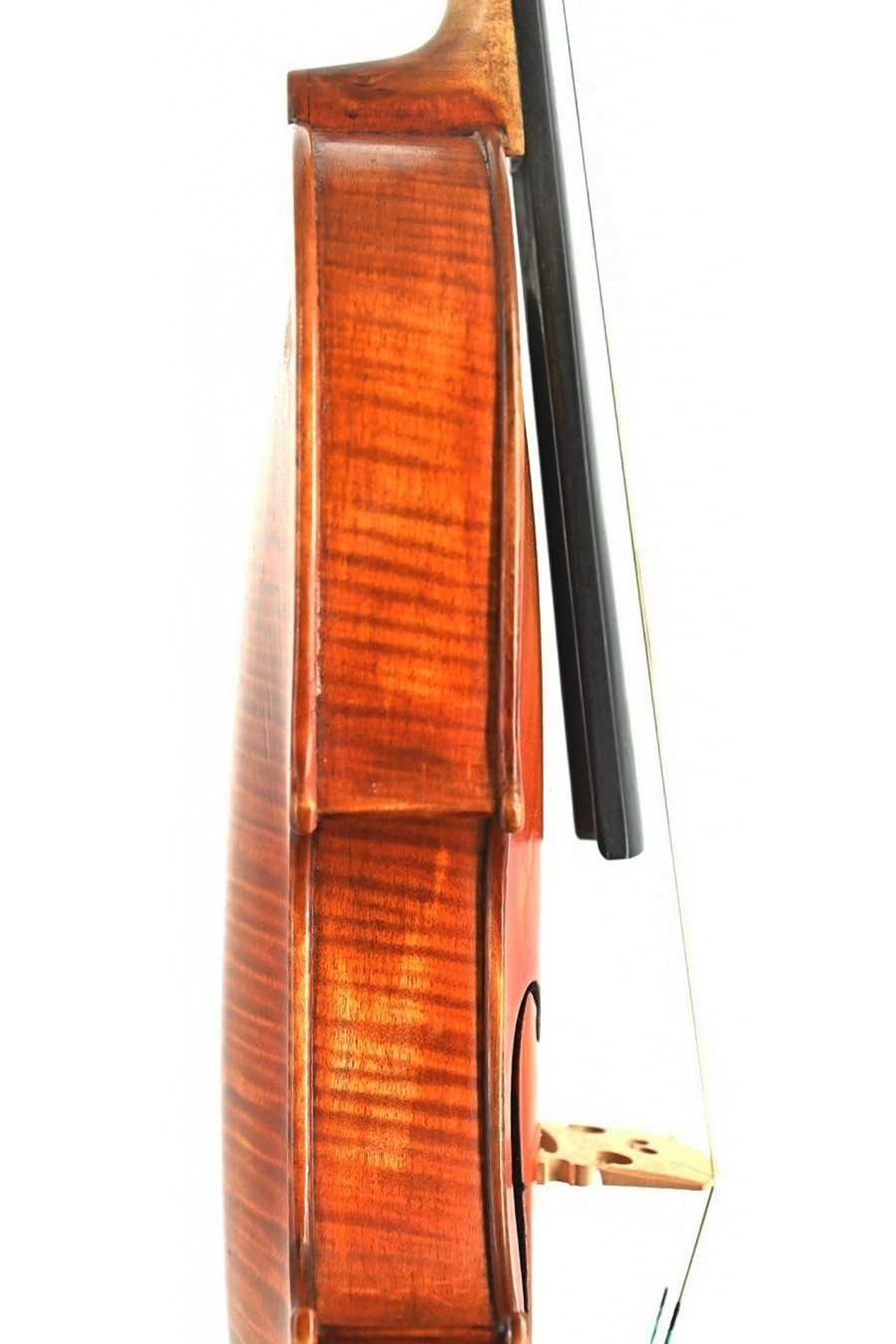
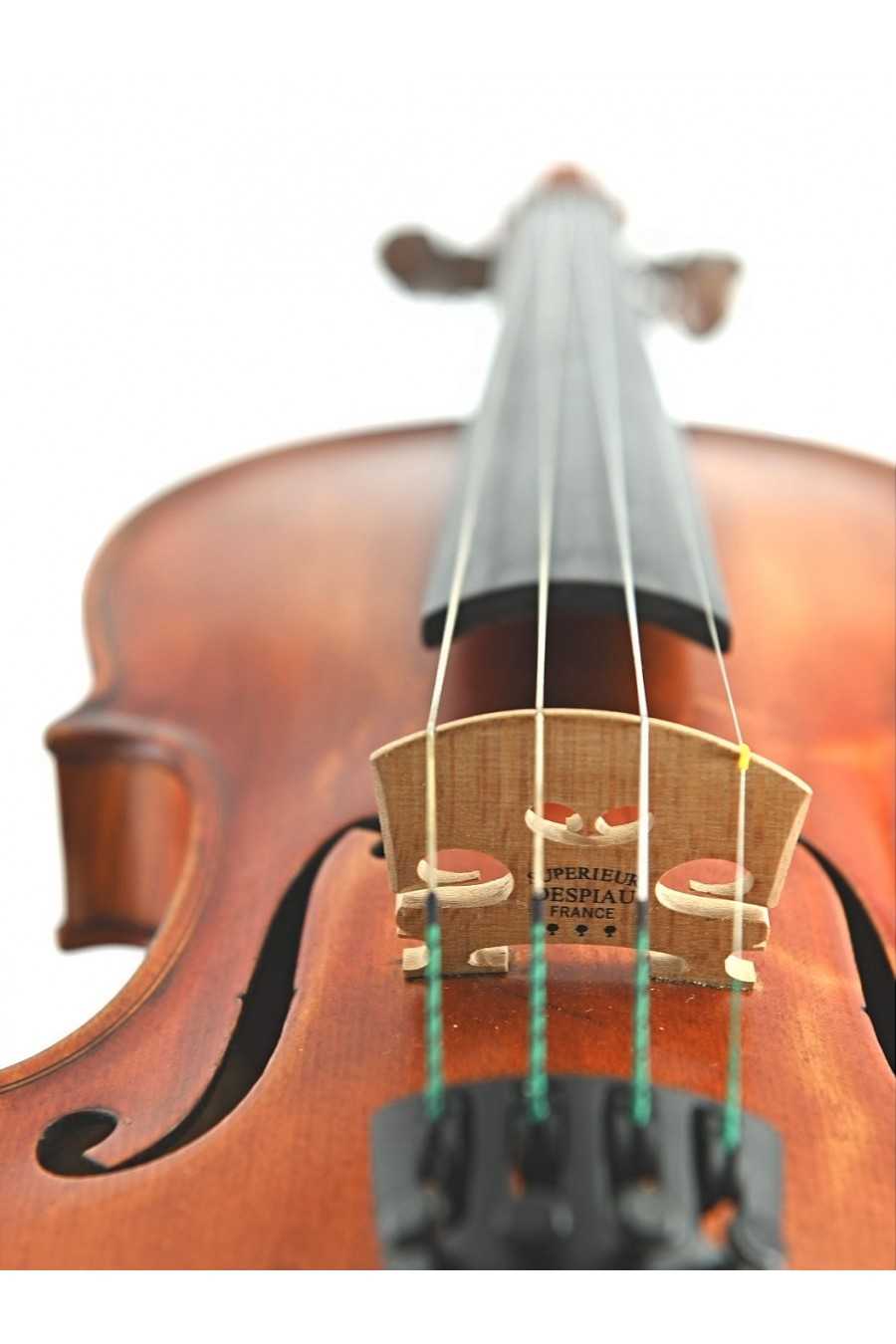
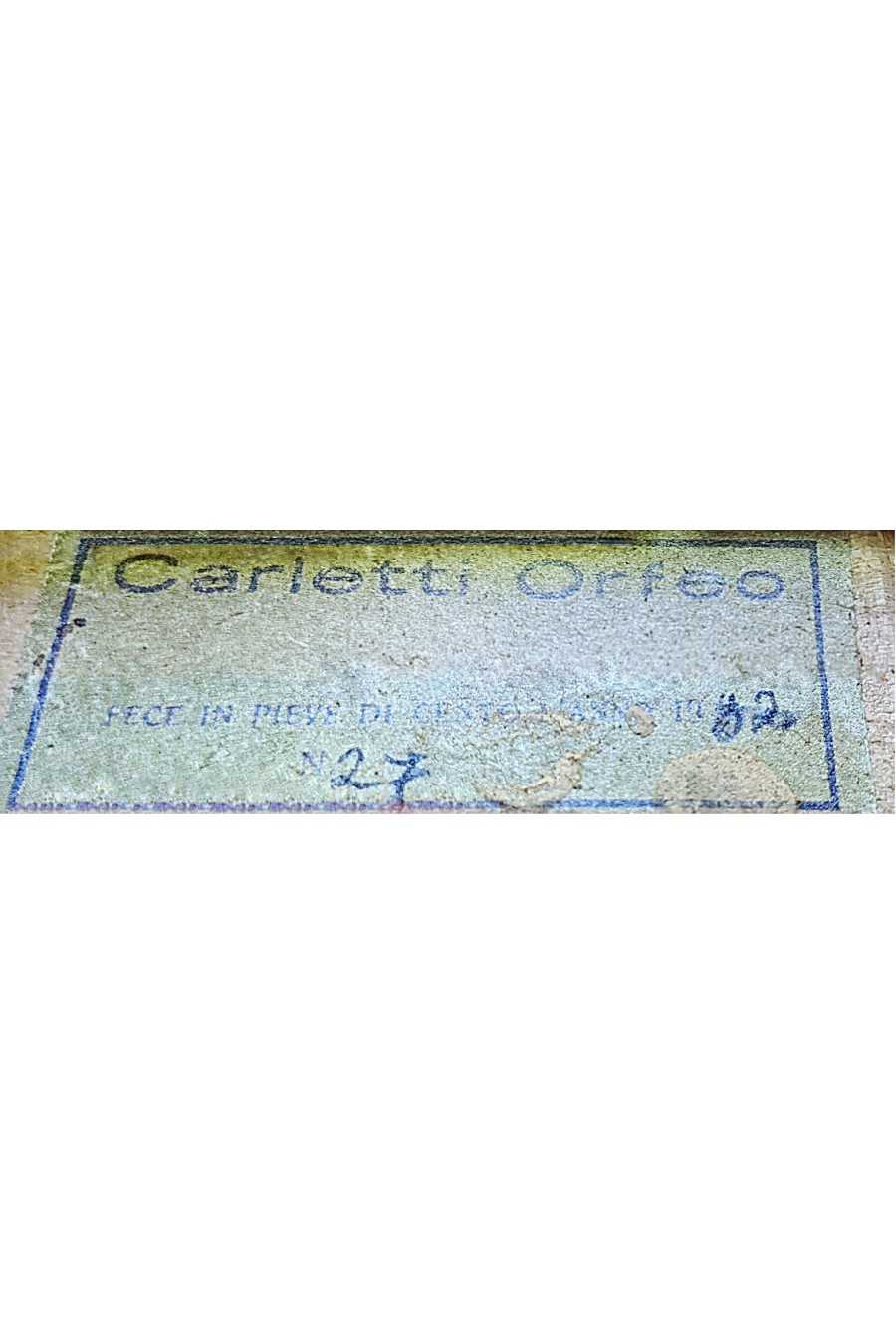
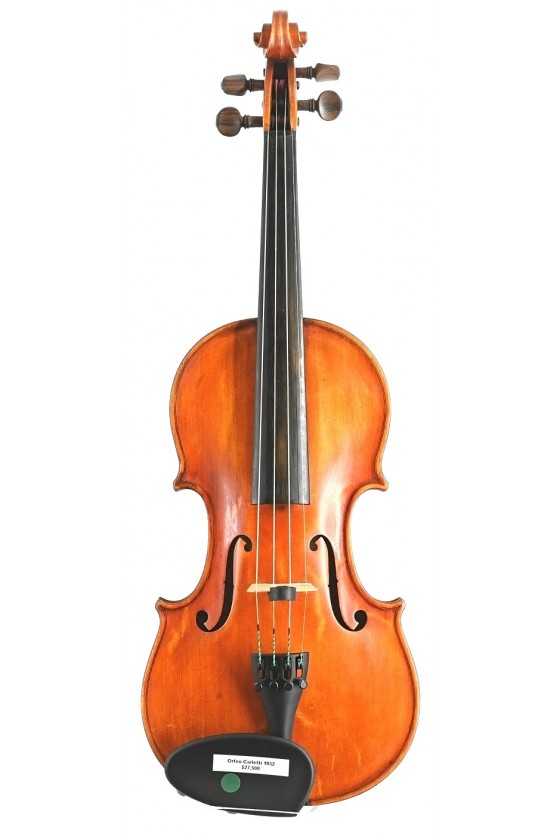
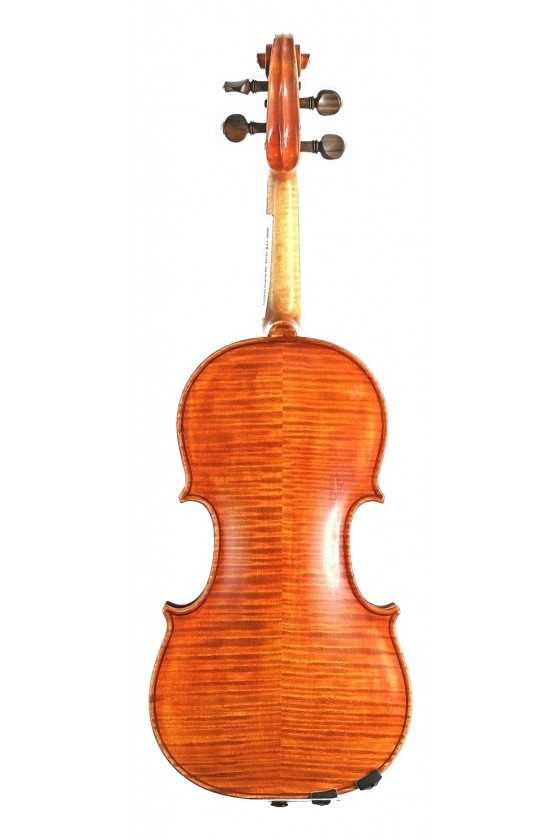
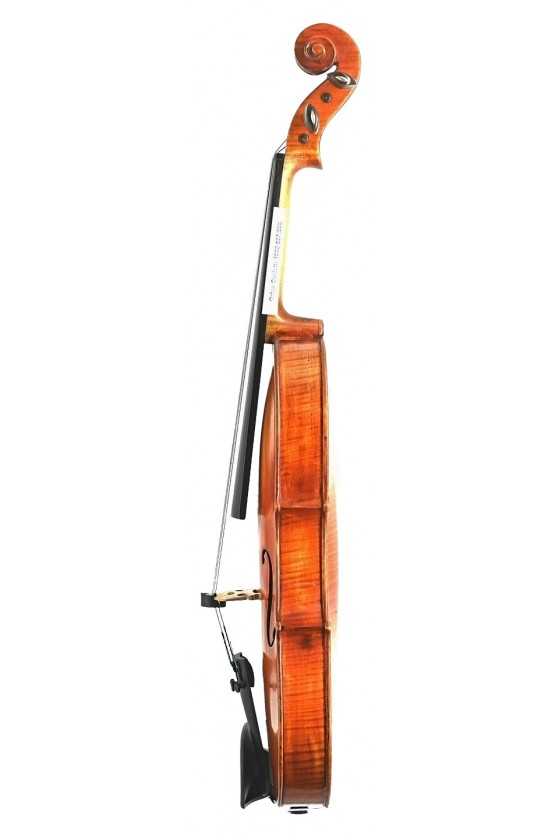
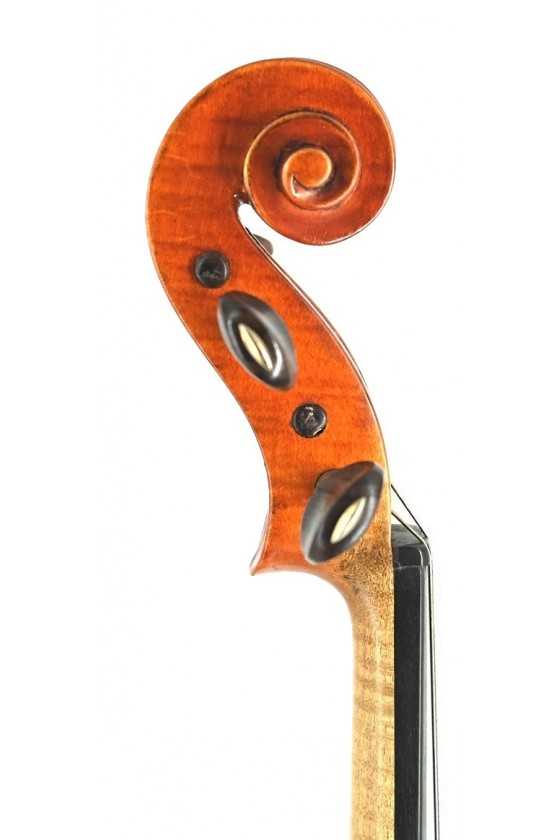
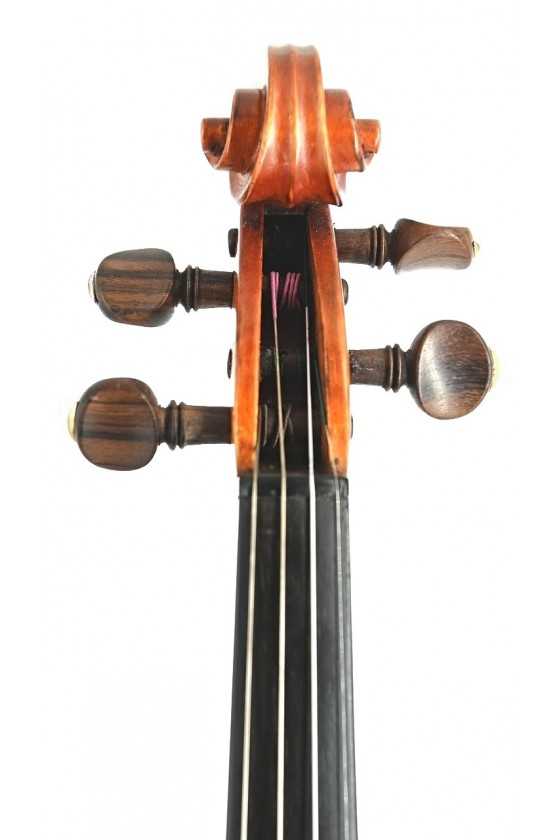
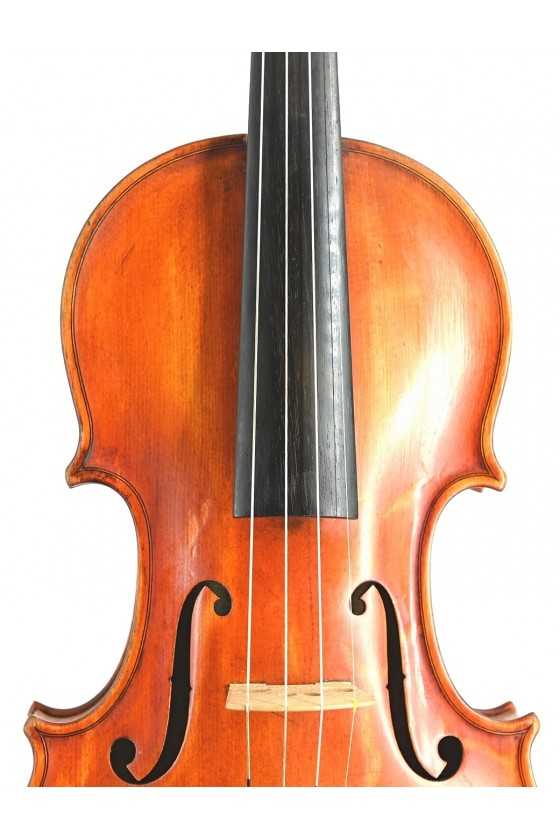
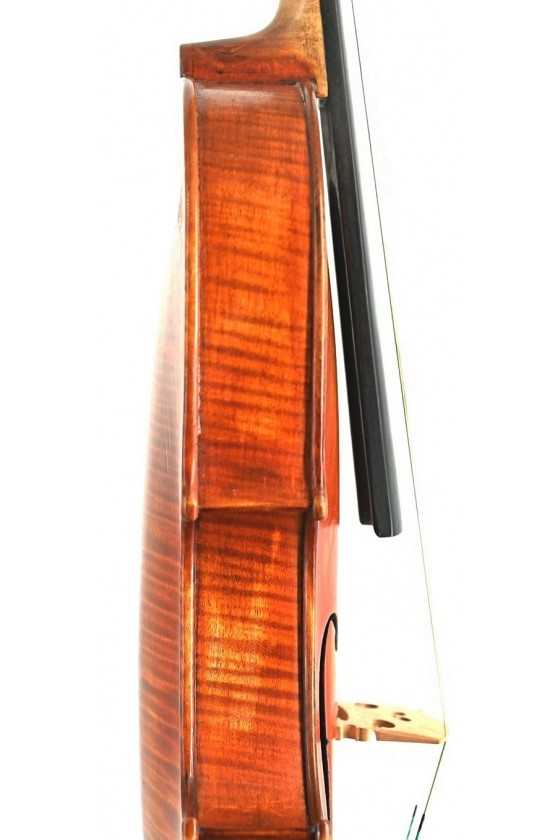
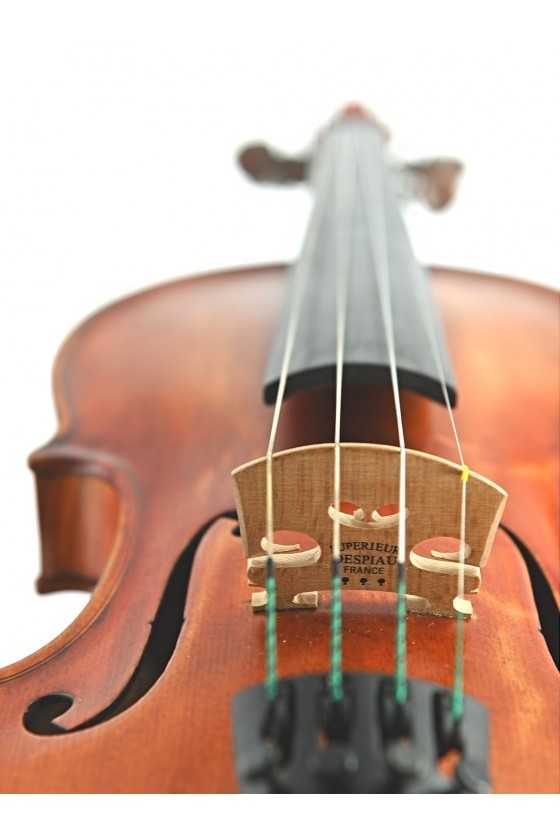
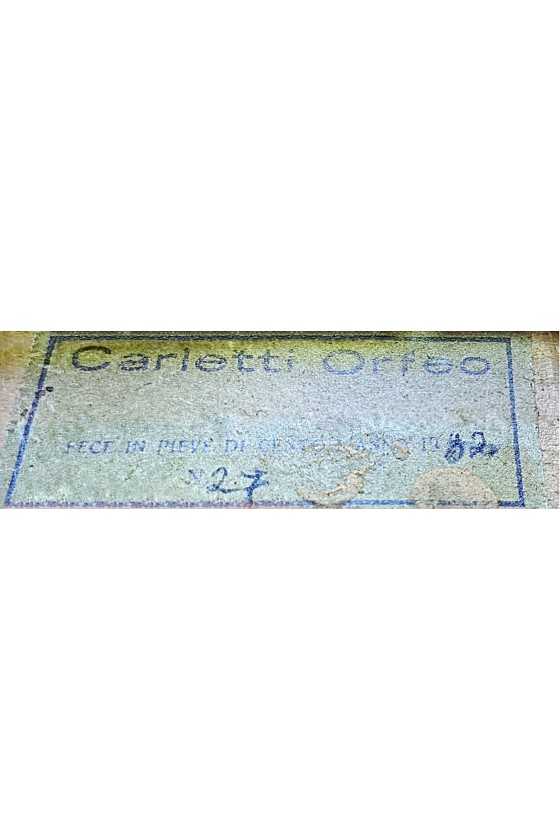
We have here the Orfeo Carletti Violin made in 1932. Orfeo Carletti is an Italian violin maker who opened a workshop together with his father and brother in Bologna.
Orfeo Carletti (1906 – 1940) is an Italian violin maker in Bologna. His father Carlo Carleti and his younger brother Natale opened their own workshop in the late 1920s in Bologna. Orfeo’s work was similar to his brother Natale's in terms of quality and craftsmanship.
This Violin has the signature of an Italian Maker Renato Scrollavezza who was greatly admired and considered to be among the most notable modern Italian makers of the post-war era. He also won numerous prizes and medals in international competitions. This violin could have been made by one of his Japanese students - see the descrirtoion for details.
Introducing the Roberto Cavagnoli Violin 2017. Roberto Cavagnoli received many awards including the Silver Medal for tone quality from the Violin Society of America in 2004 and the third prize at the 11th International Competition ‘Triennale’ in Cremona for sound quality.
Price: POA. According to Eric Blot, this is a copy of Gaetano Pareschi's violins. This violin is a fine copy of the award-winning Italian luthier Gaetano Pareschi, whose working life spanned 50 years, from 1924 to 1974.
This remarkable 7/8 size 1933 violin exhibits a timeless beauty that reflects Giacchetti's artistic skills.
Giuseppe Giacchetti (1890-1980) studied music and the violin in Rome under Rodolfo Fredi. He later established a workshop in Paris and used a “Roma” label throughout his career. This violin has a “fait a Paris” inscription, indicating it was made in Paris.
This violin is a Nicolo Amati Model by A Monzino and Figli Milano made in Italy around 1920 as seen on the label. Antonio Monzino is a string instrument maker in Milan, Italy. He founded his first workshop in 1750 in Milan, via Rastrelli 10.
Check out the Italian Copy of Geovanni Schwarz violin made about 1920. Geovanni Schwarz was born in 1865 in Padua, Italy who by the influence and tutelage of his uncle Eugenio Degani honed his skills, established his own workshop, and won a gold medal in 1916 in Rome Italy.
